
Introduction
Medical device vigilance is the system through which adverse events, near misses and device-related incidents are reported to regulators, allowing patterns to be identified, safety signals to be investigated, and corrective actions to be taken before more patients are harmed. It is not optional — manufacturers, importers and, in many markets, healthcare organisations have legal obligations to report incidents involving medical devices.
This guide explains what medical device vigilance means, which events must be reported, who bears the reporting responsibility, and how vigilance reporting works across the UK, EU, US, Gulf, and South Africa.
Vigilance in three obligations
Medical device vigilance creates three distinct obligations that apply to different stakeholders in the supply chain. The manufacturer's
-
The obligation to collect, analyse and report serious incidents and field safety corrective actions to the relevant regulator within defined timelines.
-
Importer and distributor obligation to pass adverse event information back to the manufacturer and, where required, to report serious incidents directly to the regulator.
-
Healthcare organisation obligation to report device-related incidents through the national reporting system — MHRA Yellow Card in the UK, FDA MAUDE in the US — and to cooperate with manufacturer and regulator investigations.
What triggers a vigilance report
-
Serious incident — death: any incident where a malfunction or characteristic failure of a medical device caused or contributed to the death of a patient, user or other person.
-
Serious incident — serious deterioration in any incident in which a device malfunction caused or contributed to serious deterioration in health, including life-threatening illness, permanent injury, or required medical or surgical intervention.
-
Near miss — could have caused serious harm, many malfunctions or characteristic failures that, had they recurred or had different circumstances applied, could have caused death or serious deterioration. These are reportable even if no actual harm occurred.
-
False positive or negative diagnostic results for IVDs, a result that, if acted upon, could lead to inappropriate treatment or missed diagnosis with serious health consequences.
-
Labelling or IFU issue causing or risking harm where incorrect or missing labelling information contributed to an adverse event or created a risk of one.
-
Unacceptable side effect: A side effect identified through clinical use that was not anticipated in the approved risk management file and is considered unacceptable relative to the device's benefits.
-
Data breaches in connected devices for software-enabled devices, cybersecurity incidents that could affect safety or performance, are increasingly considered reportable under some market frameworks.
-
Systematic or recurring failure is a pattern of incidents, even if each is individually below the reporting threshold, that collectively indicate a failure requiring investigation.
Vigilance reporting by market
Each market has its own vigilance framework, reporting timelines and receiving authority.
|
Market |
Who receives reports |
Timeline (serious incident) |
Public alert system |
|
UK |
MHRA |
10 days (death/serious deterioration); 15 days (serious public health threat) |
Medical Device Alerts |
|
EU |
National Competent Authority + EUDAMED |
10/15 days depending on severity |
EUDAMED and national databases |
|
US |
FDA (MDR reporting) |
30 days (general); 5 days (malfunction requiring report) |
MAUDE database; MedWatch alerts |
|
Gulf (KSA) |
SFDA |
Timeline per SFDA regulations |
SFDA safety circulars |
|
South Africa |
SAHPRA |
Timeline per the Medicines Act |
SAHPRA recall and safety notices |
Manufacturers must report to the competent authority in the country where the incident occurred, and also to the authority in their home market. Under EU MDR, EUDAMED will become the central system for EU vigilance reporting.
Need clarity on vigilance reporting obligations?
We can help you understand the reporting framework for devices you have sourced from us. Tell us the device, the incident type and the market — we will advise on the appropriate reporting pathway.
No pressure, no obligation. → Talk to the team
How vigilance reports are used
Understanding how regulators use vigilance reports explains why accurate, timely reporting matters.
-
Signal detection: regulators analyse aggregated reports to identify patterns — a cluster of similar incidents across different organisations may indicate a device-level issue that no single reporter could see.
-
Once a signal is identified, the regulator may investigate the manufacturer's quality system, technical file and corrective actions, and request further data from the reporting organisations.
-
Field safety corrective actions: if the investigation confirms a device issue, the regulator coordinates with the manufacturer to issue an FSCA and an FSN, notify all users, and require corrective action.
-
Regulatory database reports are stored in MHRA's database, FDA MAUDE and EUDAMED, creating a public record of device safety events that buyers and clinicians can search before making procurement decisions.
Under-reporting is a significant problem in medical device vigilance globally. Many incidents that should be reported are not, reducing the effectiveness of the safety signal detection system. Organisations should err on the side of reporting when in doubt.
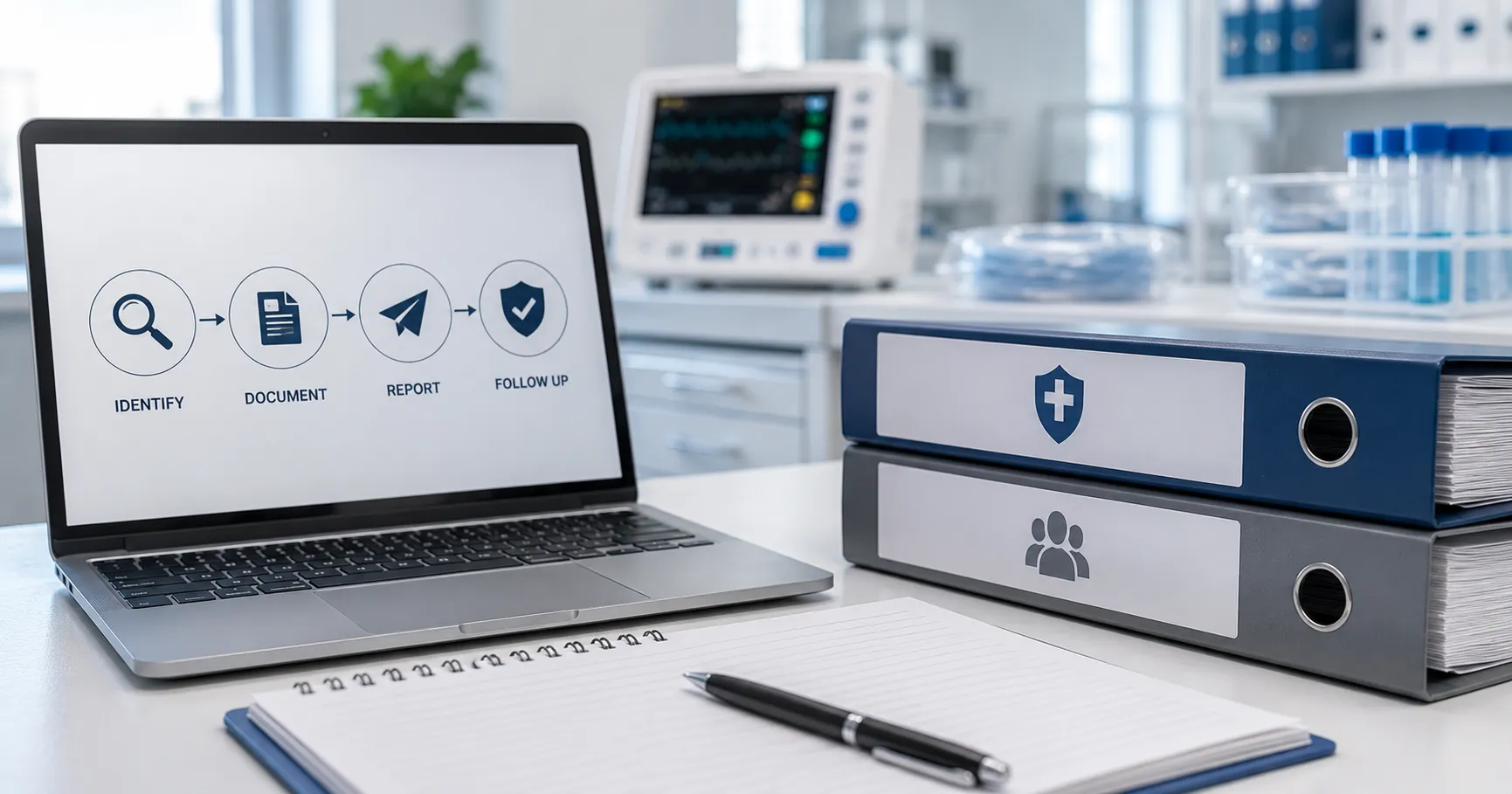
How to report a medical device adverse event
Use this process when an incident involving a medical device occurs in your organisation.
-
Secure and quarantine the device and preserve it and any associated consumables or packaging in the condition they were in at the time of the incident. Do not clean, repair or return the device before investigation.
-
Document the incident,t record the device details, the incident description, the patient or user affected, the clinical outcome, the date and location, and who was involved.
-
Notify the manufacturer or supplier promptly to report the incident. They have their own reporting obligations and should be involved in the investigation.
-
Assess whether the incident is reportable and apply the criteria for your market — is it serious, a near miss, or a pattern? Use the regulator's guidance on reportability if unsure.
-
Submit the report to the regulator through the appropriate channel — MHRA Yellow Card online system in the UK, FDA MAUDE in the US, the national competent authority reporting system in the EU.
-
Cooperate with any investigation by the manufacturer or regulator; provide the preserved device, documentation, and staff witness accounts as requested.
-
Document the outcome and lessons learned, record the investigation findings, and any changes made to clinical practice, equipment management,t or procurement in response to the incident.
Healthcare organisations should have a documented process for handling device-related incidents before one occurs. Identifying the reporting lead, training staff, and periodically testing the process ensures a faster, more complete response when an incident occurs.
Common vigilance reporting failures
These are the most frequent shortcomings in medical device vigilance reporting practice.
-
Not reporting near misses — incidents where harm did not occur but could have — is reportable in most markets, yet remains significantly underreported. They provide the most valuable safety signals because they reveal vulnerabilities before harm occurs.
-
Disposing of the device before returning it for investigation. Relearning disposal moves is needed for investigation. Always preserve the device first.
-
Attributing the incident to user error without investigation is premature; user error may be contributory, but device-related factors should always be investigated. Devices that are consistently misused may have a design or labelling issue that is itself reportable.
-
Not notifying the manufacturer(s) means they need to know about incidents to fulfil their own reporting obligations and investigate whether a wider device issue is involved. Always notify the supplier.
-
Missing reporting timeline as vigilance reporting has strict timelines — 10 or 15 days in most markets for serious incidents. Regulators note late reports and may attract enforcement attention.
Vigilance reporting by region
Reporting systems and obligations vary by market — know which system applies where your organisation operates.
|
Region |
Regulator |
Reporting system and authority |
|
United Kingdom |
MHRA Yellow Card; Medical Device Alerts; 10/15-day timelines |
|
|
European Union |
National competent authority; EUDAMED vigilance; MDCG guidance |
|
|
United States |
FDA MAUDE; 21 CFR Part 803; MDR reporting obligations |
|
|
Gulf (GCC) |
SFDA & GCC bodies |
SFDA adverse event reporting system; Gulf-specific timelines |
|
South Africa |
SAHPRA adverse event reporting; Medicines Act obligations |
For organisations operating in multiple markets, map each device and each operating country to the relevant reporting obligation, and ensure staff know which system to use and when to use it.
More from Business
-
Buyers — source medical equipment from manufacturers with robust systems for vigilance and reporting.
-
Suppliers — list your devices and demonstrate your vigilance reporting credentials to buyers worldwide.
-
Advertise — promote your products and services to a clinical audience.
-
Business overview — explore everything MediGear offers healthcare organisations.
Disclaimer
This article is for general information only and does not constitute legal, regulatory, clinical or procurement advice. Vigilance reporting requirements, timelines and obligations change over time and vary by device class, country and incident type. Always verify current requirements with the relevant regulatory authority and consult a qualified regulatory or legal professional for advice specific to your organisation and incident. medigear.UK accepts no liability for actions taken based on this content.
Questions about device vigilance reporting?
We supply medical equipment with full documentation and can advise on vigilance reporting obligations for devices sourced through us. Tell us the device and market — we will confirm the reporting framework.
Frequently Asked Questions
Medical device vigilance is the system by which adverse events, near misses and device malfunctions are reported to regulators, investigated, and acted on to prevent further harm. It includes manufacturer reporting of serious incidents and field safety corrective actions, healthcare organisation reporting through national reporting systems, and regulator analysis to identify safety signals across the market.
Manufacturers and their authorised representatives are required to report serious incidents and field safety corrective actions to regulators within defined timelines. Importers and distributors must pass incident information to manufacturers. Healthcare organisations and healthcare professionals are required or strongly encouraged — and in some markets legally required — to report device-related adverse events through national systems such as MHRA Yellow Card and FDA MAUDE.
A serious incident is one where a device has caused or contributed to actual harm — death, life-threatening illness, permanent impairment, or required medical intervention. A near miss is a malfunction or failure that could have caused harm if circumstances had been different, but that did not occur. Both are typically reportable under vigilance regulations, and near misses are especially valuable for detecting safety signals.
In the UK, serious incidents must be reported to the MHRA within 10 days of the manufacturer becoming aware of them, or within 15 days for serious public health threats. In the EU, similar timelines apply. In the US, the FDA MDR system requires most reports within 30 days, with a 5-day accelerated timeline for certain malfunctions. Specific timelines vary by incident type and market — always check current regulator guidance.
Preserve the device, accessories, and packaging in the condition they were in at the time of the incident — do not clean, repair, return, or dispose of the device before the investigation. Document the incident, notify the manufacturer or supplier, and report through the appropriate national reporting system. Cooperate with any investigation by the manufacturer or regulator, providing access to the device, documentation and staff accounts.
In the UK, the MHRA Yellow Card system accepts anonymous reports, though named reports are more valuable for investigation. FDA MAUDE also accepts voluntary reports from healthcare professionals and patients. Anonymous reports can be useful for flagging concerns. Still, they limit the regulator's and the manufacturer's ability to follow up and investigate. For organisations with legal reporting obligations — manufacturers and importers — anonymous reporting does not fulfil those obligations.