
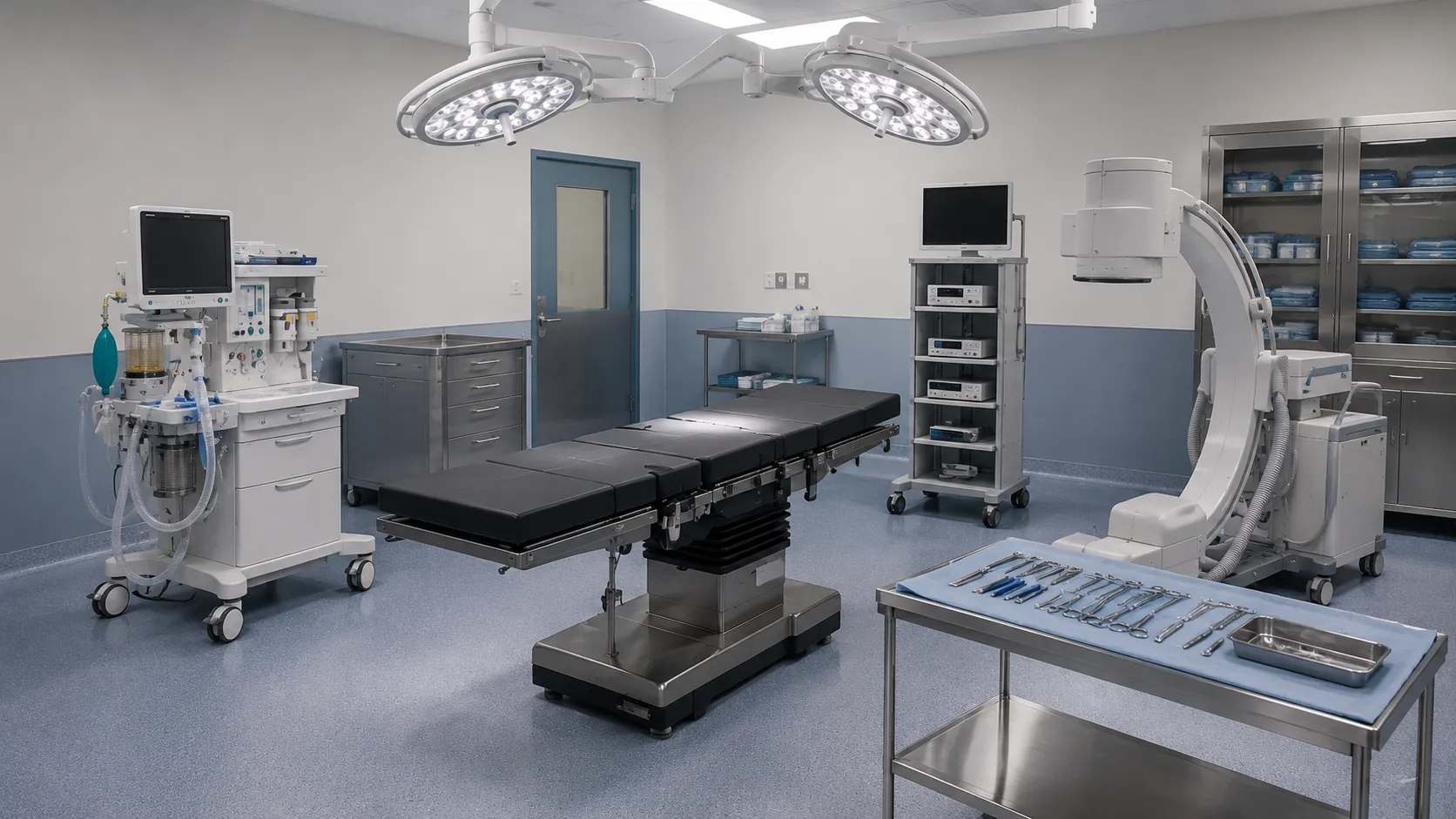
Introduction
Trauma surgery deals with severe, often multiple injuries where minutes decide outcomes. It runs on a philosophy of damage control: stop the bleeding, control contamination, stabilise the patient and return for definitive repair once physiology allows. That approach shapes the equipment more than any single procedure does. A trauma theatre has to be broad, fast and always ready, because the next case arrives without warning and rarely fits a plan.
Equipping a trauma service means covering a wide front — haemorrhage control and massive transfusion, a general and vascular surgical platform, orthopaedic fixation for broken bodies, chest and abdominal access, mobile imaging and aggressive warming — and keeping all of it prepared for immediate use. This trauma surgery equipment buyer guide sets out what a service needs, the order in which to build it, and the readiness and compliance questions to settle early. It is written for trauma surgeons, theatre teams, anaesthetists and procurement across the UK, Europe, the US, the Gulf and South Africa.
What a trauma service needs — the short version
-
Massive-transfusion capability — rapid infusers, fluid warmers and cell salvage for uncontrolled bleeding.
-
A broad surgical platform spanning general, vascular, thoracic and orthopaedic damage-control work.
-
Mobile imaging and warming, with everything configured for immediate, unscheduled use.
Start with haemorrhage control and transfusion.
The leading preventable cause of early trauma death is bleeding, so the first equipment priority is the ability to give warmed blood and fluid fast. A high-capacity rapid infuser with integrated warming, backed by cell salvage, forms the core of the massive-transfusion response. Point-of-care coagulation testing then guides what to replace, so the team corrects clotting deliberately rather than by volume alone.
Around that core sit the tools that physically stop haemorrhage: vascular clamps and shunts, packing, and in some services endovascular balloon occlusion for catastrophic torso bleeding. Because trauma is unscheduled, the difference between a good service and a struggling one is often readiness — kit checked, stocked and immediately to hand, rather than assembled under pressure. That is why transfusion and haemorrhage-control equipment is planned first and maintained relentlessly.
What trauma surgery needs
-
Rapid infuser and fluid warmer. High-flow, warmed delivery of blood and fluid for major haemorrhage.
-
Cell salvage. Recovery and return of the patient's own blood during heavy intraoperative loss.
-
Point-of-care coagulation testing. Viscoelastic analysis to target blood-product replacement.
-
General and vascular sets. Laparotomy, thoracotomy and vascular instruments for damage-control access and repair.
-
External fixation systems. Rapid pelvic and limb stabilisation, including pelvic binders, for unstable fractures.
-
Chest drainage. Chest drain insertion kit for haemothorax and pneumothorax.
-
Mobile imaging. A mobile C-arm for intraoperative fixation and vascular work.
-
Patient warming. Forced-air and fluid warming to fight the lethal spiral of hypothermia and coagulopathy.
-
Theatre-grade anaesthesia and monitoring. Full provision for an unstable, rapidly changing patient.
The equipment checklist
|
Equipment |
Role in the theatre |
Key selection point |
|
Rapid infuser and warmer |
Massive transfusion |
Flow rate; warming; air detection |
|
Cell salvage system |
Blood conservation |
Processing speed under high loss |
|
Viscoelastic analyser |
Coagulation guidance |
Speed; robustness in emergencies |
|
External fixation |
Fracture stabilisation |
Pelvic and limb range; speed of application |
|
Chest drainage |
Thoracic decompression |
Immediate availability; sizing range |
|
Mobile C-arm |
Intraoperative imaging |
Manoeuvrability; image quality; dose control |
|
Warming systems |
Temperature control |
Warm-up speed; patient and fluid coverage |
Damage control drives the equipment list
Damage-control surgery accepts that a critically injured patient cannot survive prolonged definitive repair, so the first operation is short and focused: control bleeding and contamination, then get the patient to intensive care to warm, resuscitate and correct clotting before returning. Equipment follows that logic. Temporary abdominal closure, external fixation, packing and shunts all buy time, and the theatre is arranged so a team can open, control and close quickly. Readiness and layout matter as much as the individual devices.
Fighting the lethal triad
Hypothermia, acidosis and coagulopathy reinforce one another in a downward spiral that kills injured patients. Much of a trauma theatre's equipment exists to break that cycle: aggressive warming of the patient and every fluid given, rapid warmed transfusion, and coagulation testing that targets correction precisely. Getting these working together — quickly and reliably — is one of the clearest markers of a well-equipped service, and one of the strongest reasons to keep the kit maintained and immediately available.
Compliance and documentation
Trauma equipment must be genuine, current and fully documented. In the UK, the MHR regulates devicesA, with clinical guidance from NICE; the Resuscitation Council UK publishes resuscitation standards. Mobile imaging brings ionising-radiation duties governed under HSE and IR(ME)R frameworks. Requirements vary by country and market, so confirm current obligations with the relevant authorities before you buy.
Support keeps a trauma service running.
-
Installation, commissioning and team familiarisation for transfusion, imaging and fixation equipment.
-
Preventive maintenance built around constant readiness rather than scheduled downtime.
-
Dependable consumable supply — infuser and salvage sets, drains, fixation components and warming disposables.
-
Fast technical response, because a trauma theatre cannot stand a device out of action.
-
Clear documentation and device records to support governance and audit.
More from Business
-
Buyers — source compliant, fully documented equipment.
-
Suppliers — list your equipment and reach buyers worldwide.
-
Advertise — promote your products and services to a clinical audience.
-
Business overview — explore everything MediGear offers healthcare organisations.
Disclaimer
This article is for general information only. It does not constitute clinical, procurement, legal or regulatory advice. Equipment requirements for trauma surgery vary by service, facility, country and market, and change over time. Radiation practice and blood management are separately regulated in most countries and require specialist input. Always confirm current requirements with the relevant authorities, and consult qualified clinical, medical physics, biomedical engineering, procurement and regulatory professionals for decisions specific to your organisation. medigear.uk accepts no liability for actions takenbased onf this content.
"Ready before the call" A trauma theatre that never scrambles.
We supply medical equipment to healthcare organisations across the UK, Europe, the US, the Gulf and South Africa. Everything is genuine, documented and supported, so your trauma service stays ready around the clock.
Frequently Asked Questions
A trauma theatre needs strong massive-transfusion capability — a high-flow rapid infuser with warming, cell salvage and point-of-care coagulation testing — alongside a broad surgical platform for general, vascular, thoracic and orthopaedic damage-control work. It also needs external fixation and pelvic binders, chest drainage, a mobile C-arm for intraoperative imaging, aggressive patient and fluid warming, and full theatre-grade anaesthesia and monitoring, all kept ready for immediate use.
Damage-control surgery is a staged approach for critically injured patients. The first operation is deliberately short: control bleeding and contamination, and stabilise the patient using packing, shunts, temporary closure, and external fixation. The patient is then warmed, resuscitated and corrected in intensive care before returning for definitive repair. The equipment list — and theatre layout — follows this logic of speed and temporary stabilisation.
Injured patients are prone to a lethal triad of hypothermia, acidosis and coagulopathy, where each worsens the others. Aggressive warming of the patient and of every fluid and blood product given helps break that cycle. Forced-air warming, fluid warmers and warmed rapid transfusion work together with coagulation testing to keep clotting functional, which is why warming is a core part of a trauma theatre rather than a comfort measure.
The main differences are breadth, speed and constant readiness. A trauma service must handle bleeding, chest and abdominal injury, and fractures in the same unscheduled patient, so it carries heavy transfusion capacity, external fixation, chest drainage and mobile imaging as standard. Because cases arrive without warning, equipment is checked, stocked and immediately available rather than assembled per list.
Yes, where mobile imaging is used. A mobile C-arm produces ionising radiation, which brings duties under HSE ionising-radiation and IR(ME)R frameworks, including protection, dosimetry and training.The MHRA regulates devicesA, with clinical guidance from NICE and resuscitation standards from the Resuscitation Council UK. Requirements vary by country and market, so confirm current obligations with the relevant authorities.
Yes. MediGear supplies medical equipment to healthcare organisations across the UK, Europe, the US, the Gulf and South Africa. As a distributor,, we provide genuine, documente,d and supported equipment, from transfusion and warming systems to fixation, drainag,e and mobile imaging. Requirements differ by service and market, so we work with your team to match equipment to your caseload and regulatory setting.