
Introduction
Surgical oncology is the operative treatment of cancer, and its central challenge is removing disease completely while preserving as much healthy function as possible. That balance — clear margins against safe reconstruction — runs through every case, whether it is a breast excision, a major bowel resection or a complex sarcoma. The equipment that supports cancer surgery is chosen with that balance in mind: tools that cut and seal precisely, methods that map where disease has spread, and imaging that confirms what has been removed.
Equipping an oncology surgery service spans energy devices and precision instruments, staging techniques such as sentinel lymph node detection, intraoperative imaging and specimen handling, and reconstructive kits that restore form and function. This oncology surgery equipment buyer guide sets out what each area needs, how the theatre connects to pathology, and the traceability questions to settle early. It is written for surgical oncologists, theatre teams, cancer nurses and procurement across the UK, Europe, the US, the Gulf and South Africa.
What an oncology surgery service needs — the short version
-
Energy devices and precision instruments for accurate resection with controlled bleeding.
-
Staging tools — a gamma probe and detection methods for sentinel lymph node work.
-
Intraoperative imaging, specimen handling and reconstructive capability across the case.
Start with energy and precision.
Cancer resection depends on cutting and sealing tissue cleanly, so energy devices sit at the centre of the equipment picture. Electrosurgery, advanced bipolar and ultrasonic devices allow the surgeon to divide tissue while controlling bleeding, which matters especially in the vascular, deep or delicate fields common in oncology. High-quality instrument sets and retraction complete the operative platform for open work, with laparoscopic and robotic approaches added where the service uses them.
These core tools are chosen first because they define what the service can safely undertake. Around them, the service builds staging and imaging capability. Sentinel lymph node detection — using a gamma probe and, in many centres, fluorescence — lets surgeons sample the nodes most likely to harbour disease without removing them all. Specimen orientation and intraoperative imaging then confirm what has been taken, linking theatre directly to the pathology that determines margins.
What oncology surgery needs
-
Energy platform. Electrosurgery with advanced bipolar and ultrasonic devices for controlled dissection.
-
Precision instruments: comprehensive open sets, retraction, and fine dissecting instruments.
-
Minimal-access capability. Laparoscopic stack and instruments for minimally invasive procedures.
-
Sentinel node detection—a gamma probe and, where used, fluorescence imaging for nodal staging.
-
Intraoperative imaging. Specimen radiography or mobile imaging to confirm complete excision.
-
Specimen handling. Orientation, marking and transfer that preserve margin information for pathology.
-
Reconstruction. Instruments and support for flap, mesh or prosthetic reconstruction as required.
-
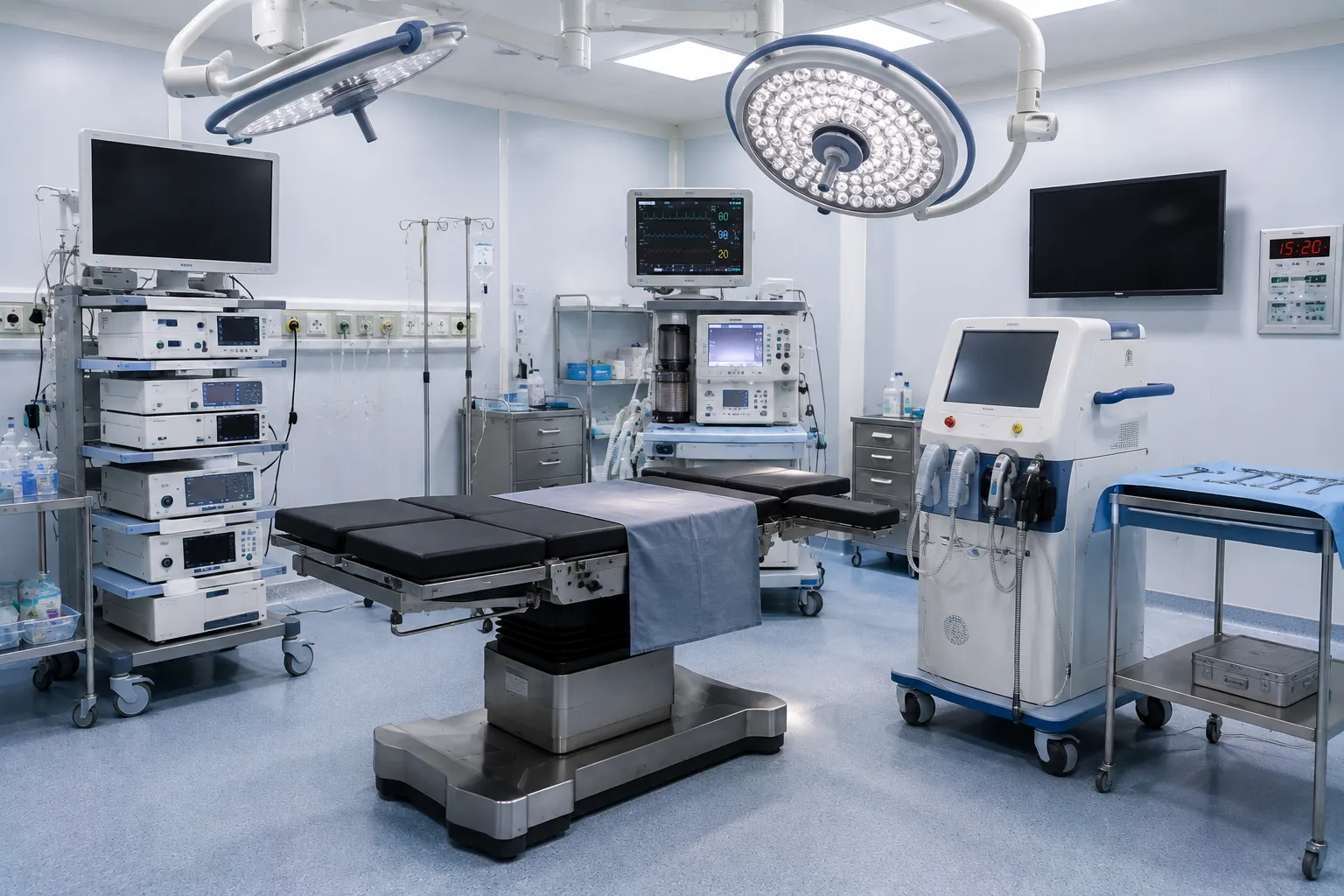
Theatre platform. Adaptable operating tables, lighting and positioning for long, complex cases.
The equipment checklist
|
Equipment |
Role in the service |
Key selection point |
|
Energy platform |
Dissection and haemostasis |
Modalities; instrument range |
|
Open instrument sets |
Resection |
Completeness; quality; sterilisation |
|
Gamma probe |
Sentinel node detection |
Sensitivity; ergonomics |
|
Specimen imaging |
Margin confirmation |
Resolution; theatre workflow |
|
Laparoscopic stack |
Minimal-access surgery |
Image quality; instrument fit |
|
Operating table |
Positioning |
Range; weight capacity; imaging compatibility |
|
Reconstruction set |
Restoring form and function |
Technique range; instrument quality |
Theatre and pathology work as a pair
One of the defining features of cancer surgery is how closely the operating theatre depends on pathology. Whether a margin is clear, whether a sentinel node contains disease, and whether further tissue must be taken are questions answered by the laboratory — sometimes during the operation itself. Equipment that preserves specimen orientation, supports intraoperative imaging and enables reliable transfer to pathology is therefore part of the surgical toolkit, not an afterthought. The better that link works, the fewer patients return for further surgery.
Resection and reconstruction together
Complex cancer surgery frequently combines removal and reconstruction in a single episode. A resection that leaves a large defect may need immediate reconstruction with a flap, mesh or prosthesis to restore function and appearance. Planning equipment for both halves of the operation — the ablative and the reconstructive — keeps the service able to offer complete care rather than staging patients across multiple procedures. It also shapes instrument sets, theatre time and the skills the team draws on.
Compliance and documentation
Oncology surgery equipment must be genuine, current and fully documented. In the UK, the MHRA regulates medical devices, and NICE publishes clinical guidance. ISO maintains international standards for medical devices. Requirements vary by country and market, so confirm current obligations with the relevant authorities before you buy.
Support keeps an oncology surgery service running.
-
Installation, commissioning and clinical familiarisation for energy platforms and imaging.
-
Preventive maintenance and calibration that keep devices theatre-ready for complex lists.
-
Reliable consumable supply — energy device handpieces, staplers, probes and reconstruction kit.
-
Rapid technical response, because a fault can delay time-critical cancer surgery.
-
Clear documentation and traceability for every device and implant used in a case.
More from Business
-
Buyers — source compliant, fully documented equipment.
-
Suppliers — list your equipment and reach buyers worldwide.
-
Advertise — promote your products and services to a clinical audience.
-
Business overview — explore everything MediGear offers healthcare organisations.
Disclaimer
This article is for general information only. It does not constitute clinical, procurement, legal or regulatory advice. Equipment requirements for oncology surgery varyby specialityy, procedure, facility, country and market, and change over time. Always confirm current requirements with the relevant authorities, and consult qualified clinical, theatre, biomedical engineering, procurement and regulatory professionals for decisions specific to your organisation. medigear.uk accepts no liability for actions taken based on this content.
"Clear margins, safe resection." An oncology surgery service equipped for complex work.
We supply medical equipment to healthcare organisations across the UK, Europe, the US, the Gulf and South Africa. Everything is genuine, documented and supported, so your surgical oncology service operates with confidence.
Frequently Asked Questions
Surgical oncology needs an energy platform — electrosurgery with advanced bipolar and ultrasonic devices — and comprehensive precision instrument sets for controlled resection. It also needs staging tools such as a gamma probe for sentinel lymph node detection, intraoperative or specimen imaging to confirm complete excision, careful specimen handling for pathology, reconstructive capability, and adaptable operating tables for long, complex cases.
Cancer resection means dividing tissue cleanly while controlling bleeding, often in vascular, deep or delicate fields. Electrosurgery, advanced bipolar, and ultrasonic devices let the surgeon cut and seal precisely, supporting clear margins and safer dissection. Because these tools define what a service can safely undertake, they are usually the first part of the equipment picture to be specified.
Sentinel node detection identifies the lymph nodes most likely to be affected first by spreading cancer so that surgeons can sample them rather tthan removeall the nodes. It typically uses a handheld gamma probe to detect an injected tracer, and in many centres fluorescence imaging as well. This lets the team stage disease accurately while reducing the morbidity of extensive node clearance.
Cancer surgery depends heavily on pathology to answer whether margins are clear and whether nodes contain disease — sometimes during the operation. Equipment that preserves specimen orientation, supports intraoperative imaging and enables reliable transfer to the laboratory is part of the surgical toolkit. A strong link between theatre and pathology reduces the number of patients who need to return for further surgery.
Yes. Devices, energy handpieces and any implants should be genuine, current and traceable. In the UK, the MHRA regulates devices, NICE provides clinical guidance, and ISO maintains international device standards. Requirements vary by country and market, so confirm current obligations with the relevant authorities before purchasing.
Yes. MediGear supplies medical equipment to healthcare organisations across the UK, Europe, the US, the Gulf and South Africa. As a distribuor,, we provide genuidocumentedete,d and supported equipment, from energy platforms and instruments to detection probes reconstruction kitststs. Requirements didiffer by specialitynd market, so we work with your team to match equipment to your service and its regulatory setting.