
Introduction
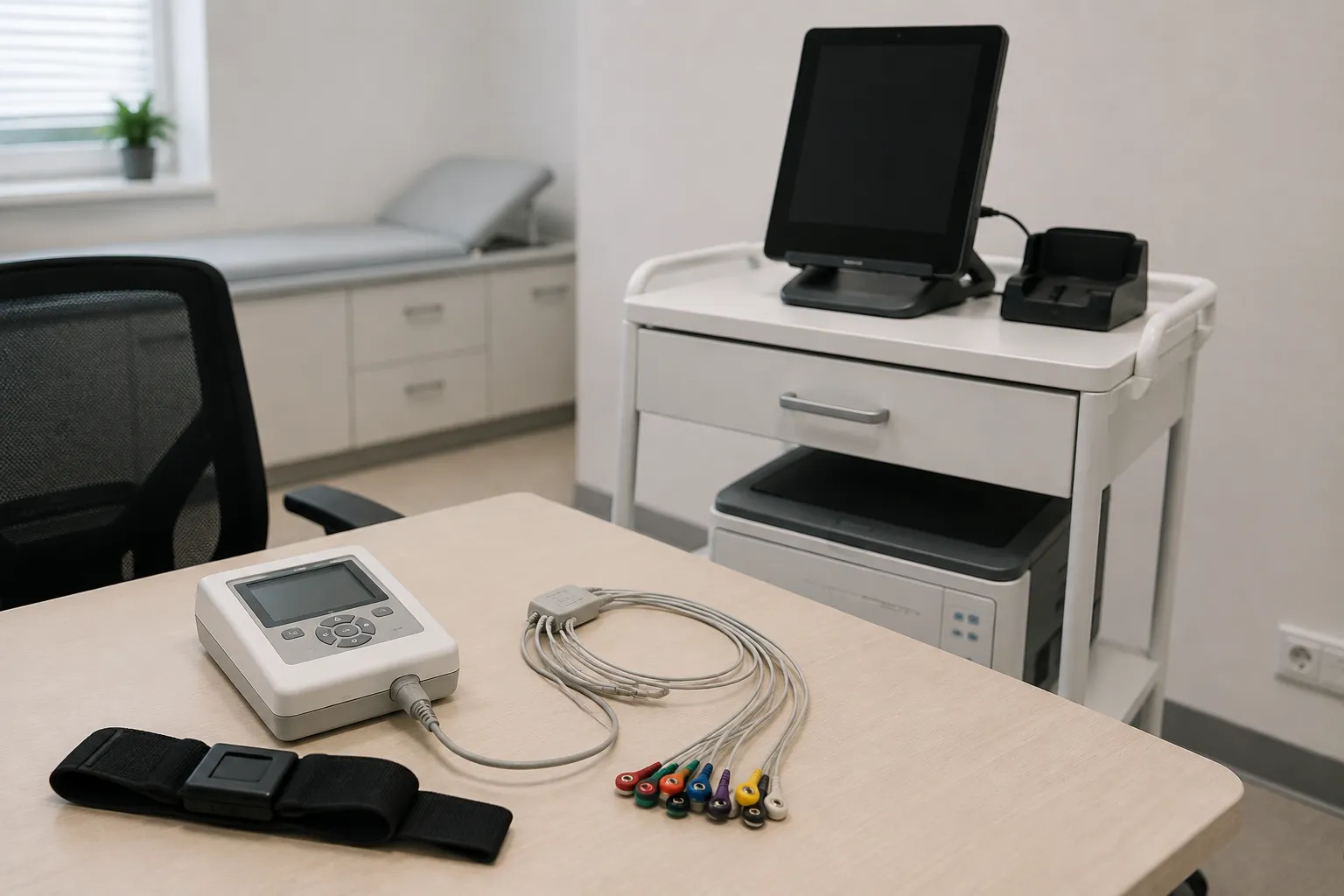
A standard ECG captures only a few seconds of the heart's activity, which is of little use when a patient's palpitations or blackouts come and go. Holter and ambulatory ECG monitoring solve this by recording the heart continuously for a day, several days or longer while the patient goes about normal life. The aim is to catch intermittent rhythm disturbances that a snapshot would miss, and the equipment is built for comfortable long-term recording and efficient analysis of the large amount of data it produces.
Equipping an ambulatory ECG service spans the recorders themselves—from traditional Holter devices to modern wearable patches—event and loop recorders for rarer symptoms —and the analysis software and workstation that turn days of recording into a useful report. This Holter monitoring equipment buyer guide sets out what each option offers, how recording and analysis connect, and the practical and traceability questions to settle early. It is written for cardiac physiologists, clinic teams and procurement across the UK, Europe, the US, the Gulf and South Africa.
What an ambulatory ECG service needs — the short version
-
Ambulatory ECG recorders, from traditional Holter devices to wearable patch monitors.
-
Event and loop recorders for symptoms that occur less often than a feevery days apaalysis software and a workstation to review recordings and produce reports.
Start with how long you need to record
The first question in ambulatory ECG is how long the heart must be watched to catch a patient's symptoms. Frequent symptoms may be captured in a 24- or 48-hour Holter recording, while less frequent ones need several days or weeks. That decision shapes the equipment: traditional Holter recorders suit shorter periods, while wearable patch monitors, worn discreetly, suit extended recording because they are comfortable enough to keep on for longer.
For symptoms that appear only rarely, event and loop recorders let the patient capture an episode when it happens, over much longer periods. Whichever recorders a service uses, the recordings must be analysed, so the analysis software and workstation are just as important as the devices. Matching the mix of recorders and the analysis capacity to the clinic's caseload is the practical core of setting up the service.
What Holter monitoring needs
-
Holter recorders. Continuous ambulatory ECG recording over 24 hours to several days.
-
Patch monitors. Discrete wearable recorders suited to extended monitoring.
-
Event and loop recorders. Devices for capturing infrequent symptomatic episodes.
-
Analysis software. Automated and manual review of long recordings.
-
Analysis workstation. A dedicated station for physiologists to review and report.
-
Electrodes and consumables. Skin-friendly electrodes and accessories for comfortable wear.
-
Reporting and storage. Structured reports and archiving linked to patient records.
The equipment checklist
|
Equipment |
Role in the clinic |
Key selection point |
|
Holter recorder |
Short-term continuous ECG |
Duration; comfort; leads |
|
Patch monitor |
Extended monitoring |
Wear time; comfort; adhesion |
|
Event/loop recorder |
Infrequent symptoms |
Trigger method; memory |
|
Analysis software |
Reviewing recordings |
Accuracy; efficiency; editing |
|
Analysis workstation |
Reporting |
Throughput; record link |
|
Electrodes |
Recording quality and comfort |
Skin tolerance; signal quality |
From 24 hours to extended monitoring
The move from traditional 24-hour Holter recording to longer, patch-based monitoring has changed what an ambulatory service can offer. Extending recording to a week or more raises the chance of catching an infrequent arrhythmia, and comfortable wearable patches make longer wear practical for patients. A service often keeps a mix—shorter Holter recordings for frequent symptoms, extended patches for rarer ones, and event recorders for the least frequent—so the equipment matches the range of clinical questions it must answer.
Analysis and reporting
Recording is only half the work; the recordings must be analysed, and days of continuous ECG contain a great deal of data. Good analysis software combines automated detection with efficient manual review, so a physiologist can find the significant events without wading through everything by hand. The analysis workstation and reporting tools therefore deserve as much attention as the recorders themselves, because they determine how quickly and accurately a recording becomes a clinical report.
Compliance and documentation
Holter monitoring equipment must be genuine, current and fully documented. In the UK, medithe MHRA regulates medical devicesd clinNICE publishes ical guidance is quirements vary by country and market, so confirm current obligations with the relevant authorities before you buy.
Support keeps an ambulatory ECG service running.
-
Installation, software setup and familiarisation for recorders and analysis.
-
Preventive maintenance and checks that keep recorders and workstations reliable.
-
Reliable supply of electrodes, patches and recorder consumables.
-
Rapid technical response, because faulty recorders mean repeat visits for patients.
-
Clear documentation and traceability for recorders, software and recordings.
More from Business
-
Buyers — source compliant, fully documented equipment.
-
Suppliers — list your equipment and reach buyers worldwide.
-
Advertise — promote your products and services to a clinical audience.
-
Business overview — explore everything MediGear offers healthcare organisations.
Disclaimer
This article is for general information only. It does not constitute clinical, procurement, legal or regulatory advice. Equipment requirements for ambulatory ECG monitoring vary by service, caseload, facility, country and market, and change over time. Always confirm current requirements with the relevant authorities, and consult qualified clinical, physiology, biomedical engineering, procurement and regulatory professionals for decisions specific to your organisation. medigear.uk accepts no liability for actions takenbased onf this content.
"Catch the intermittent beat." A clinic equipped for ambulatory ECG.
We supply medical equipment to healthcare organisations across the UK, Europe, the US, the Gulf and South Africa. Everything is genuine, documented and supported, so your ambulatory ECG service records and reports reliably.
Frequently Asked Questions
An ambulatory ECG service needs recorders suited to different monitoring lengths — traditional Holter recorders for shorter periods and wearable patch monitors for extended recording — plus event and loop recorders for infrequent symptoms. It also needs analysis software and a dedicated workstation to review long recordings and produce reports, and skin-friendly electrodes and consumables for comfortable wear.
Traditional Holter monitoring typically records for 24 to 48 hours, which suits frequent symptoms. Wearable patch monitors are comfortable enough to wear for a week or more, raising the chance of catching an infrequent arrhythmia. Event and loop recorders capture episodes over much longer periods for the least frequent symptoms. The choice depends on how often a patient's symptoms occur.
A traditional Holter recorder connects to the chest through leads and records continuously for a shorter period. A patch monitor is a discreet wearable stuck to the chest, comfortable enough to keep on for extended monitoring. Many services keep both, using shorter Holter recordings for frequent symptoms and extended patches for rarer ones, matched to the clinical question.
Days of continuous ECG contain a large amount of data, so the recordings must be analysed efficiently. Good software combines automated detection with quick manual review, letting a physiologist find the significant events without examining everything by hand. The analysis workstation and reporting tools determine how quickly and accurately a recording becomes a clinical report, so they deserve as much attention as the recorders.
Yes. Recorders, software and recordings should be genuine, current and traceable. In the UK, the MHRA regulates devices, and NICE provides clinical guidance. Requirements vary by country and market, so confirm current obligations with the relevant authorities before purchasing.
Yes. MediGear supplies medical equipment to healthcare organisations across the UK, Europe, the US, the Gulf and South Africa. As a distributor,, we provide genuine, documente,d and supported equipment, from Holter and patch recorders to event recorders, analysis softwar,e and consumables. Requirements differ by service and market, so we work with your team to match equipment to your service and its regulatory setting.