
Introduction
Bariatric surgery treats severe obesity with operations such as gastric bypass and sleeve gastrectomy, most of which are done laparoscopically. Two things define it as an equipment challenge. First, it is technically demanding minimal-access surgery, so it needs a full laparoscopic platform. Second, and unusually, almost every item in the pathway has to be load-rated for higher patient weights — the table, the trolleys, the beds, the hoists and the handling equipment.
Getting the weight capacity right across the whole pathway is central to equipping a bariatric service. A theatre with an excellent laparoscopic stack is useless if the operating table is not rated for the patients, or if there is no safe way to move them. This bariatric surgery equipment buyer guide sets out what the service needs, how to plan the purchase, and the compliance and support questions worth settling early. It is written for surgical teams, theatre managers, biomedical engineering and procurement across the UK, Europe, the US, the Gulf and South Africa.
What defines bariatric surgery equipment — the short version
-
A full laparoscopic platform, because most bariatric operations are minimal-access.
-
Load-rated equipment across the whole pathway — table, beds, trolleys, hoists and handling.
-
Safe patient handling designed for higher weights, protecting patients and staff.
Start with weight capacity across the pathway.
The decision that shapes a bariatric service is weight rating, and it applies to the whole patient journey, not just the theatre. From the ward bed to the transfer trolley to the operating table to the recovery bed and the hoist, every load-bearing item must be rated for the patients the service treats. A single unrated item creates a safety gap and a bottleneck.
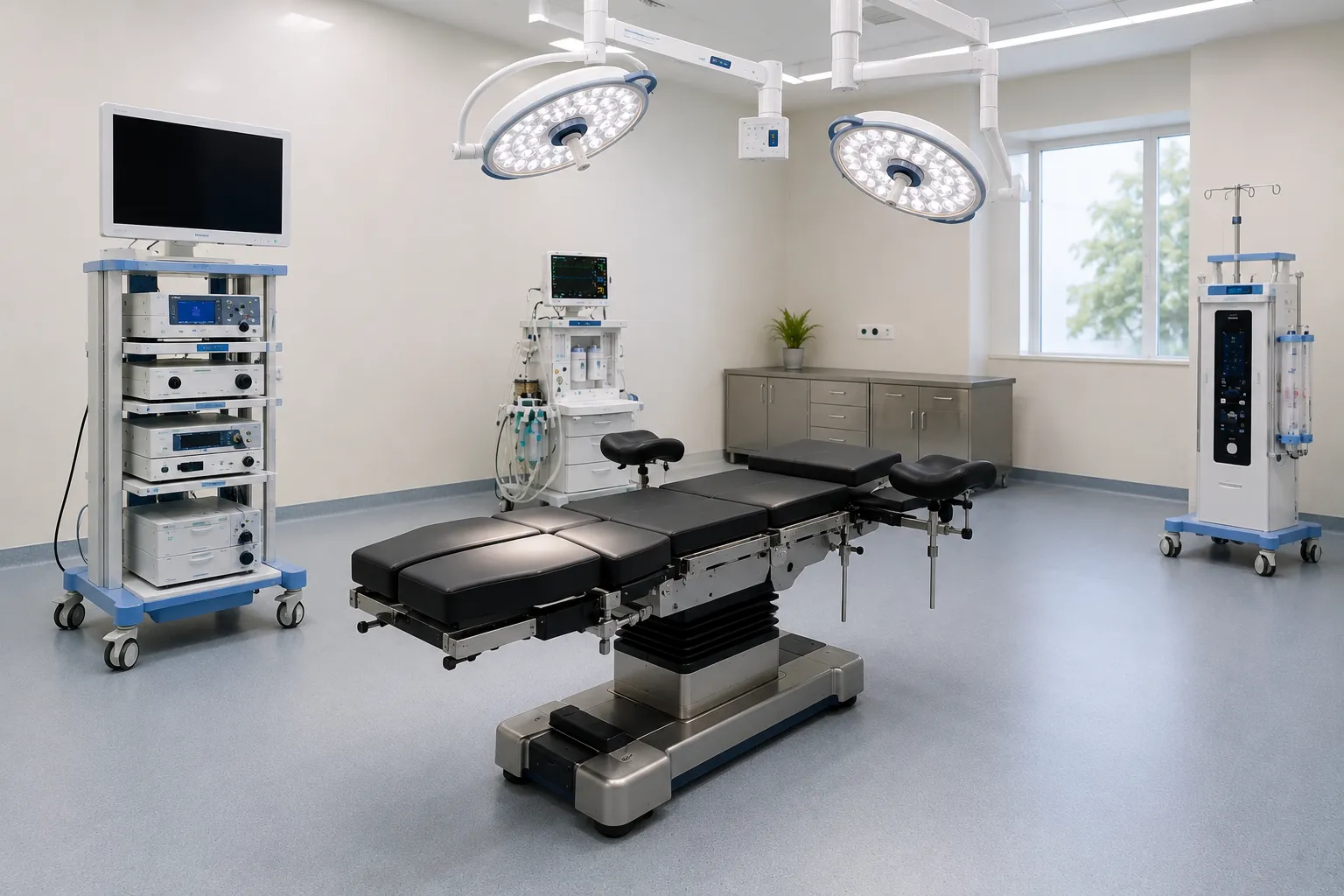
The operating table is the most demanding of these. A bariatric table needs a high safe working load and a range of motion to position larger patients for laparoscopic access, including steep tilts. Choosing it first, then matching every other load-bearing item to consistent capacity, avoids the common problem of a theatre that can operate but cannot safely move patients in and out.
What bariatric surgery needs
-
Bariatric operating table. High safe working load, wide movement range and steep tilt capability.
-
Laparoscopic stack. Camera, light source, insufflator and monitors for minimal-access surgery.
-
Longer laparoscopic instruments. Extended length to reach in larger patients.
-
Energy devices. Sealing and cutting instruments used routinely in bariatric procedures.
-
Load-rated beds and trolleys. Ward, transfer and recovery, all rated to consistent capacity.
-
Bariatric hoists and handling. Safe transfer equipment for higher weights.
-
Patient monitoring. Full theatre monitoring appropriate to the patient group.
-
Anaesthesia and airway. Equipment and adjuncts suited to bariatric anaesthesia.
The equipment checklist
|
Equipment |
Role in the service |
Key selection point |
|
Bariatric table |
Positioning and access |
Safe working load; tilt range |
|
Laparoscopic stack |
Minimal-access surgery |
Image quality; insufflation |
|
Long instruments |
Reach in larger patients |
Length; range available |
|
Energy devices |
Sealing and cutting |
Reliability; consumables |
|
Load-rated beds/trolleys |
Safe patient movement |
Consistent capacity |
|
Bariatric hoists |
Safe transfers |
Capacity; ease of use |
How to plan the purchase
-
Set the weight capacity your service will treat, then apply it to every load-bearing item.
-
Choose the bariatric operating table first; match beds, trolleys and hoists to the same capacity.
-
Specify the laparoscopic platform, with longer instruments and the energy devices you use.
-
Plan safe handling end to end, from ward to theatre to recovery.
-
Confirm regulatory approval and documentation for every device before committing.
-
Agree servicing, training and installation with the supplier in writing before the order.
The whole pathway, not just the theatre
The most common failure in equipping bariatric services is thinking only about the theatre. The patient journey runs through the ward, the anaesthetic room, the theatre, recovery and back, and every stage needs equipment rated and sized for the patient. Gaps anywhere — an unrated trolley, a hoist that cannot manage a transfer — create both safety risks and delays.
Handling equipment deserves particular care because manual handling injuries are a real risk to staff when equipment is inadequate. Well-specified bariatric hoists, slide sheets and transfer aids protect the team as well as the patient. NICE guidance informs which bariatric procedures a service is expected to provide and the standards around them.
Compliance and documentation
Every device must be approved for the market where it is used — UKCA, CE marking under the EU MDR, FDA clearance or the relevant national approval — with complete, current documentation. Laparoscopic and energy devices are higher-risk and carry stricter evidence requirements, and load-rated equipment must have its safe working load clearly documented. Ask suppliers for certification mapped to your market, confirm ISO quality standards sit behind manufacturing, and check current requirements with the MHRA or your national authority before committing.
Support keeps the service running
-
Downtime cancels list. If a laparoscopic stack or bariatric table goes out of service, ops stops, so support must be reliable.
-
Response times, in writing. Ask what fault response the supplier commits to and whether engineers cover your region.
-
Inspection and servicing. Lifting and load-bearing equipment needs regular inspection; confirm how this is supported.
-
Training included. Surgical, nursing and technical staff all need it as teams change.
-
Parts and consumables. Confirm supply of energy-device consumables and laparoscopic spares.
Settle each of these before you commit, and get the answers in writing rather than as verbal assurances.
More from Business
-
Buyers — source compliant, fully documented equipment.
-
Suppliers — list your equipment and reach buyers worldwide.
-
Advertise — promote your products and services to a clinical audience.
-
Business overview — explore everything MediGear offers healthcare organisations.
Disclaimer
This article is for general information only. It does not constitute clinical, procurement, legal or regulatory advice. Equipment requirements for bariatric surgery vary by service, facility, country and market, and change over time. Load-bearing and lifting equipment is subject to separate inspection requirements in many countries. Always confirm current requirements with the relevant authorities, and consult qualified clinical, biomedical engineering, procurement and regulatory professionals for decisions specific to your organisation. medigear.uk accepts no liability for actions taken based on this content.
"Rated for the work" Bariatric theatre kit that fits.
We supply medical equipment to healthcare organisations across the UK, Europe, the US, the Gulf and South Africa. Everything is genuine, documented and supported, so your service operates safely at full capacity.
Frequently Asked Questions
Bariatric surgery requires a bariatric operating table with a high safe working load and steep tilt, a full laparoscopic stack with camera, light source, insufflator, and monitors, longer laparoscopic instruments, and energy devices. Crucially, it also needs load-rated beds, trolleys, recovery equipment and bariatric hoists across the whole pathway, plus patient monitoring and anaesthesia suited to the patient group.
Because the patient journey runs through the ward, anaesthetic room, theatre and recovery, every load-bearing item must be rated for the patients treated. A single unrated item — a trolley or hoist that cannot manage a transfer — creates a safety gap and a bottleneck, so weight rating is applied consistently across the whole pathway.
A bariatric table needs a high safe working load and the range of movement to position larger patients for laparoscopic access, including steep tilts. It is usually chosen first, with every other load-bearing item—beds, trolleys, hoists—matched to a consistent capacity so patients can be moved safely and operated on.
Safe handling for higher weights is essential to protect both patients and staff, since manual handling injuries are a real risk when equipment is inadequate. Well-specified bariatric hoists, slide sheets and transfer aids, rated to the service's capacity, are needed at every stage from ward to theatre to recovery.
Yes. Every device must be approved for the market where it is used, correctly classified and fully documented. Laparoscopic and energy devices are higher-risk with stricter evidence requirements, and load-rated equipment must have its safe working load clearly documented. Lifting equipment is also subject to separate inspection requirements. Confirm current requirements with the relevant national authority before committing.
Because downtime cancels lists, support must be reliable. Check the servicing and maintenance offered, the fault response times committed to, and whether engineers cover your region. Confirm how inspection of lifting and load-bearing equipment is supported, what training is included, and how energy-device consumables and laparoscopic spares are supplied. Get it in writing.