
Introduction
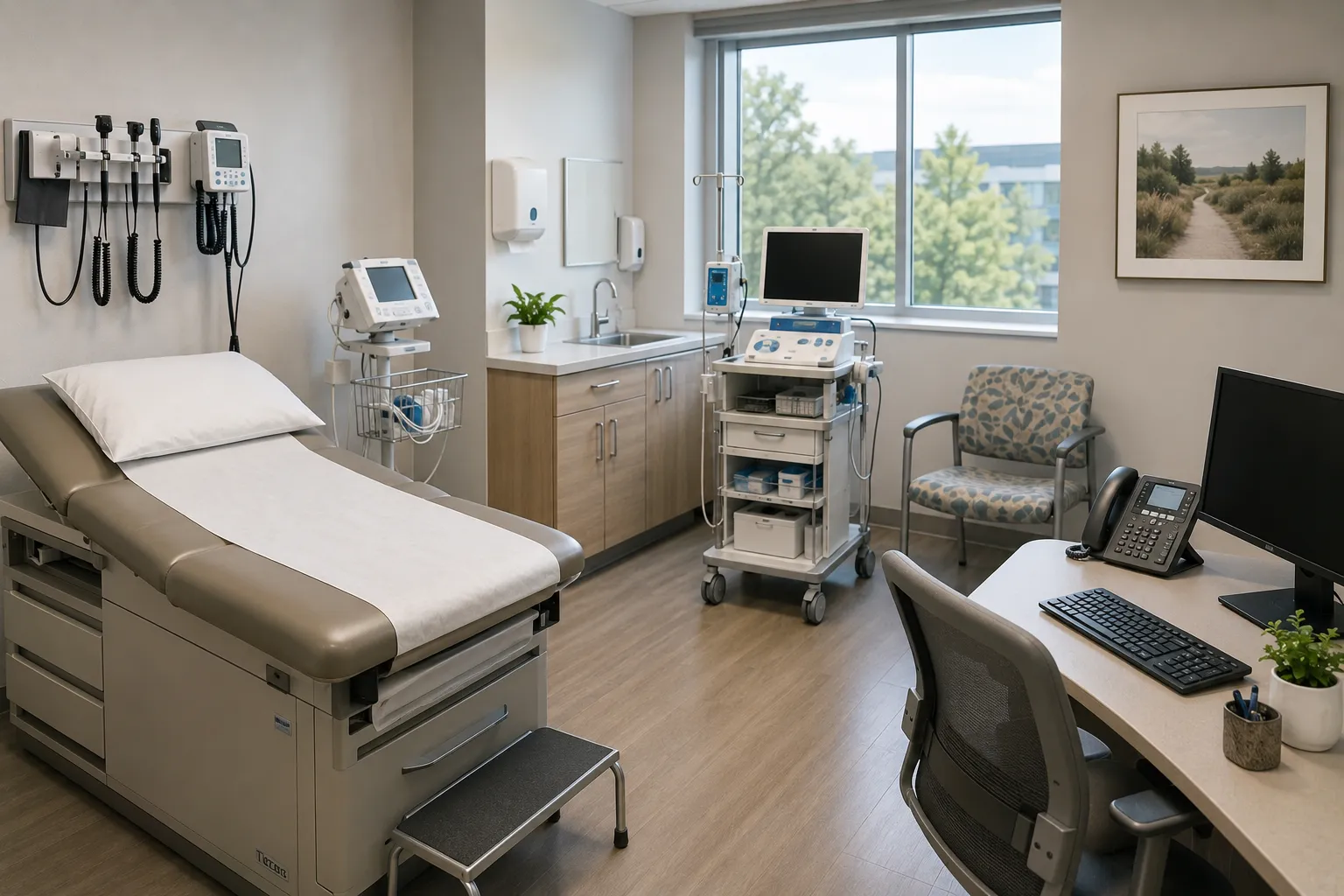
Ambulatory care treats patients on the same day and sends them home without an overnight stay, covering outpatient clinics, day-case procedures, diagnostics and treatments that once needed admission. Its strength is efficiency: patients move through assessment, treatment and recovery in a single visit, which depends on well-organised space and equipment that supports a smooth flow. The equipment is broad rather than highly specialised, chosen to let a clinic examine, investigate, treat and safely discharge a range of patients in a day.
Equipping an ambulatory care service spans the examination and minor-procedure space, the diagnostics that support same-day decisions, the treatment chairs and equipment for day-case care, and the recovery and observation area before discharge. This ambulatory care equipment buyer guide sets out what each area needs, how patient flow shapes the choices, and the practical and traceability questions to settle early. It is written for ambulatory and outpatient teams, clinic managers and procurement across the UK, Europe, the US, the Gulf and South Africa.
What an ambulatory clinic needs — the short version
-
Examination and minor-procedure space with couches, lighting and instruments.
-
Diagnostics — such as ECG, basic imaging support and phlebotomy — for same-day decisions.
-
Treatment chairs and a recovery area for safe day-case care and discharge.
Start with patient flow.
Ambulatory care lives or dies by patient flow, so the equipment is planned around the journey a patient takes in a single visit: assessment, any procedure or treatment, recovery and discharge. Examination couches, good lighting and the instruments for assessment and minor procedures come first, because they are where most visits begin. Getting this space right, and sized to the clinic's throughput, sets the pace for everything that follows and keeps patients moving smoothly through their visit.
Supporting that flow are the diagnostics and treatment equipment that enable same-day decisions and care. On-site diagnostics such as ECG, vital-signs monitoring, and phlebotomy allow quick assessment without sending patients elsewhere; treatment chairs support day-case treatments and procedures; and a recovery and observation area lets patients be watched safely before they go home. Matching this equipment to the mix of services the clinic offers is the practical core of setting it up.
What ambulatory care needs
-
Examination couches. Adjustable couches for assessment and minor procedures.
-
Procedure equipment. Lighting, instruments and equipment for minor procedures.
-
Diagnostics. ECG, vital-signs monitoring and point-of-care testing for same-day decisions.
-
Phlebotomy. Equipment for taking and handling blood samples.
-
Treatment chairs. Chairs for day-case treatments and procedures.
-
Recovery and observation. A monitored area for patients before discharge.
-
Resuscitation provision. Emergency equipment appropriate to the clinic's work.
The equipment checklist
|
Equipment |
Role in the clinic |
Key selection point |
|
Examination couch |
Assessment and procedures |
Adjustment; access; durability |
|
Procedure equipment |
Minor procedures |
Lighting; instruments; layout |
|
Diagnostics |
Same-day decisions |
Range; speed; ease of use |
|
Treatment chair |
Day-case treatment |
Comfort; positioning; access |
|
Recovery area |
Safe discharge |
Monitoring; observation |
|
Resuscitation kit |
Safety |
Readiness; suitability |
Day-case procedure space
Much of what an ambulatory clinic does happens in its examination and procedure space, so equipment planning focuses here. Adjustable couches, good procedure lighting, and the right instruments let staff assess patients and carry out minor procedures efficiently and safely. Because the same space may serve many patients in a day, it is designed for quick turnaround and easy cleaning as well as clinical function. Well-planned procedure space is what lets an ambulatory clinic treat a good number of patients well.
Diagnostics and recovery
Two things let ambulatory care complete a patient's journey in one visit. On-site diagnostics — ECG, vital-signs monitoring, phlebotomy and point-of-care testing — allow decisions to be made quickly without sending patients elsewhere, keeping the visit self-contained. A recovery and observation area then lets patients who have had a procedure or treatment be watched safely until they are ready to go home. Together with appropriate resuscitation provision, these ensure day care is not only efficient but safe from arrival to discharge.
Compliance and documentation
Ambulatory care equipment must be genuine, current and fully documented. In the UK, the MHRA regulates medical devices, and NICE publishes clinical guidance. Requirements vary by country and market, so confirm current obligations with the relevant authorities before you buy.
Support keeps an ambulatory clinic running.
-
Delivery, installation and familiarisation for couches, diagnostics and treatment equipment.
-
Preventive maintenance and safety checks across clinic and recovery equipment.
-
Reliable supply of consumables for procedures, diagnostics and phlebotomy.
-
Rapid technical response, because equipment faults disrupt a day's booked patients.
-
Clear documentation and traceability for equipment and safety checks.
More from Business
-
Buyers — source compliant, fully documented equipment.
-
Suppliers — list your equipment and reach buyers worldwide.
-
Advertise — promote your products and services to a clinical audience.
-
Business overview — explore everything MediGear offers healthcare organisations.
Disclaimer
This article is for general information only. It does not constitute clinical, procurement, legal or regulatory advice. Equipment requirements for ambulatory care vary by clinic, services offered, facility, country and market, and change over time. Always confirm current requirements with the relevant authorities, and consult qualified clinical, biomedical engineering, procurement and regulatory professionals for decisions specific to your organisation. medigear.uk accepts no liability for actions taken based on this content.
"Treated and home the same day." An ambulatory clinic equipped for efficient day care.
We supply medical equipment to healthcare organisations across the UK, Europe, the US, the Gulf and South Africa. Everything is genuine, documented and supported, so your ambulatory service treats patients efficiently and safely.
Frequently Asked Questions
An ambulatory clinic needs examination couches, procedure lighting, and instruments for assessment and minor procedures; on-site diagnostics such as ECG, vital-signs monitoring, and phlebotomy for same-day decisions; and treatment chairs for day-case care. It also needs a monitored recovery and observation area for safe discharge, and resuscitation provision appropriate to the work it does.
Ambulatory care treats patients on the same day and sends them home without an overnight stay, covering outpatient clinics, day-case procedures, diagnostics and treatments that once required admission. Its strength is efficiency: patients move through assessment, treatment and recovery in a single visit, which depends on well-organised space and equipment that supports a smooth flow.
Ambulatory care depends on patients moving smoothly through assessment, treatment, recovery and discharge in one visit. Equipment is planned around that journey — examination and procedure space first, then diagnostics and treatment, then recovery — and sized to the clinic's throughput. Getting the flow right keeps patients moving and lets the clinic treat a good number of people well in a day.
On-site diagnostics such as ECG, vital-signs monitoring, phlebotomy and point-of-care testing let decisions be made quickly without sending patients elsewhere, keeping the visit self-contained and efficient. They are central to completing a patient's journey in a single visit, which is why they match the mix of services the clinic offers.
Yes. Equipment should be genuine, current and traceable, with regular safety checks across clinic and recovery equipment. In the UK, the MHRA regulates devices, and NICE provides clinical guidance. Requirements vary by country and market, so confirm current obligations with the relevant authorities before purchasing.
Yes. MediGear supplies medical equipment to healthcare organisations across the UK, Europe, the US, the Gulf and South Africa. As a distributor, we provide genuine, documented, and supported equipment, from examination couches and procedure equipment to diagnostics, treatment, chairs and recovery provision. Requirements differ by clinic and market, so we work with your team to match equipment to your service and its regulatory setting.