
Apple OpenEvidence Health AI Study Opens to 200,000 People
Apple and OpenEvidence are launching a US study and app to test how people use conversational health AI. It is open to up to 200,000 adults aged 21 and over.

The Apple OpenEvidence health AI study will look at how people use conversational health AI. Apple announced it on Sunday at the HLTH conference in Las Vegas. It runs through a linked app. Up to 200,000 eligible US adults aged 21 and over can join. Clinical AI company OpenEvidence is Apple's partner.
What the study will examine
The Apple OpenEvidence health AI study aims to learn what drives consumer trust and how good health AI answers are. It will also test whether conversational AI can change behaviour. Dr Sumbul Desai, Apple's vice president of Health and Fitness, said "We're studying what builds user trust". Apple may use the findings to shape future healthcare AI products.
How the app works
Participants can ask health questions and explore medical information in the app. They can choose to share personal data, such as resting heart rate, activity, sleep or lab results, to tailor replies. Apple designed the study, while OpenEvidence supplies the AI. Apple says study data will not train AI models and that users must opt in to share data.
Why a clinical partner
Health tools built on large language models often give incomplete or confusing answers. Apple hopes the research will show how to explain complex information more clearly. The app could also help people prepare for doctor visits. OpenEvidence runs a medical search tool that the company says almost two thirds of US physicians use. Its chief executive, Daniel Nadler, said visits are often just 10 or 15 minutes long, so some points can slip through. He said the app could help carry a patient's data and questions into the room.
Public attitudes and safety
KFF research suggests about one third of US adults have turned to an AI chatbot for health talk. Concerns remain about wrong answers, gaps and weak safeguards. Apple says the app can spot worrying questions. It will then send users to an outside provider or other help.
Apple's wider health research
This adds to Apple's earlier research on Apple Watch tracking of mobility, heart health, hearing and fertility. Last year it launched the Apple Health Study with Brigham and Women's Hospital.
Why it matters
The Apple OpenEvidence health AI study shows consumer technology firms testing clinical style AI at scale. Medigear.uk helps clinical buyers compare verified suppliers. The study is US based and still early, so UK readers should not treat the findings as clinical evidence. Claims about the app are Apple's and OpenEvidence's own.
Source: MedTech Dive
Sourcing medical equipment?
Tell us the model and destination — our sourcing team will respond within one business day.


Zimmer Monogram Robot Submitted to FDA for Autonomous Use
The Zimmer Monogram robot is now with US regulators. Zimmer Biomet has filed a 510(k) submission for…

Abbott Encantor Trial Starts for Balloon Expandable Aortic Valve
The Abbott Encantor trial has begun. Abbott said on Thursday that it has started the VOYAGER CE clin…
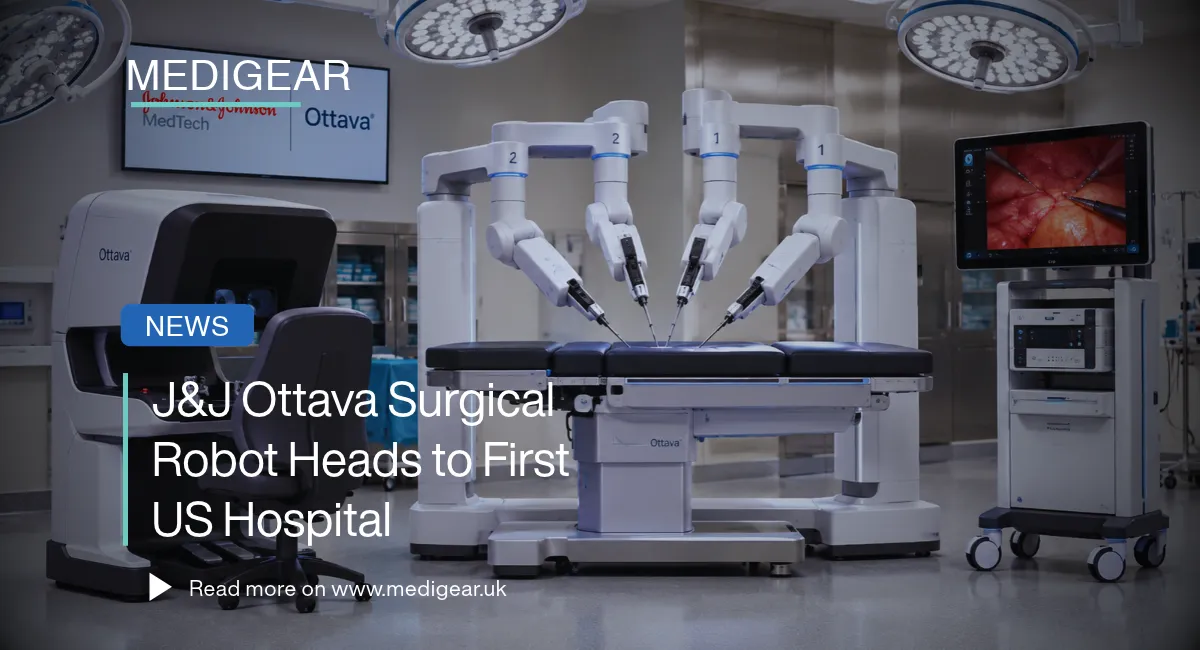
J&J Ottava Surgical Robot Heads to First US Hospital
Johnson & Johnson (J&J) said on Thursday that a Houston hospital will be the first to instal…
Medical device news, once a week.
Approvals, trials, recalls and market moves — the essentials for procurement and clinical teams.