
Introduction
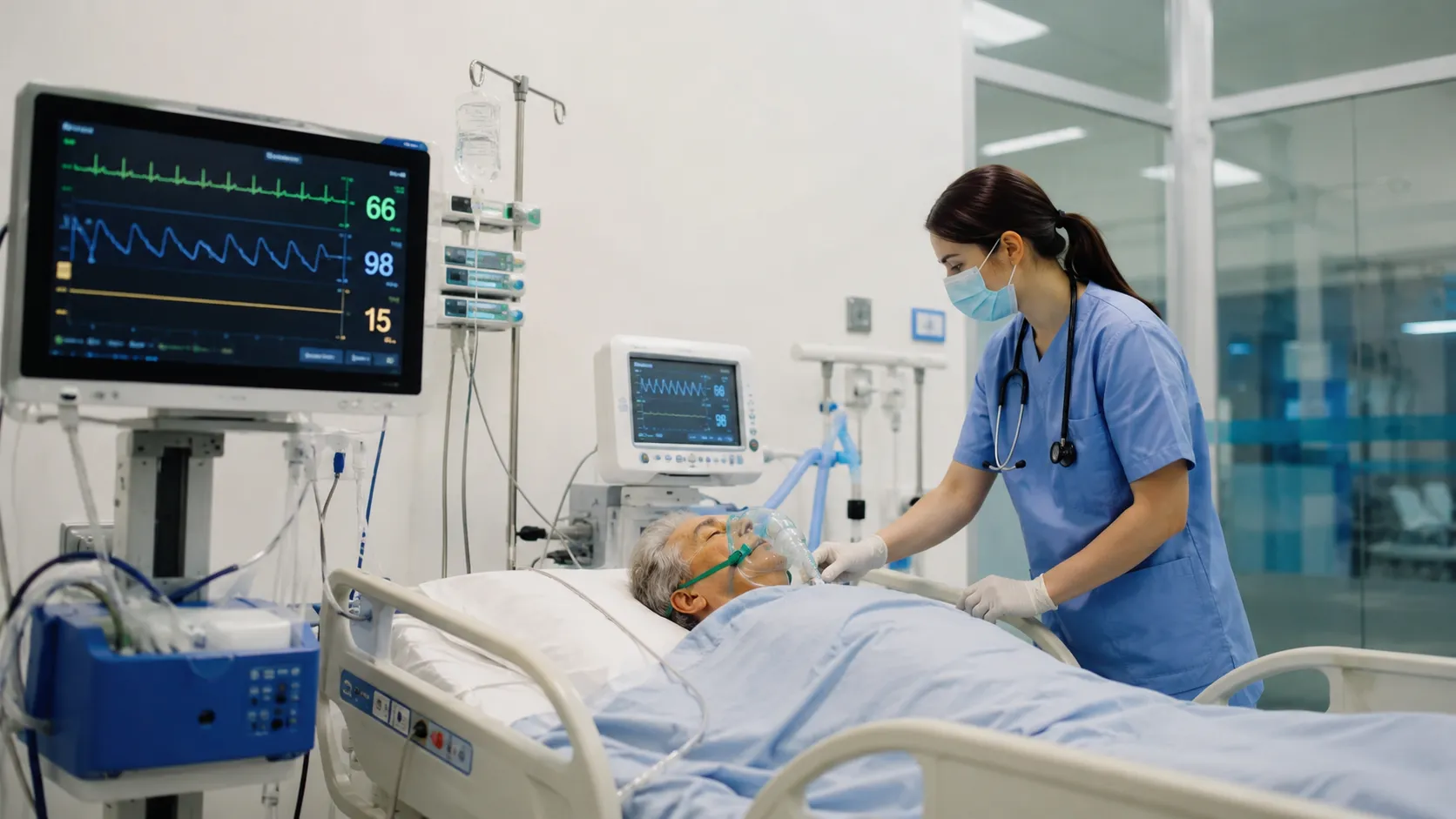
Medical equipment procurement decisions are ultimately clinical decisions — they determine whether the right device is available to detect illness earlier, guide treatment more precisely, monitor recovery more effectively, and support rehabilitation more completely. The gap between good and poor equipment is not abstract: it translates into missed diagnoses, delayed treatment, preventable complications, longer hospital stays and worse long-term outcomes for patients.
This guide sets out the evidence for how medical equipment improves patient outcomes across key clinical areas — diagnostics, patient monitoring, surgical intervention, life support, rehabilitation and home care — and what the evidence means for procurement decisions across the UK, Europe, the US, the Gulf and South Africa.
Why equipment quality matters for outcomes
The relationship between equipment quality and patient outcomes is well-established across multiple clinical areas.
-
Earlier diagnosis — through higher-resolution imaging, more sensitive laboratory assays, and faster point-of-care testing — detects disease at earlier stages, when treatment is more effective and less invasive.
-
More precise treatment — image-guided surgery, robotic-assisted procedures and targeted energy delivery reduce collateral damage, shorten procedures and improve the precision with which treatment is applied.
-
Earlier detection of deterioration — continuous monitoring and AI-assisted early warning systems identify patients who are deteriorating before clinical signs become obvious, enabling earlier intervention.
-
More effective rehabilitation — rehabilitation equipment that quantifies performance, provides real-time biofeedback and enables supervised exercise at higher intensity improves functional recovery.
-
Better supported home recovery — remote monitoring equipment enables clinical teams to detect complications early in patients recovering at home, reducing unnecessary readmissions and enabling earlier discharge.
Evidence of equipment impact by clinical area
The evidence for the impact of equipment on outcomes is strongest in these clinical areas.
-
Diagnostic imaging. CT and MRI have transformed the detection of stroke, cancer, pulmonary embolism and trauma — conditions where treatment timeliness is directly linked to outcome. Access to high-quality imaging is one of the strongest predictors of survival in time-sensitive conditions.
-
Patient monitoring. Studies consistently show that early warning systems based on continuous monitoring data reduce cardiac arrest rates and ICU admissions on general wards. Hospitals with integrated monitoring and escalation protocols have measurably better outcomes for deterioration.
-
Surgical equipment. Minimally invasive surgical technology — laparoscopic, robotic, and endoscopic — is associated with lower complication rates, shorter length of stay, faster functional recovery, and lower readmission rates compared with open surgery for many procedures.
-
Laboratory diagnostics. Faster diagnostic turnaround time correlates with shorter length of stay and earlier initiation of appropriate antibiotic therapy in sepsis — one of the strongest clinical arguments for investment in rapid laboratory diagnostics and point-of-care testing.
-
Life support and critical care. Modern ventilators with advanced lung-protective modes, smart infusion pumps with drug error reduction software, and continuous renal replacement therapy systems have all been associated with improved survival in intensive care.
Equipment access and outcomes by region
Equipment access varies significantly between regions, with measurable consequences for patient outcomes.
|
Region |
Equipment access level |
Outcome implication |
|
North America |
High — broad access across most facilities |
Outcomes limited more by care organisation than equipment |
|
Europe |
High in Western Europe; lower in Eastern |
East-West gradient in equipment access mirrors outcome gradient |
|
Asia-Pacific |
High in leading urban hospitals; lower in rural |
Urban-rural gradient significant in most markets |
|
Gulf (GCC) |
High in government hospitals; growing elsewhere |
New facilities well-equipped; older facilities variable |
|
Africa |
Major gaps; urban private better than public rural |
Equipment gaps are a significant cause of preventable mortality |
The World Health Organisation estimates that a significant proportion of preventable mortality in lower-resource settings is attributable to the absence of essential medical equipment. Providing appropriate equipment to these settings is one of the highest-return healthcare investments available.
Procurement decisions that drive better outcomes
-
Prioritise clinical evidence over brand — the device with the strongest clinical evidence base for your patient population and clinical context is more likely to improve outcomes than the most familiar brand name. Ask for outcome data, not just specifications.
-
Invest in connectivity and integration — devices that integrate with electronic health records and monitoring platforms generate data that supports better clinical decisions and earlier detection of deterioration.
-
Include clinicians in procurement decisions — clinical teams who use equipment daily have the practical knowledge of what works and what does not in their specific context. Their input improves procurement decisions.
-
Consider total cost of outcome — the cheapest device that delivers a worse clinical outcome is not a saving. Include clinical outcome data in the procurement value assessment, not just purchase price and maintenance cost.
-
Plan the implementation — the best device in the wrong hands, without adequate training and implementation support, will not deliver its potential outcomes. Budget for training and change management alongside the device.
Sourcing equipment with proven clinical outcomes?
We supply medical equipment to hospitals and clinical facilities across the UK, Europe, the US, the Gulf, and South Africa, with a focus on clinical quality, compliance, and real-world performance. Tell us the clinical area — we will help you find the right device.
No pressure, no obligation. → Talk to the team
When equipment alone is not enough
Equipment improves outcomes when it is used correctly, maintained properly, integrated into effective clinical processes, and operated by trained staff. A world-class CT scanner that is poorly maintained, operated by undertrained staff, or whose reports are not acted on promptly will not deliver the outcomes the technology is capable of.
The clinical outcome of any piece of equipment depends on the clinical system in which it operates — the people, processes, information systems, and governance frameworks that surround it. Equipment procurement is a necessary but not sufficient condition for better outcomes.
What outcome evidence means for buyers and suppliers
-
Buyers. Ask suppliers for clinical outcome data — not just technical specifications. The question to ask is not what this device can do, but what the evidence shows it achieves in clinical practice for patients like ours.
-
Suppliers. Clinical outcome data is the most powerful procurement argument available. Suppliers who invest in generating real-world outcome evidence for their devices have a substantial advantage over those relying on specifications alone.
-
Everyone. Medical equipment procurement is ultimately about patient outcomes, not product specifications. Keeping that purpose central to every procurement decision leads to better choices and better care.
More from Business
-
Buyers — source medical equipment with proven clinical outcomes from a worldwide supply base through medigear.uk.
-
Suppliers — list your devices with clinical evidence and reach buyers who prioritise outcomes alongside cost and compliance.
-
Advertise — promote your products and services to a clinical audience.
-
Business overview — explore everything MediGear offers healthcare organisations.
Disclaimer
This article is for general information only and does not constitute clinical, medical, procurement or regulatory advice. Clinical evidence regarding medical equipment and its outcomes evolves as research advances. Always consult qualified clinical professionals and review current literature before making clinical or procurement decisions. medigear.uk accepts no liability for actions taken based on this content.
**Market figures are indicative ranges drawn from multiple published market research sources and vary across definitions and methodologies. ** ** ****
Improve Patient Outcomes with Better Equipment
We supply medical equipment across the UK, Europe, the US, the Gulf and South Africa with a focus on clinical quality, compliance and real-world performance. Tell us the clinical area and the outcome goal — we will help.
Frequently Asked Questions
Medical equipment improves patient outcomes by enabling earlier and more accurate diagnosis, more precise and effective treatment, continuous monitoring that detects deterioration before it becomes critical, more effective rehabilitation, and supported home recovery, thereby reducing unnecessary readmissions. The quality, accuracy and reliability of the equipment used directly affect the quality of the clinical information and treatment available to clinicians and patients.
CT and MRI imaging have strong evidence of outcome improvement in time-sensitive conditions — stroke, where earlier detection enables thrombolysis or thrombectomy; pulmonary embolism, where CT pulmonary angiography enables definitive diagnosis; cancer, where imaging enables staging that determines treatment; and trauma, where whole-body CT is associated with improved survival in major trauma centres. Access to timely, high-quality imaging is one of the strongest predictors of survival in these conditions.
Yes. Studies consistently show that early warning systems based on continuous monitoring data reduce the incidence of cardiac arrest and unplanned ICU admission on general wards. Hospitals with integrated monitoring, automated early warning scoring and clear escalation protocols have measurably better outcomes for deteriorating patients. Continuous monitoring in the ICU is associated with shorter length of stay and better survival compared to intermittent check-based monitoring.
Minimally invasive surgical technology — laparoscopic, robotic and endoscopic approaches — is associated with lower complication rates, shorter hospital stays, less post-operative pain, faster functional recovery and lower readmission rates compared to open surgery for many procedures. Energy devices with real-time tissue feedback reduce intraoperative bleeding. Image-guided surgery improves the precision with which procedures are performed, particularly in neurosurgery, orthopaedics and vascular surgery.
Procurement decisions should include clinical outcome evidence alongside technical specifications, price and compliance. Ask suppliers for peer-reviewed clinical evidence or real-world outcome data showing how the device performs in patients similar to yours. Involve clinical teams in procurement evaluation — they can assess whether published evidence applies to your patient population and clinical context. Include the implementation plan — training, integration, governance — as part of the total procurement investment, because equipment alone does not deliver outcomes.
Yes. Access to medical equipment is strongly associated with health outcomes, and inequity in equipment access mirrors inequity in health outcomes. Within countries, urban and well-funded facilities have better access to equipment than rural and under-resourced ones. Between countries, high-income markets have dramatically better equipment availability than lower-income ones. The WHO Essential Diagnostics List and Essential Medical Devices concept reflect the recognition that equitable access to appropriate equipment is a prerequisite for equitable health outcomes.