
How surgical equipment is changing
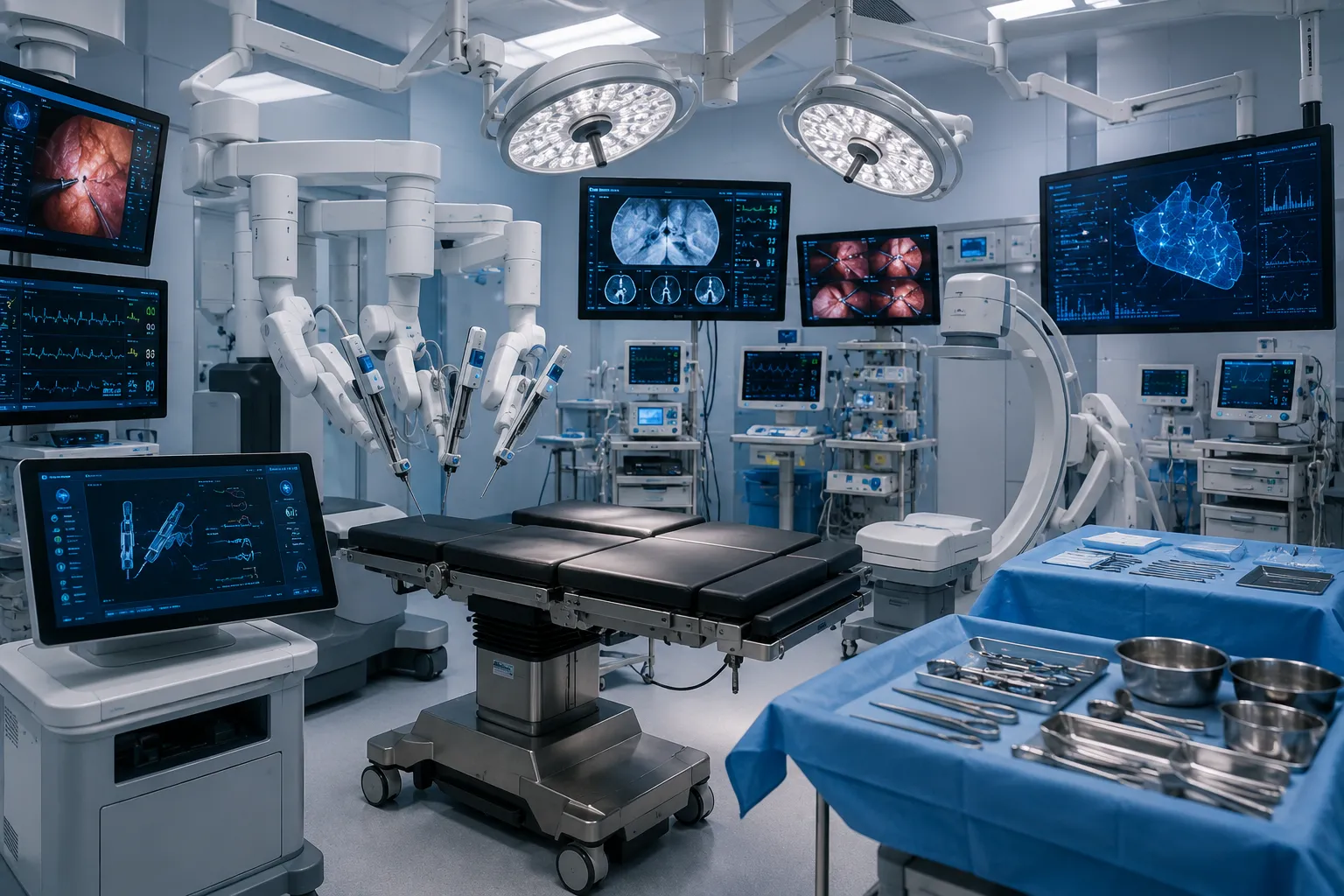
Surgical equipment is central to what a hospital can offer, and it is changing on several fronts at once. Surgery is becoming less invasive, with smaller incisions and faster recovery. It is becoming more guided, with imaging and data supporting the surgeon during the procedure. And the operating theatre is becoming more connected, with equipment sharing information rather than working in isolation. This article explains the main trends shaping the future of surgical equipment in global hospitals. It sets out what each trend means, and what hospitals should consider when they plan and buy for the theatre. The direction is clear enough to plan around. Theatres are equipped for years. The choice echoes for a decade, so buy for what is coming.
Surgery is moving, not just improving
It is easy to picture the future of surgery as simply better versions of today's instruments. That is part of it, but the deeper change is in how surgery is done. Procedures are moving towards smaller access and less trauma. Imaging and software are moving into the theatre to guide the surgeon. And the equipment in the room is being asked to work together as a connected system rather than a set of separate tools. These shifts change what a hospital should look for when it equips a theatre. The basis of the choice is shifting.
None of this replaces the surgeon's skill or the core instruments a theatre relies on. It changes the surrounding equipment and how it fits together. The fit is what matters now. Bodies that scan the horizon for healthcare broadly agree on the direction, and the World Health Organisation's foresight work on emerging technologies exists to make that direction visible. The trends below are the ones most worth planning around.
"The future of surgical equipment is less about sharper instruments and more about smaller access and better guidance."
Minimally invasive as the default
The clearest trend is the move towards minimally invasive surgery. Procedures that once needed large openings are increasingly done through small ones, using specialised instruments and cameras. The benefits are real: less trauma, shorter stays and faster recovery. This shapes the equipment a theatre needs, from endoscopic and laparoscopic tools to the imaging that guides them. The toolkit grows, and so do the benefits.
For buyers, this raises practical questions. Does the theatre have the instruments, cameras and displays that minimally invasive work requires? Are they reliable and well supported, since a fault mid-procedure is serious? Minimally invasive surgery is not a single purchase but a set of equipment that must work together. Planning for it means thinking about the whole toolkit, not one device at a time. The pieces must work together. Reliability matters at every step.
Imaging and guidance in the theatre
Surgery is increasingly guided by imaging and data during the procedure, not just before it. Equipment that shows the surgeon a clearer, real-time view of the anatomy helps precision and safety. This blends surgical and imaging equipment, and it raises the value of theatres designed around good visualisation. Seeing clearly is half the work.
The direction is towards equipment that supports the surgeon's judgement rather than replacing it. Intelligent features can highlight and guide, while the decisions stay human. Responsible routes exist to evaluate such tools as evidence grows, such as the NICE Early Value Assessment for promising health technologies. For a buyer, the questions are whether guidance genuinely helps the surgeon, and whether the equipment integrates cleanly with the rest of the theatre. Guidance should fit, not clutter. Clean integration is the test.
The connected operating theatre
A modern theatre contains many devices, and the trend is for them to work as a connected system rather than in isolation. Equipment that shares information, coordinates and records supports safer, smoother procedures and better handovers. A device that cannot connect becomes an island in a room that increasingly expects everything to talk. Isolation is now a real drawback. Devices must talk to each other.
The question behind this is about standards. Does the equipment connect on open, recognised ones, so devices from different makers work together and data flows into the record? Equipment that connects well keeps fitting as the theatre evolves. Equipment that locks a hospital into one supplier's world may age faster. Connection is becoming one of the first things to check, not the last. Data must move to be useful.
Efficiency, sustainability and lifespan
Theatres are expensive to run, and the equipment in them is increasingly judged on efficiency and sustainability as well as performance. How long will a device last, how much energy and consumable does it use, and can it be maintained and repaired rather than replaced? These questions used to come last and now come early. Running cost shapes the choice now. Lifespan is part of value.
This matters because a theatre's equipment is a long-term investment run intensively. Equipment that lasts, that can be serviced, and that uses resources efficiently eases pressure over its whole life. Durability and repairability are no longer soft considerations. They are part of judging honestly whether a piece of surgical equipment is a sound long-term choice. Value is judged over years, not on day one.
Buying for a theatre that keeps changing
Because a theatre is equipped for years, the sharper question at purchase is not only what a device does today. It is whether it will still fit as surgery becomes less invasive, more guided and more connected. Equipment chosen with that in mind keeps earning its place. Equipment chosen only for today's procedure can age quickly. Foresight protects the investment.
For buyers, that means weighing connection, integration and support alongside clinical performance. It means asking whether a device fits the direction surgery is taking, not just the procedure in front of it. Planning a theatre this way builds a capability that adapts, rather than one that has to be replaced as practice moves on. Adaptable kit lasts longer.
What buyers should really be asking
-
Minimally invasive? Does the theatre have the full toolkit of instruments, cameras and displays it needs?
-
Well guided? Does imaging and software support the surgeon, and does it integrate cleanly?
-
Connected? Do devices share data on open standards so the theatre works as one system?
-
Sustainable? How long does equipment last, and can it be maintained and repaired?
What buyers should take from this
The future of surgical equipment in global hospitals is a steady move towards surgery that is less invasive, better guided and more connected, with efficiency and lifespan judged from the start. A hospital that equips a theatre with this direction in mind avoids kit that ages quickly, and builds a surgical capability that keeps fitting how surgery is done. The horizon work that informs this, such as the WHO horizon scan of emerging health technologies, exists to make such foresight ordinary rather than rare.
Underneath every trend sits one unchanging requirement. A minimally invasive, image-guided, connected theatre is only as good as the equipment it is built on, and that equipment must be genuine, approved and reliable. The fundamentals of sound equipment outlast every shift in fashion. So the wise approach is to read the trends to buy well, without letting them distract from the basics. The hospitals that do best are curious about what is coming and firm about what has always mattered.
More from Business
-
Buyers — source approved, well-documented equipment.
-
Suppliers — list your equipment and reach buyers worldwide.
-
Advertise — promote your products and services to a clinical audience.
-
Business overview — explore everything MediGear offers healthcare organisations.
Disclaimer
This article is for general information only and does not constitute clinical, procurement, regulatory or legal advice. The examples given are illustrative. Trends in medical equipment are general directions, not certainties, and their pace and relevance vary by market and setting. Requirements and standards change over time and should always be confirmed with the relevant authorities. Always consult qualified clinical, biomedical engineering and procurement professionals for decisions specific to your organisation. medigear.uk accepts no liability for actions taken on the basis of this content.
Buy for the future, built on the basics.
Genuine, approved, fully documented medical equipment — the dependable foundation every future trend still rests on, wherever you work.
Frequently Asked Questions
The future of surgical equipment is a move towards surgery that is less invasive, better guided by imaging and data, and more connected as a theatre system. Minimally invasive tools reduce trauma and speed recovery, imaging supports the surgeon during procedures, and equipment increasingly shares information rather than working in isolation. Efficiency and lifespan are also judged earlier, making these part of what buyers should weigh.
Minimally invasive surgery uses small incisions with specialised instruments and cameras, rather than large openings. The equipment includes endoscopic and laparoscopic tools, cameras and displays, along with the imaging that guides them. It is not a single purchase but a set of equipment that must work together reliably, because a fault during a procedure is serious. It reduces trauma and supports faster recovery.
Surgery is increasingly guided by imaging and data during a procedure, not only beforehand. Equipment that gives the surgeon a clearer, real-time view supports precision and safety, blending surgical and imaging equipment. The direction is for these tools to support the surgeon's judgement rather than replace it, so buyers should check that guidance genuinely helps and that it integrates cleanly with the rest of the theatre.
A modern theatre contains many devices, and they increasingly work best as a connected system rather than in isolation. Equipment that shares information, coordinates and records supports safer procedures and better handovers. Devices that connect on open standards keep fitting as the theatre evolves, while those that lock a hospital into one supplier can age faster, so connection is now an early consideration when buying.
Hospitals should ask whether a theatre has the full minimally invasive toolkit, whether imaging and software genuinely support the surgeon and integrate cleanly, whether devices connect on open standards, and how equipment performs on lifespan and sustainability. Choosing with these questions in mind, alongside clinical performance, avoids equipment that ages quickly and builds a theatre that adapts as surgery changes.
Yes. Less invasive, better guided and more connected surgery matters to smaller hospitals as well as large ones, though the scale differs. Understanding the direction helps any facility avoid equipment that ages quickly and plan a theatre suited to how it actually operates. The core principles of reliable, well supported, integrated equipment apply whatever the size of the surgical service.