
Introduction
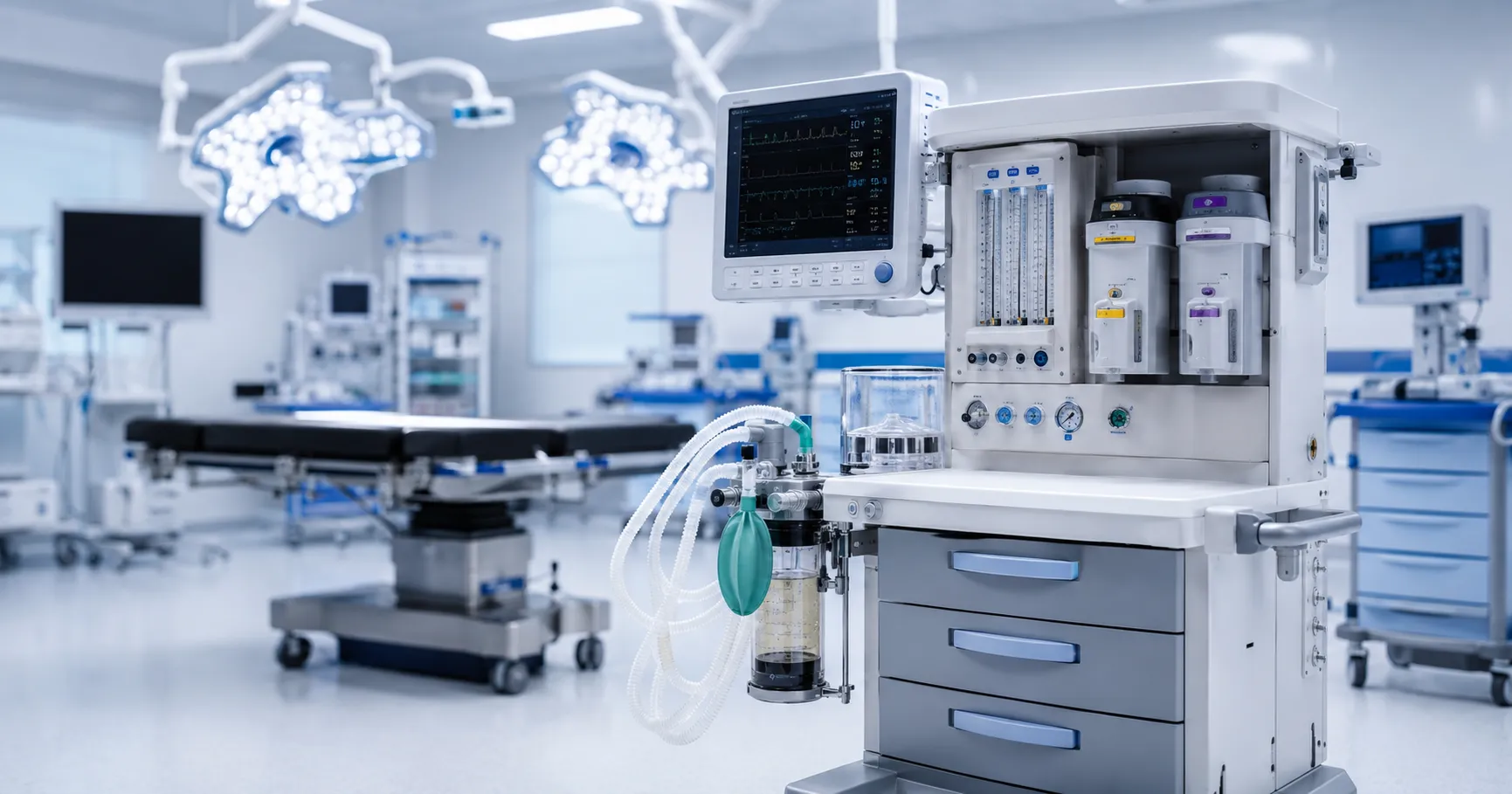
In the operating theatre, the anaesthesia machine keeps patients safe through surgery — so choosing the right one matters. The honest answer to “which is the best anaesthesia machine?” is that it depends on your case mix, your theatres and your monitoring needs. A workstation suited to day surgery may be over- or under-specified for complex or paediatric work. What does not change is the set of features and qualities that define a dependable theatre-grade anaesthesia machine.
This buyer’s guide sets out exactly what to look for, the criteria that matter most, how to choose, and what to check before you commit — so you can confidently identify the best anaesthesia machine for your theatres, wherever your hospital operates.
The short version — what an anaesthesia machine must do
Strip it back, and the best anaesthesia machine does three things well — ventilates precisely, delivers gases safely, and monitors completely.
-
Advanced ventilation — theatre-grade ventilation modes for the full range of surgical patients.
-
Safe gas delivery — accurate vaporisers, gas blending and safety interlocks.
-
Full monitoring — integrated gas, ventilation and patient monitoring on one workstation.
What makes an anaesthesia machine theatre-grade
-
Theatre-grade ventilation. Modern ventilation modes, including pressure and volume control and support modes, for all surgical patients.
-
Accurate gas delivery. Precise vaporisers, oxygen blending, hypoxic guard, and safety interlocks to protect patients.
-
Integrated monitoring. Agent, oxygen, carbon dioxide and ventilation monitoring, with patient monitoring integration.
-
Low-flow capability. Efficient low-flow anaesthesia support with the monitoring to deliver it safely.
-
Alarms and safety: clear, prioritised alarms, oxygen-failure protection, and backup ventilation.
-
Workflow and ergonomics. A clear display, integrated workspace, storage and easy-clean surfaces for theatre use.
-
Scavenging and circuits. Effective gas scavenging and compatibility with your circuits and consumables.
-
Service and support. Available sensors, circuits, absorbent, calibration and dependable service support.
The buyer’s criteria
|
Criterion |
Why it matters in theatre |
|
Ventilation |
Advanced modes cover all surgical patients |
|
Gas delivery |
Accurate vaporisers & interlocks protect patients |
|
Monitoring |
Agent, gas & ventilation monitoring is essential |
|
Low flow |
Efficient low-flow needs proper monitoring |
|
Safety |
Oxygen failure protection & backup ventilation |
|
Standardisation |
One platform simplifies training & circuits |
|
Support |
Sensors, circuits, absorbent & service |
|
Approval |
UKCA/CE/FDA/SFDA/SAHPRA for your market |
Choosing anaesthesia machines?
We’ll match anaesthesia machines to your theatres. Tell us your case mix, theatres and monitoring needs — we’ll help you shortlist workstations that fit, integrate cleanly and are approved for your market.
No pressure, no obligation. → Talk to the team
Choosing the best anaesthesia machine for your theatre
-
Define your case mix, the surgeries and patients each theatre handles, including paediatric needs.
-
Plan ventilation and monitor the modes and integrated monitoring that every theatre requires.
-
Check integration with your patient monitors, gas supply and theatre systems.
-
Decide between new and refurbished by weighing feature currency, warranty, and support life.
-
Please confirm market approval, then plan sensors, circuits, absorbent, and service support.
For the wider picture, see our guide to theatre equipment and how anaesthesia machines fit into a full operating-room setup.
New or refurbished for the theatre?
Anaesthesia machines are sometimes available certified refurbished, and certified units are supplied for some settings. For theatre use, the bar is high: insist on certified refurbishment, a warranty, current software, calibration, dependable service and consumable support, and make sure the workstation suits your gas supply and monitoring and is approved for your market. New machines bring the latest ventilation modes and monitoring, the longest support life and full warranties — often the right call for complex or paediatric theatres. Many hospitals mix the two: new for major theatres, certified refurbished for day surgery. Whatever you choose, confirm the device class and certification for your market.
The leading anaesthesia machine manufacturers
Several established manufacturers serve the anaesthesia market — names you’ll commonly evaluate include Dräger, GE HealthCare, Mindray, Getinge (Maquet), Penlon and Spacelabs, among others. Each has strengths across ventilation, gas delivery, monitoring and workflow, and each offers ranges spanning compact machines to advanced anaesthesia workstations. Rather than chasing a single “best brand,” the practical approach is to match a manufacturer’s ventilation, monitoring and support to your theatres and existing systems. A good supplier helps you compare like-for-like across manufacturers and source the right fit.
Approval by region
|
Region |
Regulator |
Requirement |
|
United Kingdom |
UKCA mark (CE accepted to 2028–2030) |
|
|
European Union |
CE marking under EU MDR 2017/745 |
|
|
United States |
510(k) clearance or PMA approval |
|
|
Gulf (GCC) |
SFDA & GCC bodies |
National registration / GCC conformity |
|
South Africa |
Medical device licensing |
For clinical guidance, the NICE and World Health Organisation resources are useful references. If you’re equipping a theatre, our buyer hub sets out how to purchase with confidence.
More from Business
-
Buyers — source the right anaesthesia machines for your hospital.
-
Suppliers — list your anaesthesia and theatre equipment and reach buyers worldwide.
-
Advertise — promote your products and services to a clinical audience.
-
Business overview — explore everything MediGear offers healthcare organisations.
Disclaimer
This article is for general information only and does not constitute clinical, medical, procurement or regulatory advice, nor an endorsement of any particular manufacturer or product. Requirements and device capabilities vary by setting, patient need and country, and change over time. Manufacturer names are mentioned for general orientation only. Always confirm a device suits the intended clinical use, integrates with your systems, and is approved for your market (for example, UKCA, CE under EU MDR, FDA, SFDA/GCC or SAHPRA), and consult qualified clinical, biomedical engineering and procurement professionals for decisions specific to your organisation. medigear.UK accepts no liability for actions taken based on this content.
The right anaesthesia machines for your theatres.
We supply anaesthesia machines to hospitals across the UK, Europe, the US, the Gulf and South Africa — helping you compare options, integrate cleanly and obtain compliant, supported equipment, new or refurbished.
Frequently Asked Questions
A theatre-grade anaesthesia machine should offer advanced ventilation modes for all surgical patients, accurate vaporisers with oxygen blending and hypoxic-guard interlocks, integrated agent, gas and ventilation monitoring, efficient low-flow capability, clear alarms with oxygen-failure protection and backup ventilation, an ergonomic workspace, effective gas scavenging, and dependable sensor, circuit and service support.
An anaesthesia workstation is an integrated machine combining a ventilator, gas delivery with vaporisers, breathing system, monitoring and a display in one unit. It gives the anaesthetist control of ventilation and anaesthetic delivery with the monitoring to do it safely. Workstations range from compact units to advanced systems with full monitoring and low-flow support.
Low-flow anaesthesia reduces anaesthetic agent and gas use while maintaining safe delivery, which requires accurate gas and agent monitoring to manage. A machine with proper low-flow capability and monitoring supports efficient, controlled anaesthesia. The clinical approach is the anaesthetist’s decision, so the machine should provide the control and feedback to deliver it safely.
Yes, certified refurbished anaesthesia machines are used in some settings. Choose carefully: insist on certified refurbishment, a warranty, current software, calibration, dependable service and consumable support, and confirm the workstation suits your gas supply and monitoring and is approved for your market. Complex and paediatric theatres often prefer new machines for the latest modes and monitoring.
Provide an anaesthesia machine for each operating theatre and anaesthetic location, plus spares for maintenance and induction or recovery areas where needed. Match capability to each theatre’s case mix. Standardising on one platform across theatres simplifies training, circuits, sensors and integration with patient monitoring.
Anaesthesia machines must be approved for the market where they’re used — UKCA or CE in the UK and EU, FDA clearance in the US, and SFDA or SAHPRA registration in the Gulf and South Africa. They’re higher-risk devices, so expect thorough documentation and plan for sensors, circuits, absorbent, calibration and ongoing service.