Selecting a medical equipment vendor is no longer a simple procurement task based on pricing and product availability. Healthcare organisations today evaluate vendors as long-term operational partners that influence equipment reliability, service continuity, workflow efficiency, compliance readiness, and financial sustainability.
A poorly chosen supplier can cause recurring downtime, delayed service, shortages of replacement parts, integration complications, and budget instability long after the equipment is installed. On the other hand, a well-supported vendor relationship can improve operational performance for years.
Modern healthcare procurement teams, therefore, apply structured vendor evaluation frameworks before approving equipment purchases.
Healthcare buyers reviewing sourcing standards and procurement support resources often explore guidance through Medigear buyers.
Vendor Evaluation Has Become More Operationally Focused
Healthcare facilities now expect suppliers to contribute more than product delivery.
Procurement teams increasingly assess whether vendors can support:
-
Long-term servicing
-
Technical training
-
Installation coordination
-
Software updates
-
Compliance documentation
-
Consumable supply continuity
-
Workflow integration
-
Emergency technical response
This shift reflects broader changes in healthcare procurement, where operational continuity matters as much as equipment acquisition itself.
Facilities studying procurement transformation trends may also benefit from Medigear.uk’s previous article, “How Medical Equipment Procurement Has Changed in Recent Years.”
Product Quality Alone Is No Longer Enough
A technically advanced system may still create operational problems if supplier infrastructure is weak.
Healthcare buyers increasingly evaluate:
Consistency across product lines – Vendors with stable manufacturing standards often reduce reliability concerns across multiple departments.
Documented testing procedures – Procurement teams prefer suppliers that maintain transparent documentation of calibration, safety, and quality control.
Lifecycle durability expectations – Equipment longevity affects replacement planning and operational budgeting.
Upgrade capability – Systems that support future expansion may reduce long-term procurement pressure.
Healthcare procurement decisions now focus heavily on operational sustainability rather than short-term purchasing convenience.
Technical Support Infrastructure Strongly Influences Vendor Selection
Service quality frequently becomes more important than minor pricing differences.
Healthcare organisations increasingly assess whether suppliers provide:
-
Local engineering support
-
Preventive maintenance services
-
Remote troubleshooting capability
-
Spare-part availability
-
Calibration assistance
-
Emergency response coordination
Regional service coverage reduces the risk of downtime – Vendors with accessible technical networks often restore operations faster during equipment failures.
Response-time reliability matters – Delayed servicing may disrupt diagnostics, patient throughput, and clinical workflow continuity.
Training accessibility improves operational efficiency – Well-supported onboarding reduces user-related operational errors.
Healthcare organisations seeking stronger supplier relationships and technical support networks often connect through Medigear suppliers.
Compliance Readiness Is a Critical Evaluation Area
Healthcare equipment procurement now involves extensive documentation verification.
Procurement teams commonly review:
-
Safety certifications
-
Calibration records
-
Import documentation
-
Cybersecurity compliance
-
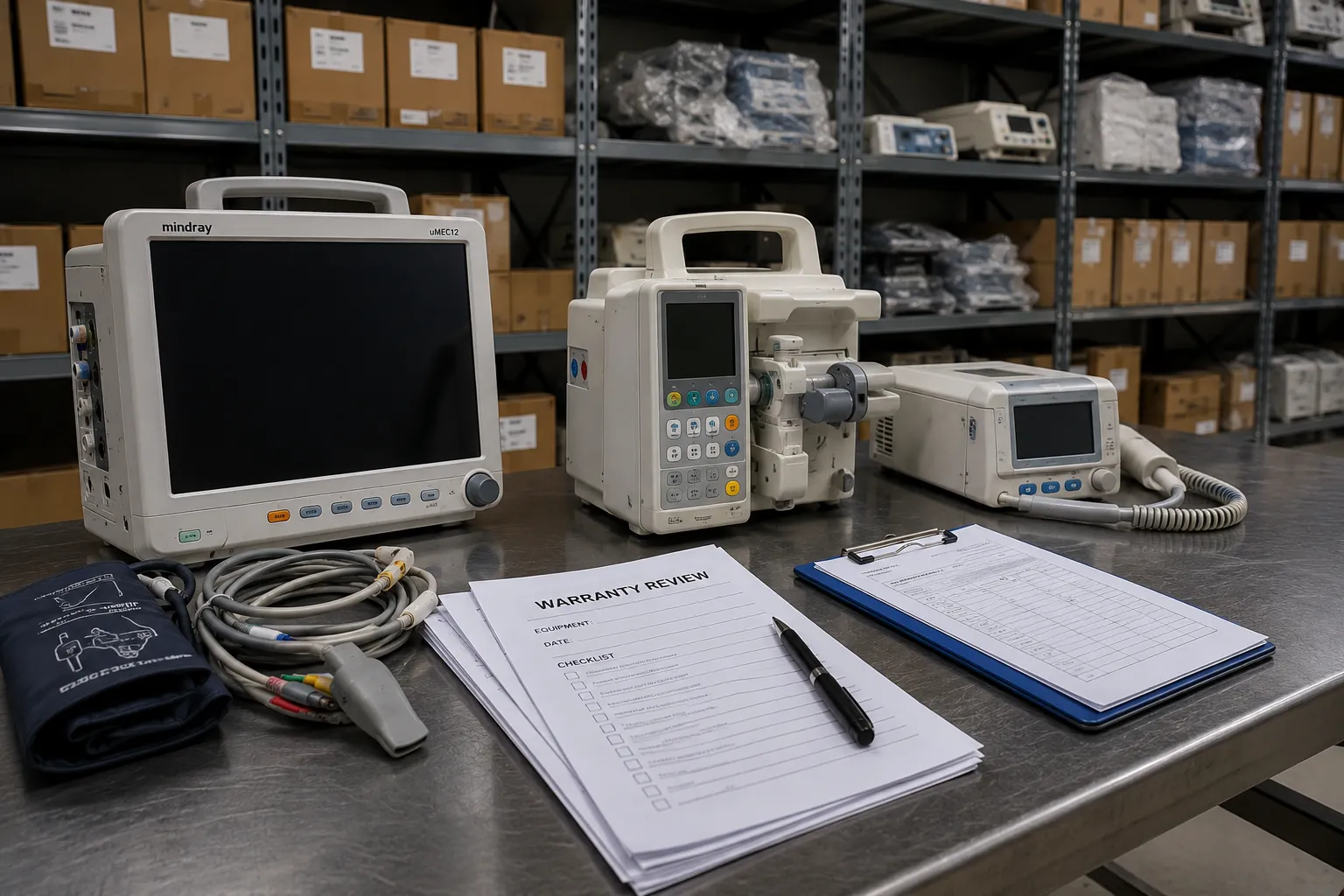
Warranty terms
-
Software licensing structures
-
Regulatory approvals
Incomplete documentation creates procurement risk – Missing compliance records may delay installation or certification approval.
Cybersecurity support has become essential – Connected healthcare systems require ongoing software protection and update management.
Audit preparedness matters – Vendors capable of supporting inspection documentation often reduce administrative pressure later.
Facilities exploring broader sourcing and compliance strategies may also find value in Medigear.uk’s article “International Sourcing Strategies for Healthcare Equipment.”
Financial Stability of Suppliers Matters More Than Many Buyers Expect
Healthcare procurement decisions often involve long equipment lifecycles.
A supplier’s long-term stability can affect:
-
Future servicing access
-
Replacement component availability
-
Warranty fulfillment
-
Software update continuity
-
Technical support consistency
Financially unstable vendors increase operational uncertainty – Sudden business disruption may leave healthcare facilities without proper support infrastructure.
Long-term procurement partnerships require reliability – Buyers increasingly assess vendor reputation and operational continuity before approving purchases.
Vendor evaluation has become closely connected to long-term risk management planning.
Consumable Availability Can Affect Vendor Reliability
Some equipment systems rely heavily on recurring accessories and proprietary consumables.
Healthcare buyers now examine:
-
Consumable pricing consistency
-
Inventory availability
-
Regional distribution strength
-
Delivery timelines
-
Alternative sourcing flexibility
Consumable shortages can quickly disrupt workflow – even functioning equipment becomes operationally limited without supporting accessories.
Supplier dependency creates budgeting pressure – Proprietary consumable structures may reduce purchasing flexibility.
Facilities reviewing ownership-cost considerations may also benefit from Medigear.uk’s article “Hidden Costs of Buying Medical Equipment.”
Communication Quality Often Predicts Post-Purchase Experience
Vendor communication standards frequently influence long-term procurement satisfaction.
Healthcare organisations increasingly evaluate:
-
Quotation clarity
-
Responsiveness speed
-
Documentation accuracy
-
Technical explanation quality
-
Coordination during installation
-
Issue escalation handling
Clear communication reduces operational confusion – Procurement delays and service misunderstandings often result from incomplete coordination.
Transparent documentation improves accountability – Well-defined agreements reduce disputes regarding warranties, installation, and maintenance obligations.
Collaborative communication supports workflow planning – Procurement coordination now involves multiple departments, not just purchasing teams.
Healthcare organisations exploring industry collaboration and procurement partnerships can connect through Medigear Partners. and advertising through Medigear Advertise.
Vendor Scalability Is Becoming More Important
Healthcare facilities increasingly prefer suppliers capable of supporting future expansion.
Evaluation areas may include:
-
Multi-site servicing capability
-
Equipment upgrade pathways
-
Additional product availability
-
Integration support
-
Long-term procurement flexibility
Scalable supplier relationships simplify future procurement – Stable partnerships can reduce sourcing complexity during organisational growth.
Technology compatibility improves expansion planning – Vendors supporting broader ecosystem integration often reduce future operational friction.
Procurement decisions now frequently align with multi-year operational strategy rather than isolated equipment purchases.
Procurement Teams Are Using Structured Vendor Scorecards
Many healthcare organisations now use formal vendor evaluation systems rather than informal decision-making.
Common evaluation categories include:
-
Technical reliability
-
Pricing transparency
-
Service response quality
-
Compliance readiness
-
Consumable stability
-
Training support
-
Integration capability
-
Logistics performance
-
Communication quality
-
Long-term operational sustainability
Structured evaluation methods help reduce procurement bias while improving purchasing consistency across departments.
Vendor Relationships Now Influence Operational Stability
Healthcare procurement has become increasingly relationship-oriented.
Reliable vendors often contribute to:
-
Faster issue resolution
-
Reduced downtime
-
Better workflow continuity
-
Stronger technical support
-
Improved procurement forecasting
-
More stable servicing access
This broader partnership approach reflects how healthcare procurement has evolved into an operational planning function rather than only a purchasing process.
Organisations needing procurement clarification or supplier evaluation support can contact the Medigear.uk support team through Contact Medigear.UK Support.
Disclaimer
Medigear.uk is a medical equipment supplier and distributor. We do not provide medical advice, diagnosis, or treatment recommendations. All information is for educational and product awareness purposes only. Qualified medical professionals should always make healthcare decisions