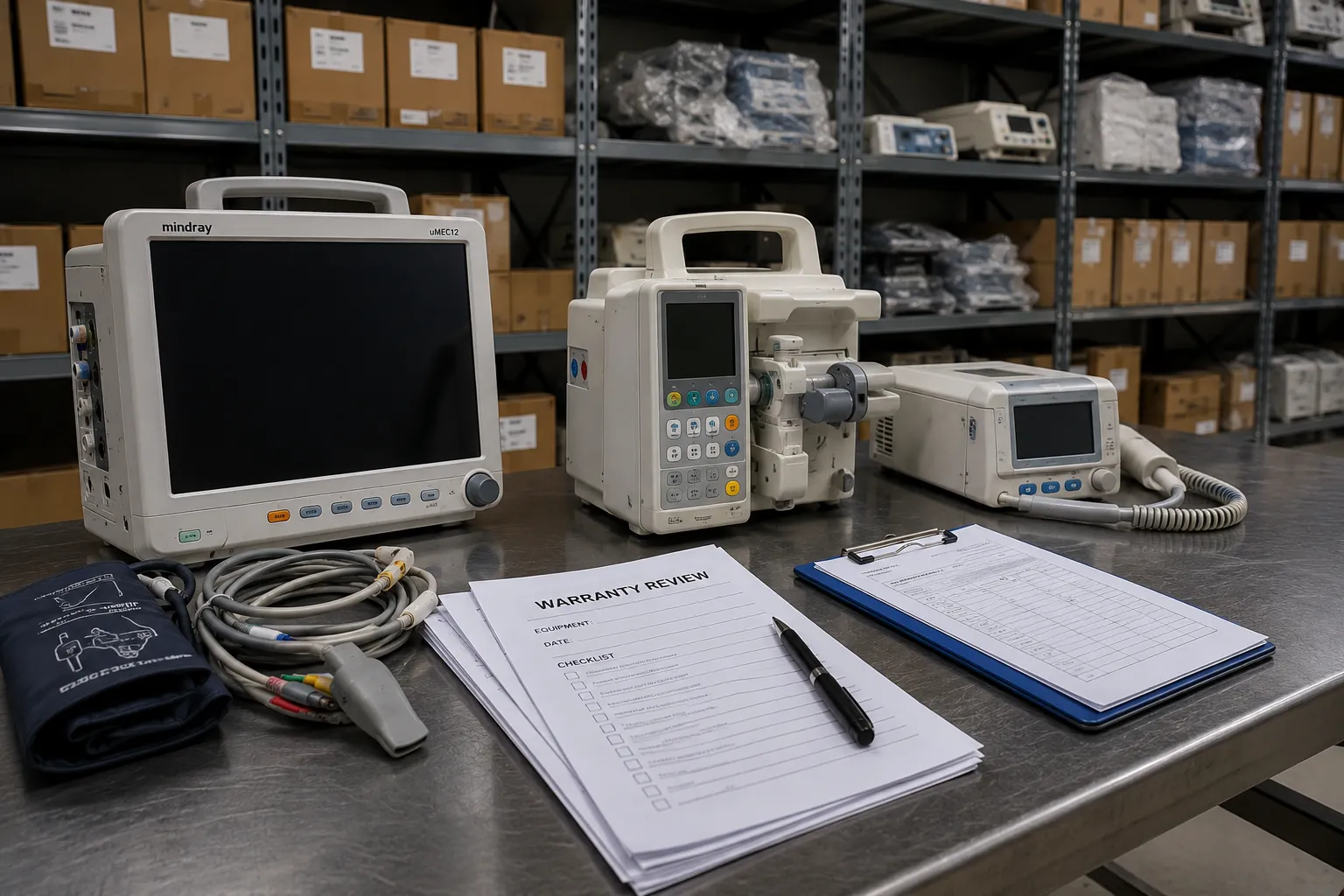
Healthcare facilities manage hundreds or even thousands of medical devices, ranging from patient monitors and infusion pumps to imaging systems and laboratory analysers. Keeping track of maintenance schedules, service records, inspections, calibration activities, and equipment performance can become increasingly complex as healthcare operations grow. This is where Computerised Maintenance Management System (CMMS) software plays a vital role.
CMMS software helps healthcare organisations organise, monitor, and optimise equipment maintenance activities through a centralised digital platform. Instead of relying on spreadsheets, paper records, or disconnected systems, facilities can use CMMS solutions to improve asset visibility, streamline maintenance workflows, and support better lifecycle management.
As healthcare technology becomes more sophisticated and regulatory expectations continue to evolve, CMMS platforms are increasingly important components of modern equipment management strategies.
Healthcare organisations seeking stronger asset management processes often explore procurement and operational resources through Medigear Buyers.
Why Traditional Equipment Tracking Creates Challenges
Many healthcare facilities historically relied on manual maintenance records, spreadsheets, or department-specific tracking systems.
These approaches often create challenges such as:
-
Incomplete maintenance records
-
Missed service schedules
-
Limited asset visibility
-
Delayed inspection tracking
-
Difficulty locating equipment
-
Inefficient reporting processes
As equipment inventories grow, manual systems become increasingly difficult to manage effectively.
Healthcare organisations are therefore adopting digital maintenance platforms that provide real-time visibility into equipment status and maintenance requirements.
Understanding What CMMS Software Does
A Computerised Maintenance Management System serves as a centralised platform for managing equipment assets and maintenance activities.
Typical functions include:
-
Asset inventory management
-
Preventive maintenance scheduling
-
Work order management
-
Service history tracking
-
Calibration records
-
Inspection documentation
-
Equipment performance monitoring
-
Maintenance reporting
Instead of storing information across multiple systems, CMMS software consolidates operational data into a single management environment.
This improves both efficiency and decision-making.
Facilities reviewing broader equipment lifecycle strategies may also benefit from understanding concepts discussed in annual maintenance contracts and medical equipment performance verification programs.
Building a Complete Equipment Inventory
One of the most valuable functions of CMMS software is maintaining a centralised equipment inventory.
Organisations can store information such as:
-
Asset identification numbers
-
Equipment locations
-
Manufacturer details
-
Installation dates
-
Warranty information
-
Service history
-
Maintenance schedules
Improved visibility supports better management – Technical teams can quickly access equipment information without searching through multiple records.
Asset tracking becomes more accurate – Facilities gain greater control over equipment movement and utilisation.
A comprehensive inventory provides the foundation for effective lifecycle management.
Supporting Preventive Maintenance Programs
Preventive maintenance remains one of the most effective methods for improving equipment reliability.
CMMS platforms help automate preventive maintenance activities by:
-
Scheduling routine service tasks
-
Generating maintenance reminders
-
Tracking completed work
-
Monitoring compliance with schedules
Automated scheduling reduces missed maintenance events – Technical teams receive notifications when servicing is due.
Consistent maintenance improves equipment lifespan – Regular servicing helps reduce wear and prevent unexpected failures.
Organisations seeking to extend equipment longevity often combine CMMS implementation with broader lifecycle planning initiatives.
Improving Work Order Management
Maintenance requests can quickly become difficult to manage without structured workflows.
CMMS software allows organisations to:
-
Create service requests
-
Assign technicians
-
Prioritize tasks
-
Monitor progress
-
Track completion times
Faster issue resolution improves operational continuity – Service teams can respond more efficiently to maintenance requirements.
Accountability increases – Work order tracking provides visibility into maintenance activities and technician performance.
Healthcare suppliers supporting technical service programs often collaborate through Medigear Suppliers.
Tracking Maintenance Costs More Effectively
Equipment maintenance represents a significant operational expense.
CMMS software helps organisations monitor:
-
Labor costs
-
Replacement parts usage
-
Service frequency
-
Repair expenses
-
Maintenance budgets
Financial visibility improves planning – Organisations can identify high-cost assets and evaluate replacement strategies more effectively.
Cost trends support budgeting decisions, and historical maintenance data helps forecast future service requirements.
This information becomes increasingly valuable for long-term capital planning.
Enhancing Compliance and Documentation
Healthcare facilities often maintain extensive maintenance documentation.
CMMS platforms help organise:
-
Inspection reports
-
Calibration certificates
-
Maintenance logs
-
Service records
-
Safety testing documentation
-
Equipment history files
Centralised documentation simplifies audits – Required records can be accessed quickly when needed.
Record accuracy improves – Digital systems reduce the risk of lost or incomplete documentation.
Facilities focused on compliance management often view CMMS implementation as an operational improvement rather than simply a technology investment.
Supporting Equipment Performance Analysis
Modern CMMS solutions provide analytical capabilities that extend beyond maintenance scheduling.
Organisations can monitor:
-
Downtime trends
-
Equipment reliability
-
Service response times
-
Failure frequency
-
Maintenance effectiveness
Performance data supports smarter decisions – Facilities can identify assets that may require replacement planning.
Reliability tracking improves resource allocation – Technical teams can focus attention on higher-risk equipment categories.
This shift toward data-driven management is changing how healthcare organisations approach asset planning.
Integration With Predictive Maintenance Strategies
Many advanced CMMS platforms now support predictive maintenance initiatives.
By combining maintenance records with performance data, organisations can identify patterns that may indicate developing equipment issues.
Examples include:
-
Increasing repair frequency
-
Recurring component failures
-
Performance degradation
-
Rising maintenance costs
Predictive maintenance reduces unexpected downtime – Problems can often be addressed before major failures occur.
Lifecycle planning becomes more accurate – Equipment replacement decisions can be supported by operational evidence.
This approach aligns closely with modern healthcare asset management objectives.
Mobile Access Improves Operational Efficiency
Many CMMS systems now provide mobile functionality.
Technical teams can:
-
Access equipment records remotely
-
Update work orders in real time
-
Record inspection findings
-
Upload service documentation
-
Track maintenance activities
Mobile access improves workflow efficiency – Information becomes available wherever maintenance activities occur.
Data accuracy increases – Updates can be recorded immediately rather than entered later.
These capabilities support faster communication and better maintenance coordination.
Buyer Considerations Before Implementing CMMS Software
Organisations evaluating CMMS platforms should consider:
-
Ease of implementation
-
User experience
-
Scalability
-
Reporting capabilities
-
Mobile functionality
-
Integration options
-
Technical support
-
Data security
The most effective solution is often the one that aligns closely with organisational workflows and equipment management requirements.
Healthcare businesses interested in expanding industry collaborations and operational partnerships can explore opportunities through Medigear.uk's partner and advertising through Medigear.uk's advertise.
Industry Trends Shaping CMMS Adoption
Healthcare equipment management continues to evolve.
Emerging trends include:
Cloud-based platforms – Providing greater accessibility and scalability.
Artificial intelligence integration – Supporting predictive maintenance and analytics.
IoT-enabled monitoring – Allowing equipment data to feed directly into maintenance systems.
Advanced reporting tools – Improving asset management visibility.
These developments are helping healthcare organisations transition from reactive maintenance approaches toward proactive asset management strategies.
Organisations seeking guidance on equipment management, procurement planning, or maintenance strategies can contact the Medigear.uk team through the Contact page.
Disclaimer
Medigear.uk is a global medical equipment supplier, exporter, and distributor. The content published on this site is intended for educational and informational purposes only. Nothing on this page constitutes medical advice, clinical guidance, treatment recommendations, or procurement advice. All healthcare procurement and clinical decisions should be made by qualified medical professionals and authorised procurement teams operating within the regulatory frameworks of their respective countries.