
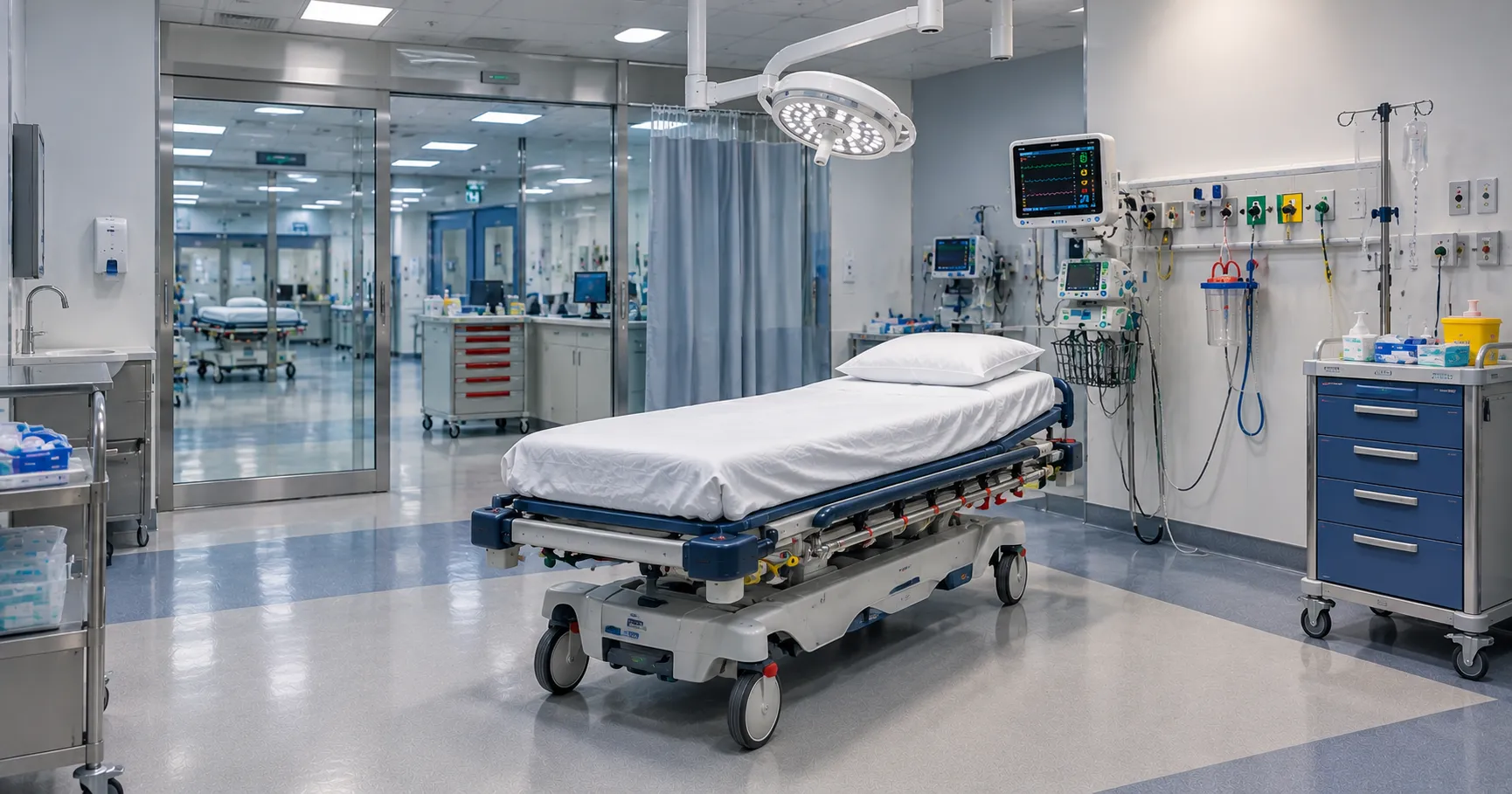
Introduction
The emergency department runs on speed and uncertainty. Patients arrive unbooked and often undiagnosed; decisions must be made fast and with incomplete information, and the pressure rarely lets up. It is a setting where any help in seeing clearly and acting quickly is precious — and where artificial intelligence is increasingly woven into the equipment to provide it.
This guide explains how AI is used in emergency department medical equipment — helping sort the urgent from the routine, read tests fast, and watch over patients under pressure. It is written for emergency, procurement and biomedical engineering teams across the UK, Europe, the US, the Gulf and South Africa who want to understand where AI genuinely helps in the demanding environment of the ED.
The short version
-
The emergency department is fast, crowded and full of undiagnosed patients.
-
AI helps by prioritising the urgent, reading tests fast and watching for deterioration.
-
Its value is time — getting the right patient seen sooner.
-
It supports hard-pressed staff; it does not make their decisions for them.
A setting built on speed
Few places in a hospital are as pressured as the emergency department. A constant, unpredictable flow of patients arrives, ranging from the genuinely critical to the minor, and staff must quickly work out who needs what, and how urgently. Getting that sorting right, fast, is the difference between a department that copes and one that is overwhelmed — and between a critically ill patient seen in time and one who waits too long.
This combination of speed, volume and uncertainty is exactly where artificial intelligence can help. By sifting information quickly and surfacing what matters, it can support the rapid judgements the ED runs on, helping a stretched team direct its attention where it is most needed. In an environment where minutes count, tools that save time and sharpen prioritisation are genuinely valuable.
Sorting the urgent from the rest
The most natural fit is triage — the crucial task of deciding who needs to be seen first. AI can support this by helping assess incoming patients and their information, flagging those who show signs of serious illness so they rise in the queue. When a patient who may be seriously unwell is identified quickly, they can be seen sooner, which is the whole point of triage.
This support does not decide the clinician; it helps ensure the concerning case is not lost in the crowd. In a busy department, where a quietly deteriorating patient can easily go unnoticed, an extra layer that helps spot them is a real safeguard. The team still decides; AI helps ensure they are deciding about the right patient at the right time.
Reading the tests fast
Speed matters in diagnosis too, and here AI helps in familiar ways adapted to the ED's urgency. It can help read imaging quickly, flagging a scan that may show a serious, time-critical problem. This alerts a clinician immediately and supports the rapid, near-patient testing on which emergency care often relies. The faster a critical result is recognised, the faster treatment can begin.
In emergencies, this time compression can be decisive. Conditions where every minute of delay worsens the outcome are precisely those where a tool that flags the critical finding at once earns its place. The AI does not replace the clinician's reading; it helps ensure the most urgent results jump the queue and reach human attention without delay.
Where AI helps in the ED
|
Task |
What AI adds |
Why it matters |
|
Triage |
Flags the seriously unwell |
Right patient seen sooner |
|
Imaging |
Prioritises urgent scans |
Critical findings jump the queue |
|
Monitoring |
Watches for deterioration |
Decline caught in a crowd |
|
Flow |
Helps manage demand |
A department that copes |
Watching over a crowded department
Emergency departments are often crowded, with patients waiting in corridors and side rooms where staff cannot watch them as closely as on a ward. This is a real safety risk, because a patient can deteriorate while waiting, out of the direct line of sight of busy staff. Continuous, AI-supported monitoring can help watch over such patients, raising a flag if someone begins to slip.
This tireless watching is especially valuable precisely because the ED is so busy. When staff are stretched thin across many patients, a system that never looks away and alerts the team to a worsening patient helps ensure no one is forgotten in the crush. It adds an extra layer of safety in an environment where attention is always in short supply.
Helping the department flow
Beyond individual patients, AI can help the department run more smoothly. By helping anticipate demand, manage patient flow, and identify bottlenecks, it can support the operational side of emergency care—and in a department, keeping patients moving through safely is itself a form of patient care, since crowding and delay carry their own risks.
These operational gains matter because the ED's problems are often as much about flow as about any single case. A department that manages its demand well can give each patient more of the attention they need, so tools that ease the logistical strain feed directly back into the quality and safety of care.
Support under pressure, not a substitute
Through all of this, AI in the emergency department supports the team; it does not replace the fast, expert judgement at the heart of emergency care. It flags, prioritises, reads and watches, but clinicians decide. This matters especially in the ED, where decisions are made quickly, and the stakes are high, so a tool must aid judgement without encouraging staff to lean on it unthinkingly.
The usual standards apply. When such software serves a medical purpose,e it is a regulated medical device; the FDA reviews it on its intended use, and in Great Britain the MHRA sets out how AI as a medical device is classified. Bodies such as the Alan Turing Institute pursue research into using such tools safely and fairly in high-pressure settings, and the same questions of validation, fit, and monitoring apply here as anywhere — with the added demand that a tool must work at the speed the ED requires.
Getting emergency AI right
-
It works reliably at the speed the emergency department actually demands.
-
It was validated on the kinds of patients and presentations you see.
-
It helps prioritise and flag without adding to alert fatigue.
-
It fits the fast, pressured workflow rather than interrupting it.
-
Clinicians stay firmly in charge of every decision it informs.
Built for pressure
The emergency department places a particular demand on any technology: it must work under pressure, at speed, without adding friction. A tool that is clever but slow, or that demands attention the team cannot spare, will fail here, no matter how sound its underlying idea. The best emergency AI is designed around the reality of the department — fast, robust and undemanding of a stretched team's scarce attention.
This is why fit matters as much as capability in the ED. A modest tool that slots seamlessly into the flow of emergency care can improve many moments a day, while a sophisticated one that gets in the way is quietly abandoned. In a setting where every second and every scrap of attention counts, unobtrusive usefulness is worth more than impressive complexity.
Speed, sharpened
AI in emergency department equipment does not change what emergency medicine is; it helps a hard-pressed team do it a little faster and a little more safely — sorting the urgent, reading the critical test, and watching over patients who might otherwise wait unseen. In a setting where time is the scarcest resource, tools that help spend it on the right patient, at the right moment, are exactly what good emergency care needs.
More from Business
-
Buyers — source approved, well-documented equipment.
-
Suppliers — list your equipment and reach buyers worldwide.
-
Advertise — promote your products and services to a clinical audience.
-
Business overview — explore everything MediGear offers healthcare organisations.
Disclaimer
This guide provides general information, not clinical or procurement advice. Use emergency-department AI only within its approved intended use and under qualified clinical judgement; confirm current requirements with the relevant authority. medigear.uk accepts no liability for actions taken based on this content.
Emergency equipment you can build on
Genuine, approved, well-documented emergency equipment — the dependable foundation good emergency AI works from, wherever every minute counts.
Frequently Asked Questions
The ED is fast, crowded and full of undiagnosed patients. AI helps by prioritising urgent cases through triage support, reading tests quickly so critical findings reach a clinician immediately, and monitoring patients for deterioration. Its value is time—getting the right patient seen sooner—and it supports hard-pressed staff rather than making decisions for them.
AI can support triage by helping assess incoming patients and their information, flagging those who show signs of serious illness so they rise in the queue and are seen sooner. It does not decide for the clinician; it helps ensure a concerning case is not lost in the crowd so the team can treat the right patient at the right time.
Yes. It can help read imaging quickly and flag scans that may show a serious, time-critical problem. This lets clinicians act immediately and supports the rapid, near-patient testing emergency care relies on. In conditions where every minute of delay worsens the outcome, a tool that flags the critical finding at once can be decisive.
Emergency departments are often crowded, with patients waiting where staff can't watch closely—a real safety risk, since someone can deteriorate out of sight of busy staff. Continuous, AI-supported monitoring can watch over such patients and raise a flag if someone begins to slip, an extra layer of safety where attention is always in short supply.
Yes. By helping anticipate demand, manage patient flow and identify bottlenecks, AI can support the operational side of emergency care. Keeping patients moving through safely is itself a form of care, since crowding and delay carry their own risks, so easing the logistical strain feeds directly back into the quality and safety of care.
No. AI flags, prioritises, reads and watches, but clinicians decide. This matters especially in the ED, where decisions are made quickly, and the stakes are high, so a tool must aid judgement without encouraging staff to lean on it unthinkingly. When it serves a medical purpose, ensure it is also a regulated medical device used within its approved intended use.