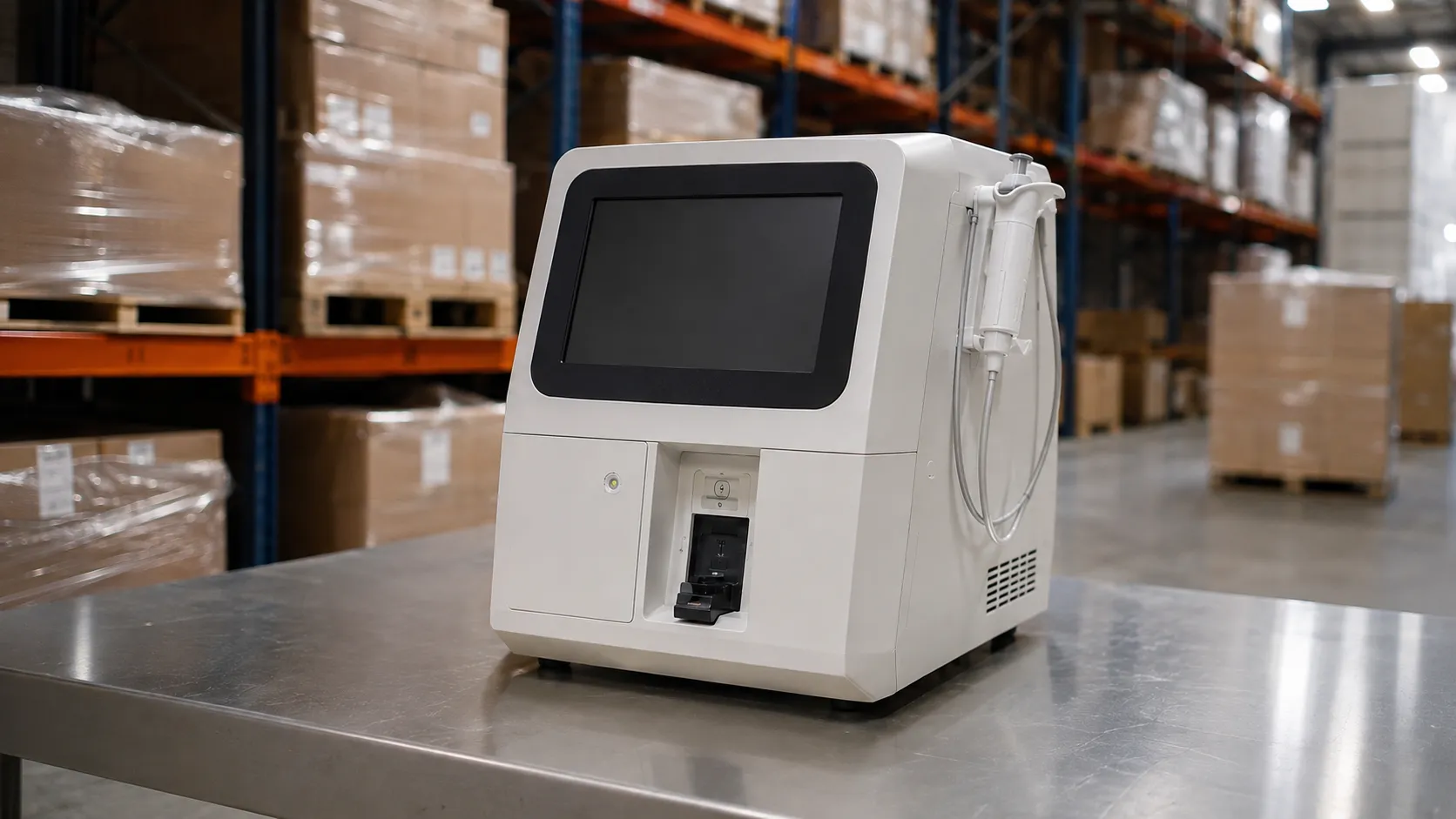
Point-of-care analysers bring testing to the patient, providing results near the bedside without sending a sample to the central laboratory. Their value is speed, but that speed only helps if the device is reliable, quality-controlled and connected to the record, since a fast result that cannot be trusted or traced is worse than a slower one from the laboratory. Choosing well means weighing the test menu, sample handling, connectivity and quality control together.
The ten analyser types below cover common near-patient testing. Each entry explains its role and what to confirm before purchase.
Test menu, sample handling and quality control
The test menu should match what a clinical area genuinely needs at the point of care, rather than the widest available, since tests better performed in the laboratory add little near-patient value. Matching the menu to the clinical need keeps the device useful and manageable.
Quality control underpins trust in near-patient results. Point-of-care testing sits within a quality framework, usually overseen by the laboratory, covering quality control, operator competence, and result traceability. This governance is central rat, notional, and it should be planned before devices are deployed.
The ten analyser types
1. Handheld single-parameter analysers
Small devices measuring one or a few parameters at the bedside, simple and quick for a focused test.
2. Multi-parameter cartridge analysers
Use a cartridge to measure several parameters from a single sample, a common practice in near-patient testing.
3. Bench-top point of care analysers
Larger near-patient analysers for a clinical area, offering a broader menu than handhelds.
4. Analysers with connectivity to the record
Send results to the patient record and quality system to support traceability. Confirm the connection and data handling.
5. Analysers with operator lockout
Restrict use to trained operators through identification to support governance.
6. Analysers with onboard quality control prompts
Prompt and record quality control, helping keep testing within the quality framework.
7. Analysers using single-use test devices
Use single-use cartridges or strips, removing between-sample cleaning but creating a consumable commitment.
8. Analysers for a defined clinical area
Configured for the tests a particular area needs, matching the menu to the clinical setting.
9. Analysers with rapid result reporting
Emphasise very quick results for time-sensitive decisions. Confirm the menu and quality arrangements.
10. Networked fleets of point of care devices
Managed as a connected fleet across a site with central oversight of quality and results. Integration and governance are central.
Connectivity, governance and the clinical area
Connectivity and governance turn a point-of-care device from a standalone gadget into a trustworthy part of care. Results should be recorded in the patient record, and the quality system for traceability and review should be managed. Operator competence should be managed to ensure only trained staff run tests. This oversight usually sits with the laboratory, which supports the clinical area running the device, and it should be agreed before deployment rather than assembled afterwards. Consumables and their storage matter too, since cartridges and strips have handling requirements and a supply that must be maintained. In the clinical area, the device should fit the workflow, be straightforward for busy staff to use correctly, and ensure quality control that maintains dependable results.
What to confirm before ordering
-
Test menu. Confirm that the menu matches the clinical area's genuine point-of-care needs.
-
Sample handling. Establish sample type, volume and any handling requirements.
-
Connectivity. Confirm results reach the record and quality system.
-
Quality control. Establish the quality framework and laboratory oversight.
-
Operator management. Confirm competence and access controls.
-
Consumables. Establish cartridge or strip supply and storage.
Training, quality and servicing
Training and competence management are central to point-of-care testing, since results are produced by clinical staff rather than laboratory staff. A defined training and competence process, usually supported by the laboratory, keeps testing reliable.
Quality control should be performed and recorded in accordance with the agreed framework, with the laboratory supporting oversight, so that near-patient results carry the same confidence as laboratory results.
For servicing, agree planned maintenance, quality control review, connectivity support and any calibration the device requires. Ensure the organisation receives medical device alert notices so that field safety notices reach point-of-care and laboratory teams.
Connectivity, quality control and laboratory oversight should be agreed before devices are deployed. Organisations can raise requirements with the sourcing team at Medigear.uk.
Final thoughts
Choose point-of-care analysers around a test menu matched to genuine need, with connectivity, quality control, and governance planned from the start under laboratory oversight. Most clinical areas are best served by reliable devices whose results are accurate, whose operations are managed, and whose quality control keeps near-patient results trustworthy.
This article provides general procurement guidance for healthcare organisations. It is not clinical or laboratory practice advice, and it does not replace manufacturer instructions or the oversight of the laboratory quality framework.