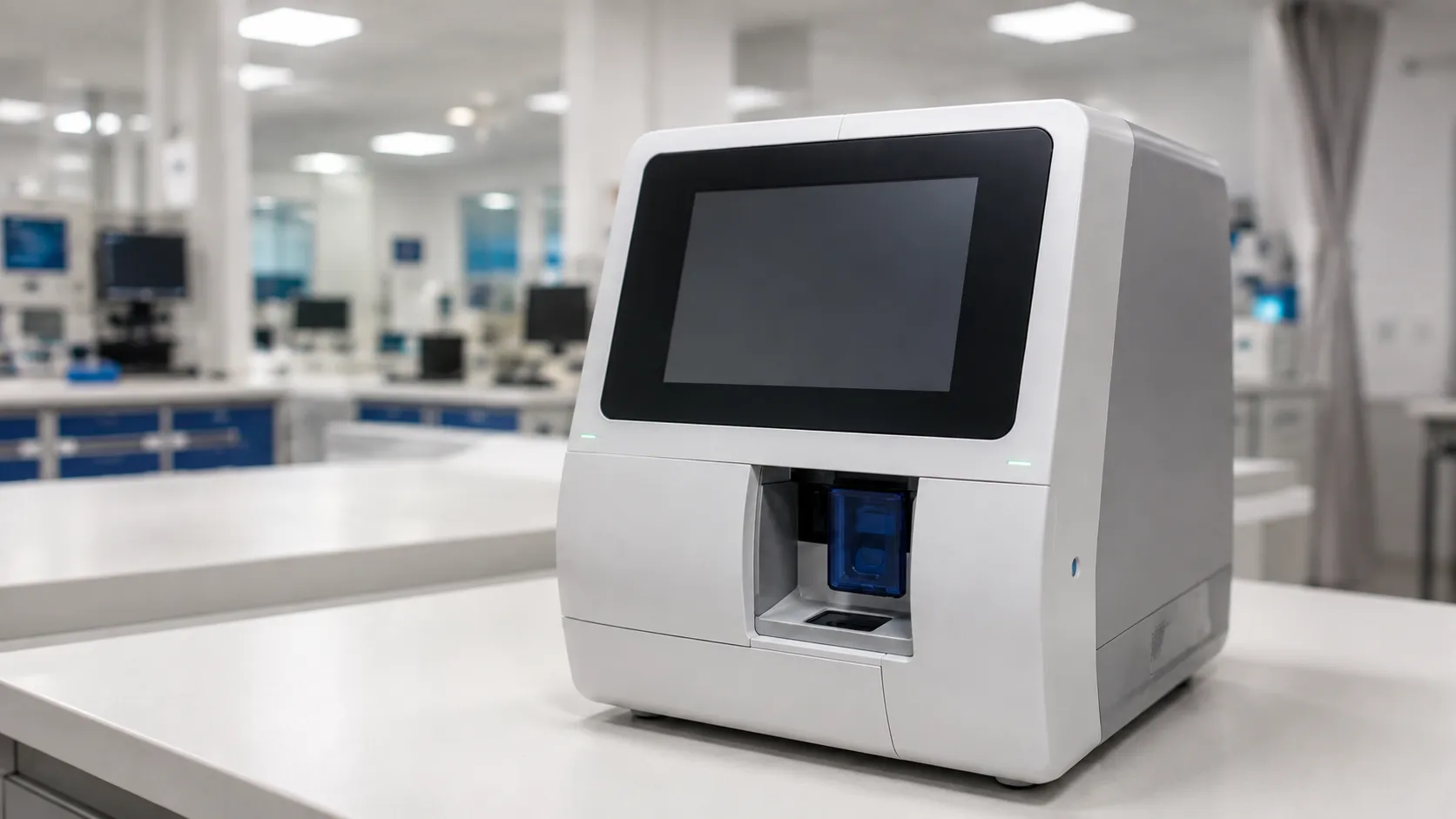
A blood gas analyser gives rapid results that guide urgent decisions in emergency and critical care, so its reliability and readiness matter as much as its parameters. An analyser that is quick when it works but often out of action, or that demands frequent attention, undermines the very urgency it serves. The practical questions concern the measured parameters, the device's dependability and low maintenance, and how results are recorded. The result types below cover emergency and critical care testing. Each entry explains its role and what to confirm before purchase.
Parameters, sample handling and readiness
The parameters should align with the department's urgent decisions, typically covering gases and a set of requirements. Matching the parameter panel to the clinical need keeps the analyser focused on what emergency care requires.
Readiness is decisive in an emergency setting. An analyser that is ready when a sample arrives, handles the sample simply, and requires little intervention serves urgent care far better than one that requires frequent intervention, so uptime and ease of daily operation deserve real weight.
The ten analyser types
1. Cartridge-based blood gas analysers
Use a cartridge containing the sensors and often the calibration, simplifying maintenance. Cartridge supply is the ongoing commitment.
2. Analysers with an extended parameter panel
Add related measurements alongside gases for a fuller picture in urgent care. Confirm the panel against clinical need.
3. Compact bench-top analysers
Small analysers suited to an emergency department bench, quick to use for urgent samples.
4. Analysers with rapid result reporting
Emphasise very quick turnaround for time-critical decisions, keeping the result close to the point of sampling.
5. Analysers with automated quality control
Perform automatic quality control steps while keeping results within the framework.
6. Analysers with connectivity to the record
Send results to the patient record and quality system for traceability. Confirm the connection and data handling.
7. Analysers with simplified sample handling
Make presenting the sample straightforward to reduce the risk of error under pressure.
8. Analysers with low routine maintenance
Reduce the routine attention needed, supporting uptime in a setting where the device must be ready.
9. Analysers with operator management
Restrict use to trained operators and record it to support governance in a busy department.
10. Analysers managed as a connected fleet
Overseen across critical care areas with central quality management. Integration and governance are central.
Uptime, quality control and the emergency setting
In an emergency department, the analyser must be ready around the clock, so uptime and simple daily operation shape its value more than any single feature. An analyser that manages its own calibration and quality control needs little routine intervention, recovers quickly from a problem, and keeps urgent testing available when needed. Quality control remains essential, since urgent results must still be trustworthy; automated quality control and laboratory oversight help maintain confidence without adding a burden on clinical staff. Connectivity ensures results reach the record and the quality system, supporting traceability even at speed. Consumable supply, particularly cartridges where used, must be expendable, since running out halts testing, so the supply arrangement belongs in the decision.
What to confirm before ordering
-
Parameters. Confirm the panel matches urgent clinical needs.
-
Sample handling. Establish sample type, volume and ease of presentation.
-
Uptime. Assess readiness, routine intervention and recovery from faults.
-
Quality control. Confirm automated quality control and laboratory oversight.
-
Connectivity. Establish results that meet record and quality system requirements.
-
Consumables. Confirm cartridge or reagent supply reliability.
Training, quality and servicing
Training should reach the clinical staff who use the analyser under pressure, covering sample handling, running a test, quality control and recognising a problem, so urgent testing is reliable at any hour.
Quality control and its oversight, usually supported by the laboratory, help ensure the trustworthiness of results; a framework should be in place before the analyser is relied upon.
For servicing, agree planned maintenance, quality control review, connectivity support, consumable arrangements and response times, since downtime in an emergency setting matters. Ensure the department receives the published device alerts page so any field safety notices reach the emergency and laboratory teams.
Uptime, consumable supply and quality control should be confirmed for an emergency setting. Departments comparing analysers can check options with listed suppliers.
Final thoughts
Choose the blood gas analyser that is dependable, reliable, and automated, with quality control and connectivity to keep results accurate and traceable. Most departments are best served by a reliable, low-maintenance analyser whose results are recorded consistently and whose consumable supply is dependable.
This article provides general procurement guidance for healthcare organisations. It is not clinical or laboratory practice advice, and it does not replace manufacturer instructions or the oversight of the laboratory quality framework.