
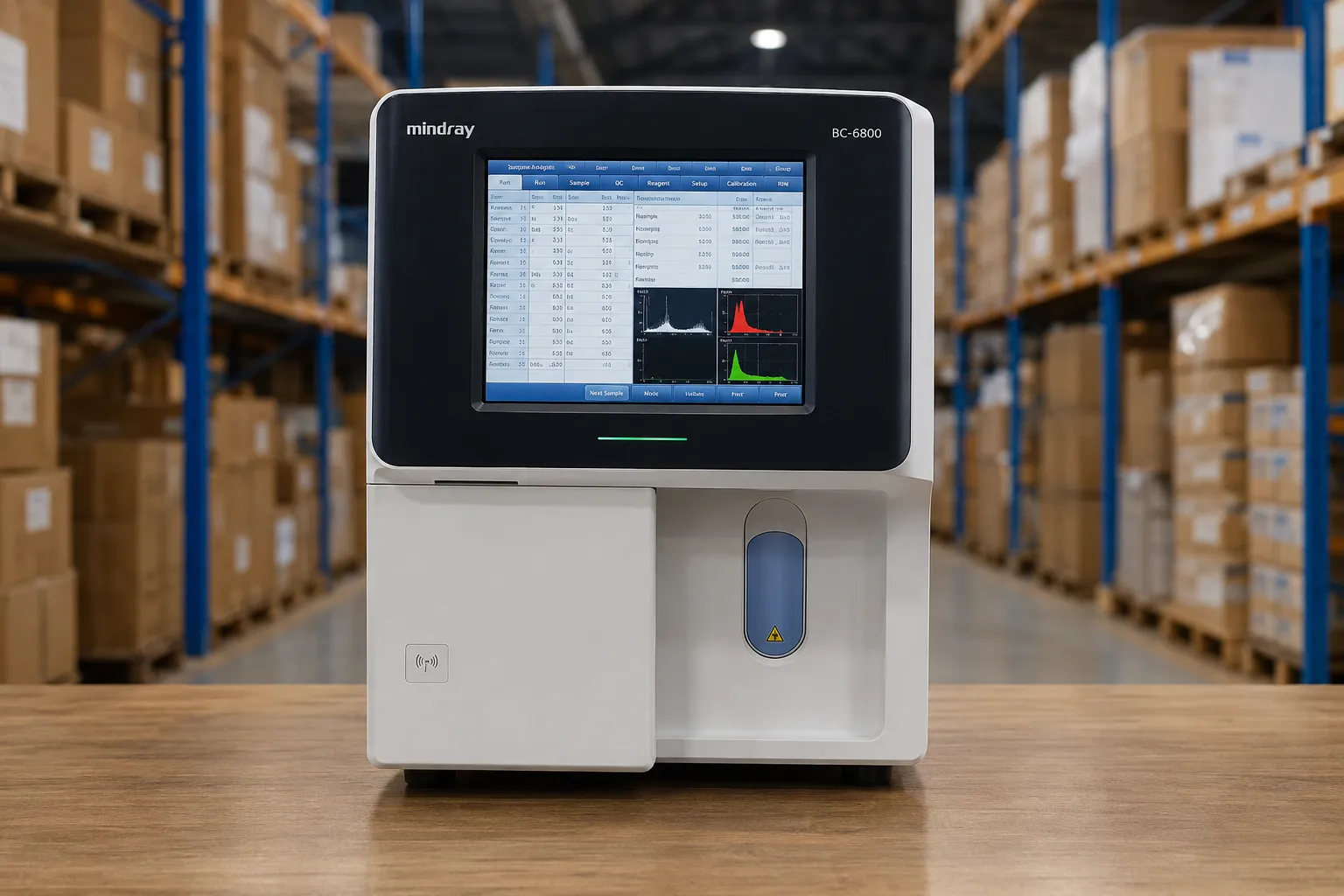
A haematology analyser performs blood counts and related measurements, and in a clinical laboratory its throughput, reliability and quality control determine how well it serves the workload. The analyser that suits a laboratory is the one whose capacity matches the sample numbers, whose parameters meet clinical need, and whose reagent and maintenance demands the laboratory can sustain, rather than the one with the longest specification.
The ten analyser types below are suitable for routine and higher-throughput laboratory use. Each entry explains its role and what to confirm before purchase.
Throughput, parameters and the workload
Throughput should match the laboratory's sample numbers at their busiest, not their average, since an analyser that copes with a quiet period becomes a bottleneck at peak times; holding up report delivery and capacity to peak workload keeps the laboratory running.
The parameters and the differential should meet the laboratory's clinical needs, including how the analyser flags samples that require review. How flagged samples are handled and how they move to further examination is part of the workflow rather than a detail, so it belongs there.
The ten analyser types
1. Compact routine haematology analysers
Suited to smaller laboratories and lower volumes, providing the count and differential for routine work.
2. Mid-throughput analysers
Balance capacity and footprint for a general laboratory workload, the common choice for many sites.
3. High-throughput analysers
Process high sample numbers for busy laboratories. Match the capacity to peak workload rather than average.
4. Analysers with an extended differential
Provide a fuller differential and additional parameters where the clinical work requires them.
5. Analysers with sample flagging and review support
Flag samples needing review and support the move to further examination, part of the laboratory workflow.
6. Analysers with automated sample handling
Add loading and automation for handling all steps in higher-volume.
7. Analysers within track-connected systems
Connect to laboratory automation for sample flow across analysers. Integration and space are the planning factors.
8. Analysers with onboard quality control management
Manage and record quality control to support the laboratory's quality framework.
9. Analysers with connectivity to laboratory systems
Send results to the laboratory information system for reporting. Confirm the interface and data handling.
10. Analysers with slide preparation integration
Link to slide preparation for samples needing a film, streamlining the review pathway.
Reagents, quality control and daily running
Reagents and consumables are a continuous commitment for a haematology analyser, so their supply, storage and handling should be part of the process, since a reagent shortage halts reporting. Confirm the reagent arrangement and that reagent quality control is fundamental to laboratory testing, with regular controls and calibration keeping results dependable. Ann analyser that manages and records this supports the laboratory's quality framework. Daily running matters too: maintenance routines, start-up, and the attention an analyser needs each day affect how smoothly a laboratory operates, so a device whose upkeep the laboratory can sustain is more useful than one that demands intervention. Planning reagent supply, quality control and connectivity before the analyser is in service keeps reporting reliable from the start.
What to confirm before ordering
-
Throughput. Confirm capacity matches peak sample numbers.
-
Parameters. Establish the count, differential and flagging meet clinical need.
-
Sample handling. Confirm loading and any automation for your volume.
-
Quality control. Establish the quality control and calibration arrangements.
-
Reagents. Confirm reagent supply, storage and handling.
-
Connectivity. Establish reporting to the laboratory information system.
Training, quality and servicing
Training should cover operation, sample handling, quality control, responding to flags and the maintenance routine, so the analyser runs reliably across the laboratory team.
Quality control and calibration keep results dependable, and the arrangements should be part of the laboratory's quality schedule, with records retained.
For servicing, agree planned maintenance, calibration support, quality control review, connectivity support and response times, since analyser downtime affects reporting. Ensure the laboratory receives MHRA field safety alerts so any field safety notices reach the laboratory team.
Throughput, reagent supply and connectivity should be matched to the workload before service. Laboratories can review options through hospital buyer support.
Final thoughts
Choose the haematology analyser based on throughput, parameters, reagents, and maintenance demands the laboratory can sustain, with quality control and connectivity keeping results dependable and reported. Most laboratories are best served by an analyser whose capacity matches peak workload, whose upkeep is manageable, and whose results flow reliably to the information system. This article provides general procurement guidance for laboratories and healthcare organisations. It is not clinical or laboratory practice advice, and it does not replace manufacturer instructions or local quality procedures.