A diagnostic laboratory turns samples into the results that guide treatment, and it does so through a carefully assembled set of laboratory equipment. From the centrifuge that prepares a sample to the analyser that reports it, a working lab is a chain of instruments where each link has to hold.
Because a laboratory is built as a system rather than a collection of separate machines, thinking about its equipment by function is the most useful way in. It shows where a bench is well equipped and where a single missing instrument would break a workflow.
The fifty laboratory equipment essentials below are grouped into ten functions of five, following a sample from preparation through the main disciplines to storage, safety and informatics. Grouping them this way mirrors how a lab is actually organised, bench by bench.
Why the lab is built as a system
It is tempting to focus on the headline analysers, but a laboratory only works when the quiet supporting equipment is there too. A centrifuge, a reliable fridge and a clean water supply are as essential to a result as the analyser that produces it, so the whole system deserves planning together rather than instrument by instrument. It also shows where a single missing instrument would quietly break a workflow that otherwise looks complete.
The ten laboratory functions
The equipment falls into ten functions: sample handling, haematology, clinical chemistry, microbiology, molecular, microscopy, storage and cold chain, weighing and measurement, water, cleaning and safety, and automation and informatics.
Sample handling and preparation
Before anything is analysed, samples must be prepared correctly. This function covers that first step. Get this stage wrong, and every result downstream is in doubt, so preparation is treated with care.
-
Centrifuges — spinning samples to separate their components.
-
Pipettes — measuring and transferring precise volumes.
-
Vortex mixers — mixing samples quickly and evenly.
-
Sample racks — holding and organising tubes safely.
-
Aliquot containers — dividing samples for testing.
Haematology
Blood counts and clotting studies are core lab work. This function analyses the blood itself. Blood counts are among the most requested tests, so this bench is rarely quiet.
-
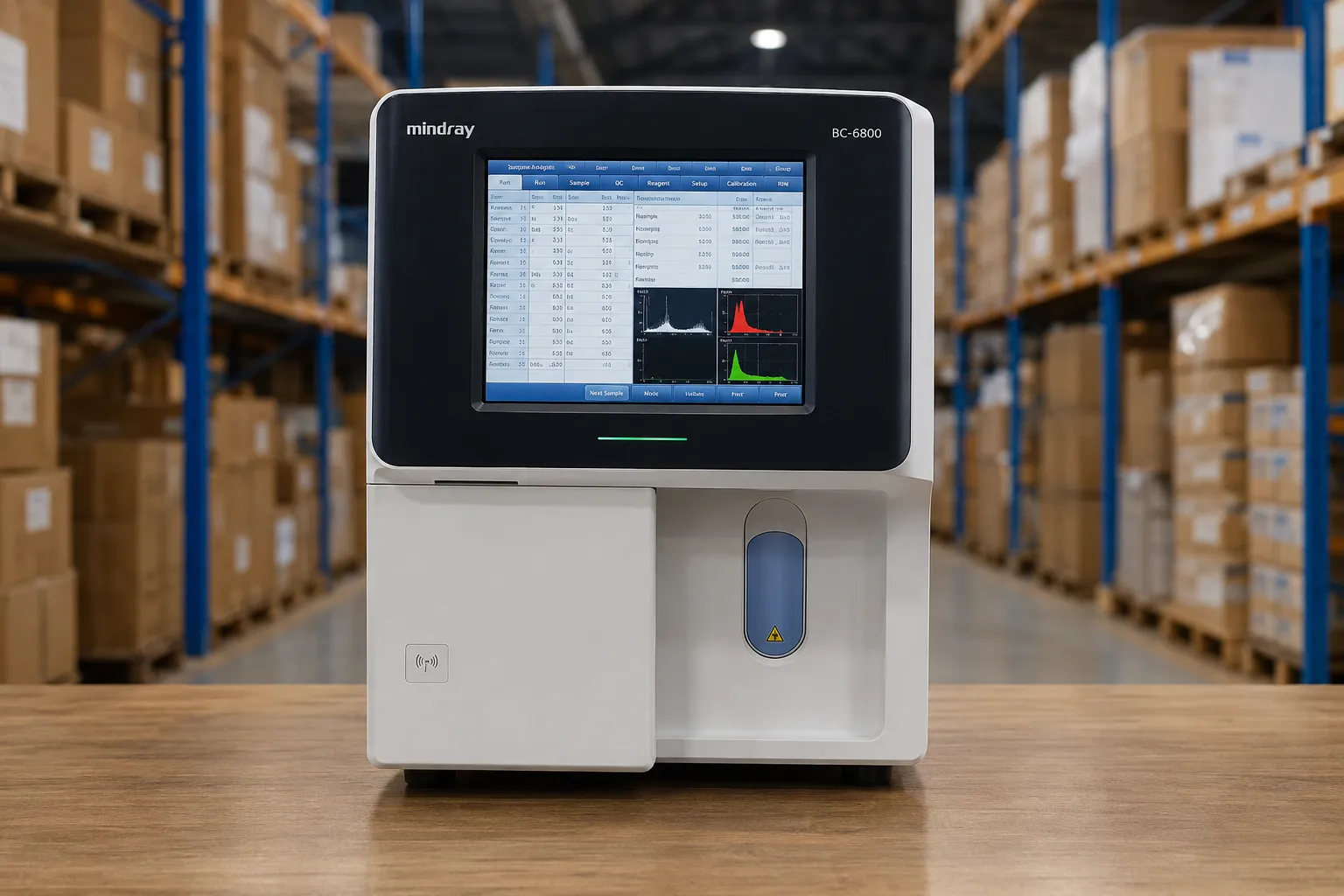
Haematology analysers — producing full blood counts automatically.
-
Blood film stainers — preparing slides for review.
-
ESR analysers — measuring red-cell sedimentation.
-
Coagulation analysers — assessing how blood clots.
-
Cell counters — supporting manual counts.
Clinical chemistry
Chemistry testing measures what is dissolved in blood and fluids. This function drives much routine diagnosis. Much of routine diagnosis runs through chemistry, so throughput here matters a great deal.
-
Chemistry analysers — measuring enzymes, electrolytes and more.
-
Electrolyte analysers — reporting sodium, potassium and chloride.
-
Immunoassay analysers — detecting hormones and markers.
-
Blood gas analysers — rapid oxygen, carbon dioxide and pH.
-
Spectrophotometers — measuring light through a sample.
Microbiology
Identifying organisms guides infection treatment. This function grows and studies microbes. Growing and naming organisms takes time and space, so this area is planned with room to work.
-
Incubators — holding cultures at controlled temperatures.
-
Biosafety cabinets — protecting staff while handling samples.
-
Identification systems — naming organisms from cultures.
-
Autoclaves — sterilising media and waste.
-
Anaerobic jars — growing organisms without oxygen.
Molecular and PCR
Molecular testing detects genetic material with great sensitivity. This function supports that work. Sensitive molecular testing has grown quickly, so many labs now build real capability here.
-
Thermal cyclers — running PCR amplification.
-
Real-time PCR systems — quantifying targets as they amplify.
-
Nucleic acid extractors — isolating DNA and RNA.
-
Electrophoresis units — separating fragments by size.
-
Gel imagers — recording and reading gels.
Microscopy
Looking directly at cells and organisms remains essential. This function equips the microscope bench. Even with automation, a trained eye on a slide still matters, so the microscope bench stays essential.
-
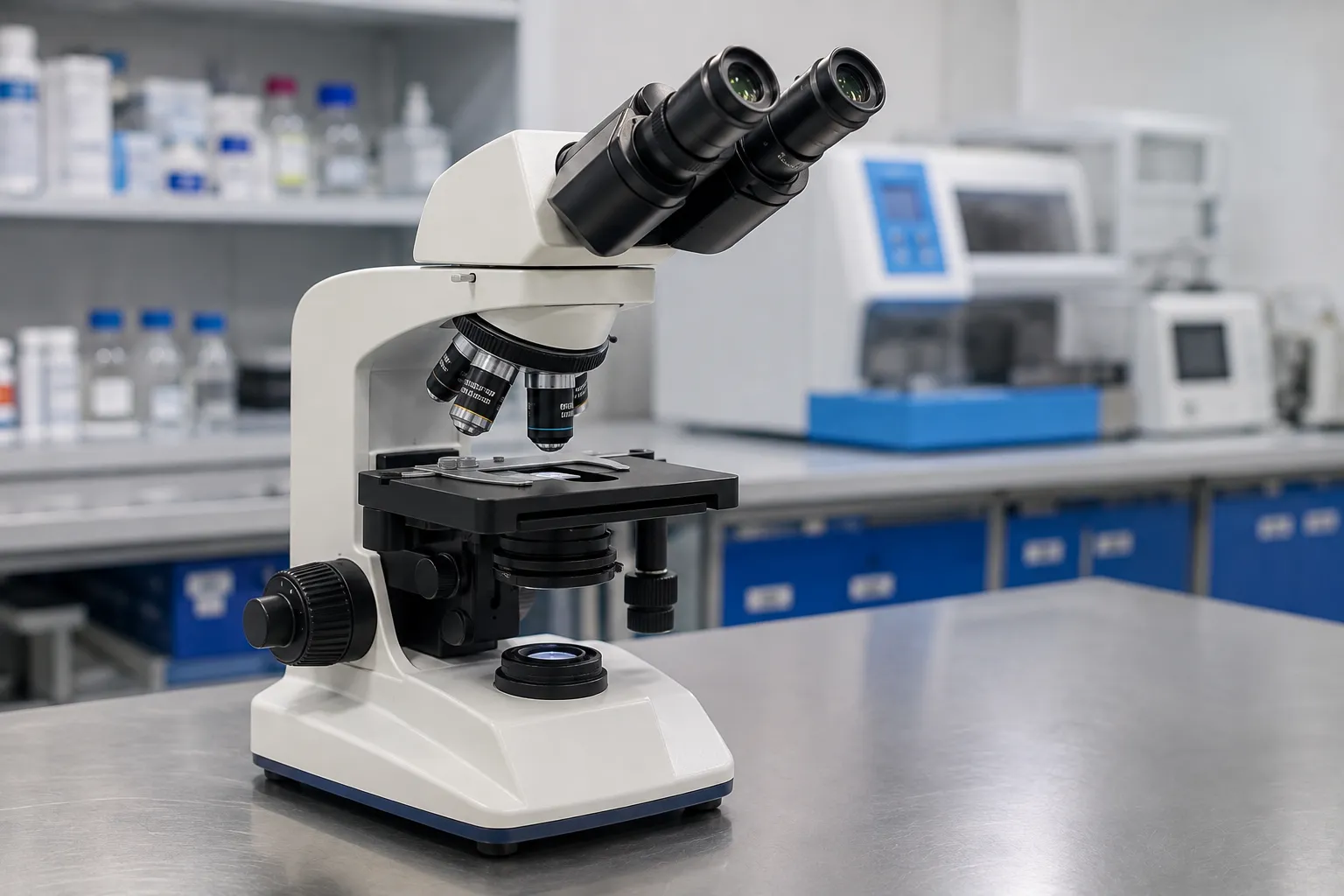
Light microscopes — examining stained slides.
-
Fluorescence microscopes — viewing labelled samples.
-
Slide stainers — preparing slides consistently.
-
Cover-slipping stations — finishing slides for storage.
-
Digital slide scanners — capturing slides as images.
Storage and cold chain
Samples and reagents must be kept at the right temperature. This function protects the cold chain. A broken freezer can undo weeks of work, so the cold chain is monitored closely.
-
Laboratory refrigerators — storing reagents and samples.
-
Laboratory freezers — holding material at low temperatures.
-
Cryogenic storage — preserving samples for the long term.
-
Ice machines — supplying ice for sample handling.
-
Archive storage — retaining samples and slides.
Weighing and measurement
Accurate weighing and measurement underpin reliable results. This function keeps the numbers honest. Reliable results start with reliable measurement, so this equipment is calibrated and checked.
-
Analytical balances — weighing to fine tolerances.
-
pH meters — measuring acidity and alkalinity.
-
Conductivity meters — checking solution strength.
-
Osmometers — measuring solute concentration.
-
Thermometers — monitoring equipment temperatures.
Water, cleaning and safety
Clean water and a safe bench are quiet essentials. This function keeps the lab running and staff protected. Clean water and a safe bench rarely make headlines but stop a lab quickly if they fail.
-
Water purification systems — supplying pure water for tests.
-
Glassware washers — cleaning labware thoroughly.
-
Fume hoods — drawing away harmful fumes.
-
Eyewash stations — first aid for splashes.
-
Spill kits — dealing with spills safely.
Automation and informatics
Modern labs connect and automate to handle volume reliably. This function ties the lab together. As volumes grow, connecting and automating keeps a lab accurate under pressure.
-
Automation lines — moving samples between analysers.
-
Barcode systems — tracking samples accurately.
-
LIS workstations — managing results and reports.
-
Sample sorters — routing samples to the right bench.
-
Reagent management — keeping reagents stocked and logged.
Equipping a diagnostic lab
A diagnostic lab is best equipped around the test menu it will offer, so its instruments match the samples it will handle rather than covering tests it rarely runs. Because so much depends on accuracy, quality control, calibration and a reliable cold chain are planned alongside the analysers, not bolted on afterwards. Labs often compare laboratory equipment suppliers on Medigear.uk when planning a bench around their test menu.
Throughput and reliability matter as much as capability, since a lab that cannot keep up, or whose key analyser is often down, delays the clinicians waiting on results. Planning capacity, backup and servicing keeps the whole chain moving from sample to report. Phasing the build around the busiest benches first lets the lab start reporting core tests while the rest comes online.
Before you equip a bench
-
Test menu. Match instruments to the tests offered.
-
Quality. Plan calibration and quality control.
-
Cold chain. Confirm reliable storage.
-
Throughput. Match capacity to sample volume.
-
Informatics. Confirm results connect to the LIS.
Quality runs through everything.
Behind every analyser sits a quality system that decides whether its results can be trusted. Controls, calibration and clear records are not an add-on, but part of the equipment plan itself, and a lab that builds them in from the start reports with a confidence that is hard to retrofit later.
Servicing and safety
Laboratory equipment produces results that guide treatment, so calibration, quality control, maintenance and staff training keep it accurate and safe. The lab should also receive the MHRA's device safety alerts and recalls, so any field safety notice affecting an analyser reaches the team promptly.
The lab in short
A diagnostic lab works because its equipment forms an unbroken chain from sample to result. Grouping the fifty essentials by function, equipping around the test menu, and planning quality and throughput turn a complex build into an organised, bench-by-bench plan. Assembled this way, the laboratory equipment supports accurate diagnosis day after day. Built and maintained as one connected system, the lab keeps that chain unbroken from first sample to final report. That quiet reliability is what a diagnostic service is built on. For help outfitting a bench, it is easy to speak to Medigear.uk about outfitting a diagnostic lab.
The notes above are general procurement guidance for laboratories and healthcare services rather than technical or clinical advice, and they never replace manufacturer instructions or accreditation requirements.