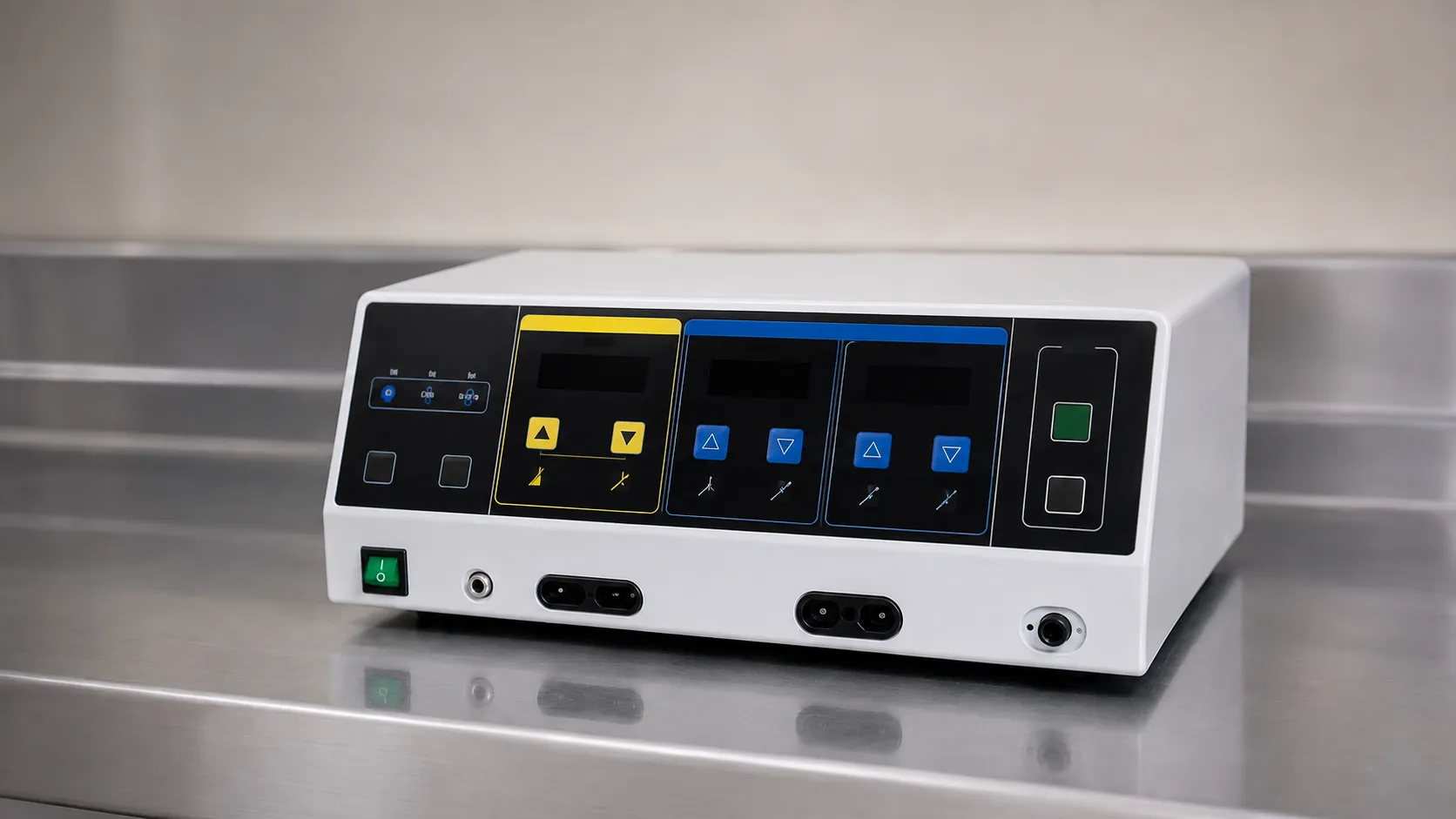
Electrosurgical safety depends on the whole circuit, not the generator alone. The unit, the active accessory, the return electrode and the patient's position together determine whether energy behaves as intended. That is why the accessory range and the return electrode system deserve as much attention as the output specification.
The ten unit types below cover general theatre, specialist and minor procedure use. Each entry explains its role and what to confirm before ordering.
Monopolar, bipolar and the return path
In monopolar use, current passes from the active instrument through the patient to a return electrode, which must be applied correctly to a suitable site. In bipolar use, current passes between the two limbs of the instrument, keeping the path short and local.
Return electrode contact quality monitoring is the safety feature that matters most in monopolar work. It checks that the pad remains in proper contact and alarms if it does not. Confirm which monitoring system a unit uses and which pads are compatible, since the two are matched.
The ten electrosurgical unit types
1. Monopolar generators
Deliver cutting and coagulation output through an active instrument with a return electrode—the generator is the theatre standard for open surgery.
2. Bipolar generators
Confine current between the tips of a bipolar instrument, which is suitable for work and situations where a return electrode is undesirable.
3. Combined monopolar and bipolar units
Provide both modes in one generator with separate outputs, allowing a single unit to cover most theatre requirements.
4. Units with tissue response output control
Adjust output continuously in response to measured tissue impedance, aiming for consistent effect as tissue conditions change during use.
5. Units with vessel sealing capability
Add a dedicated sealing mode used with matched instruments. The instrument and generator are a matched system, so compatibility is essential.
6. Argon-assisted electrosurgical units
Deliver energy through an argon gas flow for surface coagulation. Gas supply, cylinder handling and specific training form part of the purchase.
7. Units with integrated smoke evacuation control
Activate an evacuation system automatically when the generator is used, which improves the likelihood of surgical-consistent smoke being captured in capture-act units for minor procedures
Lower-output generators for outpatient, dermatology and minor operations rooms where full theatre capability is unnecessary.
9. Units with multiple simultaneous outputs
Support two active instruments simultaneously performing procedures with two instruments together, with independent settings for each.
10. Units with settings recall and networking
Store procedure presets and, in some systems, record usage data. Confirm how presets are locked and who may change them.
Accessories, pads and theatre practice
The accessory range often decides the purchase. Confirm that pencils, forceps, laparoscopic instruments and footswitches available for the generator match what your surgeons use, and check whether existing instruments are compatible or must be replaced alongside the unit. Return electrode pads deserve equal scrutiny: sizes for adult, paediatric and neonatal patients, adhesive performance, and the monitoring system they work with. Storage in theatre matters too, since a generator sitting on an unstable trolley with trailing footswitch cables creates its own hazards during a long list.
What to confirm before ordering
-
Return electrode monitoring. Confirm the system used and which pads are compatible.
-
Accessory compatibility. Check existing pencils, forceps and footswitches against the new generator.
-
Pad range. Confirm adult, paediatric and neonatal options are available.
-
Alarm behaviour. Establish how faults are indicated and how audible alarms are in theatre.
-
Preset control. Confirm whether settings can be locked at department level.
-
Smoke management. Check integration with any evacuation system in use.
Training, checks and servicing
Training should cover pad application sites, active electrode handling and storage during a procedure, alarm response and the interaction between electrosurgery and other equipment such as implanted devices, following local policy.
Pre-use checks belong in the theatre routine: cable and accessory condition, footswitch function, alarm test and correct pad application before the procedure begins.
For servicing, agree planned maintenance intervals, output verification, leakage current testing, electrical safety testing, and spare parts availability; the department receives published dev. Hence, safety alerts and field safety notices are sent to theatre and engineering teams.
Generator: The generator and return electrode pads should be specified as one system. Theatres reviewing their diathermy estate can compare options through the hospital buyer network.
Final thoughts
Specify the generator, the access and ads. Most needa combined monopolar and bipolar unit with contact quality monitoring, an accessory range matching surgeon preference, a full pad size,rranget and outputverification built into planned maintenance.
This article provides general procurement guidance for healthcare organisations. It is not clinical or surgical advice, and it does not replace manufacturer instructions, training or local theatre policy.