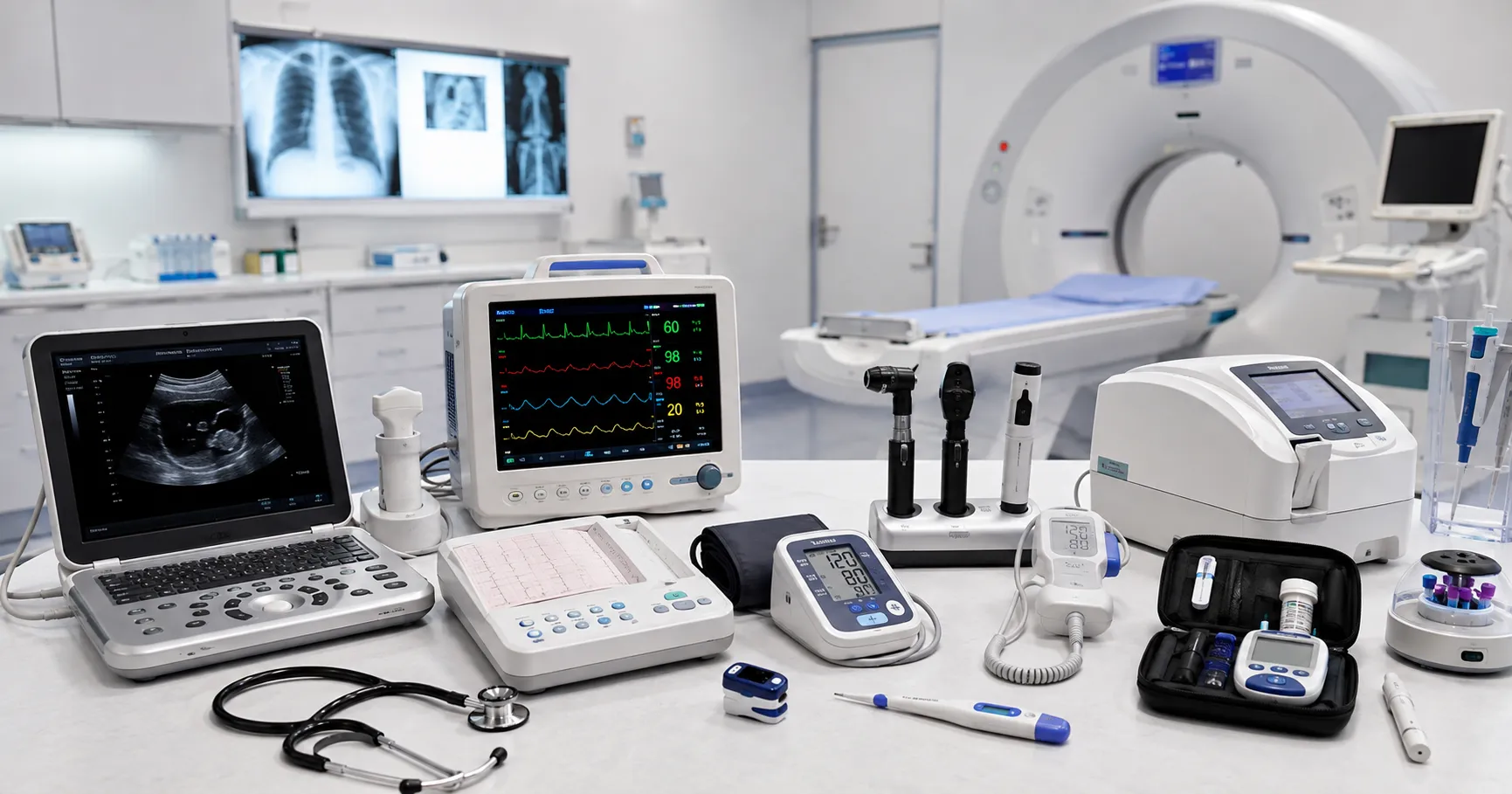
Diagnosis is where care begins, and it rests on a wide range of diagnostic devices spread across a hospital's specialities. From a bedside ECG to a scanner in the imaging suite, these devices turn signs and symptoms into the measurements and images that guide treatment.
Nursing single department owns diagnostics; devices span cardiology, imaging, the laboratory, and neurology, and specialist clinics. Seeing them together helps a hospital understand its diagnostic reach and where it depends on a particular device being available and working.
The 50 diagnostic devices listed below are used across clinical specialities. They are grouped into five areas of ten by where and how they are used, which is a useful way to review a hospital's diagnostic capability. Grouping them this way helps a hospital see its diagnostic reach as a whole, rather than department by department.
How the fifty devices group together
The devices fall into five areas: cardiac and vascular, imaging, laboratory and point-of-care, respiratory and neurology, and speciality and endoscopy. Each area supports the diagnosis of a broad range of conditions.
Cardiac and vascular
Assessing the heart and circulation draws on a range of devices, from routine to specialist. This group supports cardiac and vascular diagnosis. Because heart problems are so common, this group is among the most heavily used in any hospital.
-
ECG machines — recording the heart's electrical activity as a trace.
-
Echocardiography systems — ultrasound imaging of the beating heart.
-
Holter monitors — logging heart rhythm across a full day.
-
Blood pressure monitors — measuring pressure at rest or over time.
-
Ankle-brachial index devices — comparing pressures to assess circulation.
-
Cardiac stress systems — monitoring the heart during exercise.
-
Doppler units — listening to blood flow through vessels.
-
Pulse oximeters — reading oxygen saturation from a fingertip.
-
Event recorders — capturing rhythm during occasional symptoms.
-
Vascular ultrasound — imaging arteries and veins for narrowing.
Imaging
Imaging lets clinicians see inside the body without surgery. This group covers the main imaging modalities. Imaging often decides the next step in care, so availability and reliability here matter enormously.
-
X-ray systems — producing plain radiographs of bone and chest.
-
Ultrasound scanners — real-time imaging without radiation.
-
CT scanners — building cross-sectional images from many X-rays.
-
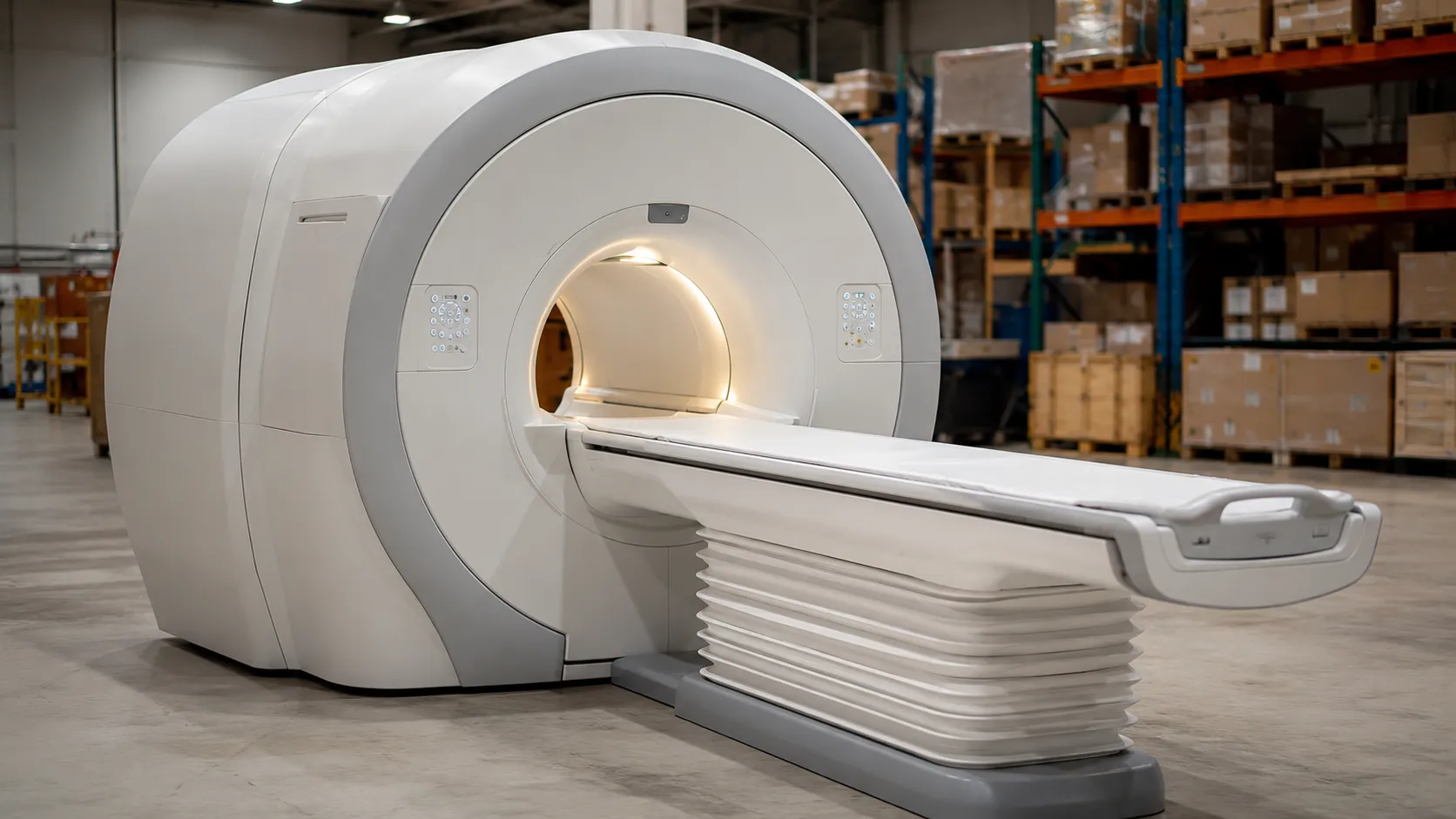
MRI scanners — detailed soft-tissue imaging using magnetic fields.
-
Mobile C-arms — live imaging during theatre procedures.
-
Mammography units — low-dose imaging of breast tissue.
-
Fluoroscopy systems — continuous X-ray for dynamic studies.
-
DEXA scanners — measuring bone mineral density.
-
Portable X-ray — bringing radiography to the bedside.
-
PACS workstations — displaying and reporting stored images.
Laboratory and point of care
Much diagnosis happens by analysing samples, in the laboratory or at the bedside. This group supports that testing. Whether in the laboratory or at the bedside, these analysers turn samples into answers that guide treatment.
-
Haematology analysers — counting and sizing blood cells.
-
Chemistry analysers — measuring electrolytes, enzymes and proteins.
-
Blood gas analysers — reporting oxygen, carbon dioxide and pH quickly.
-
Coagulation analysers — assessing how well blood clots.
-
Immunoassay analysers — detecting hormones and disease markers.
-
Urine analysers — screening urine for chemical changes.
-
Microbiology systems — culturing and identifying organisms.
-
Glucose analysers — measuring blood sugar precisely.
-
Laboratory centrifuges — spinning samples to separate components.
-
Microscopes — examining cells and organisms under magnification.
Respiratory and neurology
Assessing the lungs and nervous system needs specific devices. This group supports respiratory and neurological diagnosis. These devices assess systems that are hard to see directly, so their accuracy is carefully verified.
-
Spirometers — measuring how much and how fast air is exhaled.
-
Peak flow meters — a simple check of airway narrowing.
-
Capnographs — tracking carbon dioxide in exhaled breath.
-
EEG machines — recording the brain's electrical activity.
-
EMG systems — assessing electrical signals in muscle.
-
Nerve conduction systems — testing how well nerves carry signals.
-
Sleep study systems — recording breathing and movement overnight.
-
Nasal flow sensors — detecting airflow during sleep studies.
-
Bronchoscopes — inspecting the airways from within.
-
Nasendoscopes — viewing the nose and upper airway.
Speciality and endoscopy
Many specialities have their own diagnostic devices, including endoscopy. This group covers those specialist tools. Each speciality depends on its own devices being ready, so this group is planned in coordination with the relevant clinics.
-
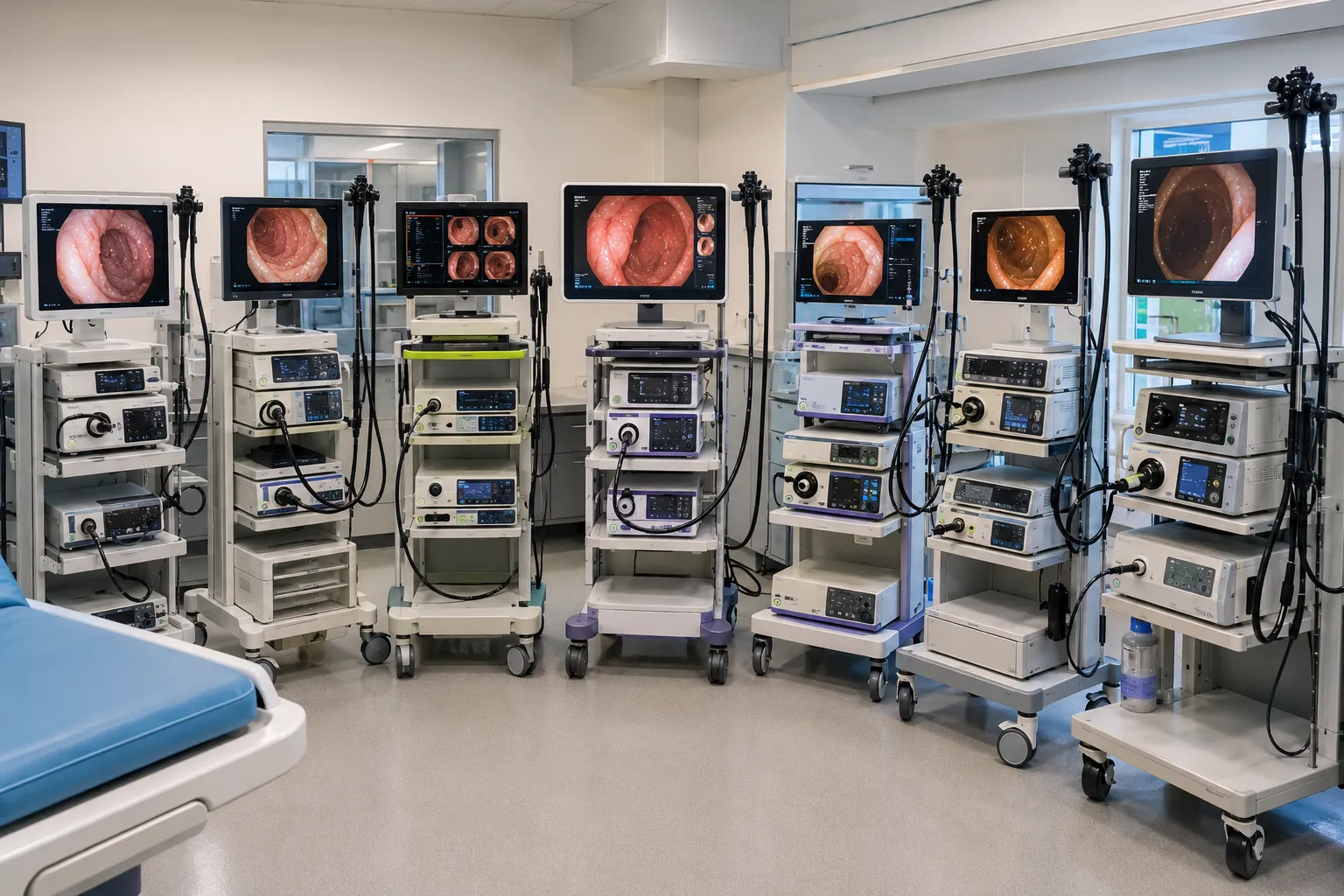
Endoscopy towers — the stack of kit behind endoscopic procedures.
-
Colonoscopes — examining the lining of the large bowel.
-
Gastroscopes — inspecting the oesophagus and stomach.
-
Otoscopes — inspecting the ear canal and eardrum.
-
Ophthalmoscopes — examining the retina for signs of disease.
-
Slit lamps — magnified examination of the front of the eye.
-
Fundus cameras — photographing the retina for records.
-
Audiometers — measuring hearing across a range of tones.
-
Tympanometers — checking how the eardrum responds to pressure.
-
Dermatoscopes — magnifying devices for examining skin lesions more closely
Planning diagnostic capability
Diagnostic devices are best planned around the conditions a hospital needs to assess, so its capabilities match the patients it sees, rather than owning devices that are rarely used. Many of these devices sit within a quality and reporting framework, so they are planned with the relevant departments, from imaging to the laboratory.
Reliability and support are central, since a diagnostic service depends on its devices being available and accurate. Matching capacity to demand keeps waits manageable, while connectivity to records keeps results flowing to the clinicians who need them. It also helps to plan training alongside the devices, since even the best diagnostic equipment only delivers when staff are confident using and interpreting it. Diagnostic buyers frequently plan capability through Medigear.uk, matching devices to the conditions a hospital sees.
A note on connectivity
A diagnostic device is only as useful as the result it delivers to the right clinician at the right time. Planning how each device connects to records and reporting systems, from the imaging suite to the bedside analyser, is what turns a measurement into a decision, so connectivity deserves as much thought as the device itself.
Reliability and availability
A diagnostic service lives or dies by whether its devices are available and working when patients need them. A scanner out of action or an analyser waiting on a part can stall an entire pathway. Hence, reliability, servicing, and sensible backup for the busiest devices matter as much as the technology itself.
Matching capacity to demand
Owning a device is only half the picture; having enough of it, and enough time on it, is the other half. Matching capacity to the real demand a hospital sees keeps wait times manageable and prevents a single popular device from becoming a bottleneck for several specialities at once.
Bringing results together
Diagnosis rarely rests on a single test in isolation, so the value of these devices increases when their results can be considered together. Planning how images, laboratory results, and bedside readings are captured in the same record helps clinicians build a full picture, which is part of what turns scattered measurements into a confident diagnosis. Hospitals can compare diagnostic device suppliers on Medigear. UK as they build that capability.
Planning for downtime
Every diagnostic device is sometimes out of action, whether for servicing or repair, so a sensible plan accounts for it. Knowing which devices have a backup, which can be covered by a neighbouring service, and which would stall a pathway helps a hospital keep diagnoses moving even when a key machine is unavailable.
Keeping pace with the field
Diagnostics moves quickly, with newer devices offering more detail, lower doses or faster answers. A hospital does not need every advance at once, but reviewing its diagnostic equipment against the field's trajectory helps it decide where an upgrade would genuinely improve care rather than follow fashion.
Servicing and safety
Diagnostic devices produce results and images that guide care, so calibration, quality control, maintenance and training are all essential to keep them accurate and reliable. It also helps the relevant teams understand the MHRA's Yellow Card guidance on reporting device problems, so that any concern about a device is raised properly.
Points to confirm before buying
-
Need. Match devices to the conditions assessed.
-
Quality framework. Plan with imaging and laboratory teams.
-
Connectivity. Confirm results connect to records.
-
Capacity. Match capacity to demand.
-
Support. Confirm servicing and calibration.
The list in short
Good diagnosis depends on the right devices being available and accurate across a hospital's specialities. Grouping the fifty diagnostic devices by where they are used, matching them to real need and planning connectivity turns a broad list into dependable diagnostic capability. Chosen this way, the diagnostic devices support confident care from the first assessment onwards. Available, accurate, and well-connected, they enable clinicians to reach a diagnosis and move on to treatment without avoidable delay. That, in the end, is what good diagnostic equipment is for. Manufacturers of diagnostic devices can also reach healthcare buyers through Medigear.uk.
Everything here is general procurement guidance for healthcare organisations,d not clinical advice; individual manufacturer instructions and departmental protocols take precedence.