
Sourcing medical equipment from international suppliers can widen choice and cut unit cost, but only if the device is properly UK-compliant, the after-sales support exists here, and the import terms are watertight. The order of priority is compliance first, support second, price third — a cheap overseas device with no UK service network and no valid marking is not a saving.
Buying across borders adds regulatory, logistical and warranty risks that a domestic purchase does not. Handle those deliberately and international sourcing is a strong route; skip the due diligence, and you inherit equipment you cannot legally place in service or keep running.
Regulatory compliance for the UK market
Compliance is the gate every international purchase must pass. A medical device placed on the UK market must carry valid UKCA or CE marking as accepted here, and the manufacturer or their UK Responsible Person must be registered with the regulator. Device regulation, registration requirements and the role of the UK Responsible Person are set out by the Medicines and Healthcare products Regulatory Agency at mhra.gov.uk. Confirm the specific model you are buying is covered, not a similar variant sold elsewhere. A device compliant in its home market is not automatically compliant here, and that gap is the buyer's problem to resolve.
Due diligence on the supplier
An overseas supplier you cannot easily visit needs harder checking. Verify the company is a genuine manufacturer or authorised distributor, not an unauthorised reseller of grey-market stock. Ask for the manufacturer's quality certification, references from other UK or European customers, and evidence they have supplied into regulated markets before. Check how long they have traded and whether they hold a UK Responsible Person. The further away and less familiar the supplier, the more documentary proof you should require before committing funds, because recovering money or goods across borders is slow and uncertain.
Incoterms decide who carries the risk.
How you agree the shipment terms determines who pays and who is liable at each stage. Incoterms such as EXW, FOB, CIF and DDP split the cost, insurance and risk of transport differently between buyer and seller. Under EXW, you take on almost everything from the supplier's door; under DDP th, the supplier delivers cleared and duty-paid to you. Know exactly which term you are agreeing to, what it makes you responsible for, and who handles customs clearance, import duty, and VAT. Guidance on importing and customs procedures is published at gov.uk. The wrong Incoterm can quietly add cost and liability you did not expect.
Lead times, logistics and delivery conditions
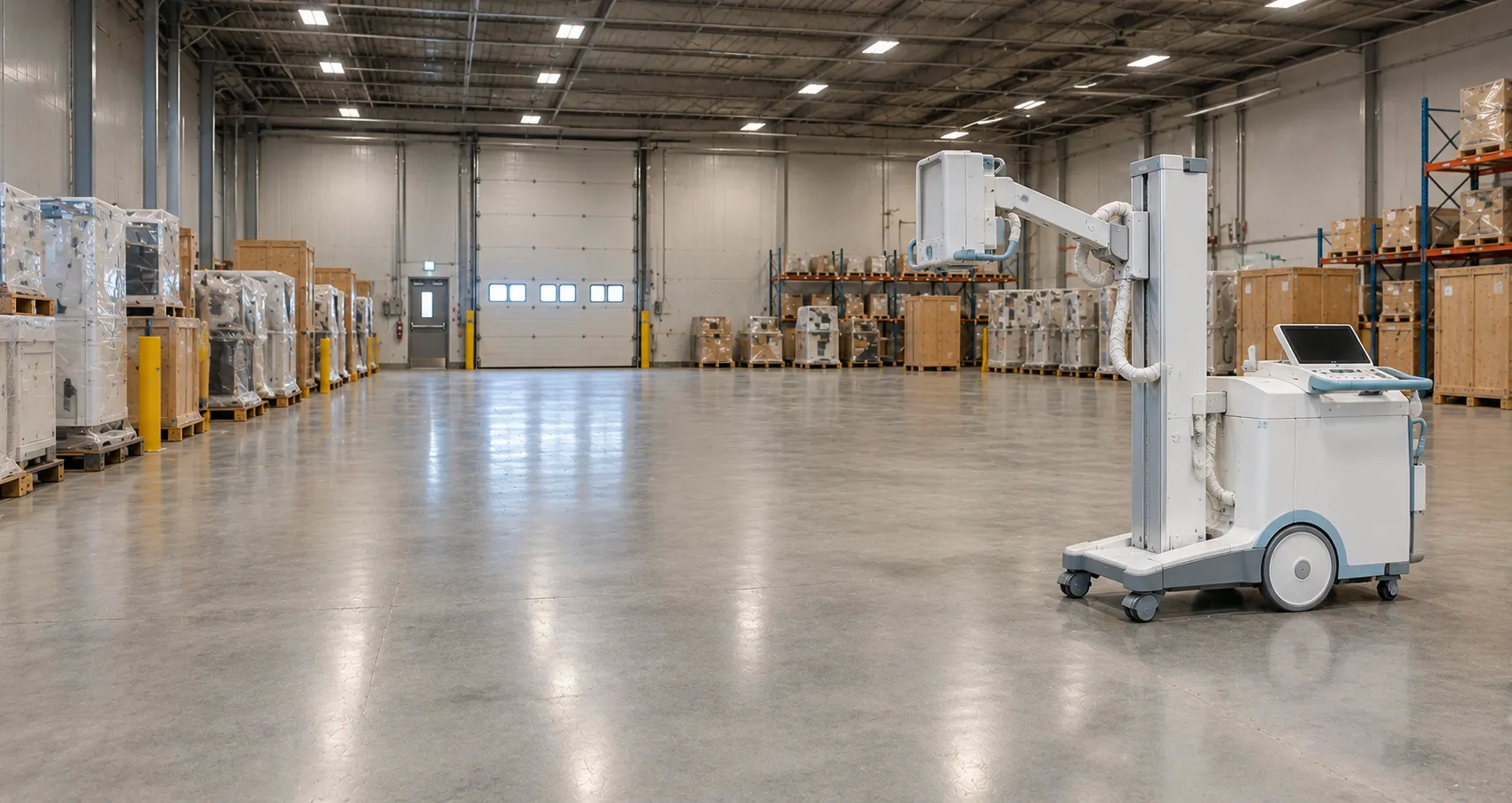
International orders take longer and travel further, which affects both planning and risk. Build realistic lead times into your project, allowing for manufacturing, freight, customs clearance and any inspection on arrival. Long sea freight exposes delicate equipment to vibration, humidity and temperature swings, so specify appropriate packaging and transit insurance for the device's value. Agree what happens if goods arrive damaged or delayed. For anything clinically time-critical, weigh the longer, less predictable international lead time against a shorter domestic supply, because a low price is no help if the device lands three months late.
After-sales support and spares in the UK
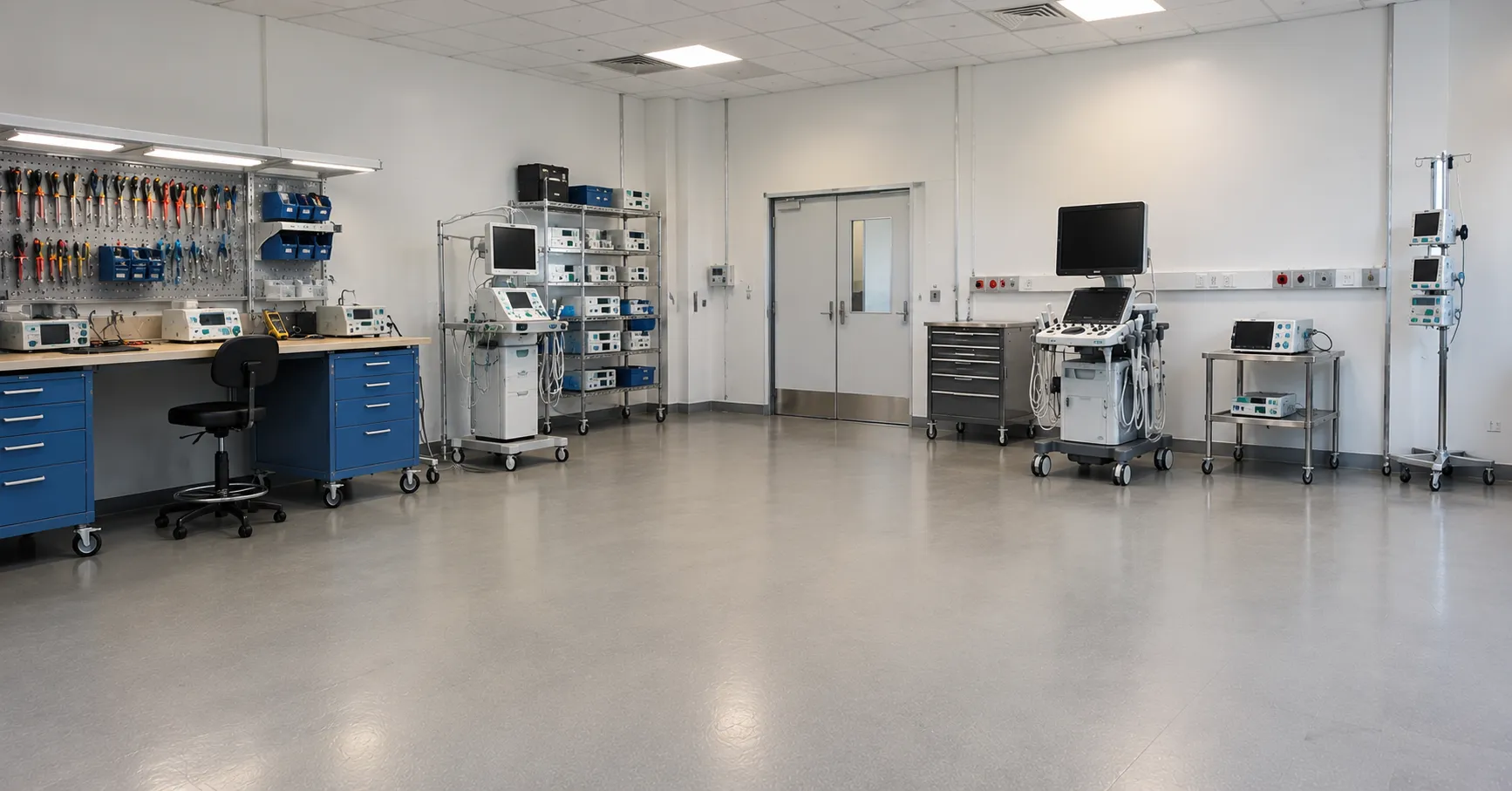
This is where international sourcing most often falls short: the device is only as good as the support behind it, so confirm before you buy that there is a UK or European service network able to maintain it, that spare parts are held or shipped quickly, and that consumables are available here without long waits. Establish the warranty terms and, crucially, how a claim is honoured across borders. Check whether your in-house biomedical engineers can obtain manufacturer training and service documentation. An overseas bargain with no realistic UK support becomes unmaintainable the first time it faults.
Comparing international and domestic sourcing
Set the two routes side by side honestly. International suppliers can offer wider choice, access to technology not yet distributed here and lower unit prices, but bring regulatory, logistics, warranty and communication risk. Domestic or UK-based distributors cost more per unit but carry the compliance, hold spares, provide local service and are far easier to hold to account. Many buyers use a UK distributor precisely to get international products with domestic support and accountability. Through MediGear you can check overseas suppliers against UK-supported ones, so a foreign price is weighed against the support that has to come with it.
Before you order from an overseas supplier
-
Valid UKCA or CE marking for the exact model, accepted for the UK market.
-
Manufacturer or UK Responsible Person registered with the MHRA.
-
Proof that the supplier is a genuine manufacturer or authorised distributor, with references.
-
Clear Incoterms defining cost, insurance, risk, customs, duty and VAT responsibility.
-
Realistic lead times with transit insurance and protective packaging specified.
-
A UK or European service network, spares and consumables confirmed available.
-
Warranty terms and how a cross-border claim is actually honoured.
-
Access to service documentation and manufacturer training for your engineers.
Where cross-border deals come unstuck
The most common failure is buying on price and discovering the marking is not valid for the UK, so the device cannot be placed in service. Close behind is the unmaintainable purchase — no UK spares, no local service, consumables that take weeks to arrive. Buyers also misread Incoterms and get landed with customs, duty, and clearance costs they assumed the seller carried. Others deal with an unauthorised reseller and end up with grey-market stock and no valid warranty. And optimistic lead times derail projects when freight and customs take far longer than promised. Every one is avoidable with the checks above.
Samples, factory evidence and first-article checks
For a significant international order, do not rely on the brochure alone. Where practical, obtain a sample or arrange a demonstration of the exact model before committing to a large quantity, and ask for evidence from the manufacturer's own quality processes — test reports, batch records or a first-article inspection of the initial unit. For high-value or bespoke equipment, some buyers arrange a pre-shipment or factory inspection so problems are caught before goods leave the country rather than after they arrive. Verifying the product against its documentation while the supplier still holds it, and you still hold the payment, is far stronger leverage than discovering a discrepancy once the container has landed.
Payment terms and protecting your money
Paying an unfamiliar overseas supplier is a risk in itself, so structure the payment to protect you. Avoid large upfront transfers to a supplier you cannot easily hold to account; stage payments against milestones such as manufacture, shipment and accepted delivery where you can. Consider the protection different payment methods offer and, for significant orders, the security a letter of credit can provide. Make the final payment contingent on the goods arriving and passing your acceptance checks, not merely on dispatch. Recovering funds across borders is slow and often fruitless, so the time to protect your money is before it leaves, not after a dispute begins.
Language, time zones and communication
Practical friction sinks more international deals than people expect. Confirm you can communicate clearly with the supplier's technical and support teams, that manuals and interfaces are available in English, and that a time-zone gap will not stall urgent support. Agree who your named contact is and how quickly they respond. Clear written specifications and order terms matter more, not less, when a phone call is inconvenient, and nuance is easily lost. A supplier who is hard to reach or slow to reply during the sale will be no easier once a device faults, so treat responsiveness during negotiation as a preview of the after-sales relationship.
Sourcing across borders with confidence
International suppliers open up genuine choice and value, provided you put compliance and UK support ahead of headline price and pin down the import terms in writing. Verify the marking and registration, prove the supplier, fix the Incoterms and confirm the device can be serviced and supplied here before you commit. If you would rather capture international products with UK accountability behind them, MediGear can connect you with suppliers and sourcing partners and help you judge each option on more than price.
Disclaimer
This article is for informational purposes only. It is published by MediGear (medigear.uk) for general information and procurement guidance, and is not clinical, diagnostic, treatment, technical, engineering, legal or regulatory advice, nor a product endorsement, guarantee or substitute for professional assessment. MediGear does not provide medical consultations. Buyers should consult their clinical, biomedical, estates and regulatory contacts, and the manufacturer's documentation, and independently verify all specifications, certifications, compatibility and suitability before purchase. Specifications, certifications and availability are correct at the time of publication and may change without notice. MediGear is a medical-equipment distributor and does not sell medicines or pharmaceutical products.