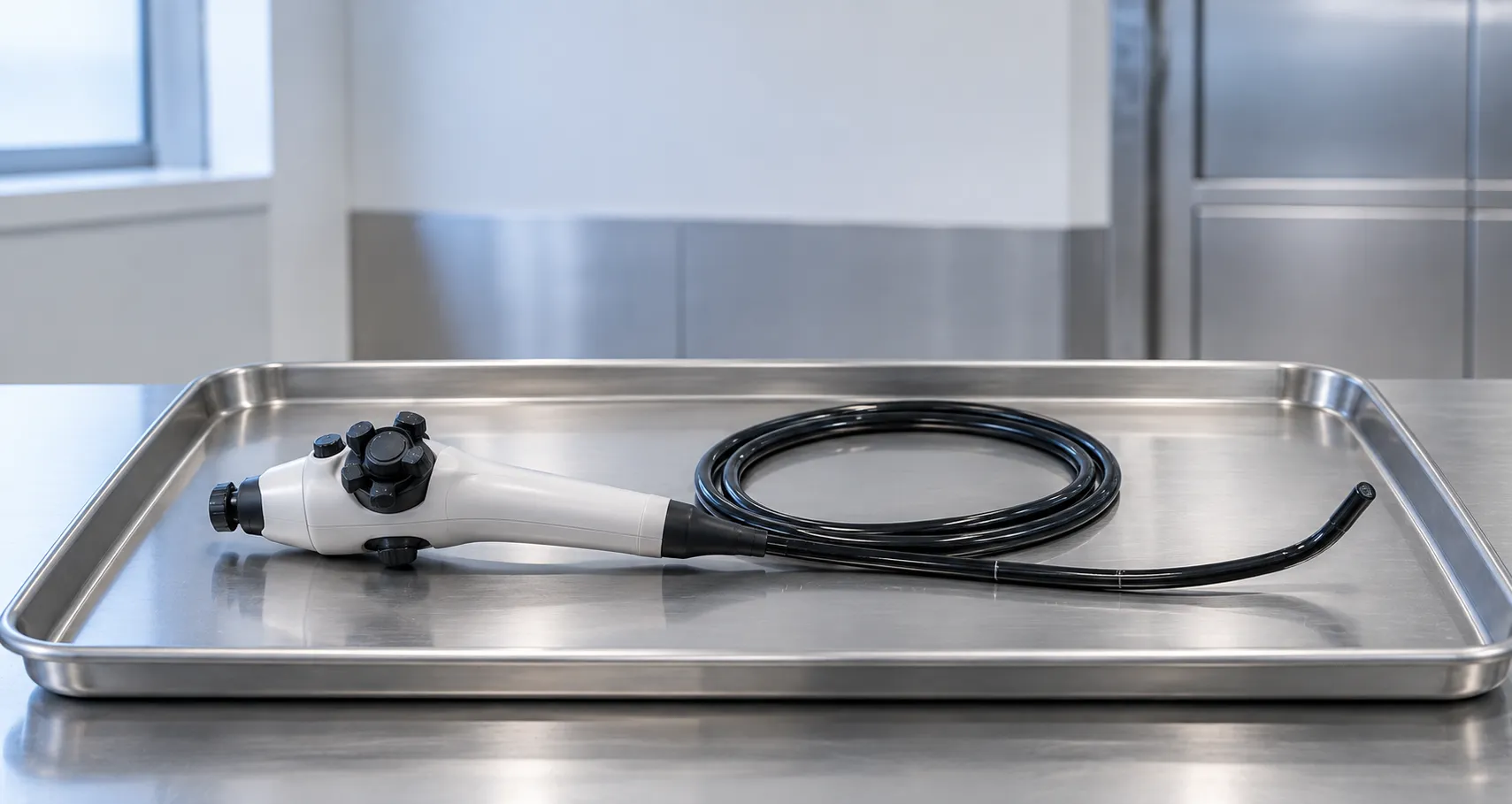
A transoesophageal echo probe is a semi-invasive cardiac ultrasound transducer mounted on the tip of a flexible endoscope, passed into the oesophagus so it can image the heart from directly behind it. Because only the oesophageal wall sits between the probe and the heart, it produces far clearer pictures of the valves, the left atrium and its appendage, and prosthetic devices than a chest-wall scan can manage.
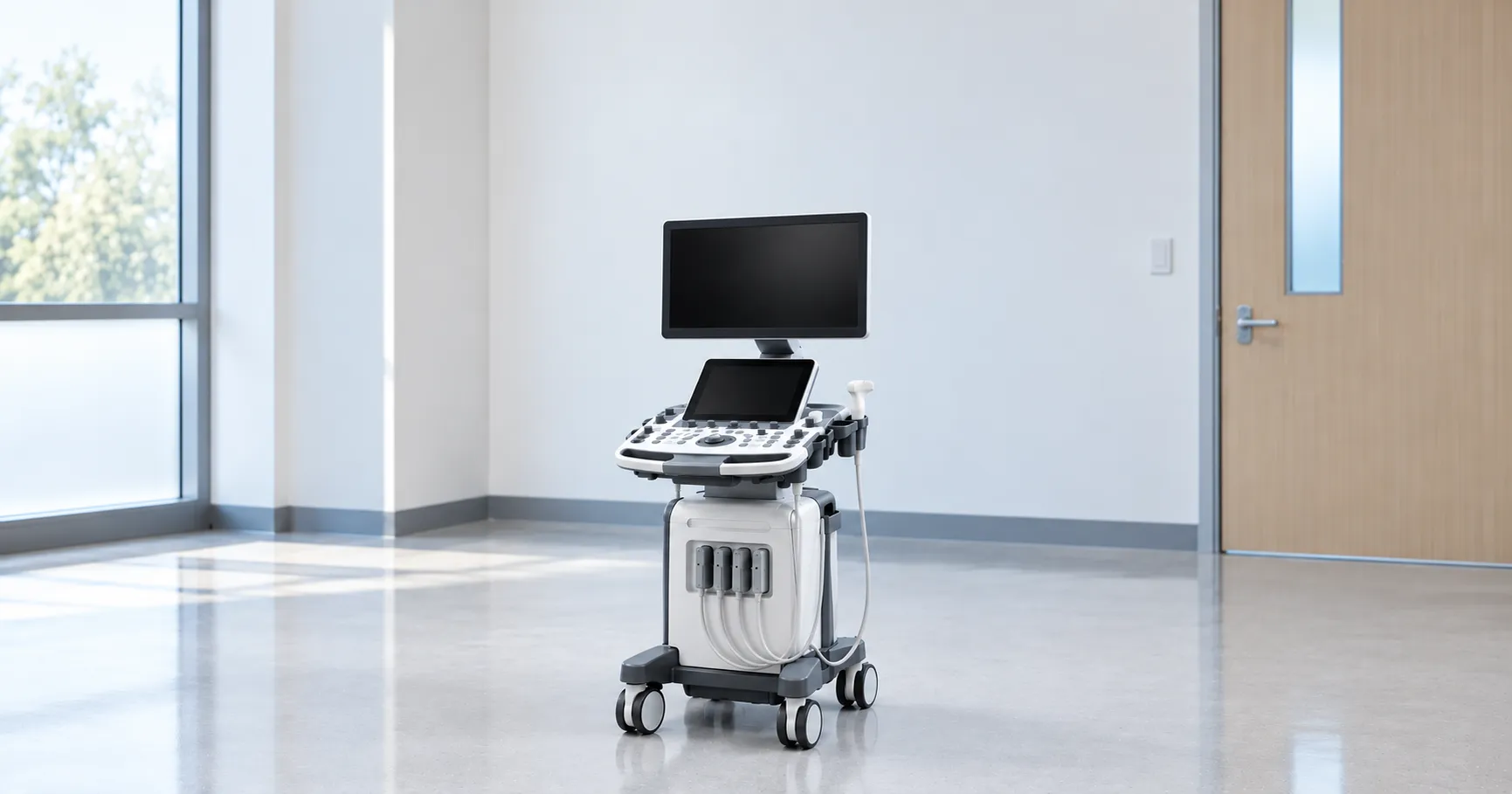
For a buyer, the transoesophageal echo probe is not a standalone machine — it plugs into a compatible echocardiography console — but it carries a disproportionate share of the cost, the clinical risk and, above all, the reprocessing burden. Specifying the probe without planning its decontamination is the classic procurement mistake.
When a transoesophageal echo probe earns its place
The transoesophageal echo probe is the tool of choice when a chest-wall scan cannot see enough. It guides structural interventions in the cath lab and theatre — valve repairs, appendage occlusion, septal closure — and is used to hunt for vegetations in suspected endocarditis, look for clot in the left atrial appendage before cardioversion, and assess prosthetic valves. Because it is semi-invasive and needs sedation or anaesthesia, it is reserved for questions transthoracic echo cannot answer, not used as a routine first look.
How the probe is built and how the heart is viewed
The device is a long flexible shaft with an articulating tip the operator steers with control wheels, flexing to sweep through the heart. A phased-array transducer sits at the very tip. Crucially, the array rotates electronically through a multiplane angle from 0 to 180 degrees without moving the shaft, so the operator can cut imaging planes through a structure from many angles. Advancing, withdrawing and rotating the probe, then adjusting the multiplane angle, gives the standard mid-oesophageal and transgastric views of the valves, chambers and great vessels. Three-dimensional matrix probes add live volume imaging that has become central to guiding valve procedures.
Probe sizes and patient fit
Adult probes suit most patients, but a service that images children needs a smaller paediatric probe, and neonatal or micro-multiplane probes exist for the smallest patients. Tip dimensions and shaft diameter matter because an oversized probe is unsafe in a small oesophagus. If your caseload spans paediatric to adult, confirm the console supports more than one probe and budget accordingly.
Decontamination: the heart of TOE procurement
This is where a transoesophageal echo probe differs from any chest-wall transducer. The probe enters the oesophagus, contacts mucous membranes and is classed as a semi-critical device, so it must be reprocessed to high-level disinfection between every patient — the same regime used for flexible endoscopes. UK practice follows the decontamination principles in HTM 01-06 and MHRA guidance, and the workflow mirrors endoscope reprocessing at every step.
The reprocessing cycle in practice
After use,e the probe is bedside-cleaned, then leak-tested to prove the fluid seal is intact, manually cleaned to remove all soil, and disinfected — most departments use an automated reprocessor validated for the probe rather than manual soaking. It is then dried and stored, ideally in a ventilated drying cabinet, and every cycle is logged so any probe can be traced to a patient. The health-department guidance on decontamination published at gov.uk and the wider infection-control context on nhs.uk set the expectations your standard operating procedure must meet.
What this means for the buyer
Before ordering a probe, confirm it is compatible with your reprocessor and that the manufacturer's approved chemistry matches what your unit runs. A probe you cannot fit into your existing decontamination workflow becomes a bottleneck or a safety incident. Factor in the drying-cabinet storage, the tracking system, the leak test, er and reprocessing consumables — these are real, recurring costs, not afterthoughts.
Bite protection and electrical safety
Patients bite, and a damaged shaft is both a patient-safety and an infection risk, so a bite guard is used on every case and the shaft is inspected for cracks before and after use. Electrically, the probe is part of medical electrical equipment held to IEC 60601-1, with the ultrasonic particular standard IEC 60601-2-37 governing acoustic output; the tip's temperature is monitored, and the console freezes transmission if the probe overheats. Leak testing after every use is the single most important routine check, because a breach lets fluid reach the electronics and ends the probe's life.
Compatibility, standards and regulation
A transoesophageal echo probe only works with consoles it is matched to, so the first compatibility question is which echocardiography machines in your fleet will drive it. Confirm UKCA or CE marking and file the conformance documents. Device alerts and field-safety notices are published by the Medicines and Healthcare products Regulatory Agency at mhra.gov.uk, worth checking for any probe model you are considering. This guide is compiled from manufacturer instructions for use, HTM decontamination guidance and MHRA material, and is written for UK procurement and infection-control teams.
Fragility and the true cost of ownership
A TOE probe is delicate and expensive, and the commonest causes of failure are avoidable: dropped tips, bite damage, and fluid ingress from a missed leak test. Repairs are costly, and turnaround leaves a service short. Budget for probe insurance or a replacement plan, reprocessing consumables, drying-cabinet storage,e and staff training. When you compare suppliers, weigh warranty and repair terms as heavily as the headline probe price, and use MediGear to compare verified suppliers.
Where the probe fits alongside transthoracic echo
A transoesophageal echo probe complements rather than replaces the chest-wall scan. Most patients are assessed first by transthoracic echo, and the probe is brought in when that scan cannot resolve the question — a prosthetic valve shadowed on the surface view, a possible vegetation, or the fine detail a valve repair demands during a procedure. Because it images from behind the heart, the probe excels at the posterior structures the chest wall hides, above all the left atrium and its appendage. Understanding that division of labour helps a service size its fleet: a busy structural and cath-lab programme leans heavily on TOE, while a general clinic may need only occasional access to a shared probe.
Warranty, repair turnaround and loan cover
Because a transoesophageal echo probe is fragile and a repair takes it out of service, the support terms deserve as much scrutiny as the imaging. Ask how long a typical repair takes, whether the supplier provides a loan probe while yours is away, and what the warranty covers — accidental damage and fluid ingress are common exclusions worth checking. A single probe out of action can stall a cath-lab list or a cardioversion clinic, so a service running heavy TOE volumes may need a spare in the fleet or a fast-turnaround repair agreement. Weigh these terms against the headline probe price when you compare suppliers, because downtime is expensive in both money and cancelled lists.
Storage, tracking and traceability
A reprocessed probe must stay clean until it is next used, so storage is part of the decontamination chain, not separate from it. Best practice is to hang the probe vertically in a ventilated drying cabinet that keeps the shaft straight and dry; coiling a damp probe in a drawer invites contamination and kinks the shaft. Traceability closes the loop: a tracking system records which probe was used on which patient, when it was reprocessed and by whom, so a decontamination failure or a suspected infection can be investigated. For a semi-invasive device,ce this audit trail is a governance expectation, and buyers should confirm the storage and tracking are in place before the first patient list.
Consumables and the reprocessing budget
The probe is a capital item, but the reprocessing around it is a recurring cost that is easy to underestimate. Single-use bite guards protect every patient and every probe; disposable probe sheaths, detergents, high-level disinfectant, leak-test components, and the reprocessor's own consumables all recur with volume. Staff time for the reprocessing cycle is itself a real cost. When you model the whole-life cost of a transoesophageal echo probe, add the decontamination consumables and labour to the probe price and repair plan, because the ongoing spend often rivals the purchase over a probe's life.
Before you buy a transoesophageal echo probe: checklist
-
Confirm compatibility with the specific echocardiography consoles in your fleet.
-
Probe size range — adult, paediatric or micro — matched to your patient population.
-
2D or 3D matrix imaging, licensed for the procedures you guide.
-
Compatibility with your automated reprocessor and approved disinfection chemistry.
-
Leak tester, tracking system and ventilated drying-cabinet storage in place.
-
Conformance to IEC 60601-2-37, current UKCA or CE marking and documentation.
-
Warranty, repair turnaround and replacement cover for a fragile, high-value probe.
-
Staff training on handling, bite protection and the reprocessing cycle.
The bottom line on TOE probes
A transoesophageal echo probe delivers heart views nothing else can, but its value depends entirely on the systems around it — a compatible console, a validated reprocessing workflow and disciplined handling. Specify the decontamination and compatibility as carefully as the imaging, and the probe will earn its keep across the cath lab, theatre and clinic. If you are sourcing a probe, MediGear can help you reach suppliers and compare terms.
Disclaimer
This article is for informational purposes only. It is published by MediGear (medigear.uk) for general information and procurement guidance, and is not clinical, diagnostic, treatment, technical, engineering, legal or regulatory advice, nor a product endorsement, guarantee or substitute for professional assessment. MediGear does not provide medical consultations. Buyers should consult their clinical, biomedical, estates and regulatory contacts, and the manufacturer's documentation, and independently verify all specifications, certifications, compatibility and suitability before purchase. Specifications, certifications and availability are correct at the time of publication and may change without notice. MediGear is a medical-equipment distributor and does not sell medicines or pharmaceutical products.