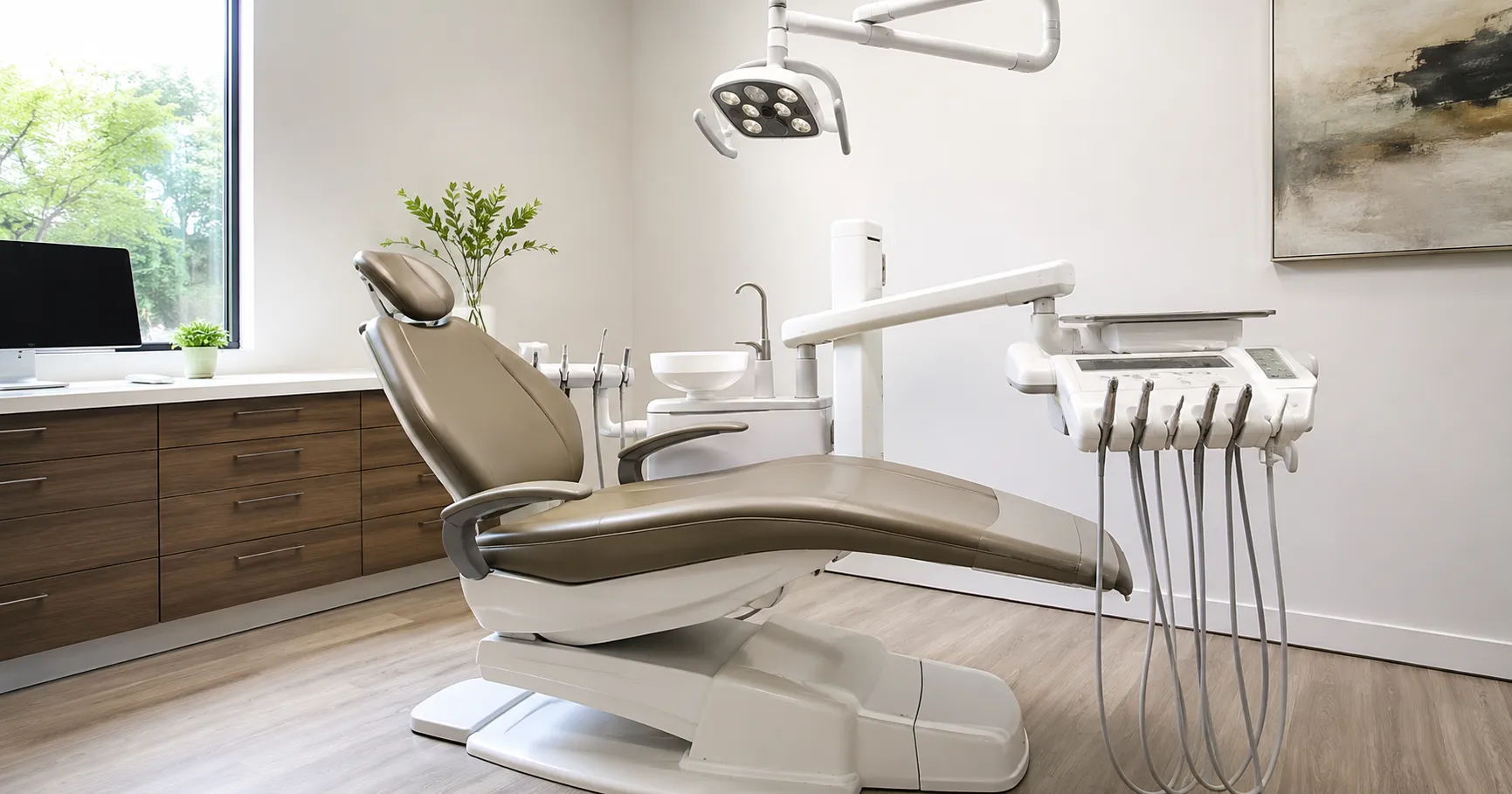
Selecting a dental chair is one of the most important decisions in designing an ergonomic dental practice, because the chair shapes the working posture of the entire clinical team and the comfort of every patient. The right dental chair supports healthy, sustainable working and a good patient experience; the wrong one creates daily strain. Many buyers compare dental chairs for sale on Medigear.uk when planning their purchase.
Dental chairs vary in their movements, delivery systems, upholstery and integration, so the best choice depends on how a practice works and the treatments it provides. Understanding these differences before selecting a dental chair leads to a chair that supports ergonomic practice rather than one the team must adapt to.
This guide outlines what to consider when selecting a dental chair for ergonomic practice design, from positioning and access to delivery systems, comfort, and cleaning so that a practice can build a healthy, efficient working environment.
Why the right dental chair matters
A dental chair is the centre of the treatment room and the reference point around which the clinical team works, so its design directly shapes their posture, access and comfort over long working days. The right chair supports good ergonomics, reducing the musculoskeletal strain that dentistry can cause, while also giving patients a comfortable, reassuring experience. Because the chair is used continuously and kept for years, selecting one that supports ergonomic practice repays itself many times over in health and efficiency.
What to weigh when selecting a dental chair
Positioning and movements
Consider the range and smoothness of the chair's movements, since good patient positioning is central to the clinician maintaining a healthy posture and clear access. A chair that positions patients precisely and easily supports ergonomic working. The quality of movement is fundamental to the choice. Manufacturers can also supply your dental chairs on Medigear.uk as a partner.
Clinician access
Weigh how well the chair allows the team to reach the working area comfortably, since access shapes posture and strain. A chair designed for good access lets clinicians work without twisting or stretching. Access is at the heart of ergonomic practice.
Delivery system integration
Consider how the chair integrates the delivery system and instruments, since their placement affects reach and workflow. A well-integrated delivery system keeps instruments within easy, natural reach. Integration shapes both ergonomics and efficiency.
Patient comfort
Weigh the comfort the chair offers patients, since a comfortable, well-supported patient is more relaxed and easier to treat. Good upholstery and support improve the patient experience. Comfort matters for both patient and treatment.
Upholstery and cleaning
Consider how easily the chair can be cleaned and decontaminated, since many patients use a dental chair and it must be turned around hygienically. Smooth, smooth, sealed upholstery and surfaces make cleaning faster and more thorough. Ease of cleaning is a real clinical feature.
Controls and usability
Look at how the chair is controlled, since clear, accessible controls, including foot controls, let the team position the chair without interrupting treatment. Intuitive controls support smooth working. Usability is part of ergonomic design.
Footprint and plumbing
Weigh the chair's footprint and its plumbing and services, since these shape how the chair fits the treatment room and the practice's layout. A chair that fits the room and its services well supports good room design. The physical fit matters in practice design.
Reliability and support
Examine the chair's reliability and the support behind it, since a dental chair is used constantly and downtime disrupts a practice. A dependable chair with responsive servicing keeps a practice running. Reliability and the support behind the device are central to the decision.
Ergonomics at the centre
The guiding principle in selecting a dental chair is ergonomics, because the chair shapes the working posture of the clinical team through every treatment of every day. Dentistry places real demands on the body, and a chair that supports good posture and access helps protect the team's long-term health. Selecting for ergonomics is an investment in the people who use the chair. A practice that puts ergonomics first chooses a chair that supports sustainable working.
Designing the room around the chair
A dental chair is the reference point for the whole treatment room, so a practice designs the room around the chair rather than fitting the chair into a fixed space. Considering how the chair, delivery system, clinician, and assistant all relate allows a practice to build an efficient, comfortable room. Good room design flows from a well-chosen chair. The chair and the room are designed together.
Comfort for patients
Alongside the team's ergonomics, a dental chair shapes the patient's experience, and a comfortable, well-supported patient is more relaxed and easier to treat. Good patient comfort improves both the experience and the treatment. A chair that serves patients well supports a positive practice. Patient comfort is part of a good chair, not an afterthought.
Infection control and turnaround. Many patients use a dental chair, so its design for cleaning and decontamination matters greatly, since the chair must be turned around hygienically between patients. Smooth surfaces and smooth, sealed upholstery make cleaning faster and more thorough. A chair that is easy to clean supports both safety and efficiency. Ease of cleaning is a genuine clinical priority.
Efficiency in the working day
A well-chosen dental chair supports an efficient workday, with smooth positioning, easy access, and integrated instruments that keep treatment flowing. Small efficiencies, repeated through many appointments, add up considerably. A chair that eases the working day serves a practice well. Efficiency and ergonomics reinforce one another.
Involving the whole team
The clinicians and assistants who use a chair every day understand what makes one comfortable and efficient, so involving the whole team in the choice leads to a better decision. A short trial often reveals what a specification cannot. Choosing a chair with its users, not just for them, pays off in daily use. The team's experience is valuable in the choice.
Fitting the practice's treatments
Different practices provide different treatments, so a dental chair is chosen to suit the work a practice actually does, from general dentistry to more specialised care. Matching the chair to the treatments provided ensures it supports the practice's real work. Fit to the practice's treatments is part of choosing well. The chair should suit the dentistry it will host.
The whole life of the chair
A dental chair is a long-term investment, so a practice considers not only its performance on day one but its durability, servicing and support over years of heavy use. A chair that is well supported and dependable stays useful far longer. Thinking about the chair's whole life protects the investment. A chair is chosen for the years ahead, not just the first day.
Planning the changeover
Replacing a dental chair involves plumbing, services and installation, so a practice plans the changeover to minimise disruption to treatment. Thinking through the installation and any downtime keeps the practice running smoothly. Carefully planning the changeover brings a new chair into service with the least disruption. A well-planned installation makes the transition smooth.
A checklist before you choose
-
Positioning. Check the range and smoothness of movements
-
Access. Confirm the chair supports good clinician posture
-
Delivery system. Weigh how instruments integrate and reach
-
Cleaning. Confirm the chair turns around hygienically
-
Fit. Check footprint, plumbing and room design
-
Trial. Trial the chair with the whole clinical team
Planning a dental chair selection
A practice's selection of a dental chair starts with how its team works and the treatments it provides, then matches the chair's movements, access, delivery system, a nd comfort to them, weighing ergonomics above all. Because the chair shapes the team's posture and the room's design, the choice is made carefully and, where possible, trialled first.
It also helps to plan the room around the chair and to think ahead to servicing and the chair's whole life, so the choice supports healthy, efficient working for years. A dental chair selected with ergonomics and the whole practice in mind builds a treatment room that serves team and patients well.
A chair that supports healthy working
Selecting a dental chair for ergonomic practice design comes down to matching its movements, access, delivery system and comfort to how a team works, with ergonomics weighed above all. A practice that designs the room around the chair, involves the whole team and looks to the chair's whole life selects one that supports healthy, efficient working and a genuinely good patient experience for many years to come. Buyers often source dental chairs from suppliers on Medigear.uk for their service.
Servicing and safety
A dental chair is used constantly, so servicing, safety checks and cleaning are essential to keep it safe and dependable. Staff should also know how to report a problem with a medical device to the MHRA if a dental chair or its integrated equipment is found faulty.
Selecting a dental chair in short
The right dental chair supports the ergonomics of the entire clinical team and patient comfort. Matching movements, access, delivery system and cleaning to how a practice works, designing the room around the chair and trialling with the team lead to a chair that supports healthy, efficient working. Chosen this way, a dental chair serves a practice for years.
This guide offers general procurement guidance on selecting a dental chair and is not clinical advice; local policy and manufacturer instructions always take precedence.