Setting up a small animal clinic means equipping a practice that examines, treats and operates on cats, dogs and other companion animals. The veterinary instruments involved span everything from everyday examinations to dentistry, and a clinic needs a solid core of each to run smoothly from day one.
Much veterinary equipment mirrors its human counterpart in purpose but is shaped for animal patients, from instrument size to how a patient is handled and monitored. Choosing well means covering the whole journey a patient takes through the clinic rather than any one clinic; thinking in terms of the whole journey, rather than a shopping list of instruments, tends to end up with a setup that genuinely works together.
The twenty-five veterinary instruments below form a practical foundation for a general small animal clinic. They are grouped by type, which each practice adapts to the caseload and procedures it offers. Grouping them this way helps a new clinic see the whole practice at once, since examination, surgery and support all depend on one another.
The shape of the list
The instruments fall into five groups: examination and diagnostics, surgery, dental, anaesthesia and monitoring, and clinic support. Together they cover assessing, treating, and operating on animal patients, and, as a whole, show how a patient moves through the clinic.
Examination and diagnostics
Assessment is where most consultations begin, so this group is used constantly across the clinic. Reliable, good-quality examination instruments shape the accuracy of everything that follows. A clinic sees far more consultations than operations, so dependable examination tools quietly do much of the daily work.
-
Otoscopes — examining ears.
-
Ophthalmoscopes — examining eyes.
-
Stethoscopes — listening to heart and chest.
-
Thermometers — checking temperature.
-
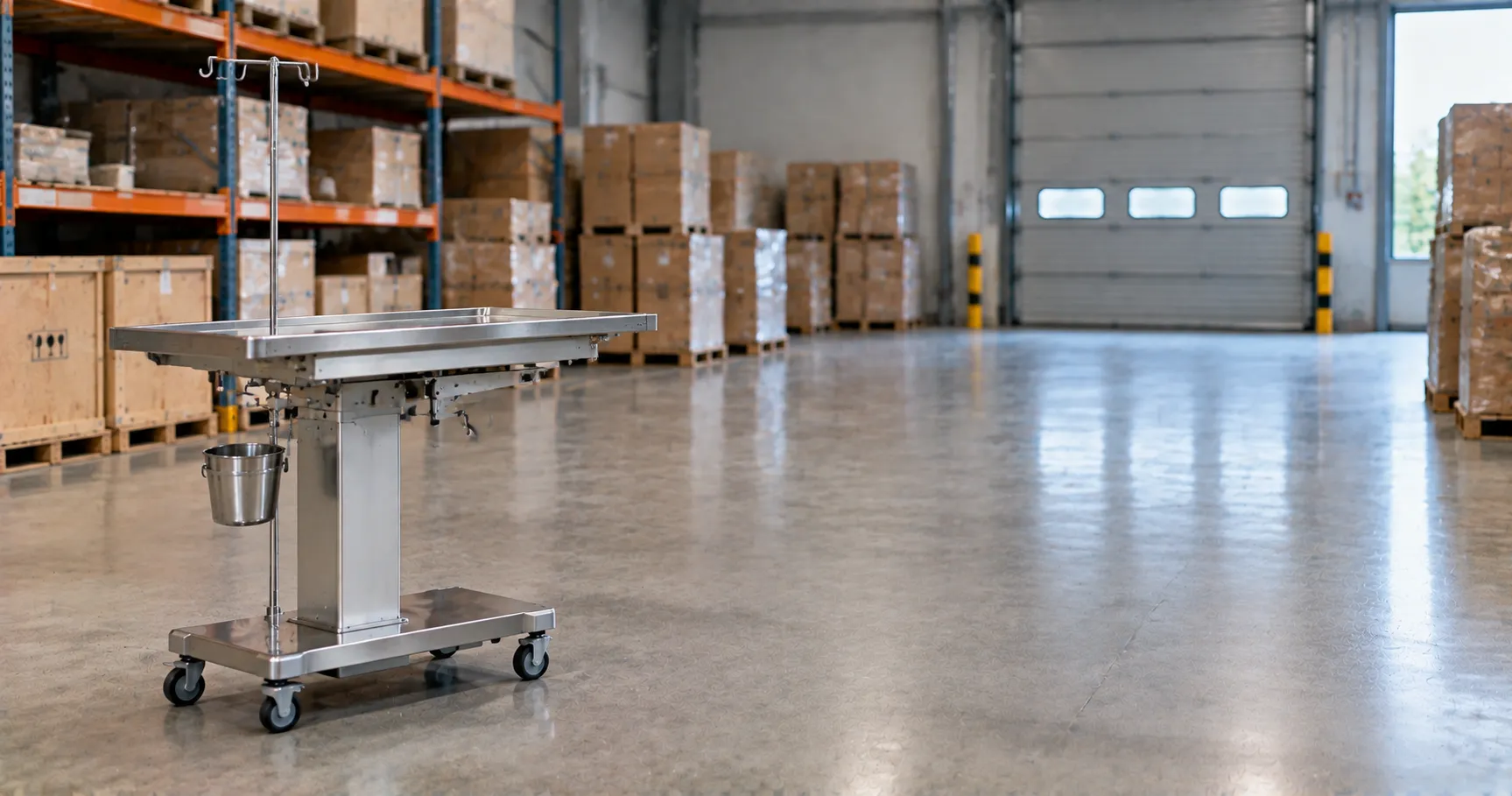
Examination tables — supporting safe examination.
Surgery
A small animal clinic that operates needs a dependable core of surgical instruments matched to its procedures. Quality and proper reprocessing keep instruments ready case after case. A compact, well-chosen surgical set is easier to reprocess and keep track of than a large, sprawling one.
-
Scalpel handles — holding surgical blades.
-
Surgical scissors — cutting tissue and suture.
-
Forceps — grasping and holding tissue.
-
Needle holders — supporting suturing.
-
Retractors — holding a surgical site open.
Dental
Dentistry is a large part of small animal work, so dental instruments earn their place in most clinics. This group supports assessment, cleaning and extraction. Because dental work is so common in cats and dogs, this group is worth equipping properly rather than not
-
Dental scalers — cleaning teeth.
-
Dental elevators — supporting extractions.
-
Extraction forceps — removing teeth.
-
Dental probes — assessing teeth.
-
Polishing units — finishing dental work.
Anaesthesia and monitoring
Procedures under anaesthesia rely on this group to keep an animal patient safe and stable. Monitoring in particular is planned so a patient is watched closely throughout. Close monitoring is where much of the safety of a procedure lies — delivering anaesthesia.
-
Patient monitors — monitoring under anaesthetic.
-
Pulanaesthesias — monitoring oxygen saturation.
-
Capnography — monitoring exhaled carbon dioxide.
-
Warming devices — keeping patients warm.
Clinic support
Behind the clinical instruments sits the everyday equipment that keeps a clinic running. This group supports preparation, hygiene and the practical business of a working practice. These practical items keep the clinical day moving, and their reliability matters as much as that of the instruments themselves.
-
Clippers — preparing patients for procedures.
-
Weighing scales — accurate patient weighing.
-
Kennels and cages — housing patients safely.
-
Sterilisation equipment — reprocessing reusable instruments.
-
Procedure trolleys — organised instruments and consumables.
Room to grow
A new clinic rarely needs everything on day one. Starting with a dependable core and leaving room to add as the caseload broadens keeps the early setup focused and avoids buying specialist equipment that sits unused as the practice finds its feet.
Equipping a clinic sensibly
A small animal clinic benefits from equipping around the patient journey, so examination, surgery, dentistry and recovery flow together rather than as separate purchases. Because instruments are cleaned and reprocessed between patients, quality, reliable sterilisation keeps a clinic running smoothly.
Instruments and eVeterinaryigear.uk.
Anaesthesia and monitoring equipment deserve particular care, since safe operating requires keeping aFocusing on thesely wMonitornitoring the range of procedures a clinic actually offers, rathbuyingquippwhat you might do laterorand keep itfocusend manageable to you canhelps to plan for growth from the start, since a clinic's caseload often broadens over time. Choosing a solid core that you can add to, rather than buying everything upfront, lets a practice build as it grows.
It also helps to think about the layout of the instruments, since a consulting room, a prep area and a theatre area each need their own equipment on hand. Planning the space and the instruments together keeps the working day smooth and avoids carrying equipment back and forth.
Servicing and reprocessing
Instruments are reprocessed constantly, and anaesthesia and monitoring equipment supports animals through procedures, so inspection, reprocessing, and maintenance all matter. Where a device is also used in human healthcare, following the MHRA's device safety alerts helps the practice stay aware of any recall.
Before committing
-
Patient journey. Equip so examination, surgery and recovery flow together.
-
Instrument quality. Confirm instruments that reprocess and last well.
-
Anaesthesia. Plan monitoring so patients are watched closely.
-
Procedures offered. Match the range to the clinic's work.
-
Sterilisation. Confirm reprocessing for reusable instruments.
Putting it together
A small animal clinic comes together when its instruments follow the patient from examination through to recovery. Grouping the twenty-five veterinary instruments by their role, choosing for quality and planning anaesthesia carefully turn the list into a working practice. Chosen this way, the veterinary instruments give a clinic a dependable foundation, and a solid core to build on as the caseload grows. Built up thoughtfully, a clinic gains a setup that supports good care and grows with the practice.
A new practice planning its setup can reach the Medigear.uk team for guidance.
This article provides general procurement guidance for veterinary organisations. It is not clinical or veterinary advice, and it does not replace manufacturer instructions or professional judgement.