Fitting out a hospital ward is about more than beds. Medical furniture shapes how a ward works day to day, from where staff record notes to how patients rest, receive visitors, and are treated, and it has to be durable, cleanable,e and safe as well as comfortable.
Good furniture quietly supports good care. It puts equipment and supplies where staff need them, gives patients somewhere comfortable and dignified to be, and stands up to constant use and cleaning without falling apart.
The twenty-five medical furniture items below cover the core of a general ward fit-out. They are grouped by their role in the ward, which each project adapts to the ward's purpose, layout and the space available. Grouping the items this way helps a project see the ward as a whole, since the beds, seating, storage and treatment areas all have to work together in one space.
Organising the fit-out
The items fall into five groups: beds and bedside, seating, storage and workstations, treatment and examination, and ward support. Together they cover the furniture that makes a ward workable for patients, visitors and staff. Seen together, the groups show how a ward supports patients, visitors and staff at the same time.
Beds and bedside
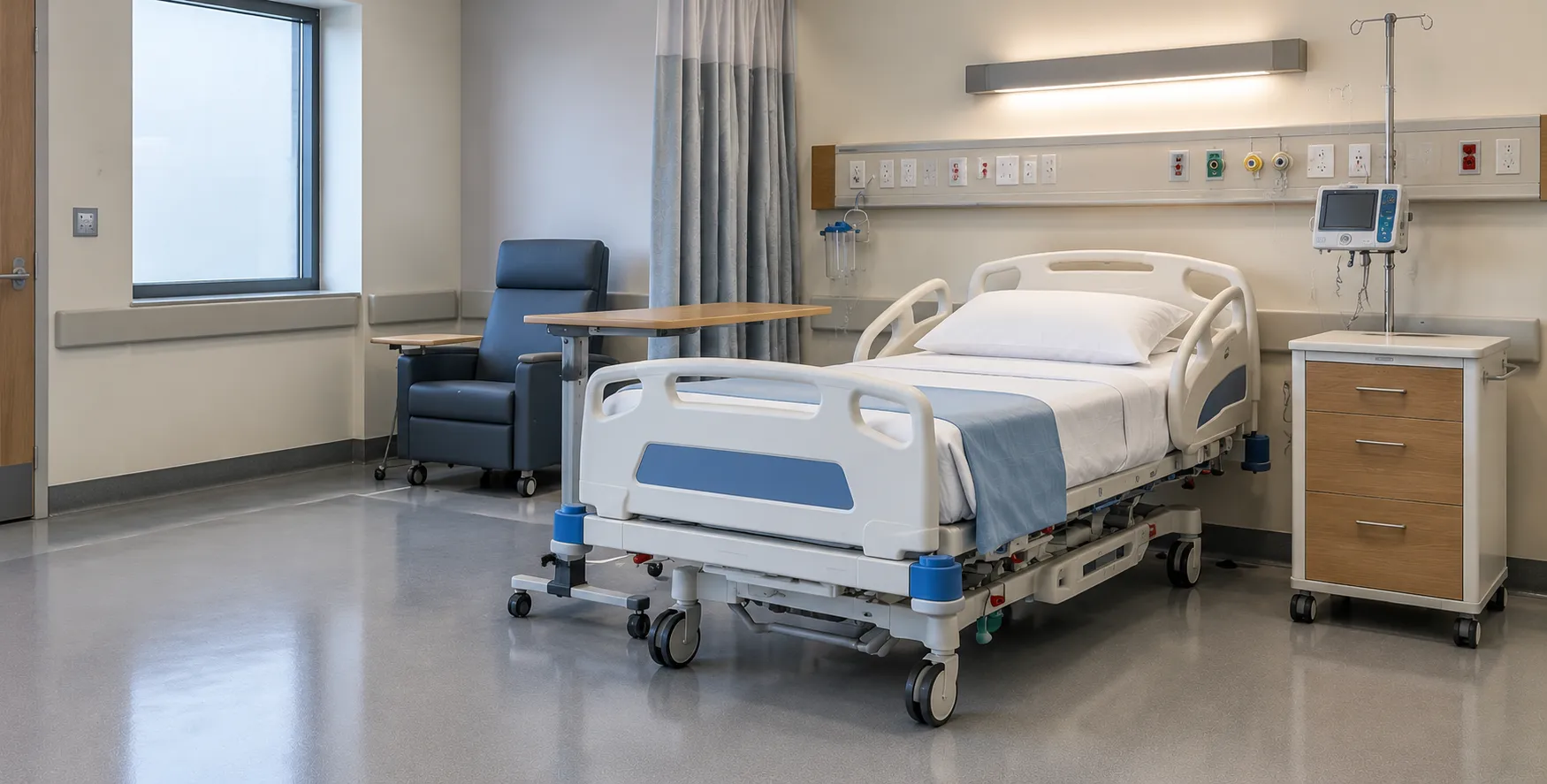
The bed and its immediate surroundings are the centre of each patient's space. This group provides the bed, its support surface and the furniture a patient uses close by. Getting this space right shapes a patient's whole experience, since it is where they spend most of their time.
-
Hospital beds — adjustable beds for patient care.
-
Mattresses — matched support surfaces.
-
Bedside cabinets — personal storage at the bedside.
-
Overbed tables — supporting meals and activities.
-
Bed screens — supporting privacy.
Seating
Comfortable, cleanable seating supports patients, visitors,s and waiting areas. This group covers the chairs a ward needs in its different spaces. Seating that is comfortable and easy to clean serves patients and visitors alike without becoming a hygiene problem.
-
Patient chairs — supporting rest away from the bed.
-
Visitor seating — for family and friends.
-
Recliner chairs — supporting longer, comfortable rest.
-
Waiting seating — for waiting areas.
-
Stools — practical seating for staff tasks.
Storage and workstations
Keeping supplies, medicines, and records organised and to hand keeps a ward running smoothly. This group provides the storage and working surfaces staff rely on. Well-placed storage keeps supplies and records where staff need them, which quietly saves time on every shift.
-
Medical trolleys — mobile storage for supplies.
-
Storage cabinets — organised ward storage.
-
Workstations — supporting recording and tasks.
-
Drug cupboards — secure medicine storage.
-
Notes trolleys — organising patient records.
Treatment and examination
Wards carry out examinations and procedures, which need dedicated, cleanable furniture. This group supports treatment at and away from the bedside. Dedicated, cleanable furniture for procedures keeps care safe and keeps the rest of the ward uncluttered.
-
Examination couches — supporting examination.
-
Treatment trolleys — organised equipment for procedures.
-
Dressing trolleys — supporting dressing changes.
-
Instrument tables — positioning equipment for procedures.
-
Privacy screens — supporting dignity during care.
Ward support
Behind the patient-facing furniture sits the support furniture that keeps a ward clean, organised and functional. This group is easy to overlook but essential. These are the items that keep a ward tidy and functional, and their absence is felt even when they go unnoticed.
-
Linen trolleys — managing clean and used linen.
-
Waste stations — supporting safe waste segregation.
-
Curtain systems — dividing and screening space.
-
Noticeboards — supporting ward information.
-
Cleaning stations — supporting hygiene routines.
Things to confirm
-
Cleanability. Confirm furniture cleans easily and suits infection control.
-
Layout. Plan furniture with the ward layout and flow.
-
Estates. Involve estates where fixtures are affected.
-
Standardisation. Align furniture across similar wards.
-
Purpose. Match furniture to the ward's purpose.
Planning the fit-out
Medical furniture has to be durable, cleanable and safe, so infection control and easy cleaning are as important as comfort and appearance. Because furniture defines how a ward flows, planning it with the layout, and with estates where fixtures are involved, keeps the space workable and safe.
Ward furniture of this kind can be sourced from the medical furniture suppliers on Medigear.uk.
Standardising furniture across similar wards eases ordering, replacement and staff familiarity, and it keeps the environment consistent for patients moving between areas. Matching the furniture to the ward's purpose, rather than a generic list, keeps a fit-out focused on how care is actually delivered there.
It also helps to think about the lifespan of the furniture, since ward furniture is in near-constant use and replacing it is disruptive. Choosing robust, well-supported items, and planning for their upkeep, keeps a ward looking cared for and working properly for years rather than months. Thinking about how each piece will be cleaned, moved and stored in daily use, rather than only how it looks when new, tends to lead to choices a ward is still glad of long after the fit-out is done.
Cleaning and infection control
Because ward furniture is touched, sat on, and cleaned constantly, its surfaces and joints matter as much as its shape. Furniture that wipes down easily, with few seams for dirt to gather in, supports infection control every day, and it is worth checking this as closely as comfort or appearance.
Upkeep and safety
Ward furniture takes constant use and cleaning, so durability, easy cleaning and scheduled checks on beds and adjustable items all matter. The ward and estates teams should also follow the MHRA's medical device alerts and recalls, so any notice affecting a bed or powered item is picked up promptly.
The whole picture
A well-fitted ward works because its furniture supports patients, visitors and staff alike. Grouping the twenty-five medical furniture items by their role, choosing for cleanability and durability, and planning the layout turn the list into a workable ward fit-out. Chosen this way, the medical furniture underpins how care is delivered on the ward. Chosen and maintained this way, it gives a ward a setting that supports good care day after day.
Larger fit-out projects may also benefit from working with a Medigear.uk partner.
This article provides general procurement guidance for healthcare organisations. It is not clinical advice, and it does not replace manufacturer instructions or professional judgement.