Recovering from a stroke is often a long journey that touches movement, balance, everyday tasks, and communication. The rehabilitation aids that support it are chosen to help a person rebuild skills step by step, working alongside the therapy team rather than replacing the hands-on work at the heart of recovery.
Because a stroke can affect people so differently, no single set of aids suits everyone. A good programme draws on a range that can be matched to each person's needs and adjusted as they progress, supporting both the physical and the cognitive sides of recovery. Approached with the whole person in mind, a programme supports not just movement but the confidence and independence that recovery depends on.
The twenty-five rehabilitation aids below cover the areas a stroke recovery programme commonly supports. They are grouped by the part of recovery they help with, and each service adapts to the people it works with. Grouping them this way helps a programme see the whole person, since movement, independence and communication all matter to recovery.
How the aids are organised
The aids fall into five groups: mobility and gait, upper limb and hand, balance and standing, daily living and independence, and cognitive and communication support. Together they cover the physical and cognitive sides of stroke recovery, and as a whole they show how a programme supports the whole person.
Mobility and gait
Rebuilding walking is a central goal for many stroke survivors, so this group is heavily used. The aids here support safe, graded progress towards independent movement. Progress here is often gradual, so aids that support safe, graded practice are especially valuable.
-
Walking frames — supporting steady walking practice.
-
Gait trainers — supporting walking practice.
-
Ankle-foot orthoses — supporting foot and ankle.
-
Parallel bars — supported gait practice.
-
Walking aids — sticks and supports for progress.
Upper limb and hand
Regaining arm and hand function is often slow and needs patient, repeated practice. This group supports rebuilding strength, movement, and grip. Regaining hand function can be slow, so this group supports the patient with the repeated practice that recovery needs.
-
Hand exercisers — rebuilding grip and movement.
-
Arm supports — supporting the affected arm.
-
Grip aids — supporting hand function.
-
Splints — supporting position and function.
-
Resistance bands — graded strengthening.
Balance and standing
Regaining balance and the confidence to stand underpins much of recovery. This group supports safe standing and balance practice. Confidence is as much a part of this as physical balance, so safe practice here supports both.
-
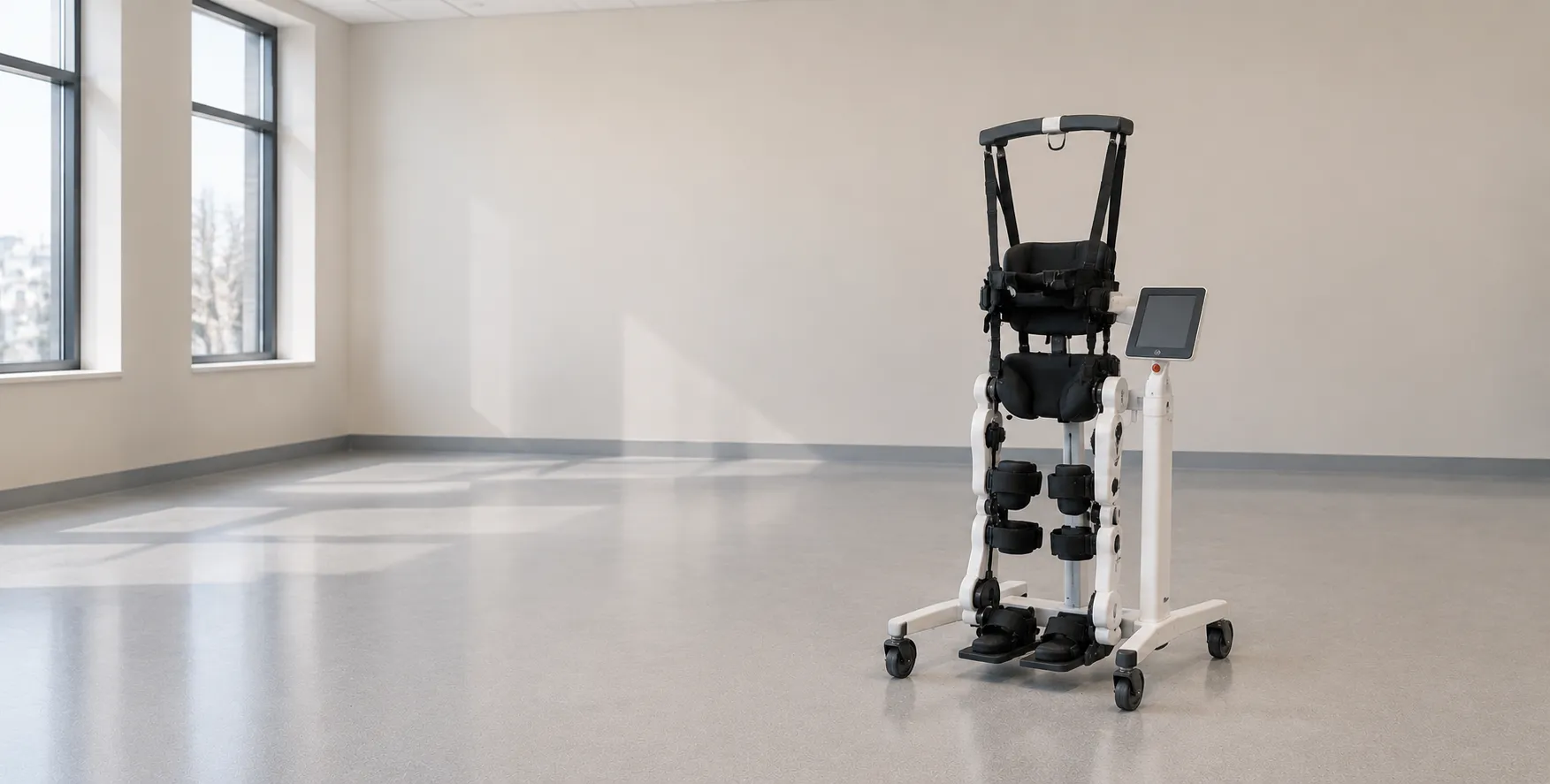
Standing frames — supporting standing practice.
-
Balance boards — supporting balance work.
-
Tilt tables — supporting early standing.
-
Support harnesses — supporting safe practice.
-
Balance aids — supporting steadiness.
Daily living and independence
Returning to everyday tasks is a major goal, and small aids can make it achievable. This group supports independence in daily life. Small wins in everyday tasks can mean a great deal to a person's sense of independence and progress.
-
Adapted cutlery — helping a person eat independently again.
-
Dressing aids — helping a person dress more independently.
-
Reachers — extending a person's reach safely.
-
Grab rails — supporting safe movement at home.
-
Transfer aids — supporting safe transfers between surfaces.
Cognitive and communication support
Stroke can affect thinking and communication as well as movement, so this group supports those sides of recovery. It helps a person reconnect and rebuild everyday skills. Supporting thinking and communication is as important as movement, since a stroke can affect all of these.
-
Communication boards — supporting communication.
-
Speech aids — supporting speech recovery.
-
Memory aids — supporting memory and routine.
-
Cognitive exercise tools — supporting cognitive work.
-
Orientation aids — supporting day-to-day orientation.
Building the programme
Rehabilitation aids work best when chosen with the therapy team and matched to each person's stage of recovery, so a programme benefits from a range that supports different needs and progress. Because a person's needs change as they recover, aids that can be adjusted or stepped up over time are especially valuable.
Rehabilitation aids of this kind can be sourced from the suppliers on Medigear.uk.
Durability matters too, since much of this equipment is shared and used intensively across a caseload. Choosing aids that stand up to heavy, repeated use, and that clean easily between people, keeps a programme running smoothly.
It also helps to keep the whole person in view, since stroke recovery spans the physical and the cognitive. A programme that supports movement, independence and communication together tends to serve people far better than one focused on any single area.
It also helps to plan for progress and review, since a person's needs change markedly as they recover. Aids that can be stepped up, and a programme that revisits them regularly, keep the support matched to where the person actually is.
Progress and review
A stroke survivor's needs rarely stand still, so a programme works best when it revisits the aids in use as the person recovers. Equipment that can be stepped up, and a habit of reviewing it regularly, keeps the support matched to where someone actually is rather than where they were at the start.
Before you buy
-
Therapy team. Choose aids with the therapy team.
-
Range. Confirm aids for different needs and stages.
-
Adjustability. Prefer aids that step up as people progress.
-
Durability. Confirm aids suited to heavy shared use.
-
Whole person. Support movement, independence and communication.
Cleaning and upkeep
These aids support people through a demanding recovery and are often shared, so cleaning, maintenance and safety checks all matter. The rehabilitation team also benefits from the MHRA's Yellow Card guidance on reporting device problems, so any concern with an aid is raised properly.
To finish
Stroke recovery is a journey across movement, independence and communication, and the right aids support every part of it. Grouping the twenty-five rehabilitation aids by the part of recovery they help with, choosing them with the therapy team and keeping the whole person in view turn the list into a supportive recovery programme. Chosen this way, these rehabilitation aids help a person rebuild step by step. Chosen with the person and adjusted as they recover, these aids support a genuine, step-by-step return to daily life.
Services equipping a programme can also use the Medigear.uk buyer marketplace.
This article provides general procurement guidance for healthcare organisations. It is not clinical or therapy advice, and it does not replace manufacturer instructions or professional judgement.