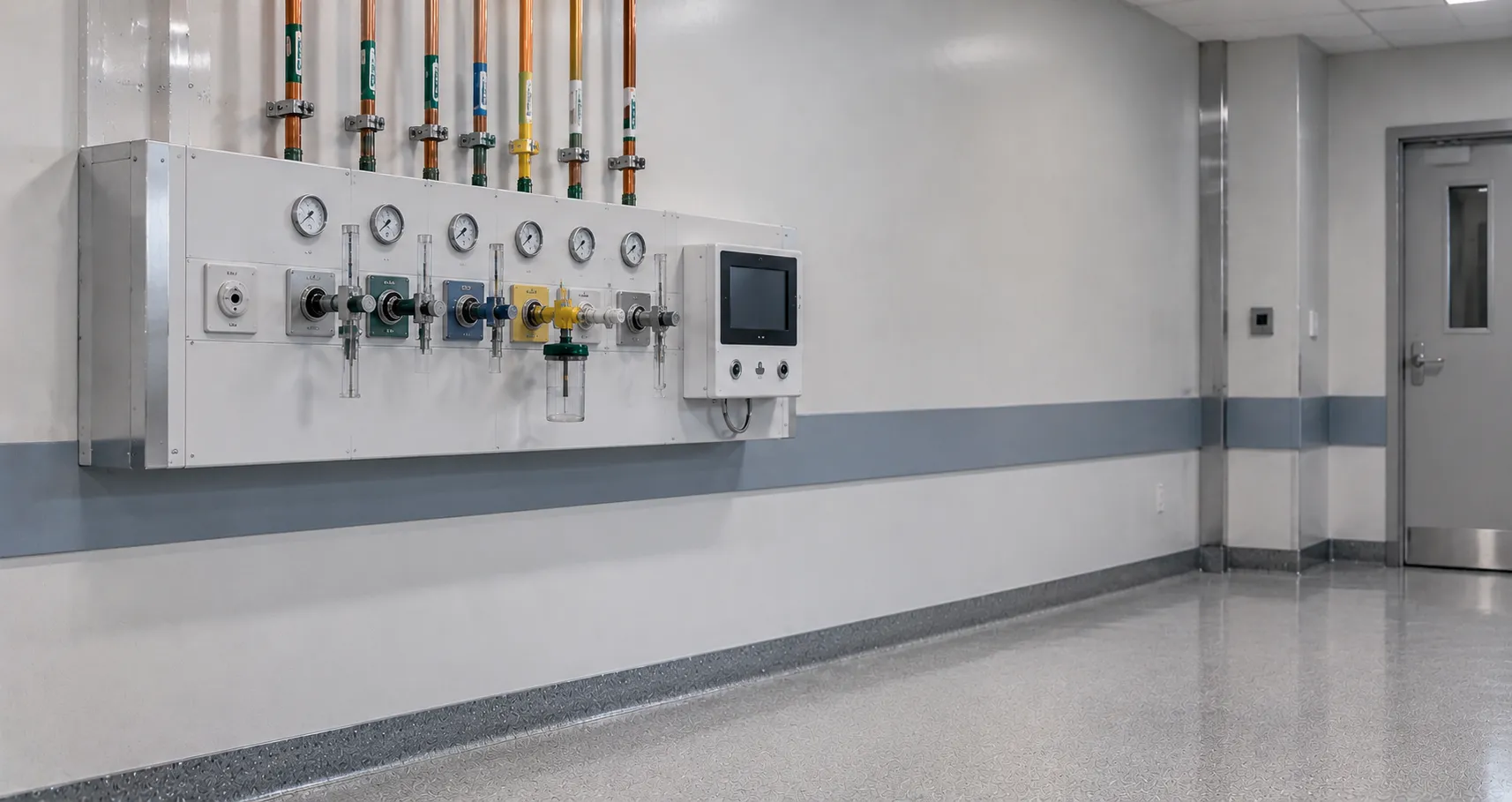
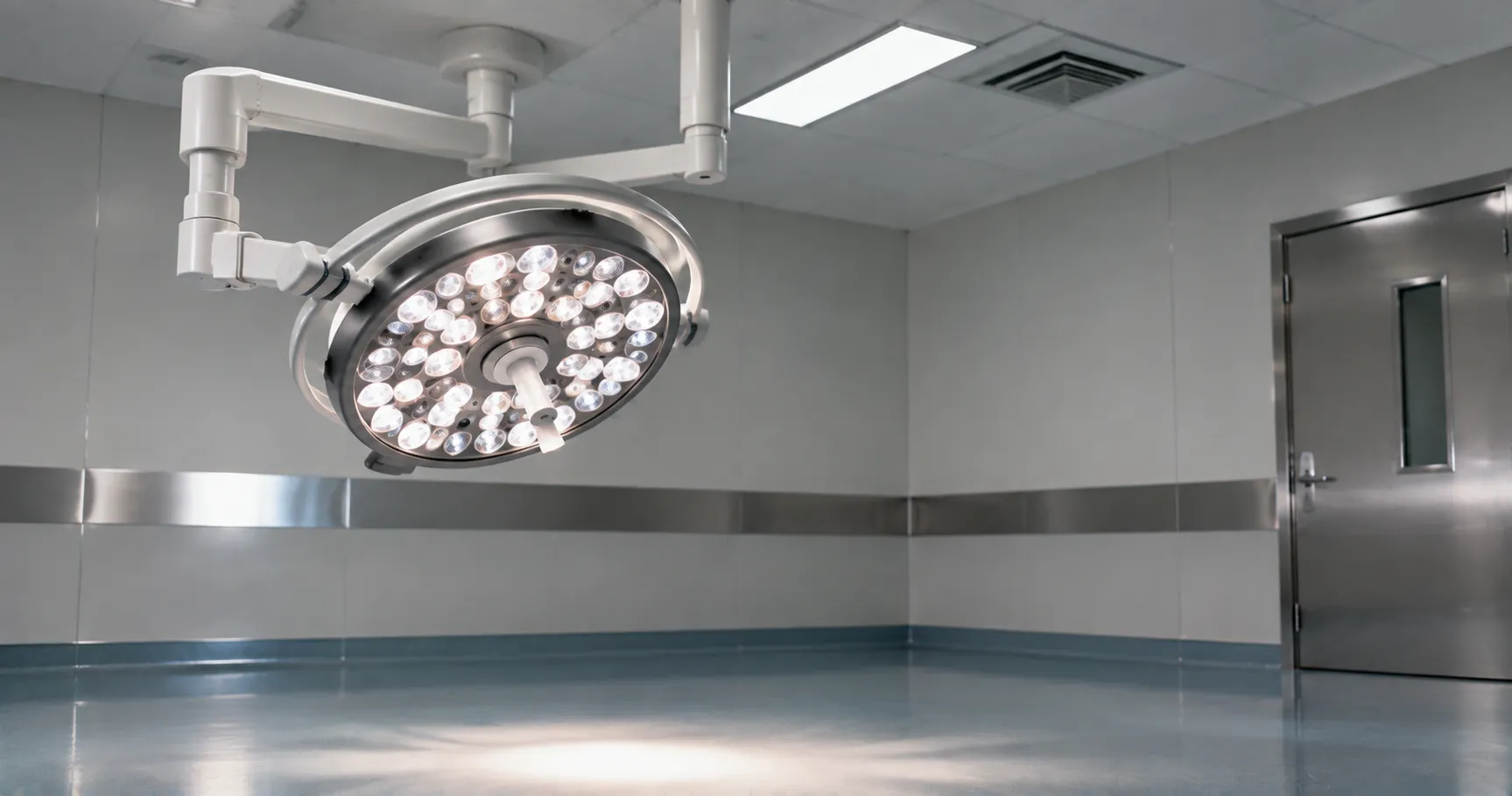
Lighting shapes almost every clinical task, from a surgeon working in a precise field to a nurse checking on a patient at night. Hospital lighting has to do more than illuminate a room; it must give clinicians the light they need while keeping the environment safe and comfortable for patients.
Different spaces need very different lighting. A theatre, an examination room, a ward bay and a specialist clinic each have their own demands, so a hospital draws on a range of lighting solutions matched to the task rather than a single approach used everywhere. Thought about in this way, lighting becomes part of good clinical design rather than an afterthought bolted on at the end.
The twenty-five hospital lighting solutions below cover the main clinical lighting needs across a site. They are grouped by where and how they are used, which each project adapts to its spaces and clinical services. Grouping them this way helps a project see the whole building, since good lighting is planned space by space.
Light quality, not just brightness
It is tempting to judge clinical lighting by brightness; colour accuracy and glare matter just as much. Light that shows tissue and skin in true colour, without dazzling staff or patients, supports better assessment and a calmer environment, so it deserves as much weight as raw output.
How the lighting is grouped
The solutions fall into five groups: surgical and procedure, examination and treatment, ward and patient, specialist clinical, and support and controls. Together, they cover a wide range of hospital tasks and show how light is attached to space.
Surgical and procedure
Procedures demand bright, shadow-controlled light exactly where the clinician is working. This group provides the focused, high-quality illumination that surgery and procedures need. Poor light here directly affects a clinician's work, so we specify this group for care.
-
Surgical lights — shadow-controlled theatre illumination.
-
Minor procedure lights — focused light for procedures.
-
Mobile operating lights — flexible procedure lighting.
-
Examination spotlights — bright, focused light.
-
Overhead theatre lighting — general theatre illumination.
Examination and treatment
Clinics and treatment rooms need clear, adjustable light for assessment and care. This group supports seeing clearly during examination and treatment. Adjustable, good-quality light lets a clinician see clearly without tiring, supporting accurate assessment.
-
Examination lamps — clear light for assessment.
-
Treatment lights — supporting treatment tasks.
-
Magnifying lamps — light with magnification.
-
Inspection lights — supporting close inspection.
-
Portable examination lights — flexible clinic lighting.
Ward and patient
Wards need lighting that supports care while remaining comfortable for patients day and night. This group balances clinical need with patient rest. The challenge here is serving clinical need and patient rest at once, which good controls make possible.
-
Bed head lighting — light at the bedside.
-
Reading lights — supporting patient comfort.
-
Night lighting — safe low-level light at night.
-
Nurse station lighting — supporting staff tasks.
-
Patient-controlled lights — giving patients control.
Specialist clinical
Some clinical areas need lighting shaped for a particular task or speciality group; specialist lighting covers those needs. Matching the light precisely to a specialist task can make a real difference to how well that task is done.
-
Phototherapy lights — supporting treatment.
-
Slit lamp illumination — supporting eye examination.
-
Dental lights — lighting the mouth for dentistry.
-
Headlights — hands-free focused light.
-
Inspection lamps — supporting specialist assessment.
Support and controls
Behind the clinical lighting sits the infrastructure that keeps it safe, controllable and maintainable. This group underpins the rest. The elements that keep lighting safe, adjustable, and maintainable, planned in from the start.
-
Emergency lighting — light during power loss.
-
Lighting controls — managing lighting easily.
-
Dimming systems — adjusting light levels.
-
Mounting systems — positioning lighting well.
-
Replacement components — supporting upkeep.
Before you specify
-
Space by space. Match lighting to each clinical space.
-
Estates. Plan fixed lighting with estates from the start.
-
Light quality. Confirm accurate colour and comfortable light.
-
Controls. Include controls staff and patients can adjust.
-
Resilience. Confirm emergency lighting and easy upkeep.
Planning the scheme
Hospital lighting is best planned space by space, since the right light for a theatre is quite different from the right light for a ward bay at night. Because lighting is often fixed and part of the building, it is planned with the estate plan to fit the space and its services.
Larger lighting: You can plan larger lighting schemes—UK partner.
Light quality matters as much as brightness, since clinicians rely on accurate colour and detail, and patients need comfort and rest. Matching each solution to the task, and including controls that let staff and patients adjust it, keeps the environment both clinical and humane.
It also helps plan for upkeep and resilience from the start, since lighting must work reliably and emergency lighting must be accessible even when something fails.
It also helps to consider use and long-term running alongside the clinical needs, since lighting runs constantly across a hospital. Efficient, durable lighting that is easy to maintain keeps a building well lit without becoming a burden to run.
Maintenance and safety
Clinical lighting must work reliably and safely, so maintenance, safety testing and checks on emergency lighting, with theatre checks, are carried out on a schedule. The estates and clinical teams can look to the MHRA for the safety standards that apply where lighting is part of a medical device.
Bringing it together
Good clinical lighting gives clinicians the right light where they need it while keeping patients comfortable. Grouping the twenty-five hospital lighting solutions by where they are used, planning space by space and including good controls turn the list into well-lit clinical environments. Chosen this way, hospital lighting supports both precise clinical work and patient comfort. Planned space by space, hospital lighting supports both careful clinical work and a calm, comfortable environment.
Individually sourced individual fixture lighting suppliers on Medigear.uk.
This article provides general procurement guidance for healthcare organisations. It is not clinical or estates engineering advice, and it does not replace manufacturer instructions or professional judgement.