
Bedside and Community Measurement
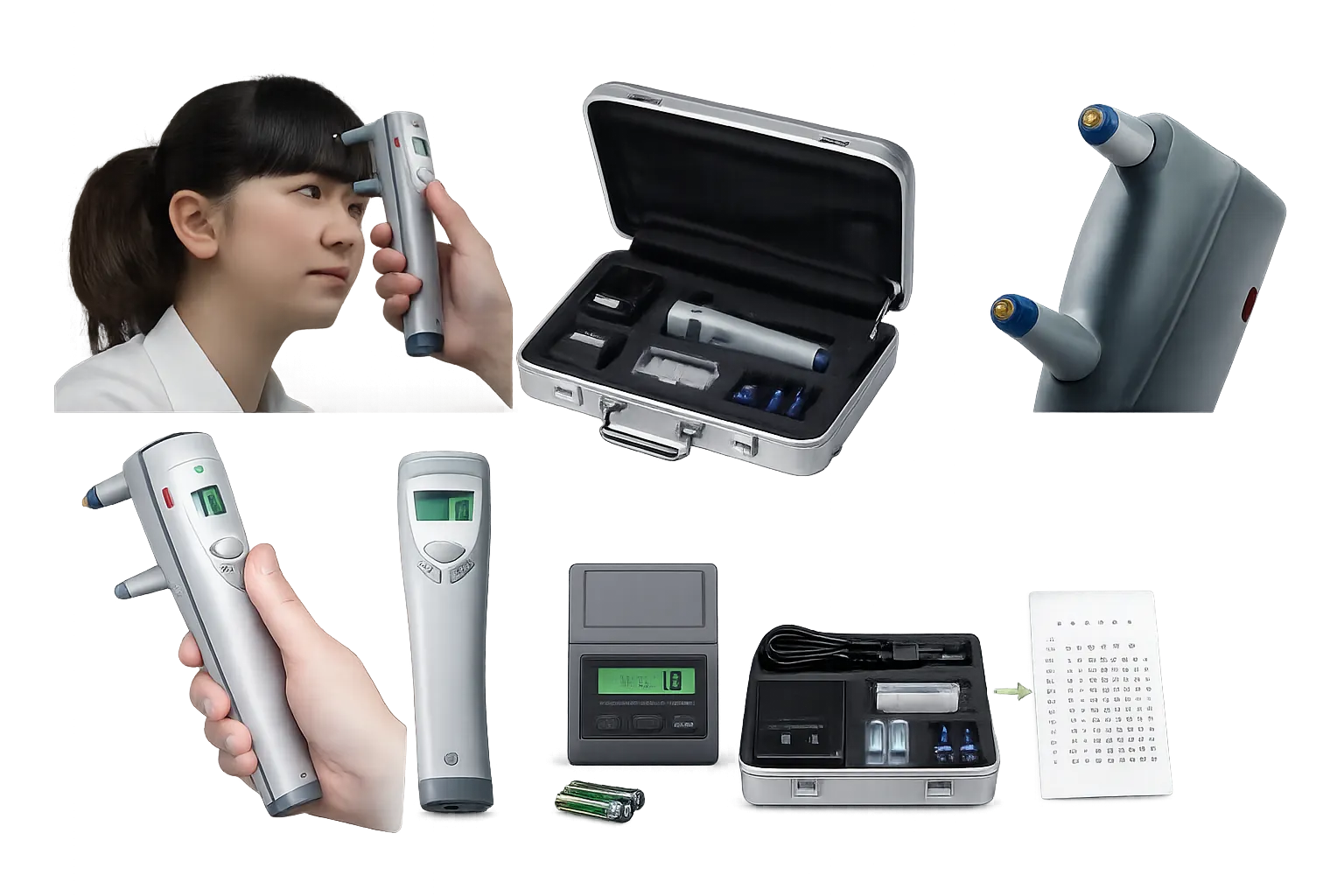
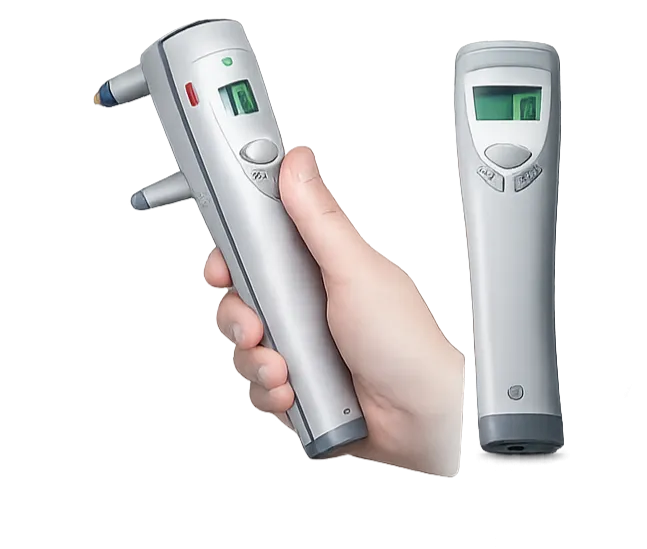
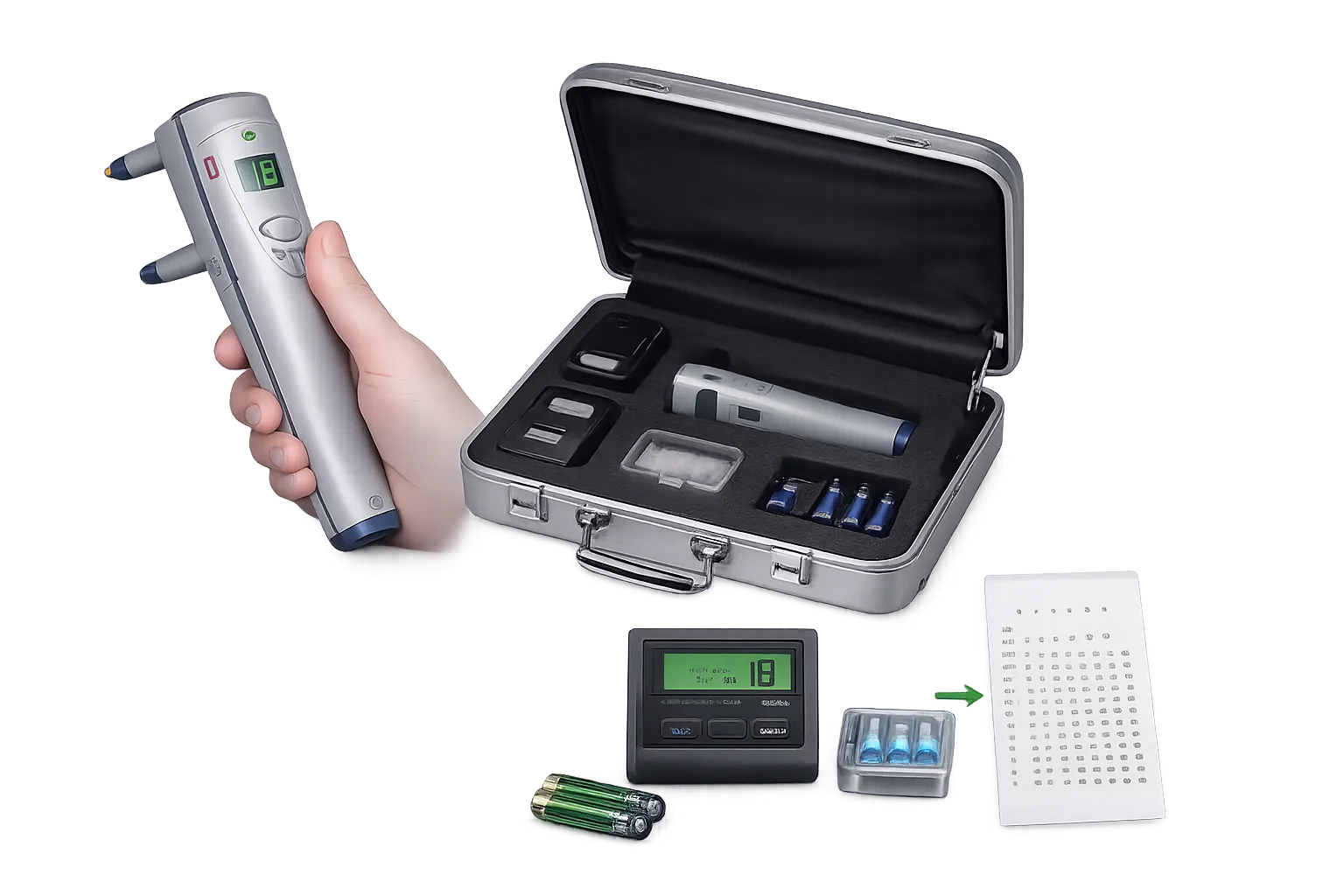
A handheld instrument needing no stand, no mains and no slit lamp can measure pressure wherever the patient is. Brief probe contact and battery operation suit ward rounds, care homes and community clinics, with interpretation of any reading resting entirely with the clinician taking it. Mounted equipment cannot follow a patient to a bedside. Ward rounds and care homes both come within reach. Interpretation rests with whoever takes the reading.
Paediatric and Anxious Patients
Momentary probe contact rather than sustained pressure against the eye suits patients who find examination difficult to tolerate. Whether any individual patient can be examined, and how the reading should be weighed, remains a clinical judgement for the examining clinician. Momentary contact is inherent to how the method works. Tolerance of examination varies considerably between patients. Clinical judgement governs whether a patient can be examined.
Screening and Outreach Work
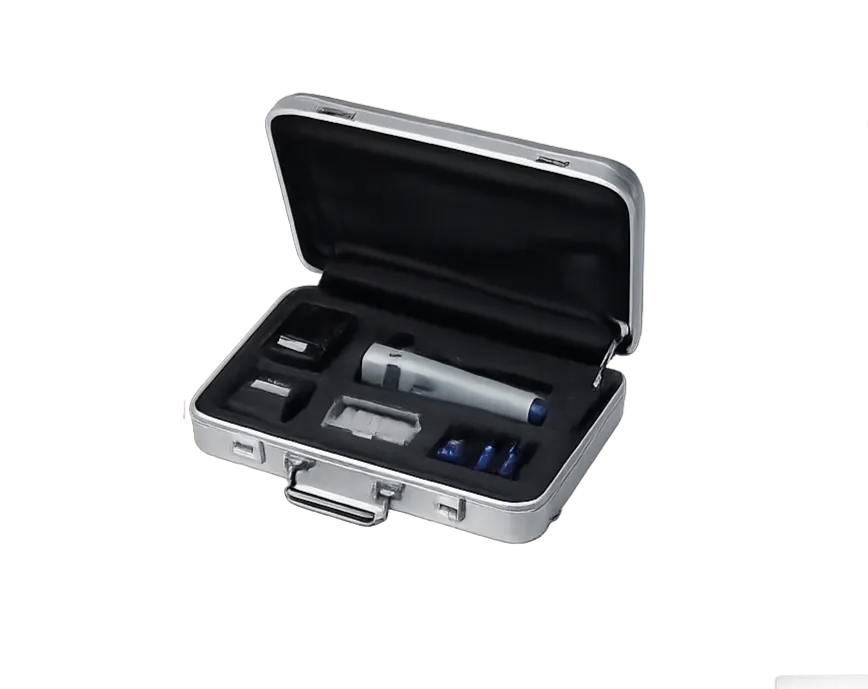
Battery operation with ordinary AA cells means no power supply need be found at the point of use, and the documented storage range accommodates equipment carried between sites in varying conditions. Probe consumable supply is the practical matter to establish before such work is planned. Consumables rather than power become the limiting factor. Storage limits accommodate varying transport conditions. Probe supply becomes the practical planning constraint.
Services Comparing Stated Accuracy
An error figure split into two bands gives a service something concrete to weigh against other instruments. Where the margin widens above 25 mmHg is exactly the information a department assessing equipment for glaucoma work would want stated rather than averaged. Averaged figures would hide where the margin widens. Two bands tell a service more than one figure could. Glaucoma work in particular depends on that upper band.