
High Volume Refraction
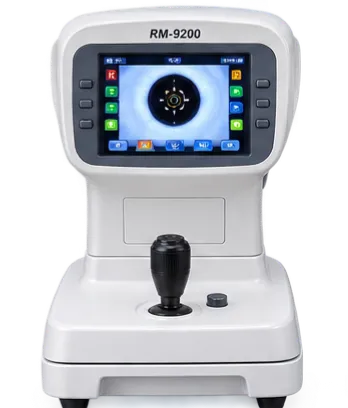
Automated tracking, focus and chinrest movement mean a measurement sequence runs with little operator adjustment, which suits a practice refracting many patients in succession. What is finally prescribed remains a clinical judgement rather than an instrument output. Operator adjustment falls to very little. Prescribing stays a clinical judgement. Consistency across a list depends upon that. Sequences run the same way each time. Many patients pass through in succession. Adjustment falls to very little indeed.
Practices With Limited Bench Space
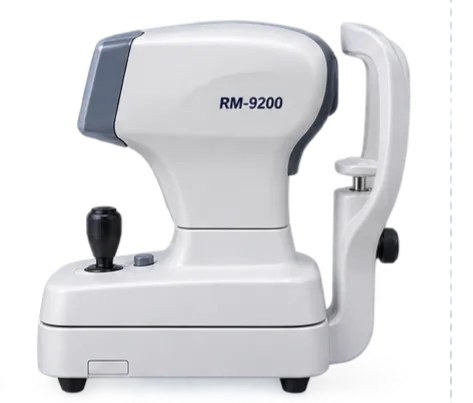
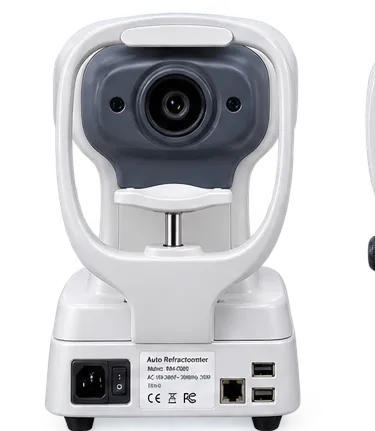
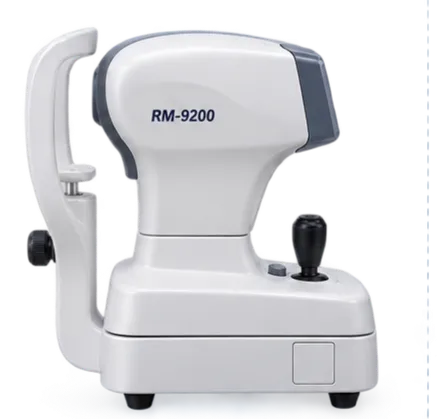
A console of 288 by 500 by 480 millimetres at 14.5 kilograms occupies considerably less room than the larger series. Where bench space is the binding constraint, that difference decides what can actually be installed. Installation depends upon available bench space. Smaller consoles fit more rooms. Larger consoles simply will not fit. Footprint decides the installation. Bench space decides many purchases outright. Compact consoles fit far more rooms.
Services Not Requiring Keratometry
Where corneal curvature is not routinely needed, a refraction only instrument avoids paying for a capability that would go unused. Practices fitting contact lenses should consider the ref/keratometer variant instead. Unused capability still costs money. Contact lens work needs the variant. Refraction only suits many practices well. Keratometry serves contact lens fitting. Paying for unused capability makes little sense. Variants exist for both cases.
Patients Difficult to Position
A motorised chinrest adjusted from the console rather than by hand helps where a patient cannot easily be positioned. Automatic tracking then follows the eye rather than requiring it to stay still against a fixed target. Fixed targets demand a still patient. Tracking follows the eye instead. Motorised positioning helps considerably here. Tracking follows rather than demanding stillness. Patients unable to hold still are accommodated. Console adjustment replaces manual handling.