
Cataract Biometry and Lens Calculation
Axial length feeds intraocular lens power calculation, and resolution of 0.01 millimetres with accuracy of plus or minus 0.02 bears on the refractive outcome. Six formulas give a surgeon the choice their practice requires, with the selection itself a surgical judgement rather than an instrument setting. A wrong axial length gives a wrong lens power. Precision therefore carries real consequence. Six formulas cover most cataract practice. Selection follows the eye being treated.
Services Moving Between Rooms
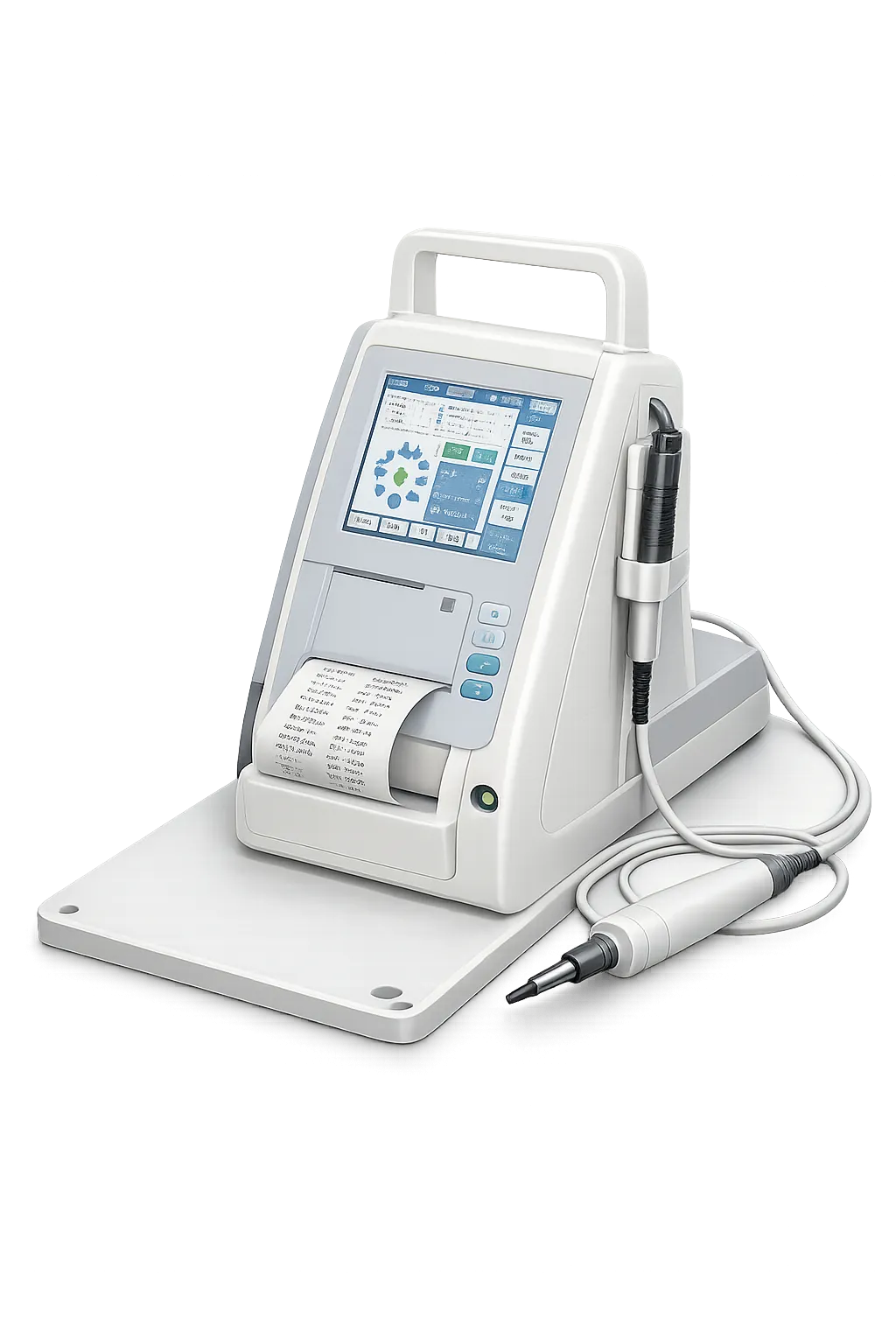
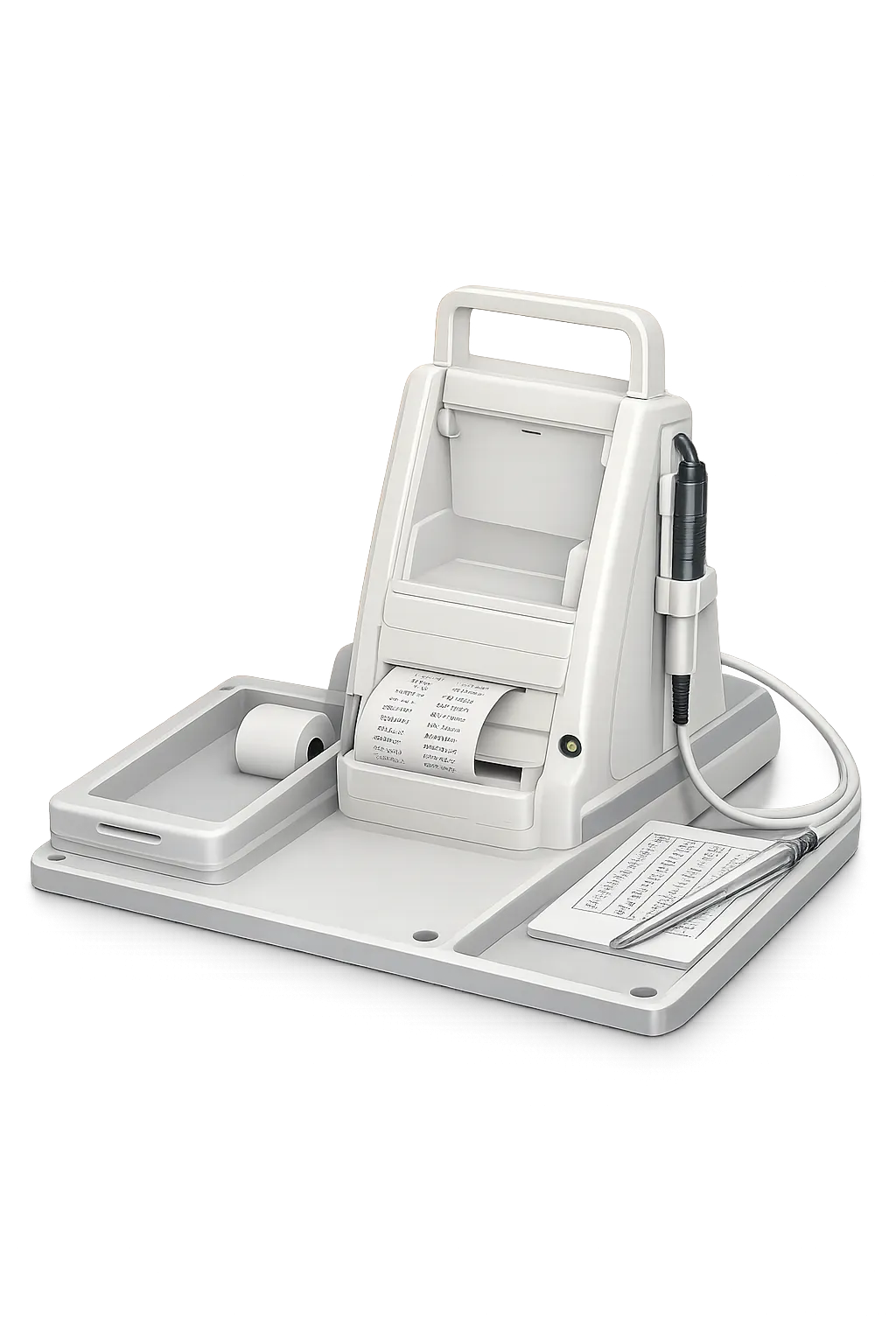
A console of 200 by 168 by 165 millimetres with a carry handle and internal printer can be moved between clinics rather than occupying one room permanently. Results print where they are taken, without a computer needing to be present. No computer needs carrying alongside the console. Clinics share the instrument between them. Portability and printed output work together. Rooms are shared rather than dedicated.
Corneal Thickness Measurement
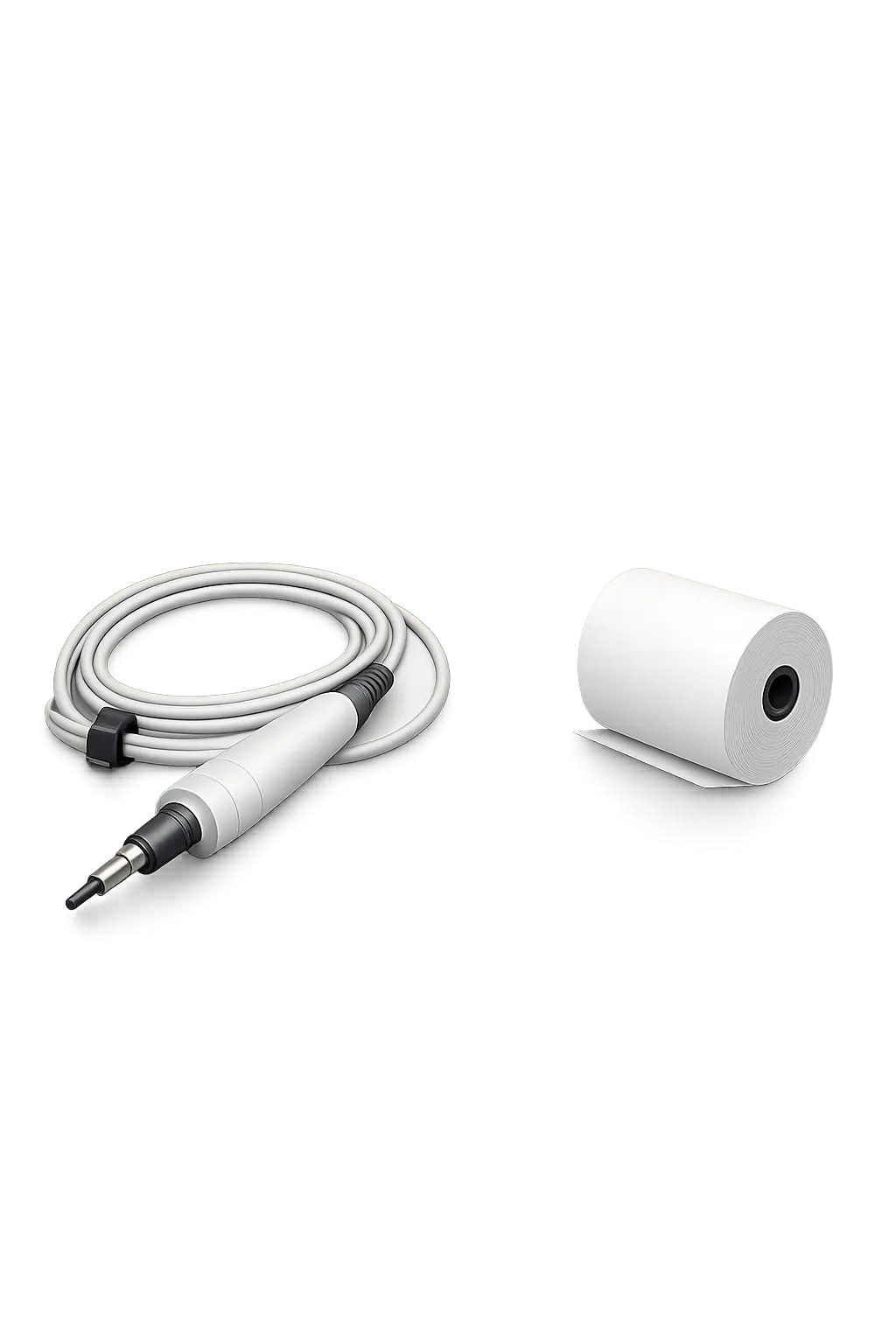
A 20 MHz probe resolving to 1 micron across 0.23 to 1.3 millimetres supports thickness assessment. What any measurement means clinically rests with the examining clinician rather than with the instrument producing it. Thickness supports assessment rather than settling it. Interpretation stays with the clinician. Both probe specifications are documented separately. Resolution and accuracy differ between them.
Departments Choosing Measurement Method
Immersion and contact are both available, as are automatic and manual operation. Departments hold settled views on measurement technique, and an instrument supporting both fits existing practice instead of requiring it to change. Neither method is imposed upon the department. Adoption proceeds more smoothly as a result. Automatic and manual operation are both offered. Practice rather than the instrument decides.