
Carrying an Instrument Daily
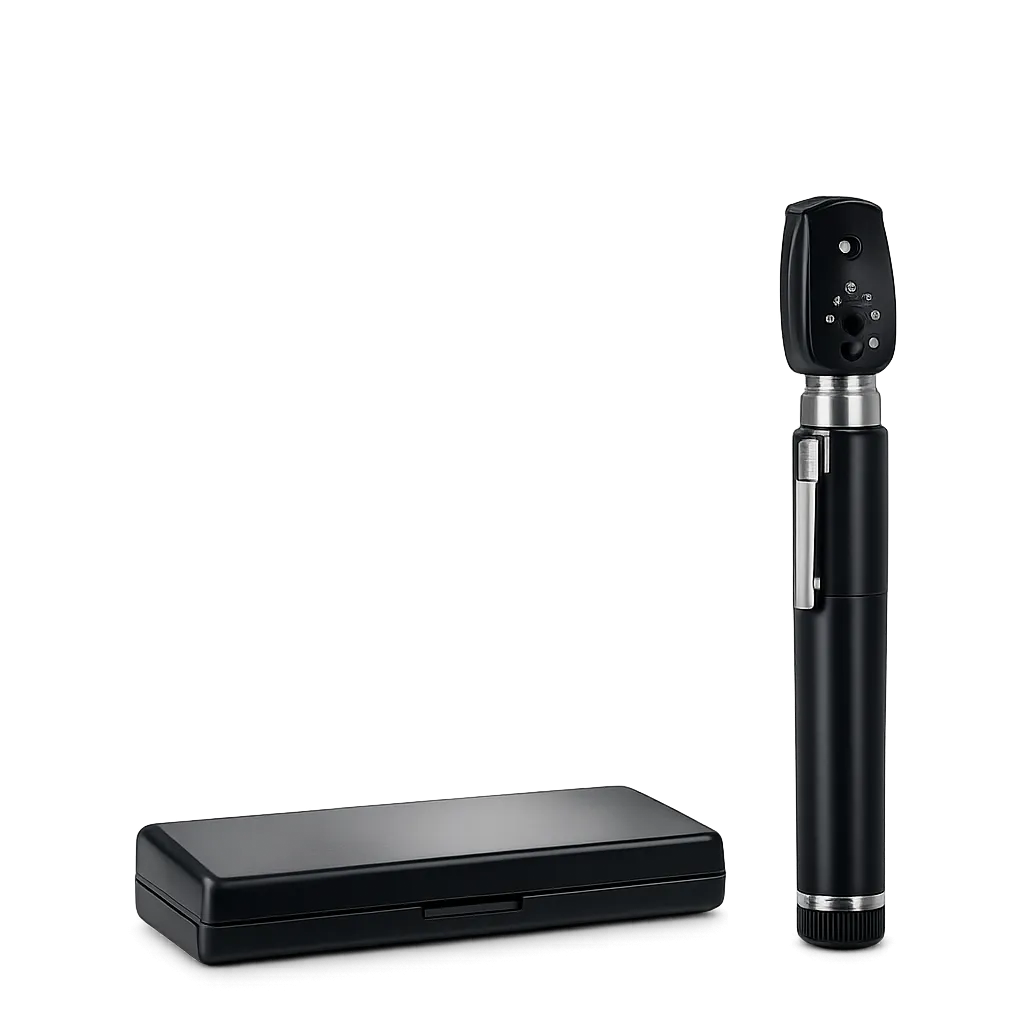
A pocket-sized case makes this the instrument that actually travels with a clinician rather than staying in a room. For anyone doing occasional fundus examination away from a clinic, an instrument present is worth more than a better one left behind. An instrument present beats a better one absent. Occasional examination is where it earns its place. Away from a clinic it may be all there is. Portability decides whether it is used. Occasional examination is its natural setting.
Undilated Examination in Darkened Rooms
With the room lights down and an undilated pupil, the lower bulb rating matters less than it would otherwise. Whether illumination is sufficient for a given examination is a clinical judgement for the examiner rather than a specification question. Room lighting bears on what is sufficient. Judgement stays with the examining clinician. Darkened rooms reduce the practical difference. Sufficiency depends on the examination. Illumination sufficiency is a clinical matter.
Settings Without Power or Charging
Dry cells suit places where charging is impractical and mains access unreliable. Replacements are obtainable anywhere, which for community and remote work removes a dependency that a rechargeable instrument carries. Charging dependency disappears entirely here. Community work benefits particularly from that. Batteries are obtainable from any shop. Remote work loses a dependency entirely. Charging infrastructure is unnecessary here.
Services With Standard Refractive Presentations
Compensation to plus or minus 20 dioptres covers the great majority of eyes. Where highly myopic patients form a regular part of the caseload, the absence of a setting beyond 20 is worth weighing before choosing this instrument. Most eyes fall well within that range. Myopic caseloads deserve consideration though. Standard presentations are covered fully. Higher specified models exist for the rest. Caseload composition governs the decision.