
Monitoring Myopic Progression
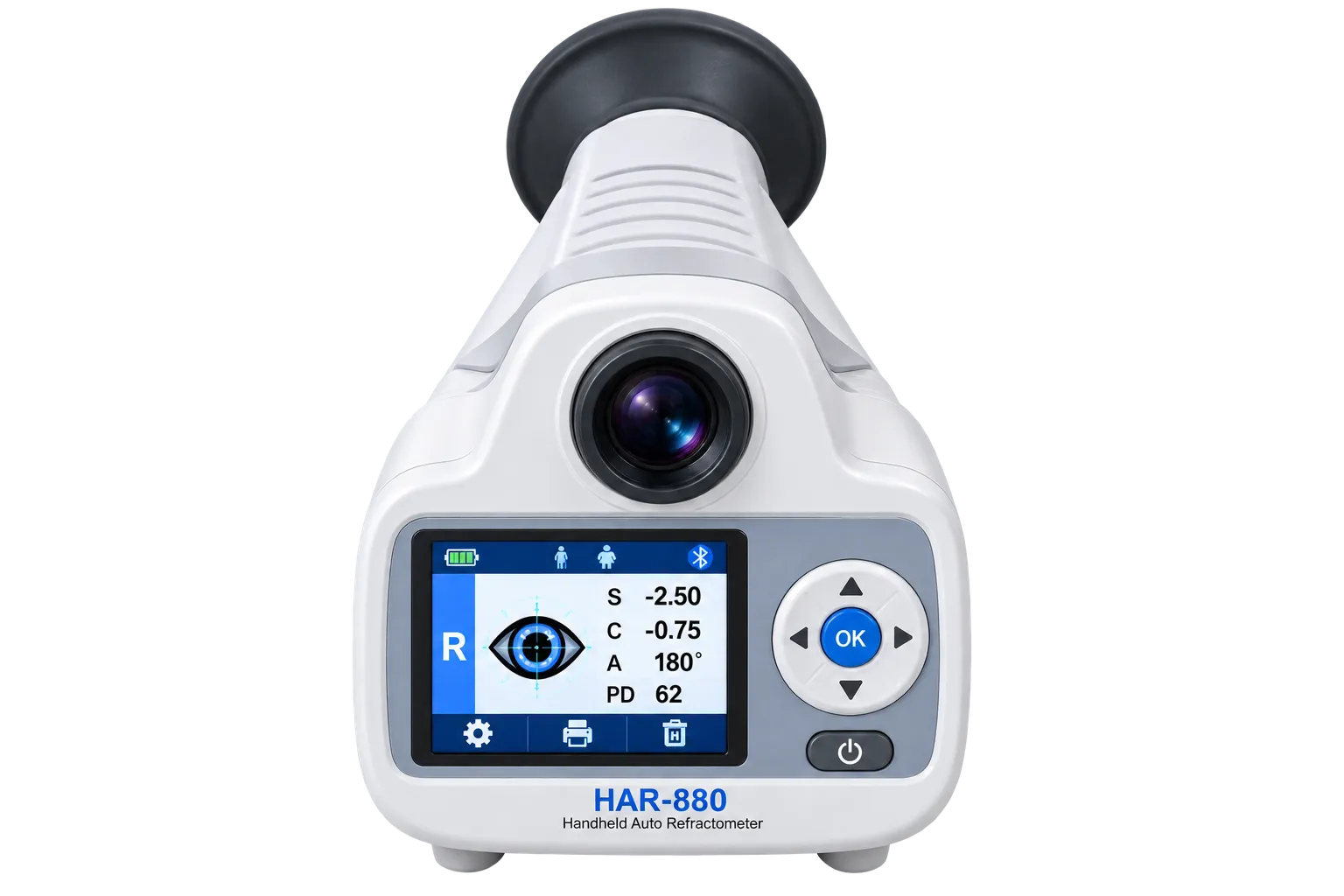
A mode reaching minus 9.0 dioptres is built for eyes that are already myopic, which is exactly the population needing repeated measurement. Childhood myopia progresses, and a figure recorded at intervals shows whether it is progressing quickly. Whether that warrants intervention is entirely a clinical judgement, but having a measurement to look at is what allows the question to be asked at the right moment rather than too late.
Practices Seeing Established Myopia
The standard sphere range stops at minus 6.0 dioptres, and a patient beyond that would fall outside it. This model extends to minus 9.0 in its dedicated mode, so a practice with a myopic caseload can measure those patients on the same instrument used for everyone else, rather than finding that its screener fails on precisely the people who most need watching over the years.
Infants and Patients Who Cannot Cooperate
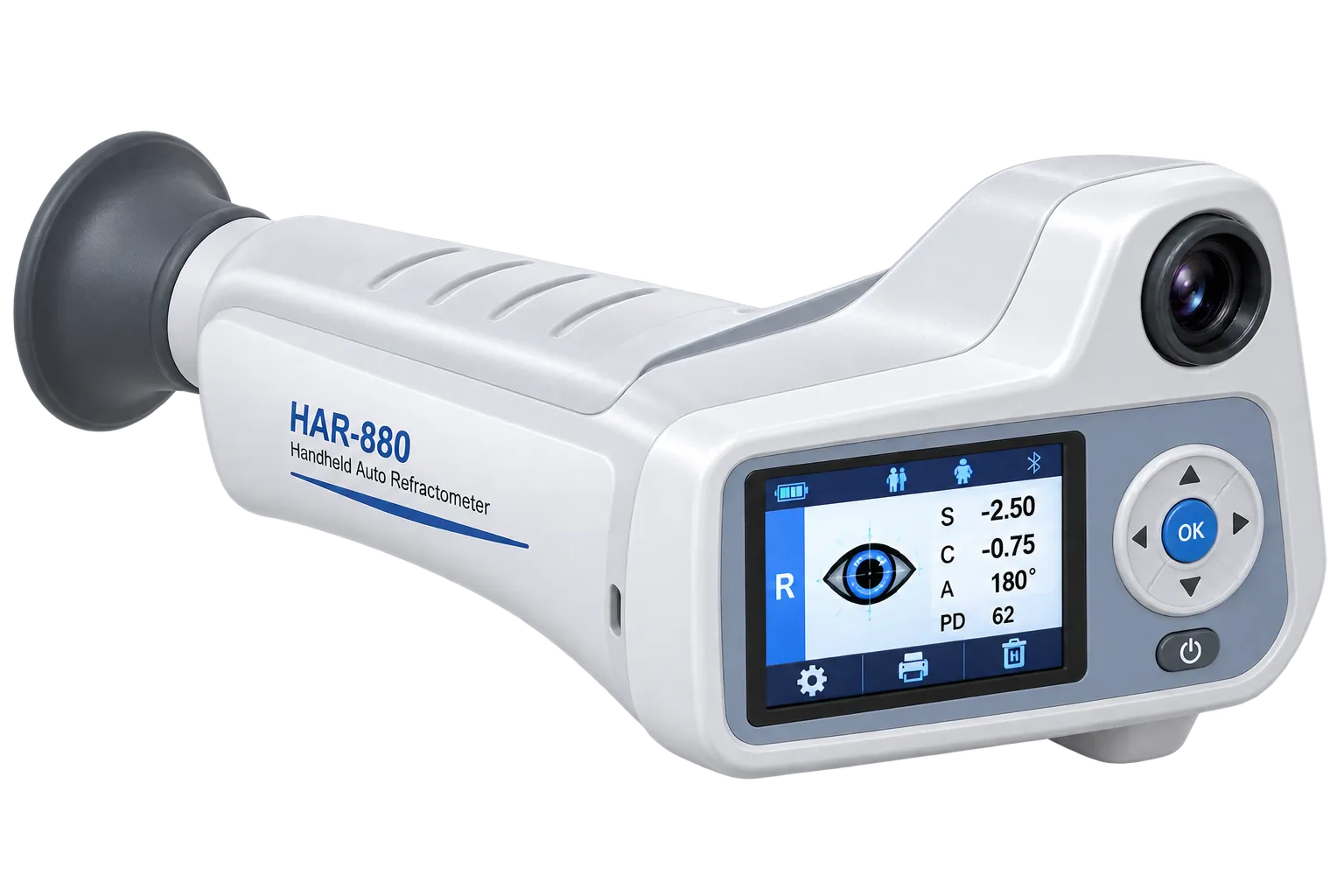
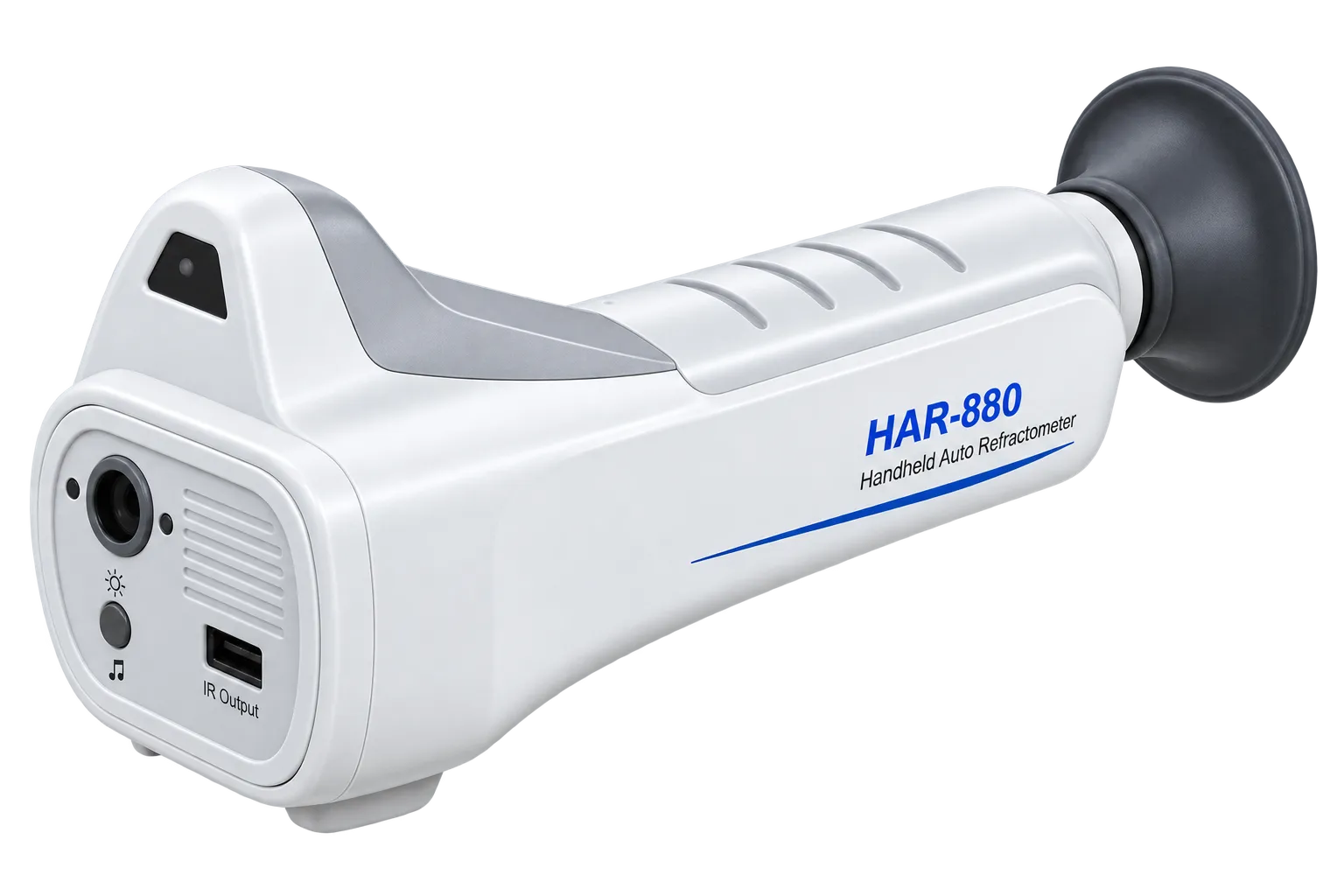
Infant mode, non contact operation, two second acquisition and flashing lights with music are all retained. The manufacturer names infants and those with a language barrier specifically. An objective reading needs no question asked and no answer understood, which is what makes the instrument usable across a caseload that conventional refraction would otherwise struggle with entirely.
Community and Outreach Screening
Battery life beyond 6 hours with a warning at 15 minutes remaining supports a full session away from mains power, and an infrared printer produces a record without a cable. Ultrasonic ranging with audible hints helps a non specialist operator hold the correct distance, which matters most where screening is being delivered by trained assistants rather than by qualified optometrists.