
Patients Who Need Assistance
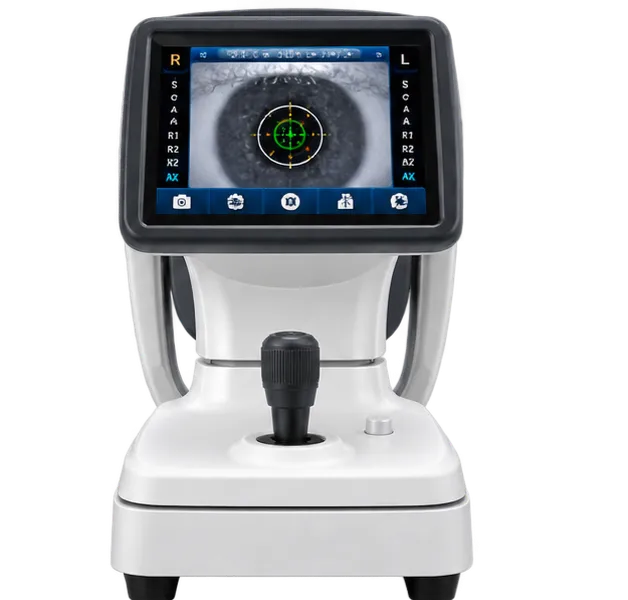
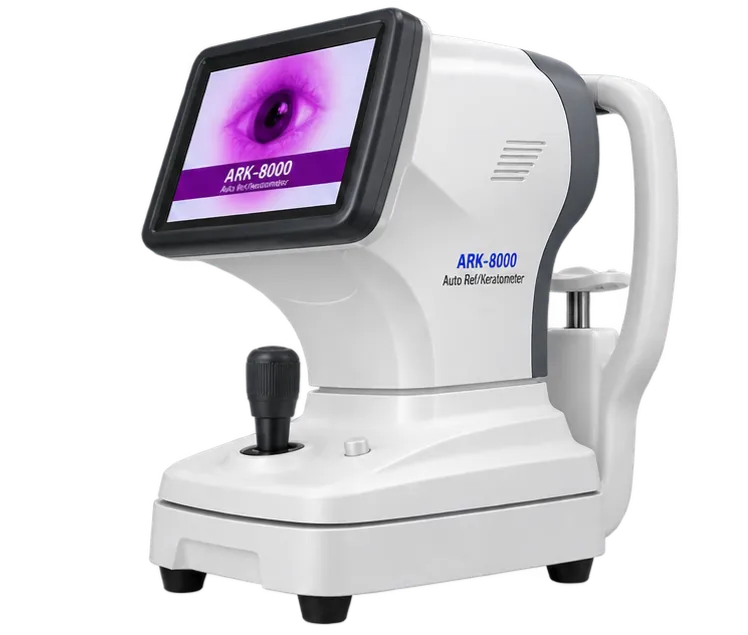
Automatic alignment and a display tilting through 120 degrees address one difficulty directly. Where an eyelid must be held open or a patient steadied, an operator working a joystick has no hand free. An instrument that finds the eye itself, with a screen angling to wherever the operator stands, lets assistance and measurement happen together. The 2.0mm minimum pupil requirement also helps with older patients and brightly lit rooms.
Contact Lens Fitting
Keratometry from 5.00 to 10.00mm at 0.01mm steps, corneal astigmatism to plus or minus 10 dioptres and a size function reaching 12.7mm describe the surface a lens must sit on. Peripheral keratometry at 6.0mm adds measurement away from the corneal centre, which matters because a lens rests on more than the apex and a central reading alone can mislead about how it will sit on that particular eye.
High Prescriptions and Difficult Refractions
A sphere range reaching plus or minus 25.00 dioptres extends well beyond ordinary spectacle prescriptions, covering aphakic and highly ametropic eyes that a narrower instrument would fail to measure. Step sizes selectable at 0.01, 0.12 or 0.25 dioptres let a practitioner work at the resolution the case warrants rather than at a fixed increment chosen for them.
Connected Pre Testing and Records
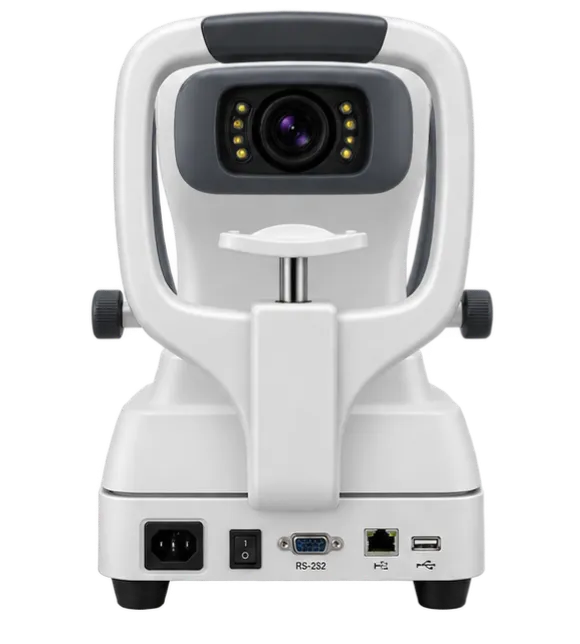
RS-232C, D-sub video out and optional RFID connect the instrument to an auto vision tester, an auto lensmeter, a PC and EMR or EHR protocol systems. Figures then move between instruments and into the patient record without being read off one screen and typed into another, which is where transcription errors ordinarily enter a clinical record most often.