
Busy Refraction Lists
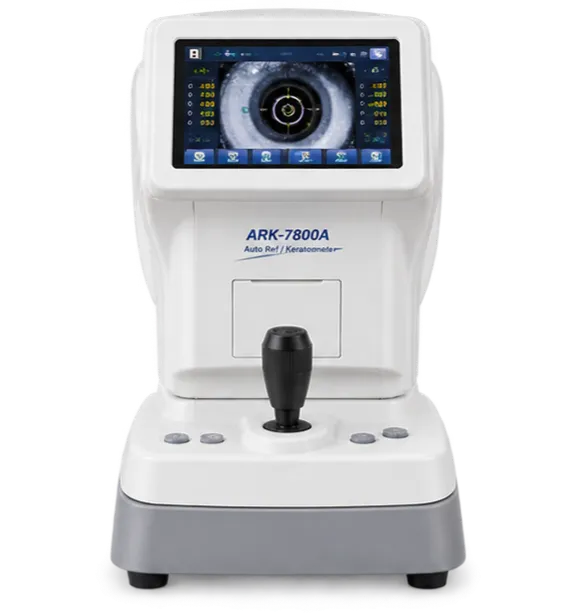
Automatic tracking and focusing remove alignment from the operator's task, so the sequence runs the same way for every patient. That consistency matters more across a full list than any single specification figure, and prescribing remains a clinical judgement. Every patient follows the same sequence. Consistency beats any single figure. Operator technique stops affecting alignment. Lists run more consistently throughout. Alignment stops depending upon technique. Sequences repeat identically each time.
Contact Lens Fitting
Corneal radius to 0.01 millimetres, power with its index stated and astigmatism to 15 dioptres cover what a fitting requires, arriving from the same sitting as the refraction. Fitting decisions rest with the practitioner. Both sets arrive from one sitting. Radius reaches hundredth resolution. Corneal figures accompany the refraction. Practitioners weigh them together. Fitting draws upon all four figures. One sitting covers everything needed.
High Ametropia
Sphere from minus 30 to plus 25 dioptres reaches patients most instruments in this range cannot measure. Where markedly ametropic eyes form part of a caseload, that span is what decides suitability. Other instruments cannot reach those eyes. Caseload decides suitability entirely. Markedly ametropic eyes are measurable. Fifty five dioptres are covered. Suitability turns upon that documented span. Most siblings fall well short.
Practices Comparing Documentation
This card states its ranges correctly where an earlier one in the same range did not. For a buyer weighing the two, that difference in documentation quality is worth noticing alongside the specifications themselves. Documentation quality is itself informative. Reliable tables assist a buyer. Correct tables inspire real confidence. Comparison becomes considerably easier. Reliable tables reduce purchase risk. Errors elsewhere needed correcting.