
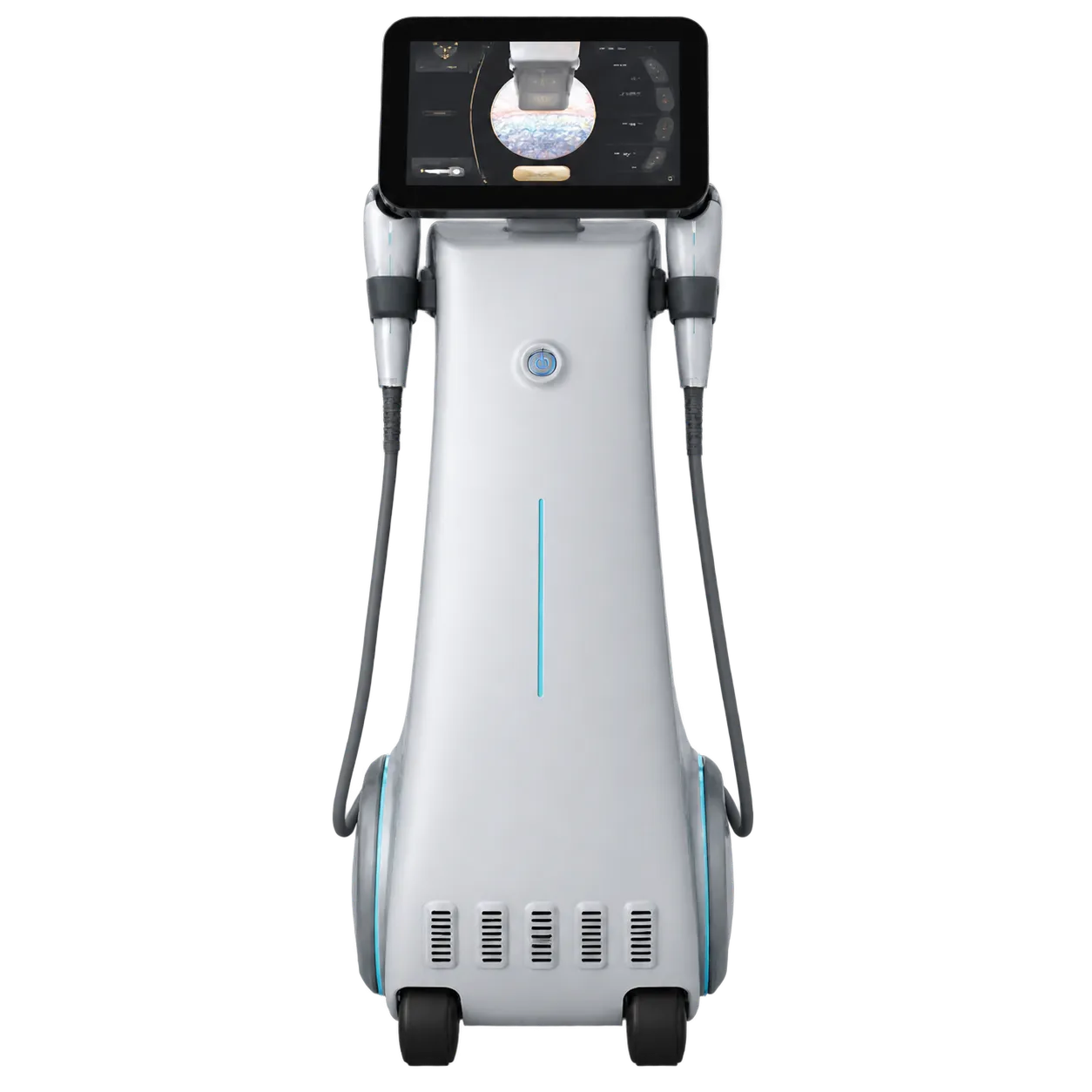
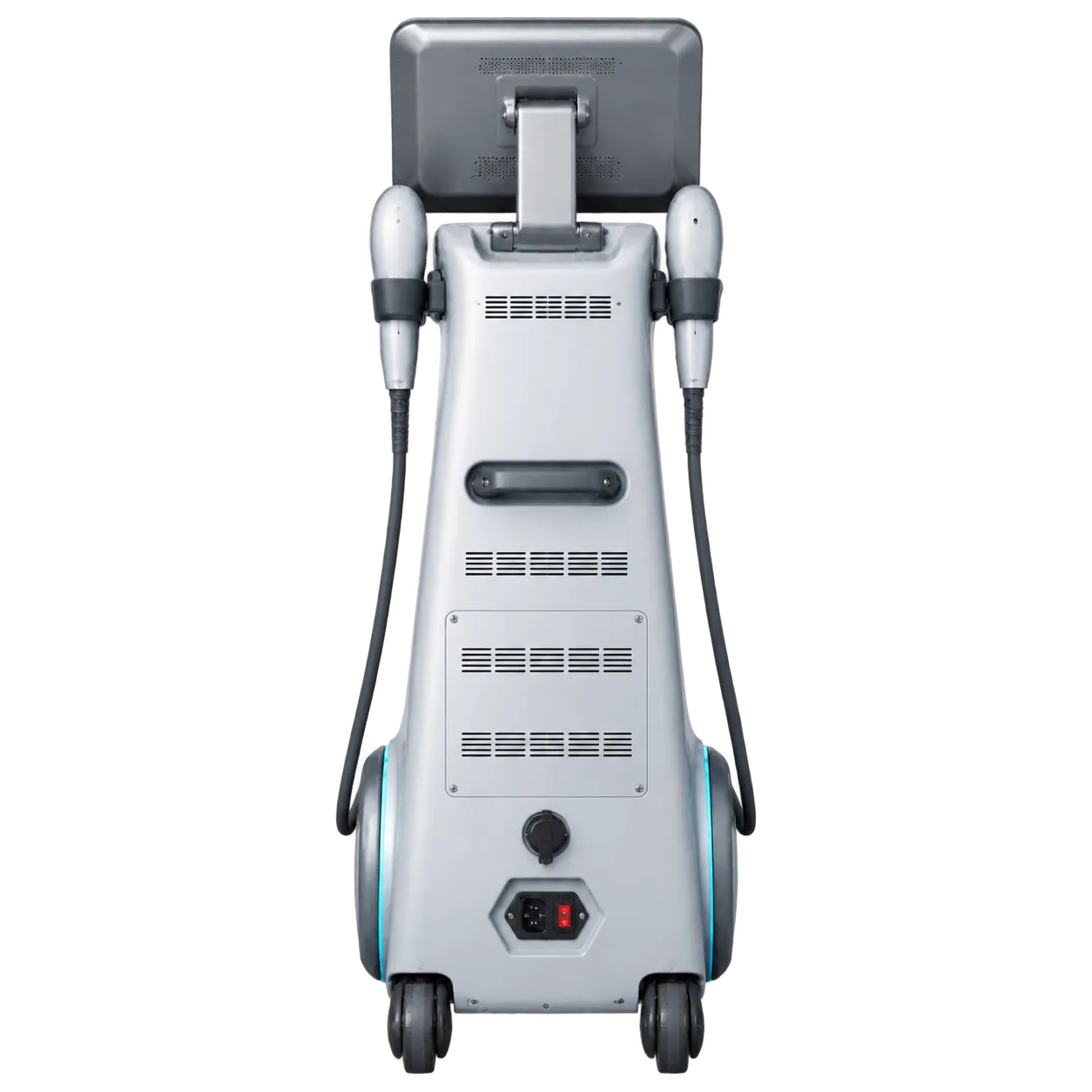
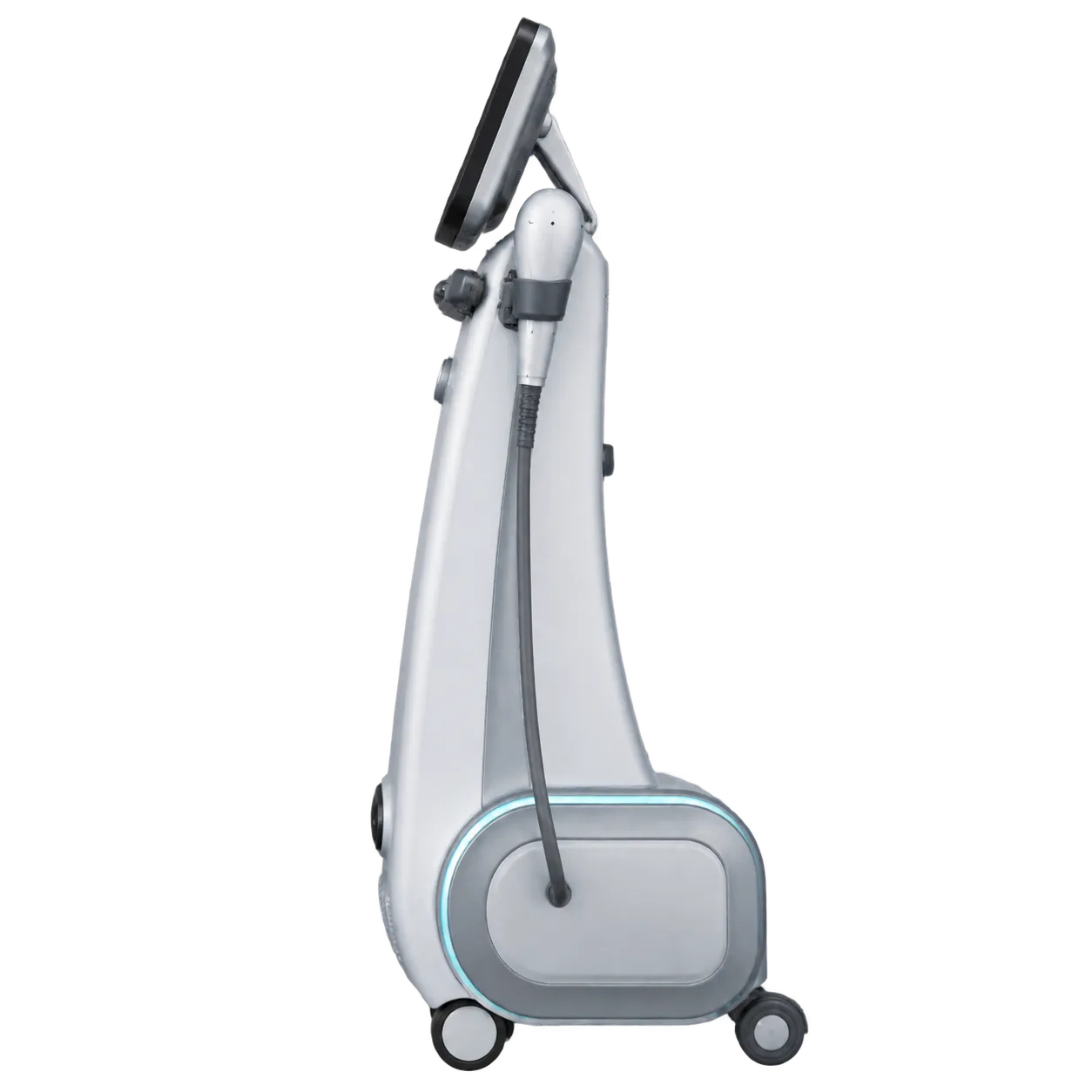
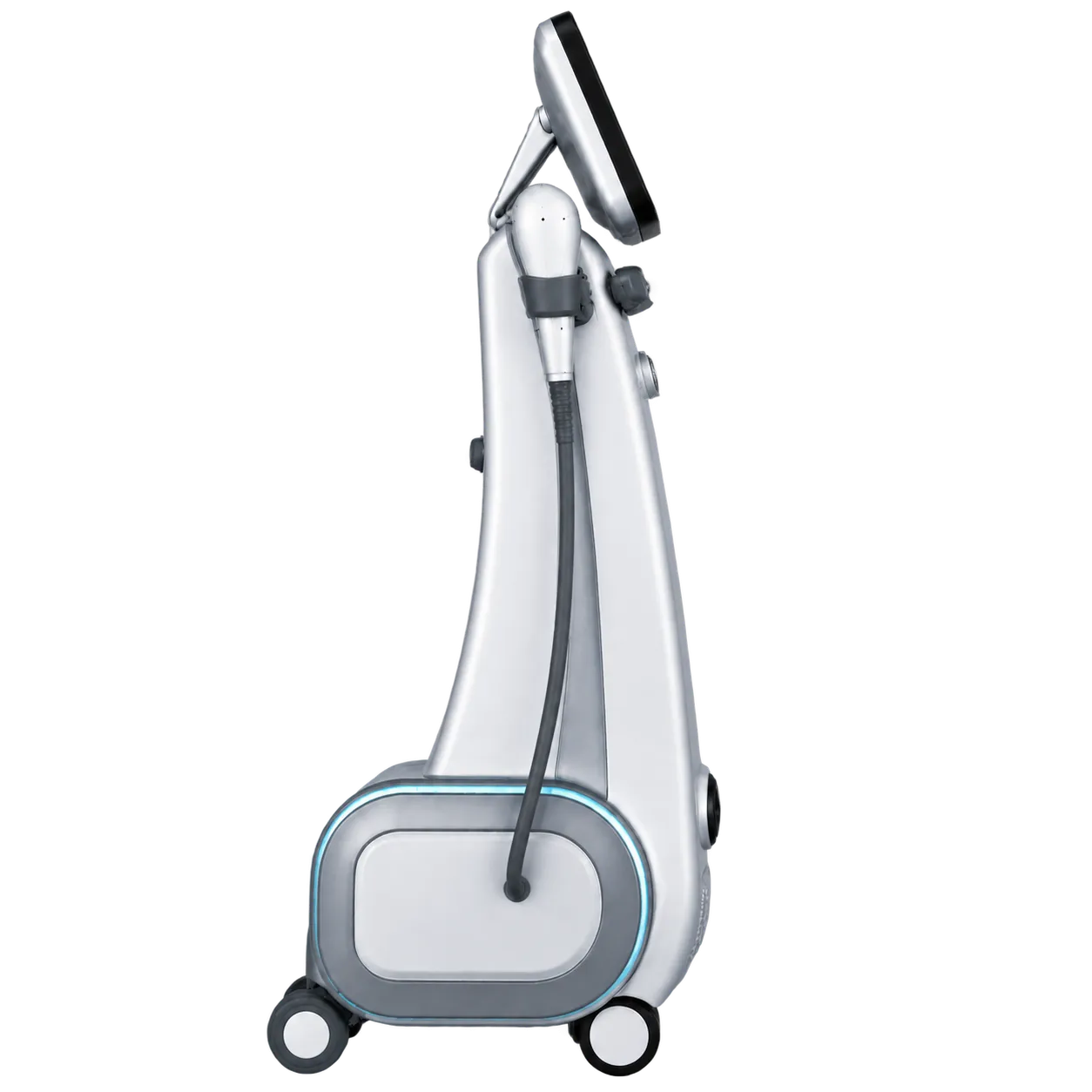
Atrophic acne scarring is where radiofrequency microneedling has its strongest evidence. Rolling and boxcar scars respond to courses of treatment spaced a few weeks apart, and the recovery is usually short enough for clients to return to work within days. Depth control up to 4 mm lets the operator work deeper on the cheeks and shallower on thinner skin.
Early laxity and photo-ageing form the second strand. Softening along the jawline, crepey skin on the neck and fine lines around the eyes are standard requests, and vacuum suction helps the handpiece sit flat on these curved, mobile areas. Enlarged pores and stretch marks are common follow-ups, with a smaller head size for delicate zones such as the upper lip.
The non-invasive radiofrequency handpiece, if supplied, gives the practice a gentler tightening option between microneedling courses or for clients who want no downtime.
Suitable settings include skin clinics, doctor-led and nurse-led aesthetic practices, dermatology clinics, and cosmetic surgery units with a clean treatment room and a clinical waste contract. The station is unsuitable for practices without sharps and waste arrangements, for clients with implanted electronics or active skin infection, and for anyone planning to reuse cartridges. Obligations follow it into the building: single-use sterile cartridges, sharps containers at the point of use, a needlestick procedure, a documented handpiece cleaning routine, batch traceability in client notes and, depending on the area, local authority registration. The conformity documentation those inspection routes require is issued by the manufacturer and provided by the seller.