
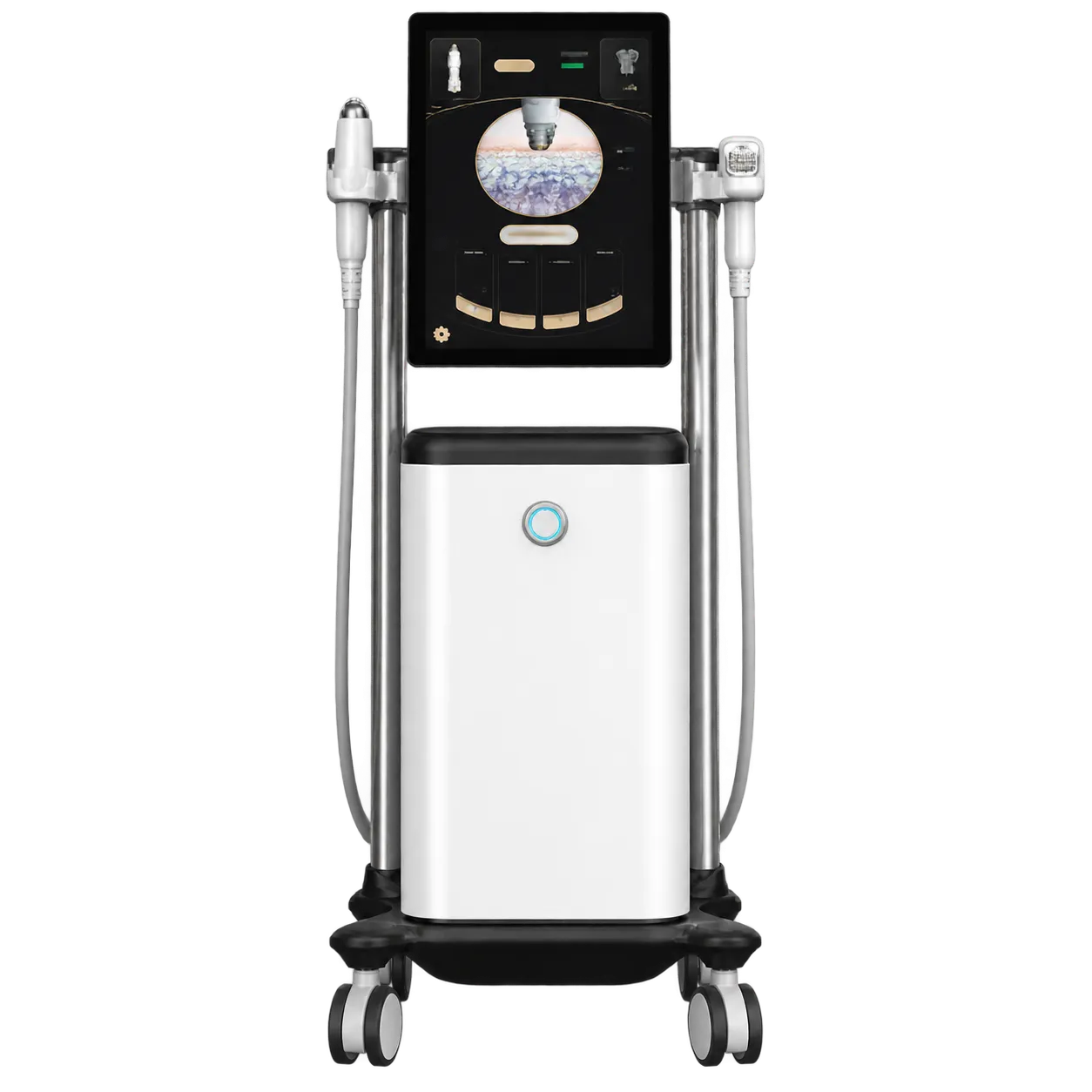
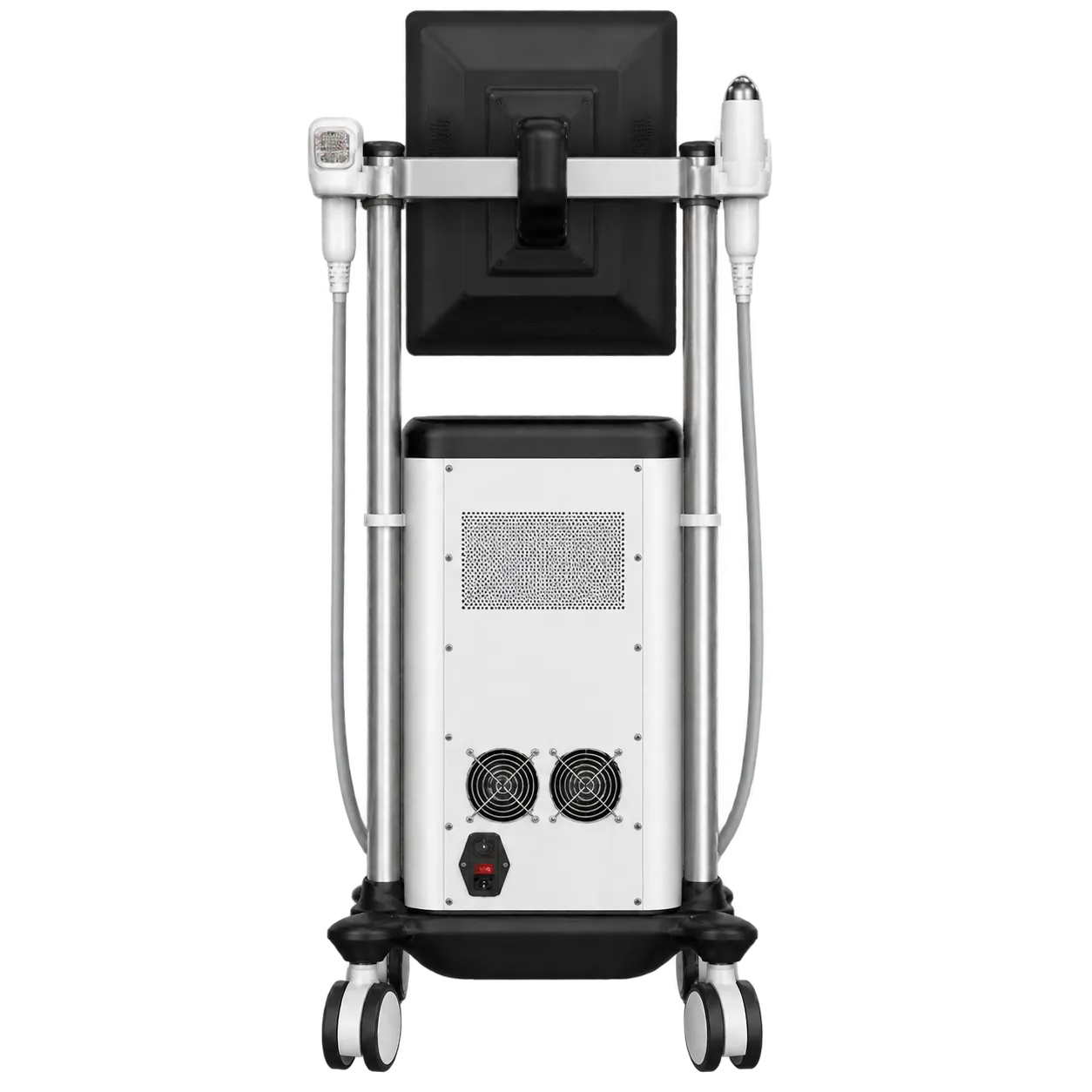
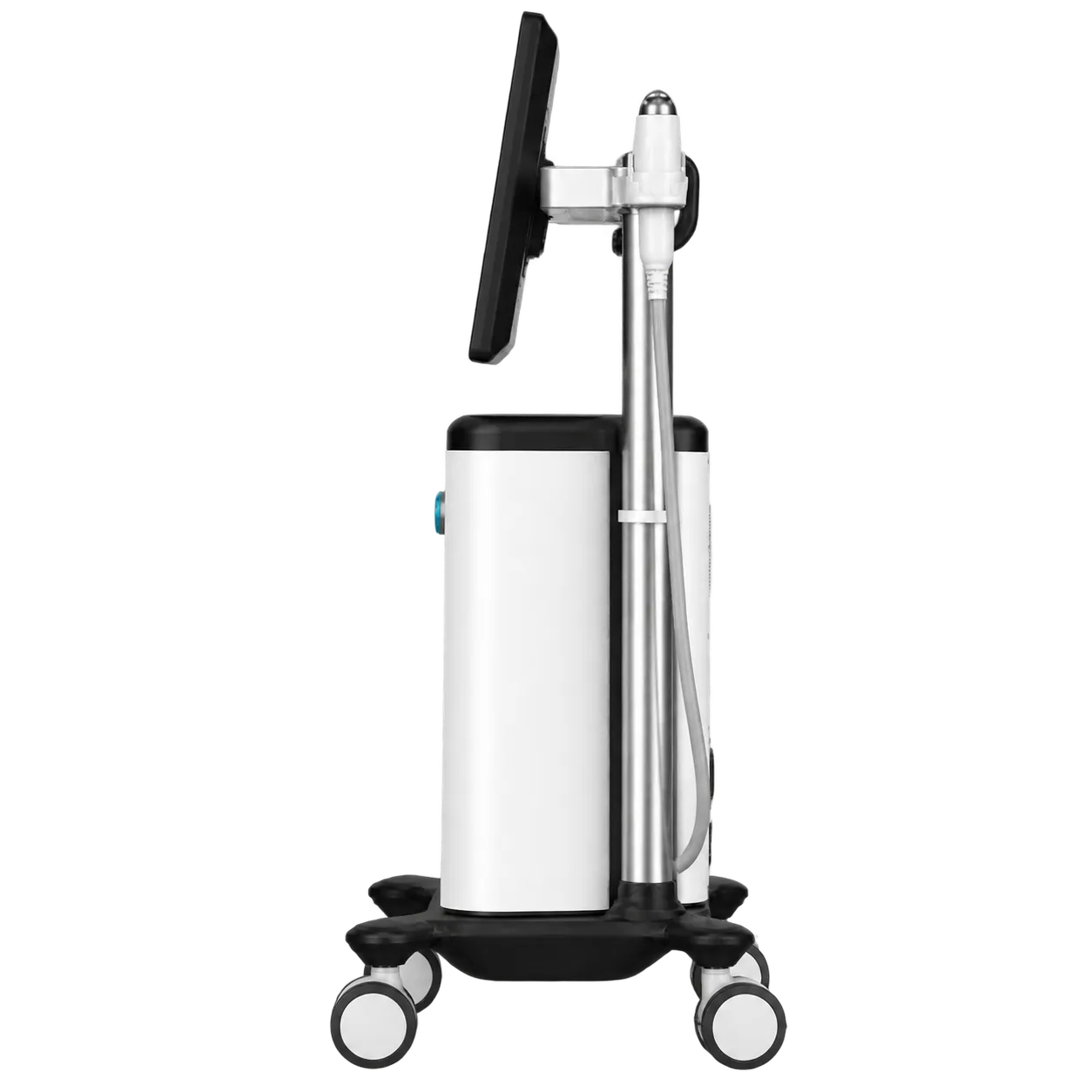
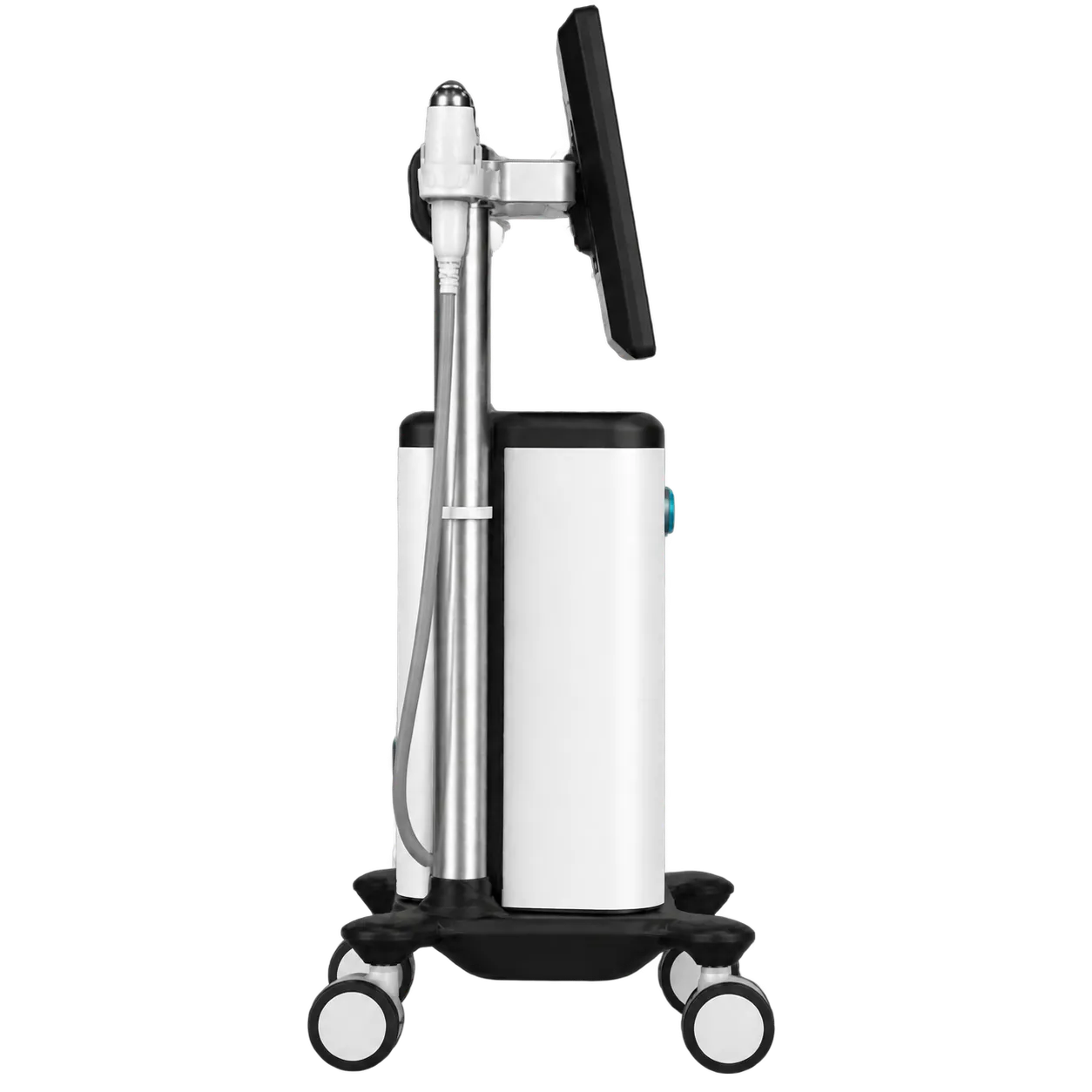
Aesthetic clinics use RF microneedling for atrophic acne scarring, one of its best-supported uses. A course of sessions about a month apart, with depth set to scar type and consistent photographs, gives a measurable record of change. Scar type matters: rolling and boxcar scars usually respond well, while deep ice-pick scars often need other procedures alongside.
Skin rejuvenation services treat enlarged pores, fine lines and mild laxity on the face and neck. Clients who want improvement with a short recovery suit the treatment, provided they accept gradual results over several months. Maintenance sessions once or twice a year help hold the improvement.
Jawline and neck treatments rely on the suction handpiece to hold loose or curved skin evenly against the needles. Settings stay conservative on thin neck skin, and you should refer marked sagging for a surgical opinion.
Body services treat stretch marks and texture on the abdomen, thighs and arms using the larger heads. Body areas use more cartridges and more time, so pricing must reflect both. Results on older, silvery stretch marks are modest, and consultations should make that clear.
The non-invasive RF handle supports tightening treatments without needles, which suits clients who want maintenance between microneedling courses or cannot have needling on a given day. It carries no cartridge cost, which helps margins on maintenance visits.
Doctor-led practices can combine RF microneedling with other scar treatments and manage complications through clinical governance. Every setting needs a sharps procedure, a clean treatment field and a written infection control policy before the first client.