
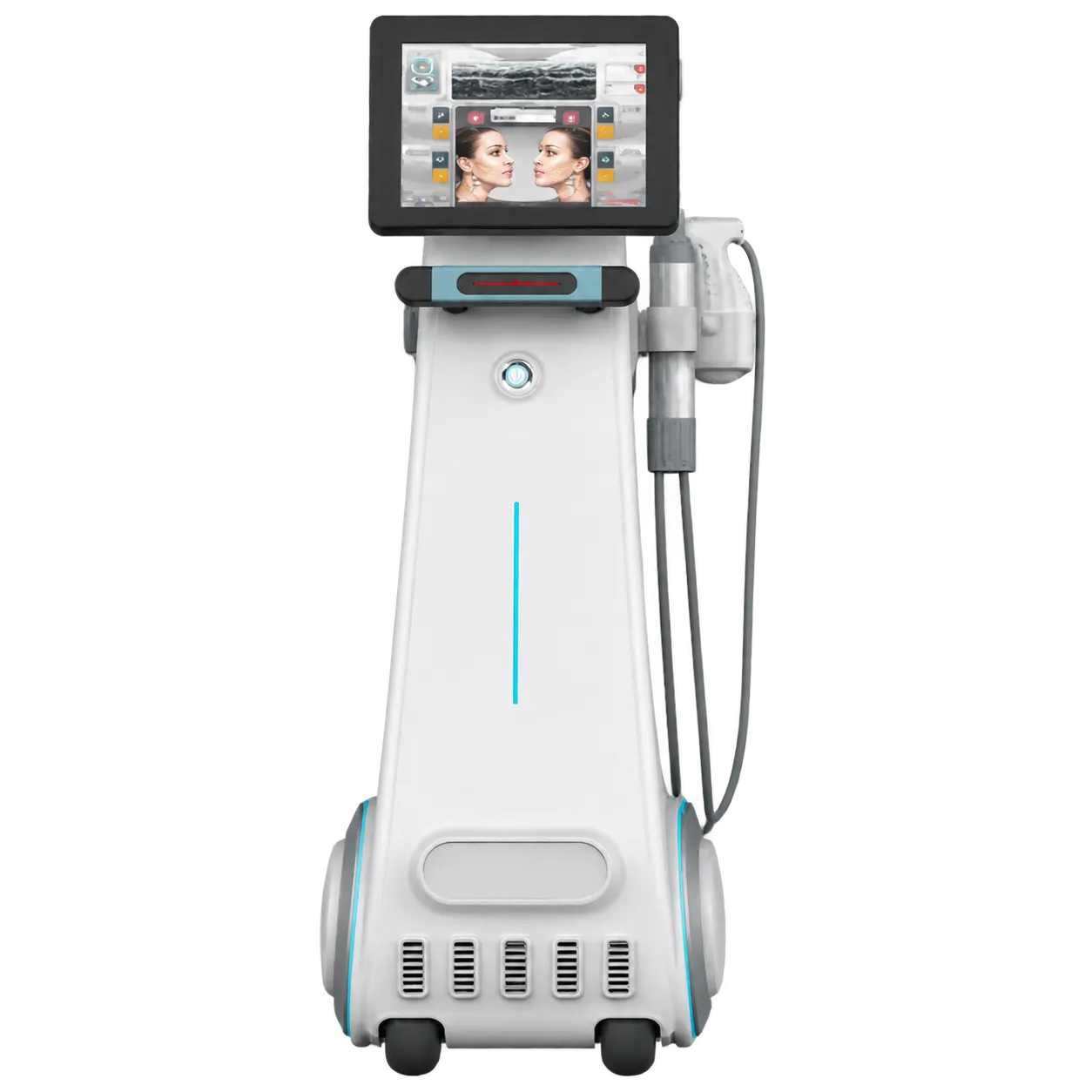
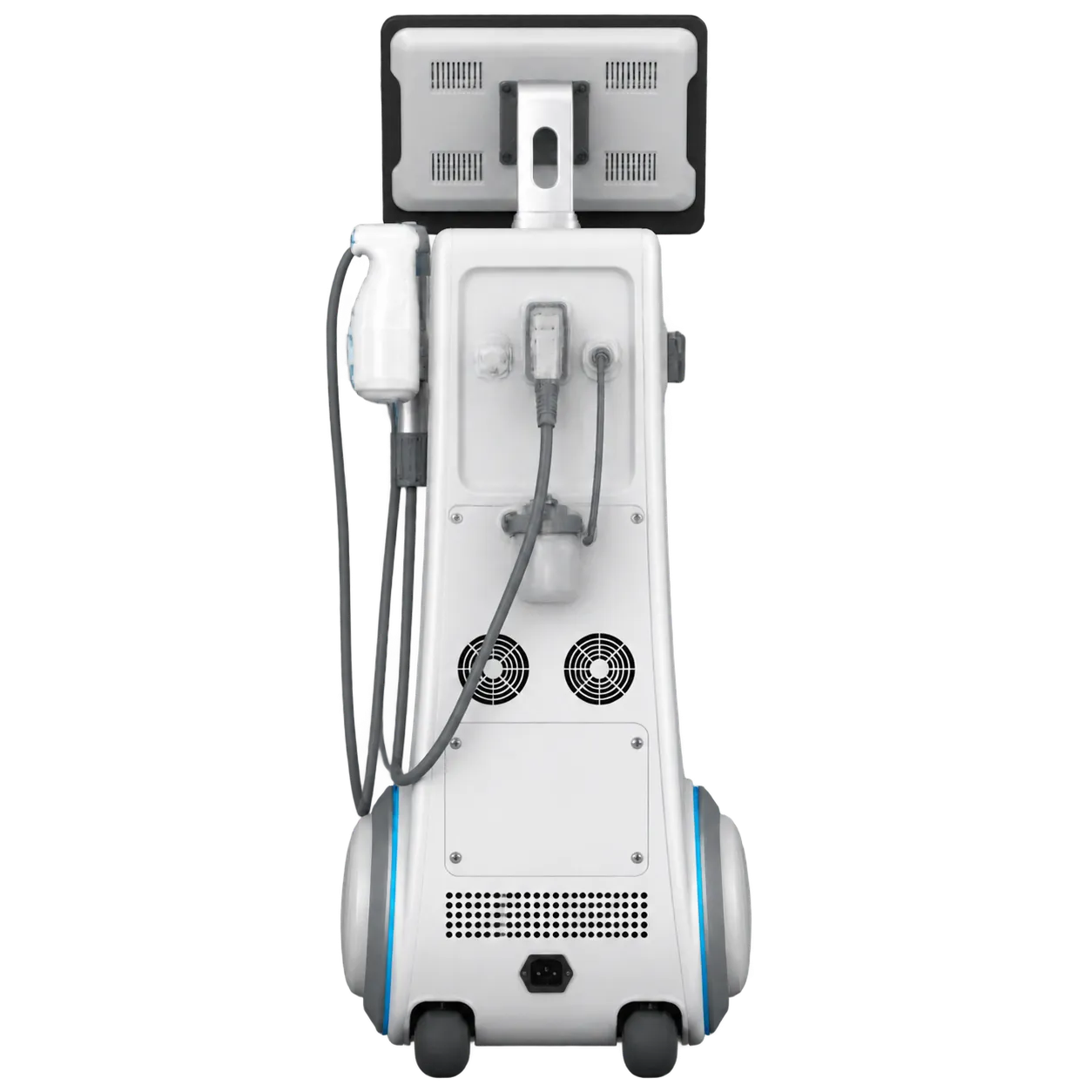
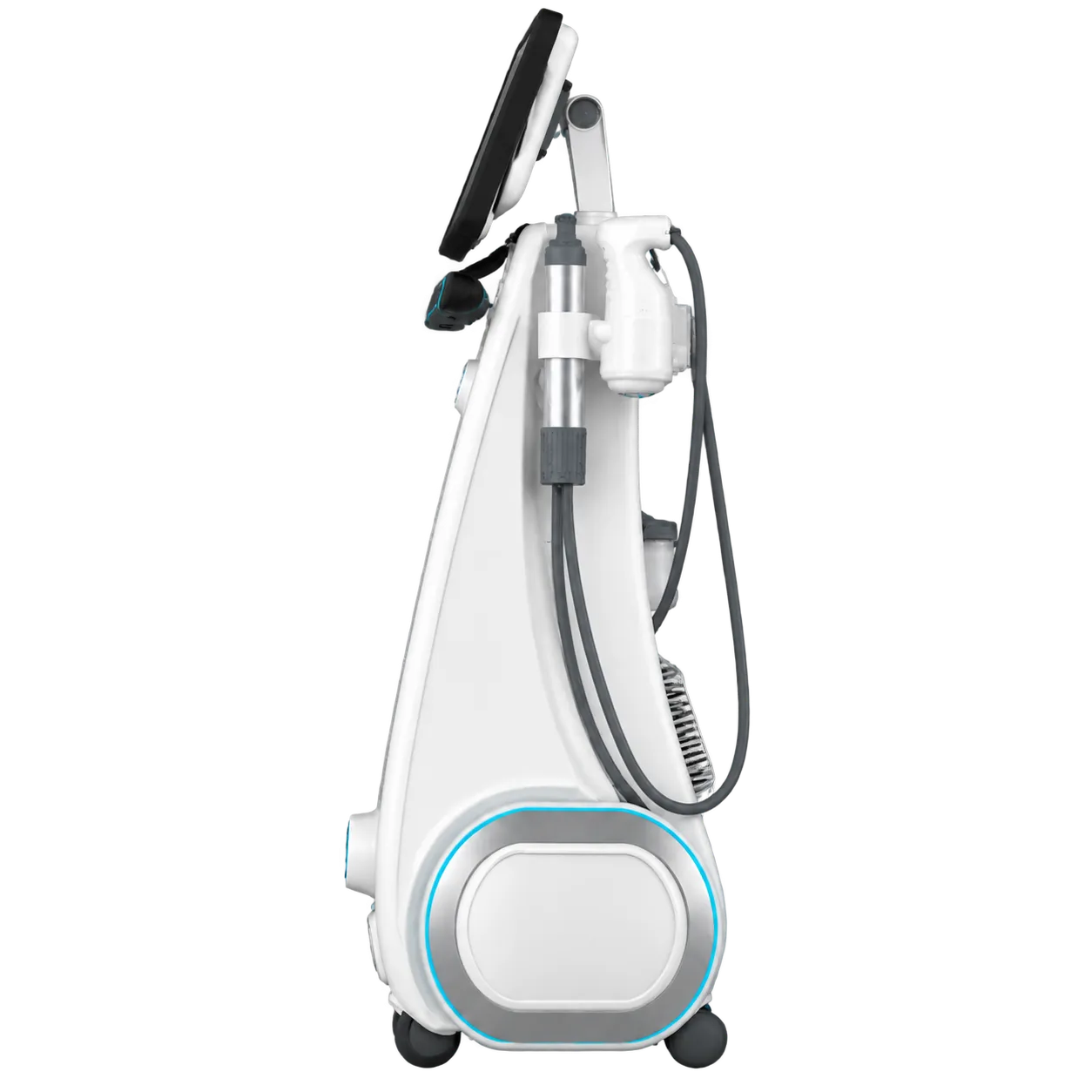
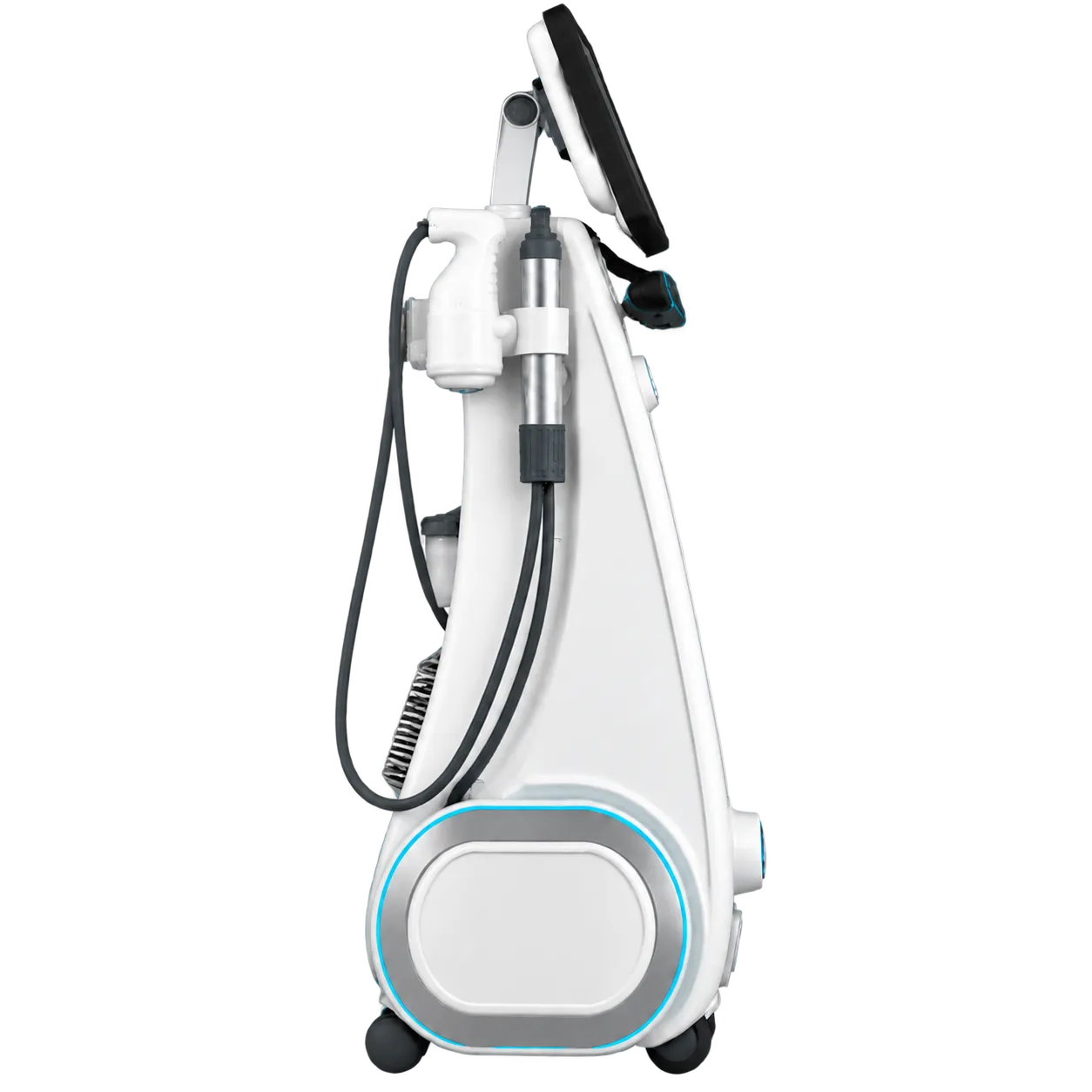
Aesthetic clinics use HIFU to treat mild to moderate laxity in the lower face and jawline. Clients with early jowling and good skin quality suit the treatment best, and a mapped grid with the 4.5 mm and 3.0 mm cartridges targets the SMAS and deep dermis while avoiding the jawline nerve zone.
Brow and upper face treatments aim for a subtle brow lift and softer lines around the eyes. The shallow 1.5 mm and 3.0 mm cartridges suit thin skin here, and the eyes themselves are always excluded from treatment. Eye shields or careful positioning protect the orbit throughout.
Neck and submental treatments address early laxity under the chin and on the neck. Careful depth selection, avoiding the thyroid area, and conservative energy protect these delicate structures. Clients with marked skin laxity on the neck may need a surgical opinion.
Body tightening services use the deeper optional cartridges on the abdomen, arms and thighs. Claims of fat reduction need care, because evidence for body HIFU is limited and results are often modest.
Maintenance programmes invite clients back at around twelve months for review. Honest reviews of baseline and follow-up photographs help clients decide whether a repeat treatment is worthwhile, and they protect the practice against disputes about results.
Doctor-led practices can combine HIFU with injectables and skin treatments under clinical governance, and assess any nerve weakness, persistent numbness or burn through established referral routes. Every practice should have a written protocol, a danger-zone map, and a complication plan before seeing the first client.