
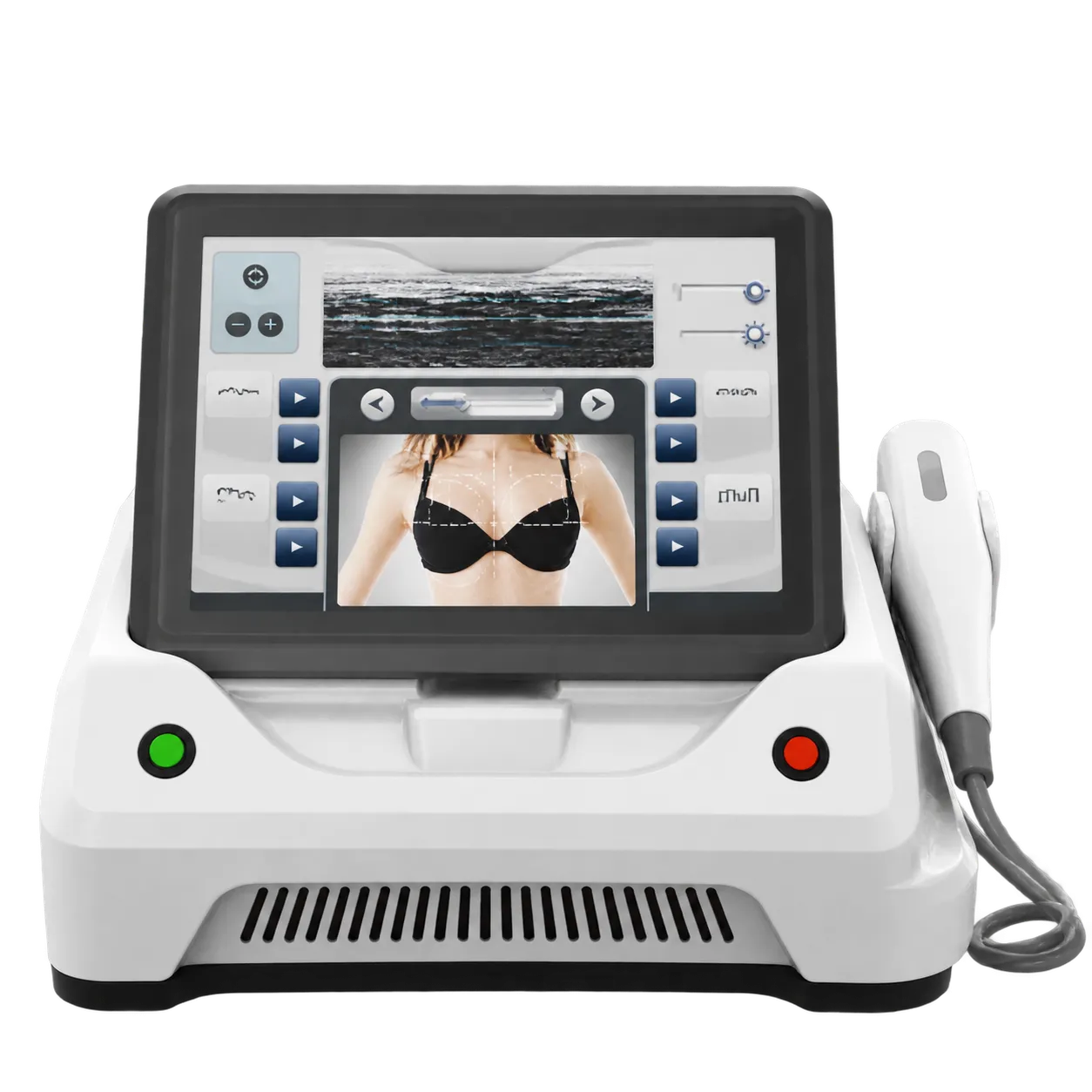
Beauty salons and small clinics use desktop HIFU to firm the brows, forehead, and cheeks. A clear per-treatment price, built from cartridge lines and staff time, makes the service easy to sell and keeps margins visible as cartridge prices change. Annual review appointments give a natural point to rebook.
Aesthetic clinics treat early jowling and jawline laxity with 4.5 mm and 3.0 mm cartridges, avoiding the nerve running along the lower jaw. Clients with mild laxity, good skin quality and realistic goals suit the treatment best. Standardised photographs at baseline and three months show the gradual change.
Neck treatments target early laxity under the chin and on the front of the neck. Conservative depth and energy, and avoidance of the thyroid area, protect delicate structures. Marked neck laxity needs a surgical opinion.
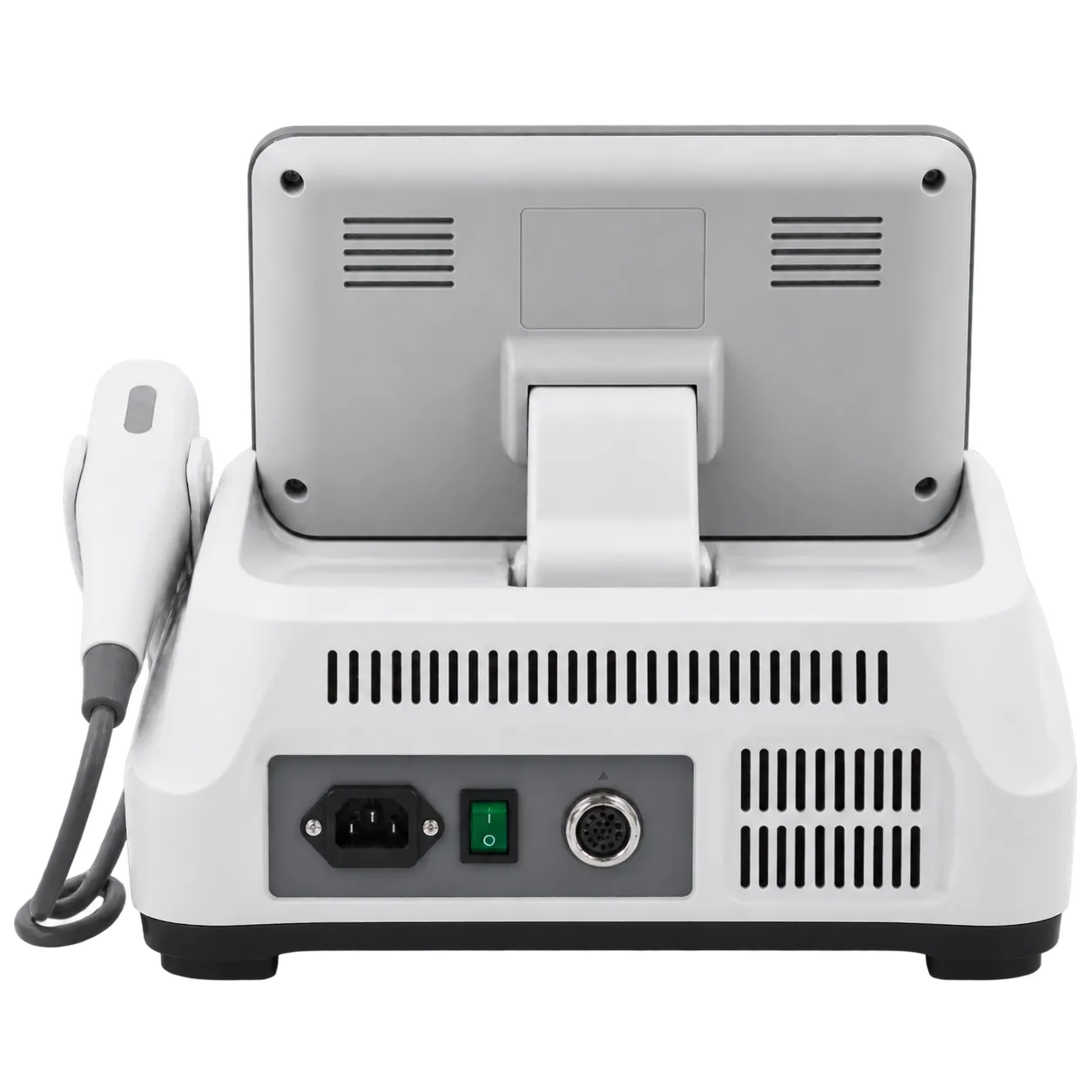
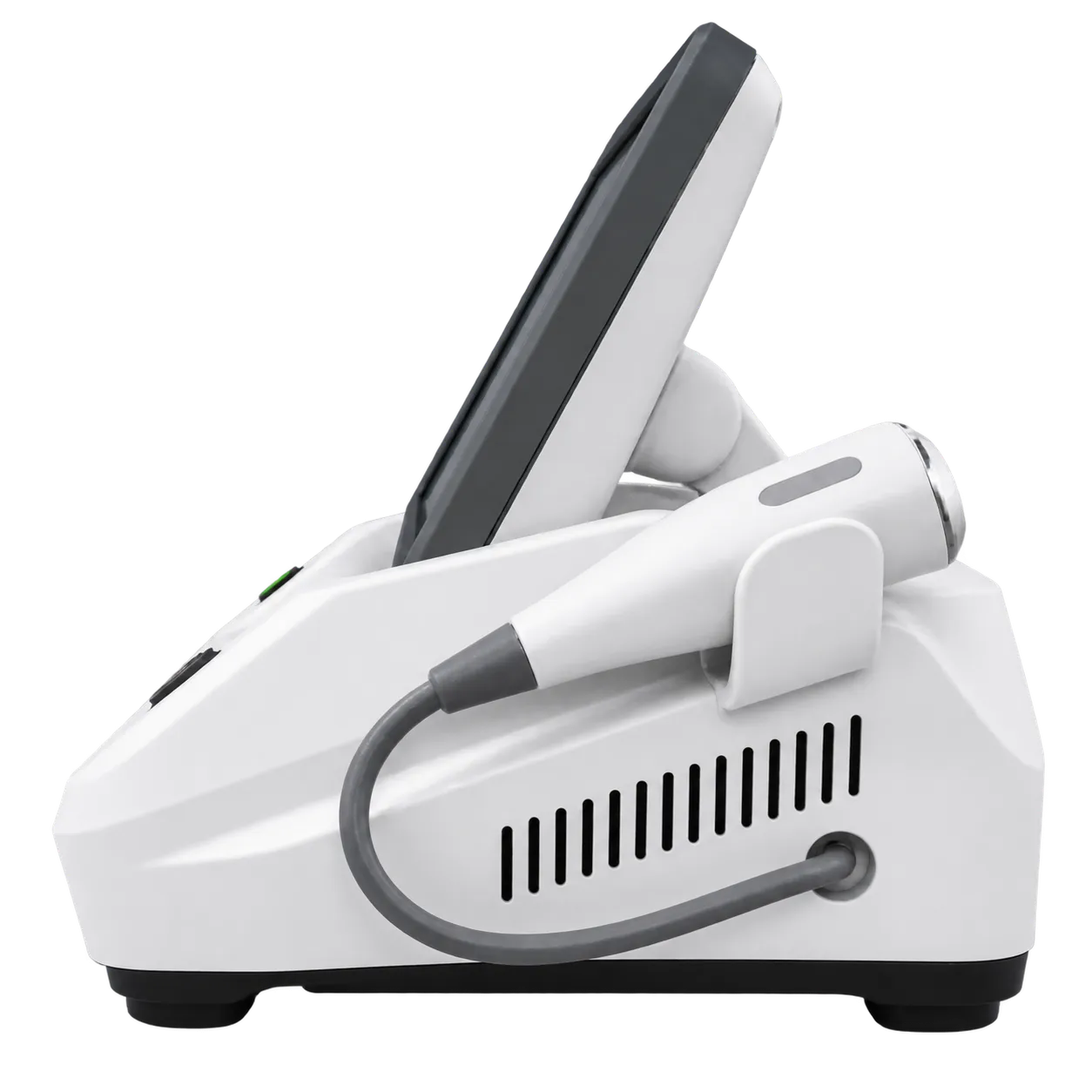
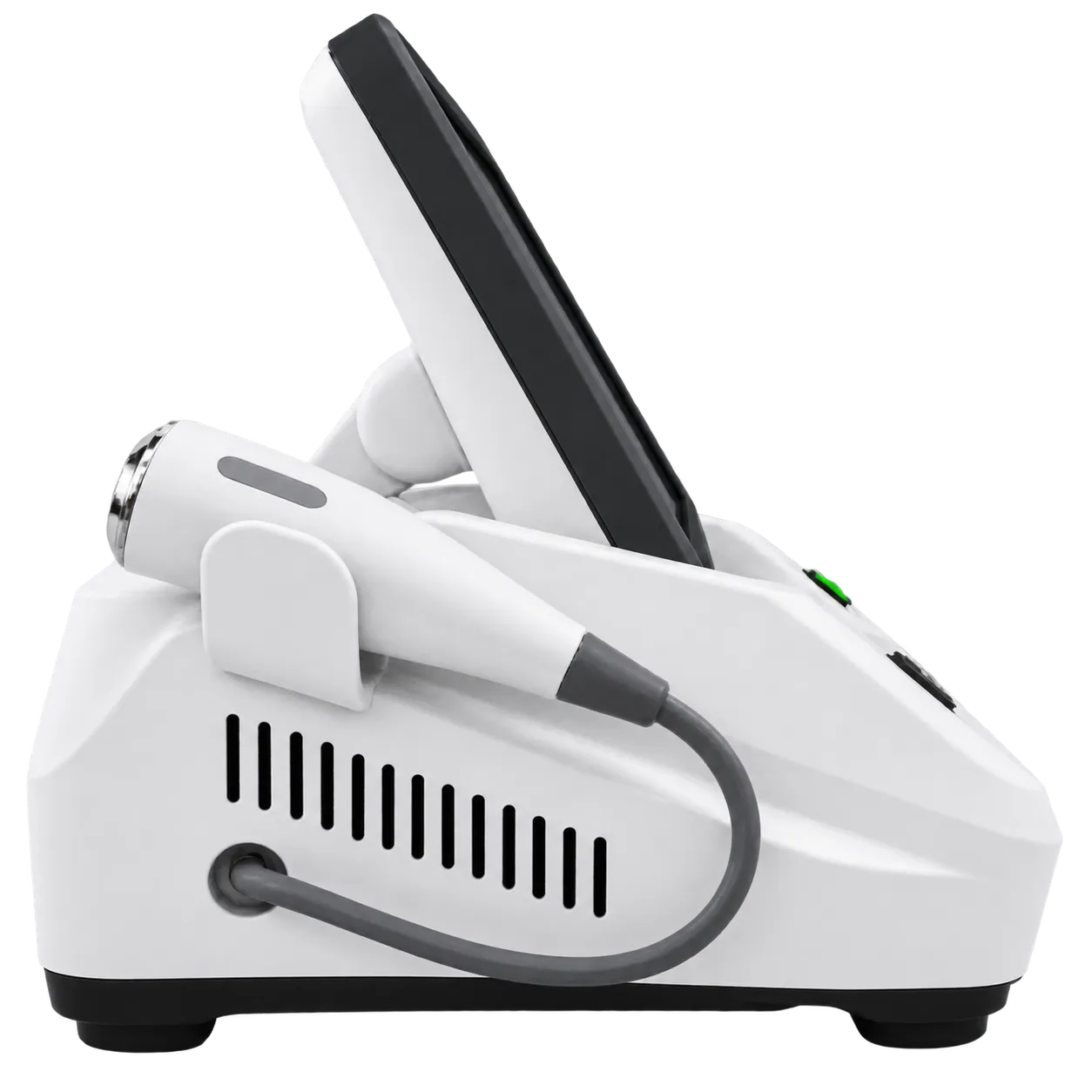
Mobile practitioners value the desktop format, which travels on a trolley between rooms or sites. Every location needs a stable surface, a suitable socket, gel, cleaning supplies and a secure store for cartridges.
Body tightening with the deeper optional cartridges suits clients seeking gentle firming of the abdomen, arms or thighs. Consultations should present results as modest and avoid claims of fat loss. Deeper cartridges consume lines quickly, so body prices need careful costing.
Doctor-led practices can combine HIFU with injectables and skin treatments under clinical governance. Any nerve weakness, persistent numbness or burn should be assessed through established referral routes, and every practice needs a written protocol and complication plan before the first client.