
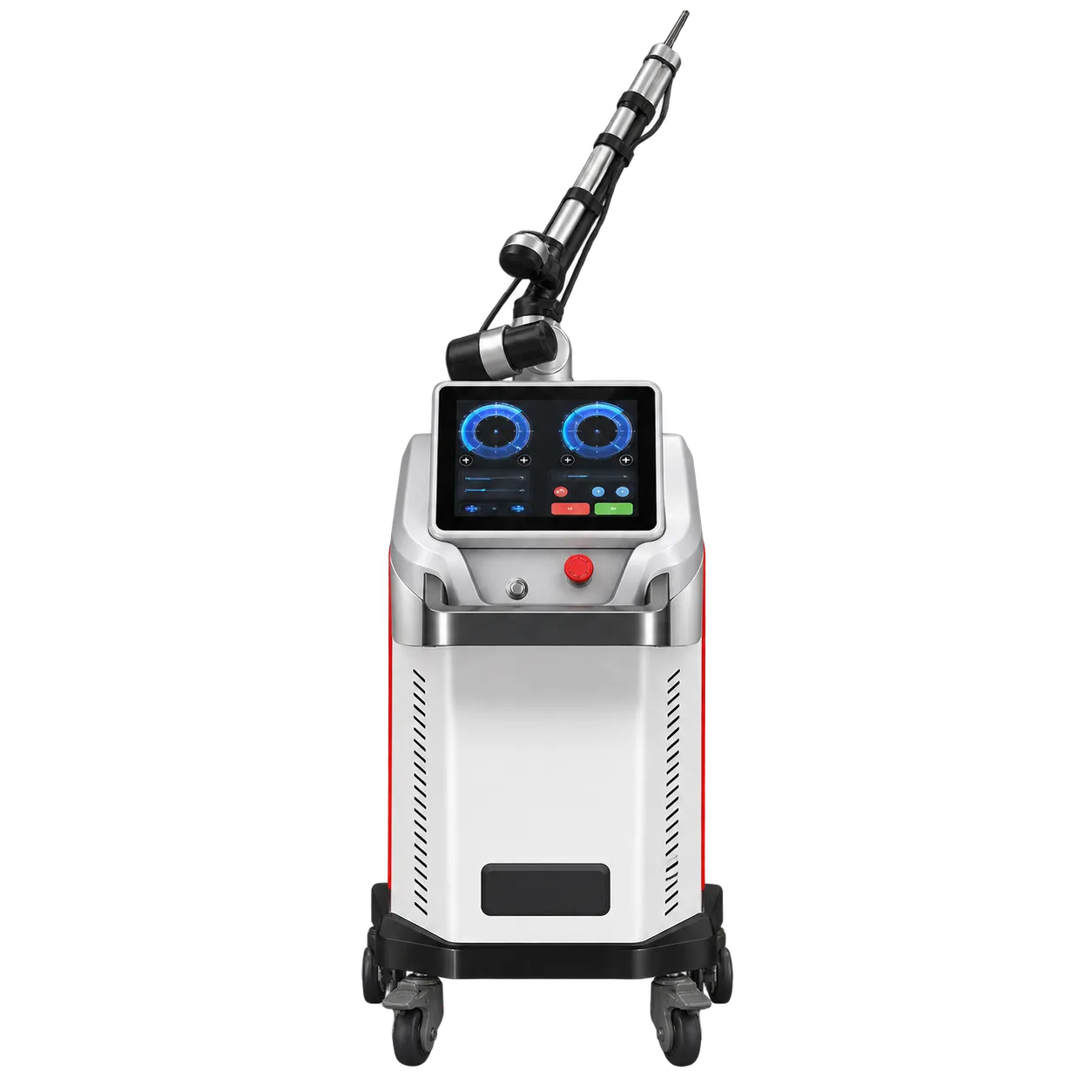
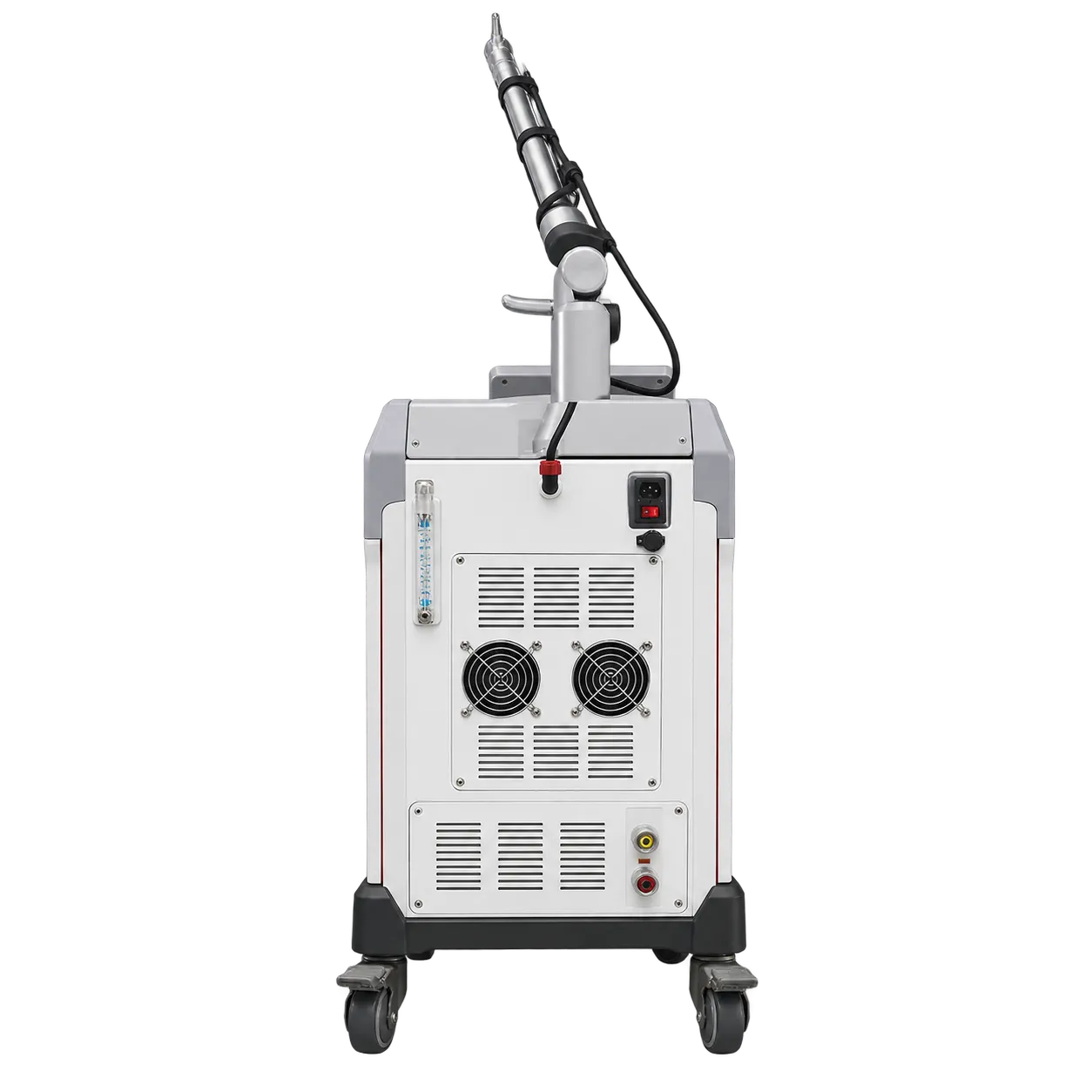
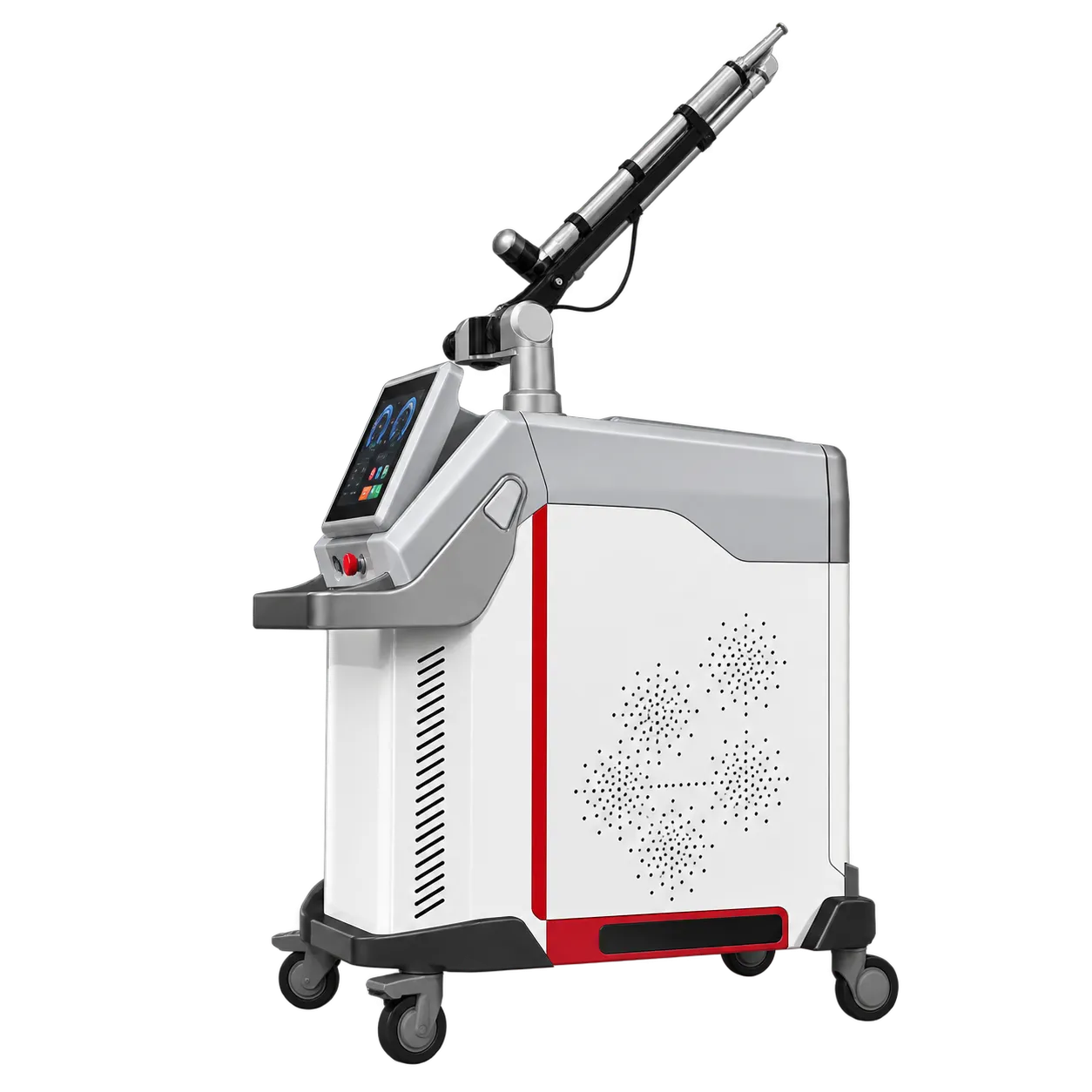
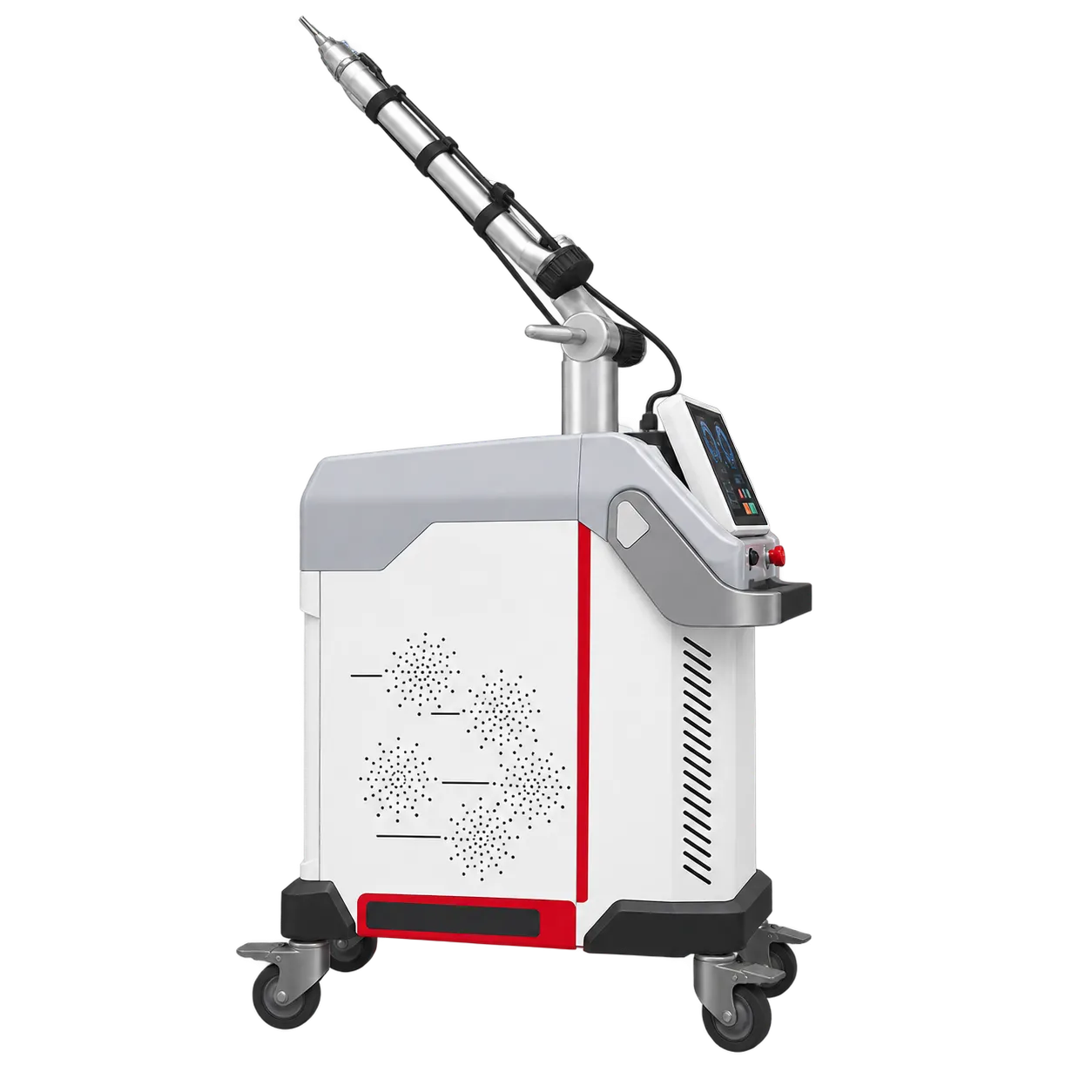
Tattoo removal is the core use, and the standard wavelength pair sets its scope. Black and dark blue amateur and professional tattoos are the natural caseload at 1064 nm, while 532 nm covers red ink and some warm colours. Studios and clinics that remove multicoloured work will need the optional wavelengths and should expect several sessions per tattoo, regardless of configuration.
Pigmentation work forms the second strand. Nubway markets the platform for freckles, solar lentigines, age spots and melasma, with 532 nm suited to superficial pigment and 1064 nm to deeper dermal pigment. Melasma relapses often and needs cautious protocols, so it belongs in dermatology and medically led aesthetic clinics where a clinician writes the treatment plan and manages topical therapy alongside the laser.
Nubway's product page also lists a fractional handpiece among its options. Where one is supplied, the platform can extend into textural work such as acne scarring and skin rejuvenation. However,h the handpiece specification is not published and should be requested before promoting that service.
Practice size matters as much as indication. The unit suits a fixed treatment room that can be designated a controlled laser area, with local rules, a Laser Protection Adviser and eyewear for every wavelength. Laser tattoo removal clinics, medical aesthetic practices, dermatology outpatient services and cosmetic surgery groups adding a pigment service all fit that profile.
In the UK, regulation depends on the nation and the provider. Council special treatment licences apply across London and in parts of England. Healthcare Inspectorate Wales and Healthcare Improvement Scotland register clinics in their nations, and the Regulation and Quality Improvement Authority does the same in Northern Ireland. The conformity documentation required by those licensing and registration routes is issued by the manufacturer and provided by the seller.