
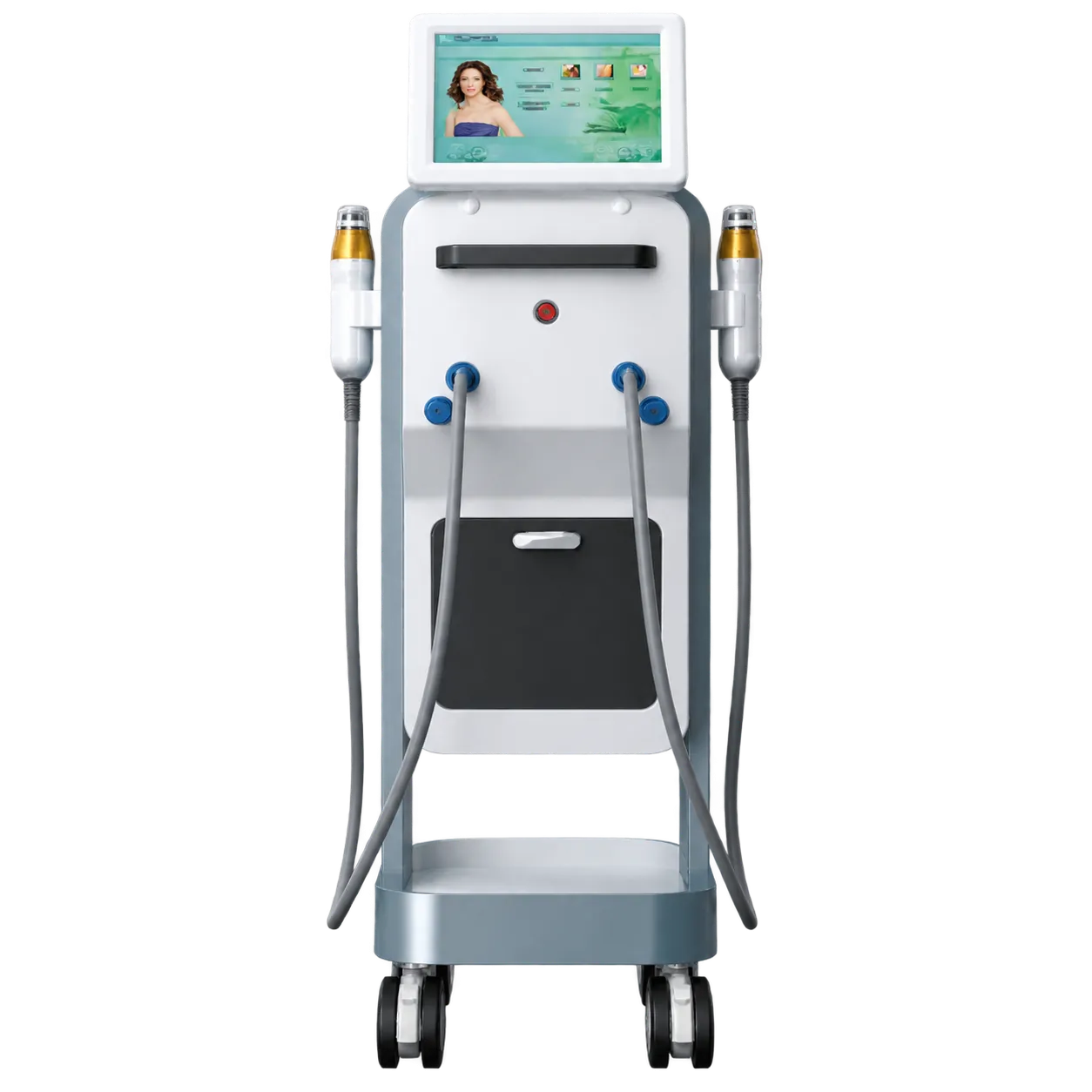
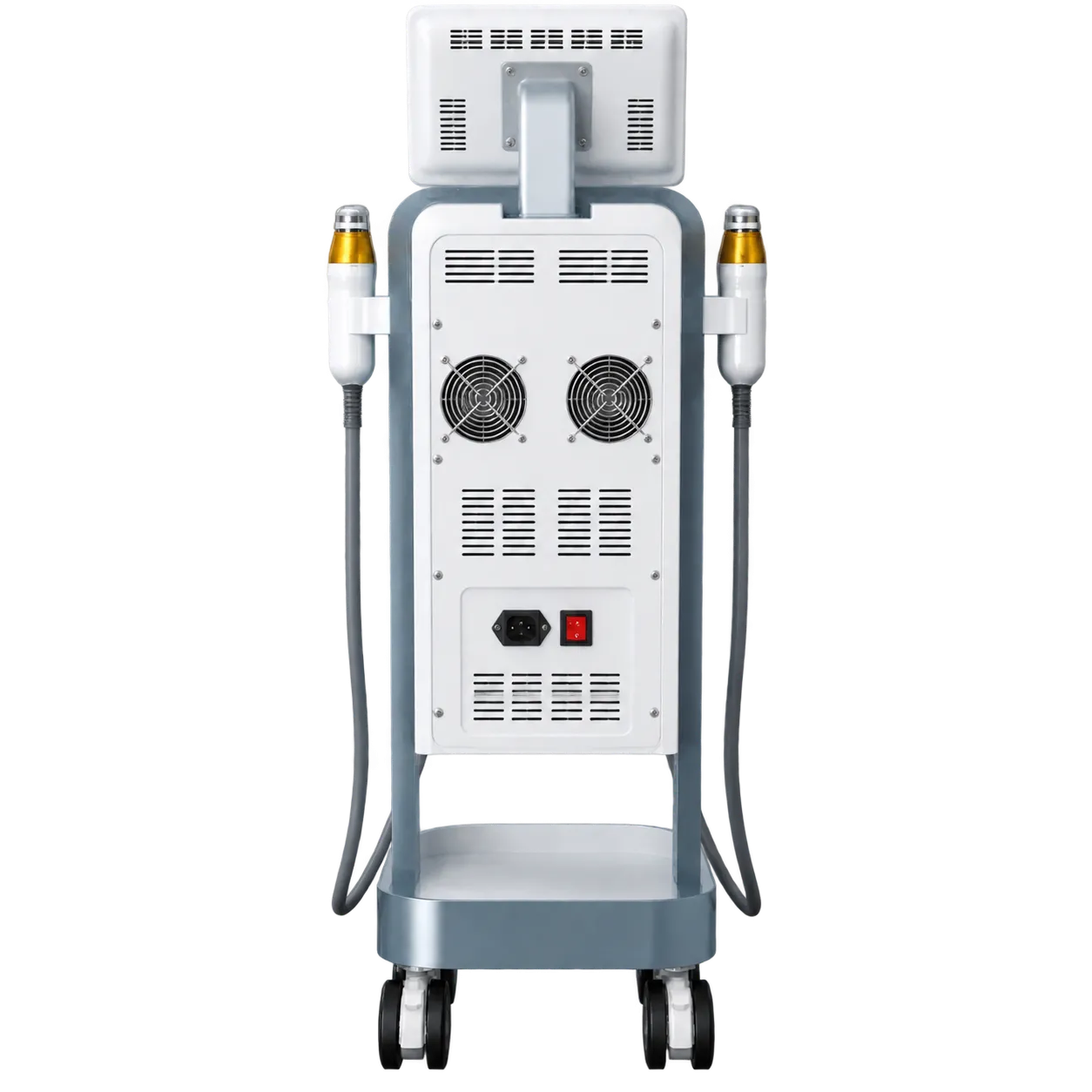
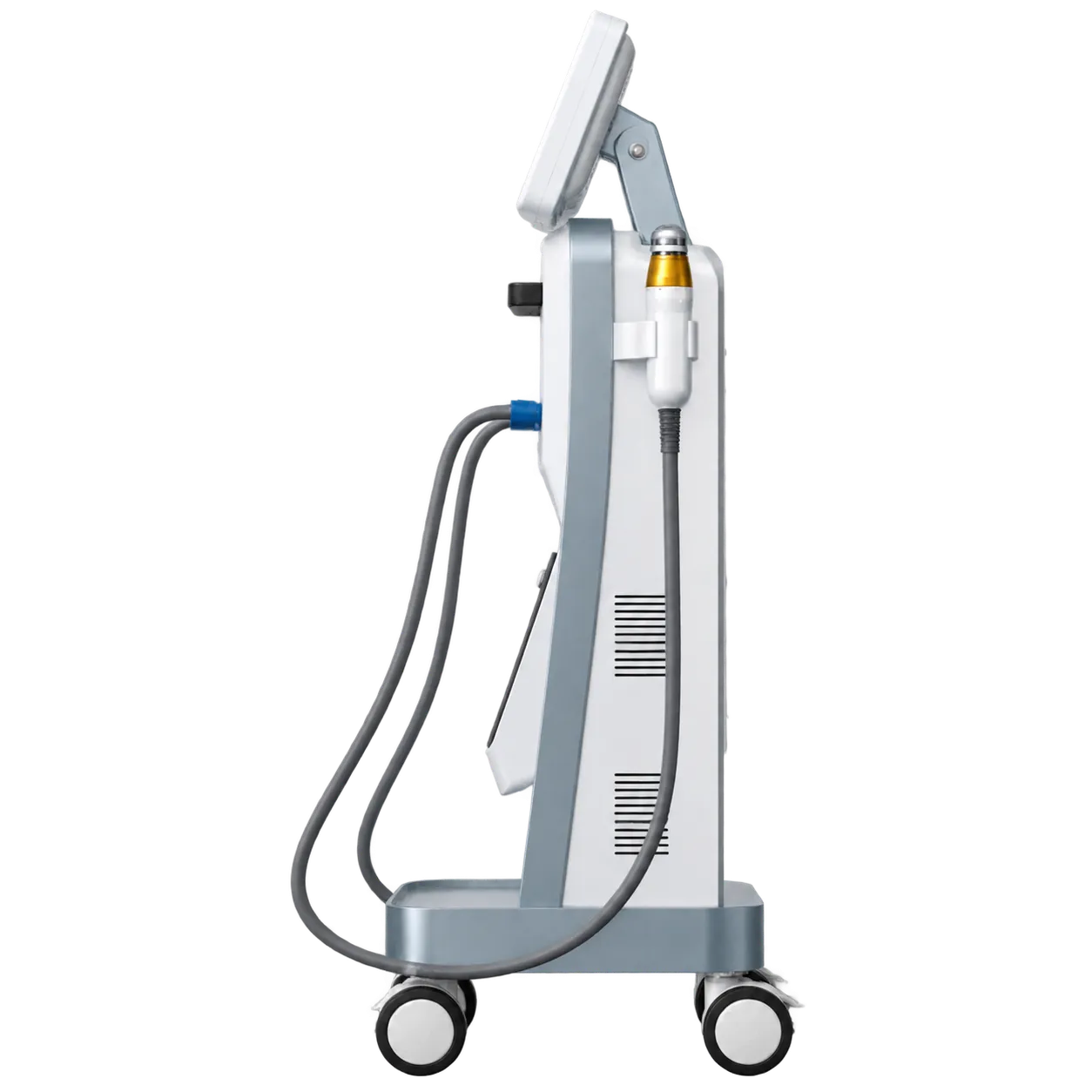
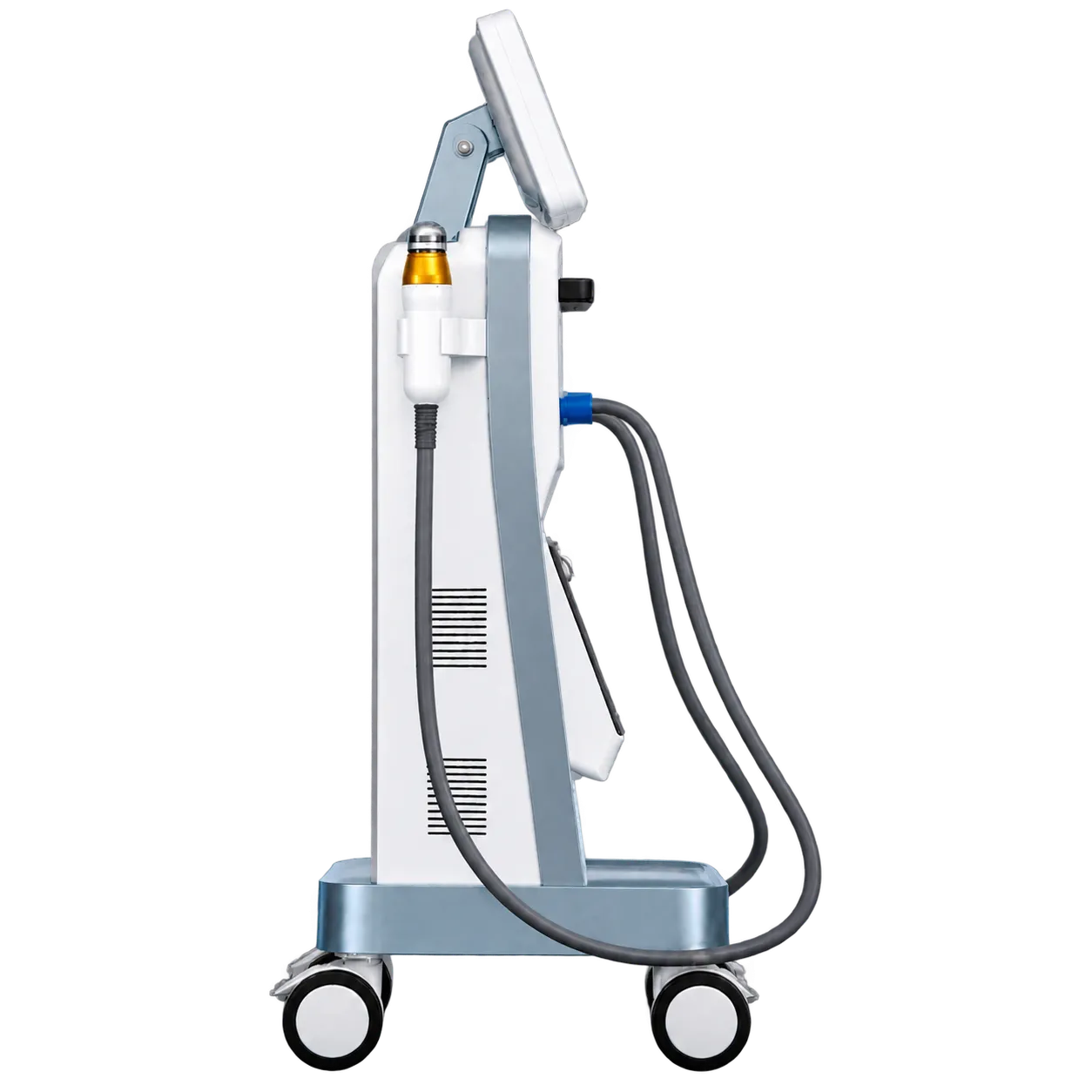
Atrophic acne scarring is the central use. Rolling and boxcar scars have a fibrous base below the surface, and insulated tips set to that depth can heat the scar floor while leaving the upper skin comparatively untouched. Ice-pick scars are narrower and deeper, and the small dense tips suit them best, often alongside other techniques the practitioner already uses.
Darker skin types are where the tower fits particularly well. Clients with Fitzpatrick skin types IV to VI often carry acne scars but face a higher risk of pigment change with surface-heating treatments. A practice serving those communities can build a scar programme around conservative settings, test patches and gradual depth increases.
Texture, pores and fine lines round out the menu. The pin-matrix head delivers a gentler, needle-free pass across the forehead, cheeks and neck, while the microneedle handpiece treats stretch marks and surgical scars on the body at greater depth. Those body areas usually take the larger heads and a longer course than facial work.
The tower suits doctor-led and nurse-led aesthetic clinics, dermatology practices and skin clinics that already run consultation-led scar programmes with photographs and follow-up. It is unsuitable for practices without sterile tips, sharps containers and a clinical waste route, and for clients with implanted electronics or active infection. Obligations include screening records, batch numbers for every tip, a handpiece cleaning routine and, depending on the council, registration for skin-penetrating treatment. The conformity documentation those inspection routes require is issued by the manufacturer and provided by the seller.