
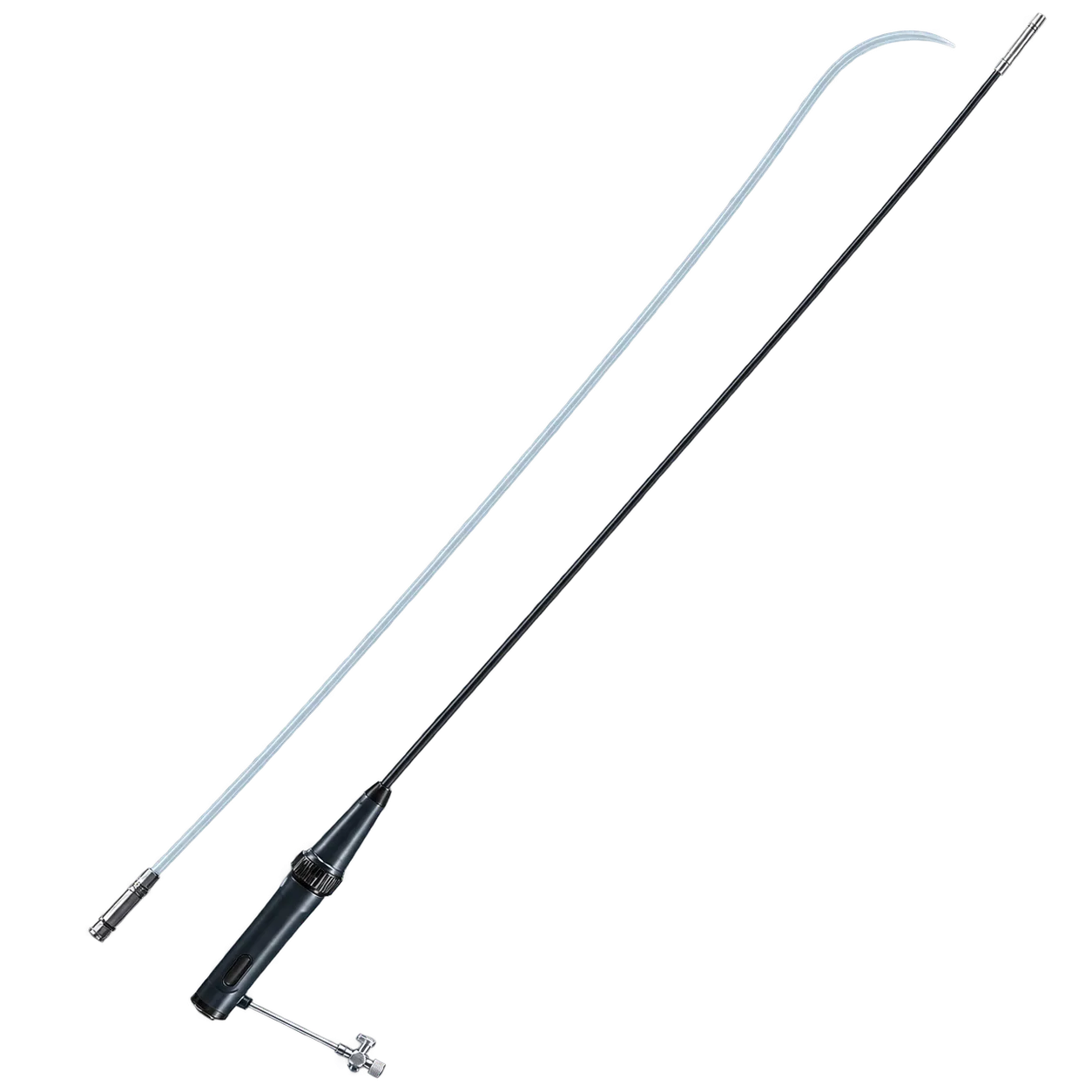
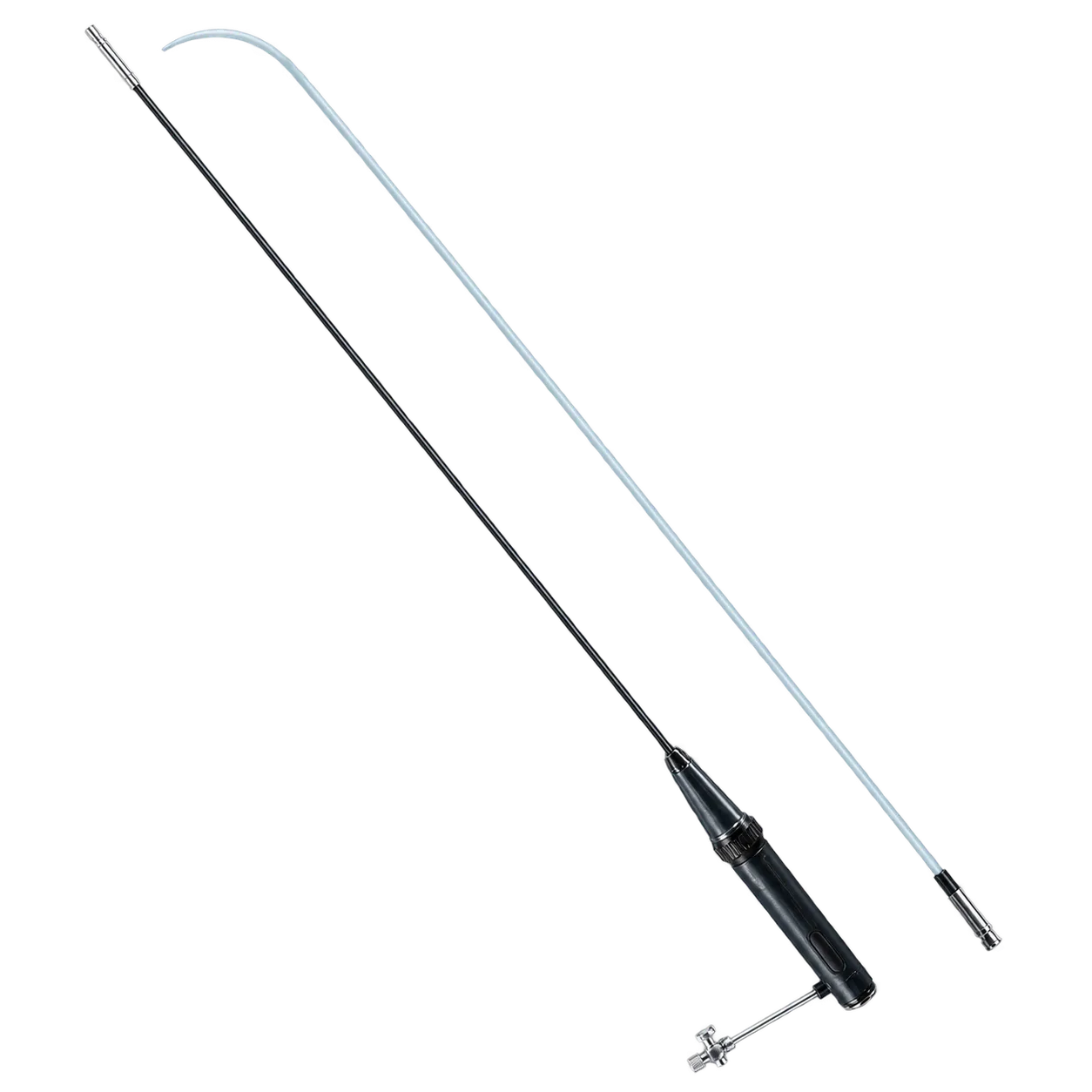
Atrial fibrillation ablation happens in the left atrium, and getting there means crossing the wall between the two atria. A needle punctures the septum, a wire goes through, and a sheath follows over it. The delivery sheath is usually exchanged over that wire once the crossing has been made with a dedicated transseptal system. From that single crossing point, everything else in the procedure has to be reached.
That is the problem this sheath solves. Four pulmonary veins drain into the left atrium, two on each side, and they leave at markedly different angles. The left-sided veins are usually straightforward from a central position. The right-sided veins are harder, because the sheath often has to curve back towards where it came from. A fixed-shape sheath cannot manage all four. A steerable one can, and the operator adjusts the curve as they approach each vein.
Two specifications describe that capability. Deflection through 200 degrees means the tip turns well past a right angle, allowing the reverse curve for right-sided veins. A 30 mm bend diameter means the curve is tight rather than sweeping, which matters in an atrium that is only a few centimetres across. Beyond steering, the sheath serves as a stable working channel. It holds position while the catheter is advanced, withdrawn and repositioned repeatedly. In this setting, sheaths are normally flushed continuously with heparinised saline to prevent clots from forming inside them, so the handle arrangement matters.
Medigear.uk will supply the instructions for use once the full documentation is available.