

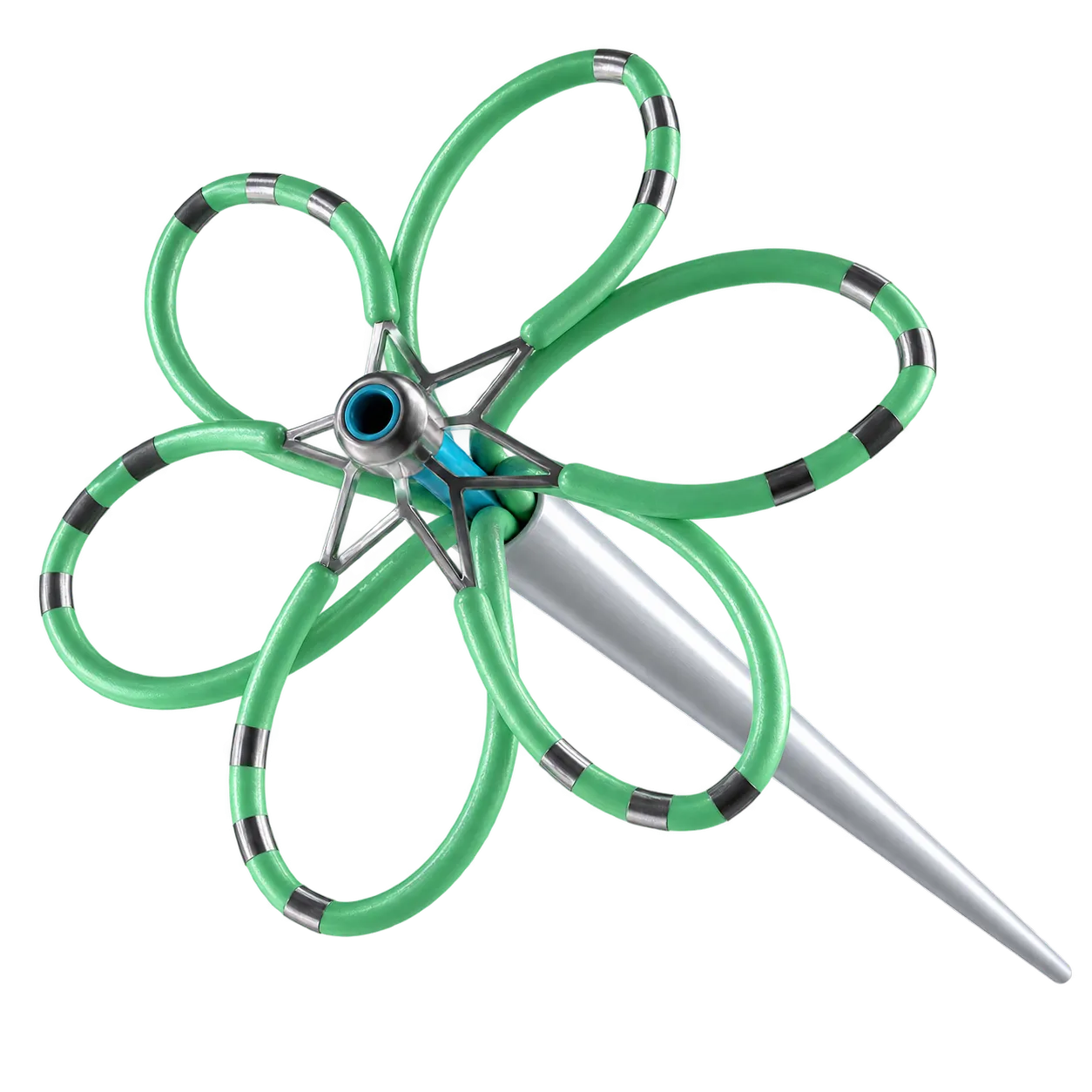
Atrial fibrillation is treated by isolating the pulmonary veins, where the electrical triggers usually arise. A ring of destroyed tissue around each vein's mouth blocks those signals from reaching the rest of the atrium. This has been done for years with heat or with cold, and both work. Both also carry a risk to nearby structures.
The oesophagus runs directly behind the left atrium, and the phrenic nerve passes close to the right veins. Thermal energy does not distinguish between tissue types, so injury to either is a recognised complication. Pulsed field ablation works differently. It uses short high-voltage pulses to break open cell membranes, and heart muscle succumbs at lower field strengths than nerve or oesophageal tissue. That difference is the whole clinical argument for the modality.
A petal array suits this work because it treats a whole vein in one application rather than point by point. The arms open outward and press against the rim of the vein, so a circle of tissue is treated at once. Vein size varies between patients and between the four veins in one patient, which is why a range of array diameters matters. Delivery is normally timed to the cardiac cycle, so pulses land at a safe point in the heartbeat. The procedure is done through a steerable sheath under imaging. None of that can happen without the matched generator, which is not included in the supplied materials. Medigear.uk will provide the instructions for use once the full system documentation is available.