
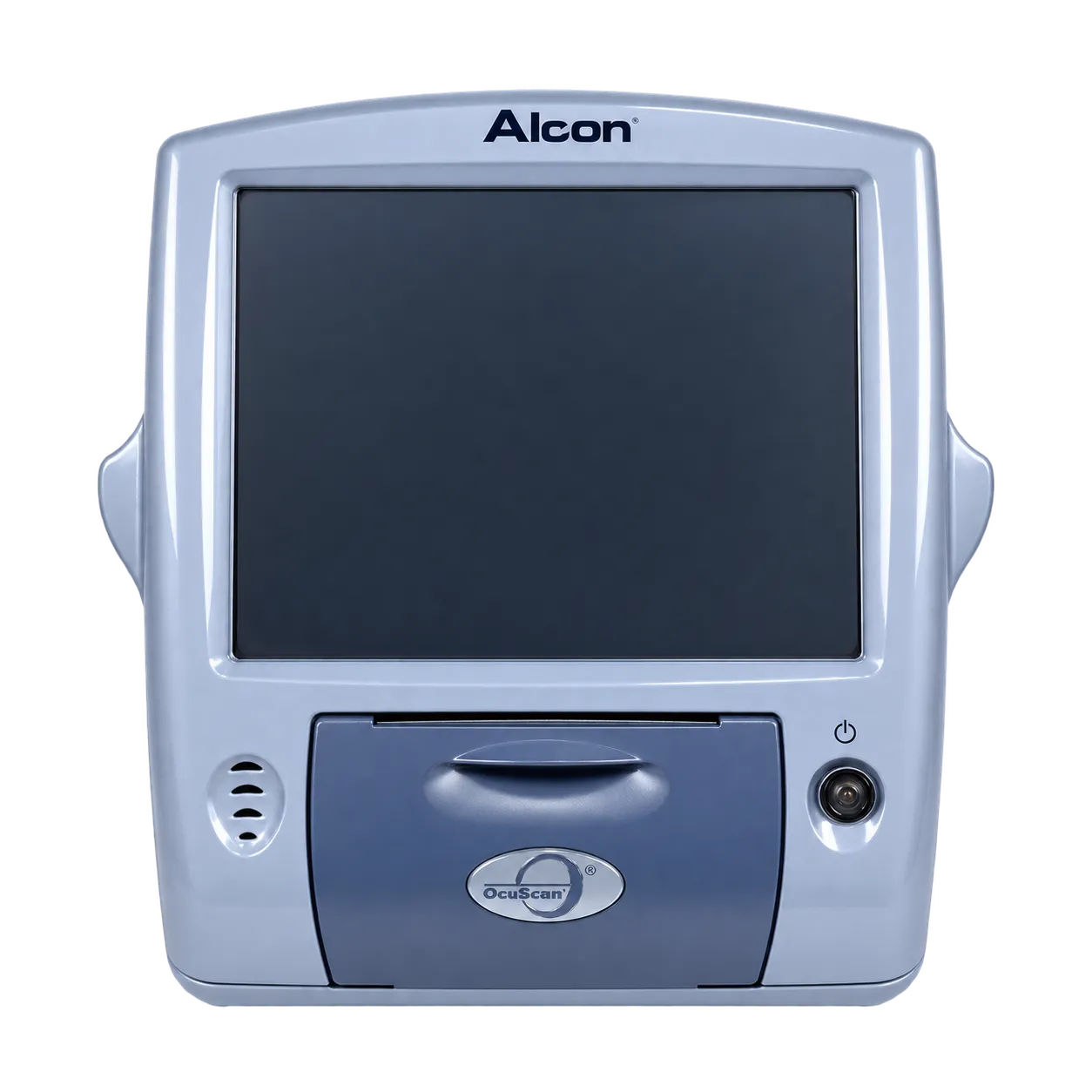
The OcuScan RxP serves ophthalmology clinics, eye hospitals, cataract surgery planning departments and optometry practices that run A-scan biometry on site. Axial length, lens thickness, anterior chamber depth and vitreous length are read in one measurement routine, and six IOL formulas turn the values into lens power for the planned implant. Velocity is programmable for each segment of the eye, and an age compensation option adds age-related velocity compensation for natural lenses.
Ophthalmologists, optometrists and ophthalmic technicians operate it, and the workflow is built around keeping hands on the patient. A foot pedal gives hands-free control, Auto, Manual and Super Auto modes match the operator's preferred way of capturing a reading, and a beep sounds each time a reading is stored. Up to five user profiles for biometry hold each surgeon's settings, with 10 editable IOL slots in each, so a rotating team can work from one console without resetting constants.
With the optional pachymetry software and probe, the same console records corneal thickness in single-point, mapped and LASIK modes. The LASIK mode records three points in each of four phases, which supports measurements before and after a refractive procedure, and Single Point mode shows the minimum, average, standard deviation and adjusted IOP.
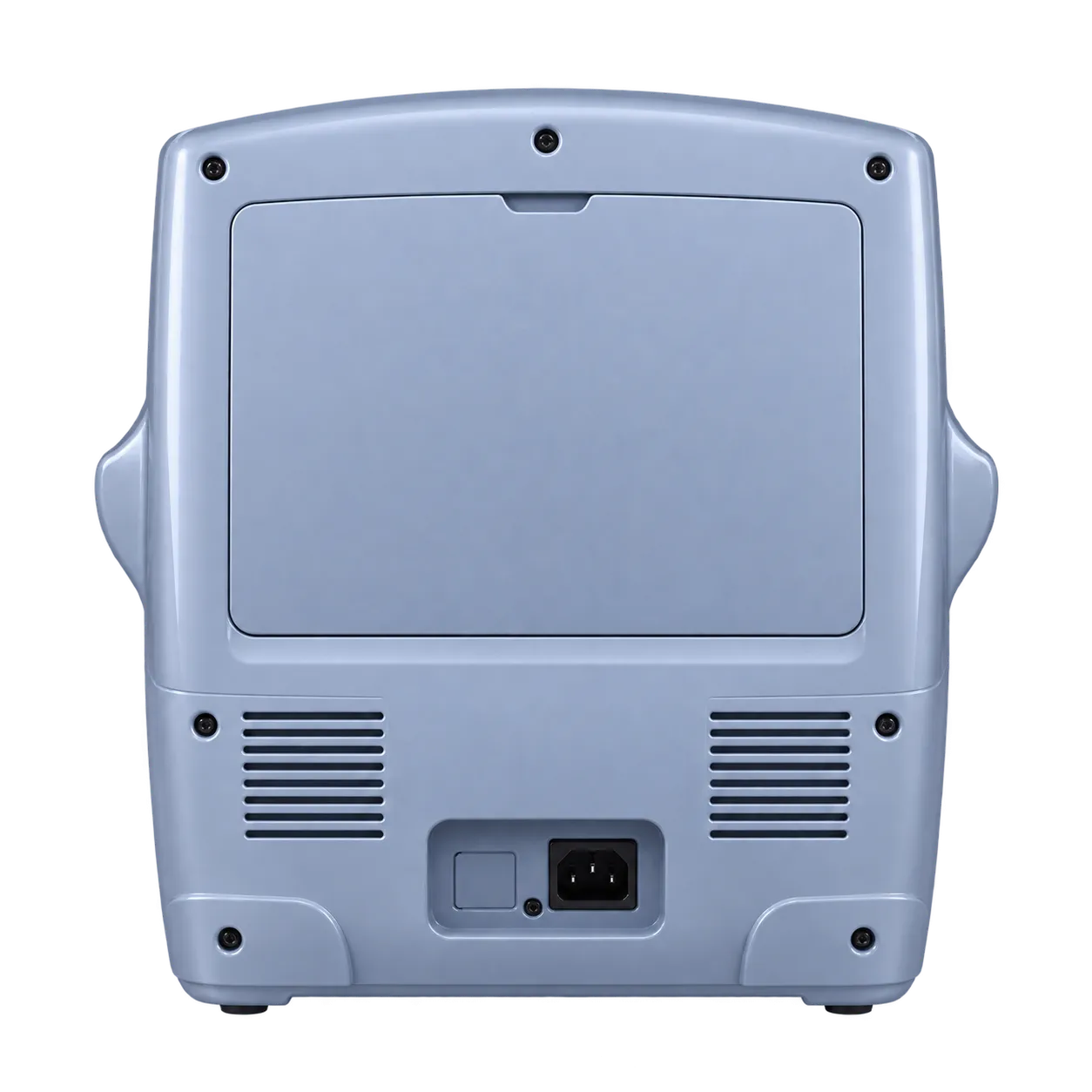
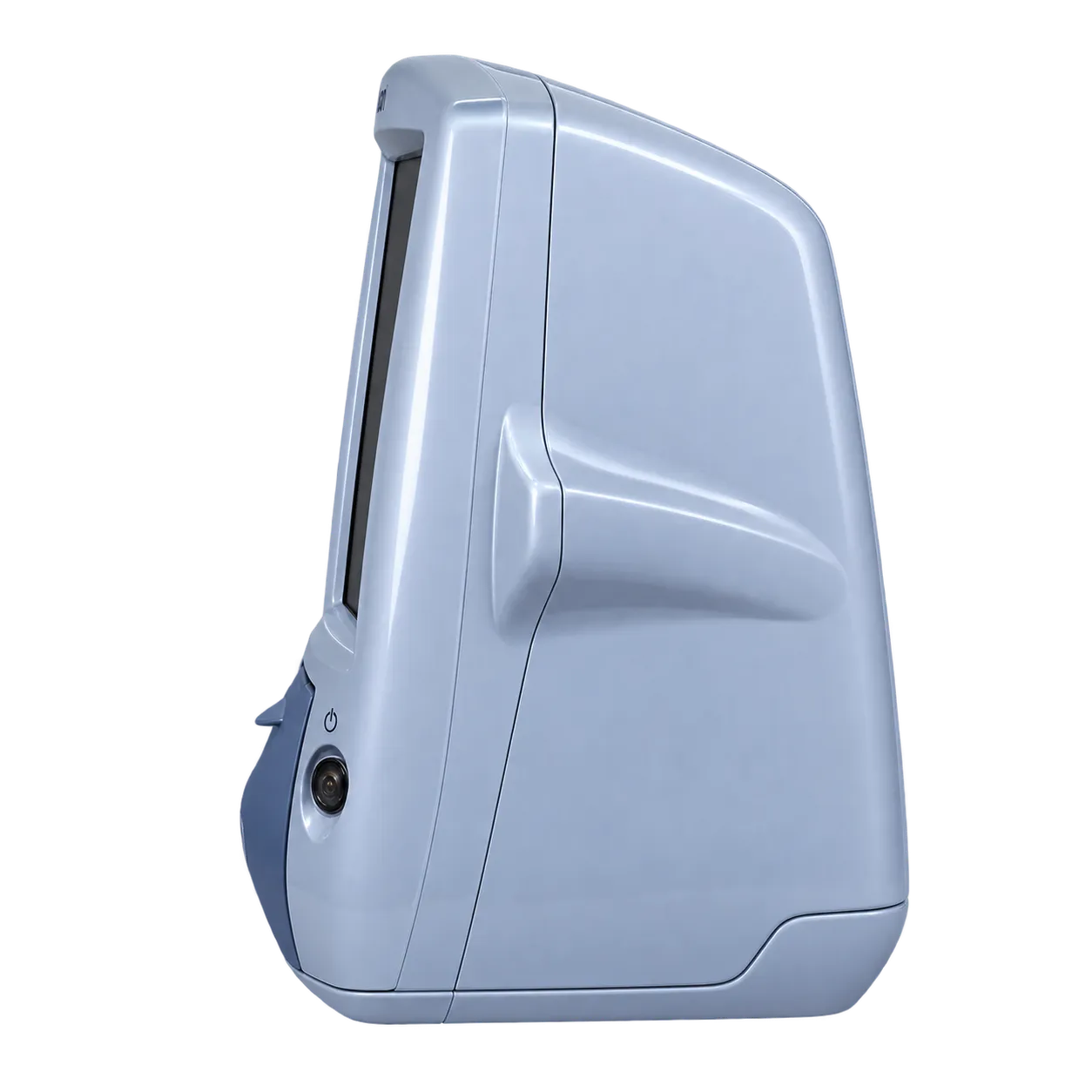
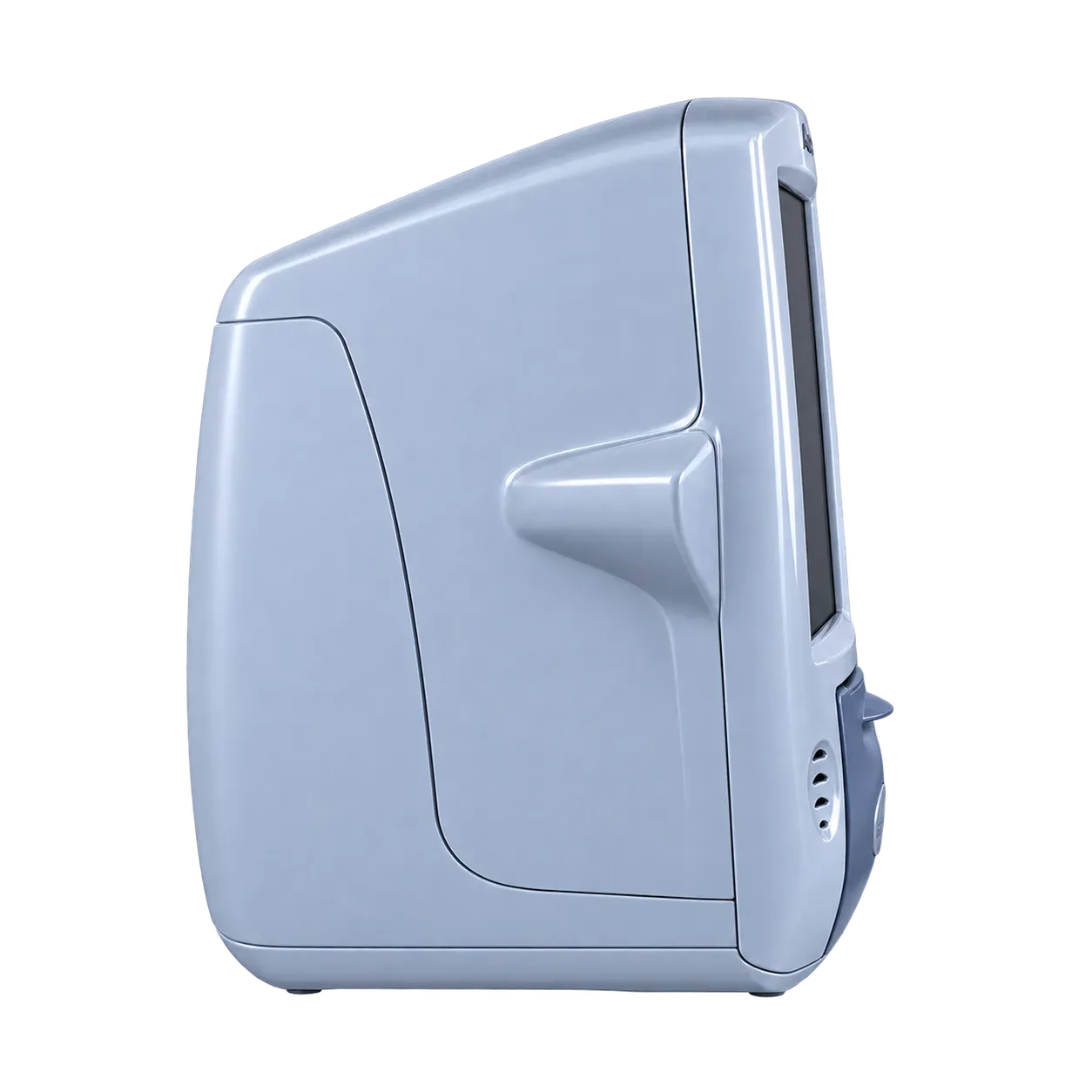
At the end of a session, the built-in thermal printer prints the current screen or a full patient report, and a CompactFlash card carries patient data to a computer. The console weighs 4.85 kg, sits on a desk or mounts through four threaded holes in its base, and operates from 10 to 35 °C. A built-in contact eye model keeps probe testing at the bench between patients.