Haemodynamic monitoring is the continuous measurement of how blood moves through the circulation — the pressures, flows and volumes that show whether a patient’s organs are receiving enough oxygenated blood. It is not a single device but a framework: a layered set of measurements, from a simple upper-arm cuff to invasive flow monitors, matched to the patient's level of illness. This guide is a buyer’s overview of that framework and the equipment behind it, not a deep dive into any one method.
Every haemodynamic measurement tries to answer the same question — is the heart delivering enough blood to the tissues, and if not, why? Knowing the ladder of tools available helps a department equip its wards, theatres and critical-care beds sensibly rather than over- or under-buying.
What haemodynamics actually describes
Circulation depends on a handful of interacting factors. Preload is the volume of blood filling the heart before it contracts; afterload is the resistance it must pump against; and contractility is the force of the heartbeat itself. Combined with heart rate, these determine how much blood the heart ejects each minute. Monitoring exists to make these otherwise invisible factors measurable, so a team can tell whether a low blood pressure reflects an empty tank, a weak pump or dilated vessels — three problems with very different treatments.
The parameters a monitor tracks
At the simplest level, a monitor shows heart rate and arterial pressure as systolic, diastolic and mean values. Step up, and it may add central venous pressure, cardiac output and index, stroke volume and calculated vascular resistance. Alongside these sit global markers of perfusion that are not pressures at all: blood lactate, urine output, central venous oxygen saturation and capillary refill. Reading several of these together, rather than fixating on a single number, turns raw data into a picture of the circulation.
From non-invasive to invasive: the monitoring ladder
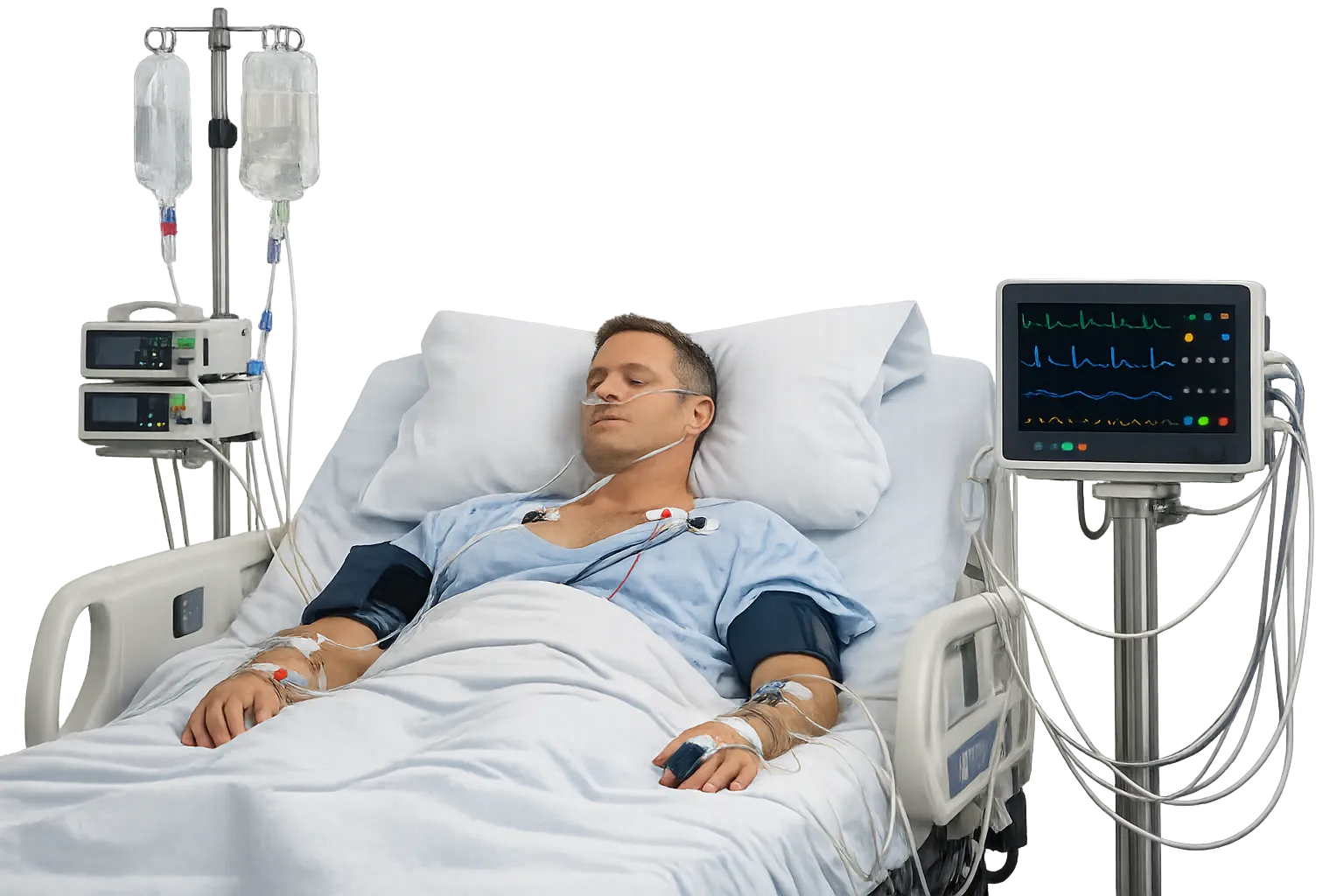
Haemodynamic monitoring escalates with acuity. On a general ward, an automated non-invasive blood pressure cuff and pulse oximetry are usually sufficient. A deteriorating or high-risk patient may need an arterial line for beat-to-beat pressure and a central line for venous pressure and access. The most unstable patients, in theatre or intensive care, may warrant flow-based monitoring that estimates cardiac output. The principle is to use the least invasive tool that answers the clinical question, and to step up only when the added information will change management.
Static pressures versus dynamic flow
A normal blood pressure can mask a failing circulation, because the body compensates by tightening blood vessels long before pressure falls. This is why monitoring has shifted from static pressures towards flow and functional measures — assessing whether giving fluid will actually increase cardiac output rather than simply guessing from a single reading. Buyers should understand this shift because it influences which monitoring platforms and consumables a modern critical-care unit expects to run.
How the numbers guide care
Haemodynamic data steer decisions about fluids, drugs that support the heart or tighten vessels, and when to escalate. The value lies in trends over time far more than isolated snapshots: a falling pressure with rising lactate tells a story a single figure cannot. Crucially, the monitor is one input among several. It sits alongside clinical examination and laboratory results, and no responsible unit treats a number in isolation. Equipment that displays clear, stable trends therefore supports better decisions than kit that produces noisy or hard-to-read data.
Displaying and integrating the data
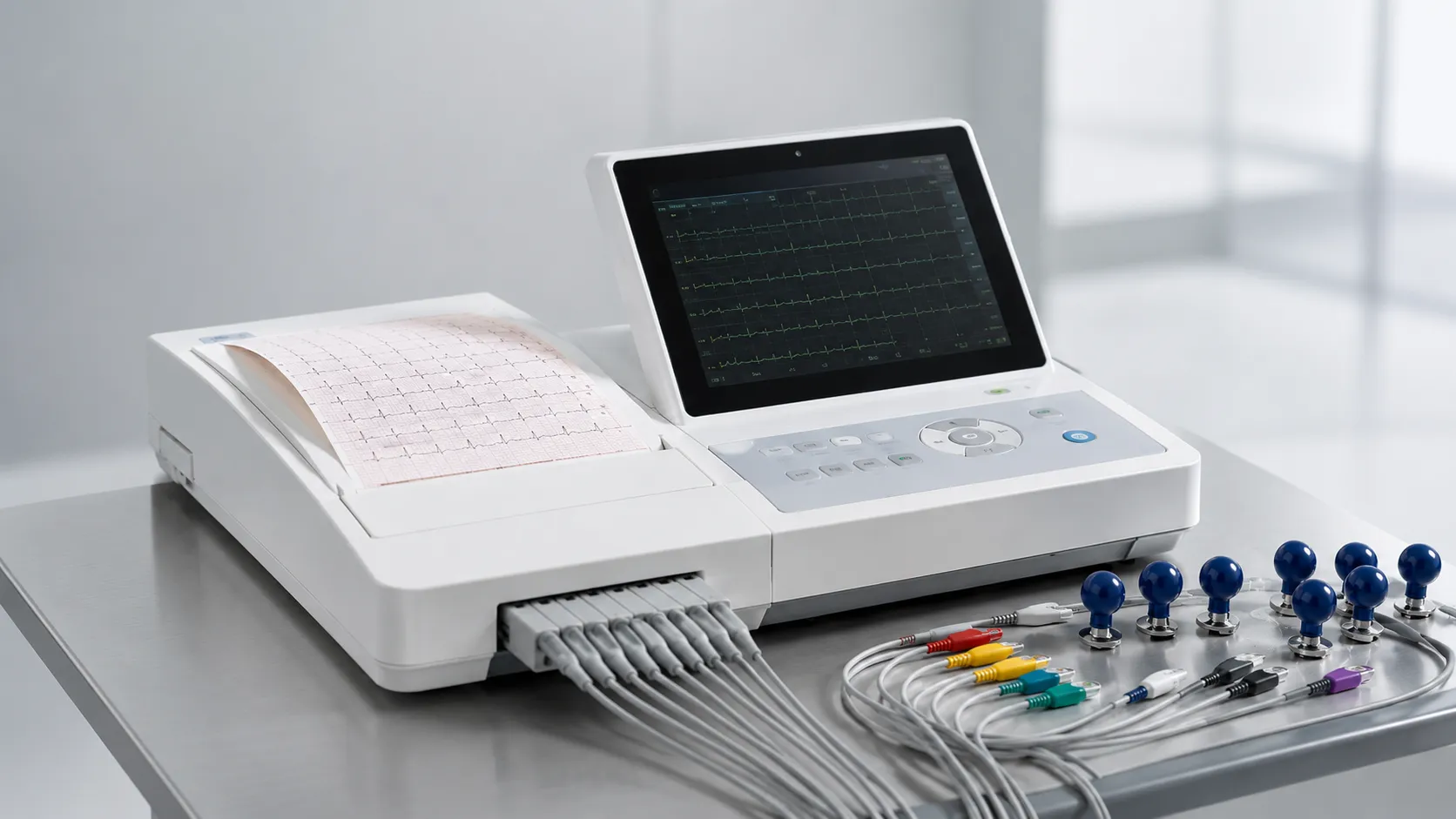
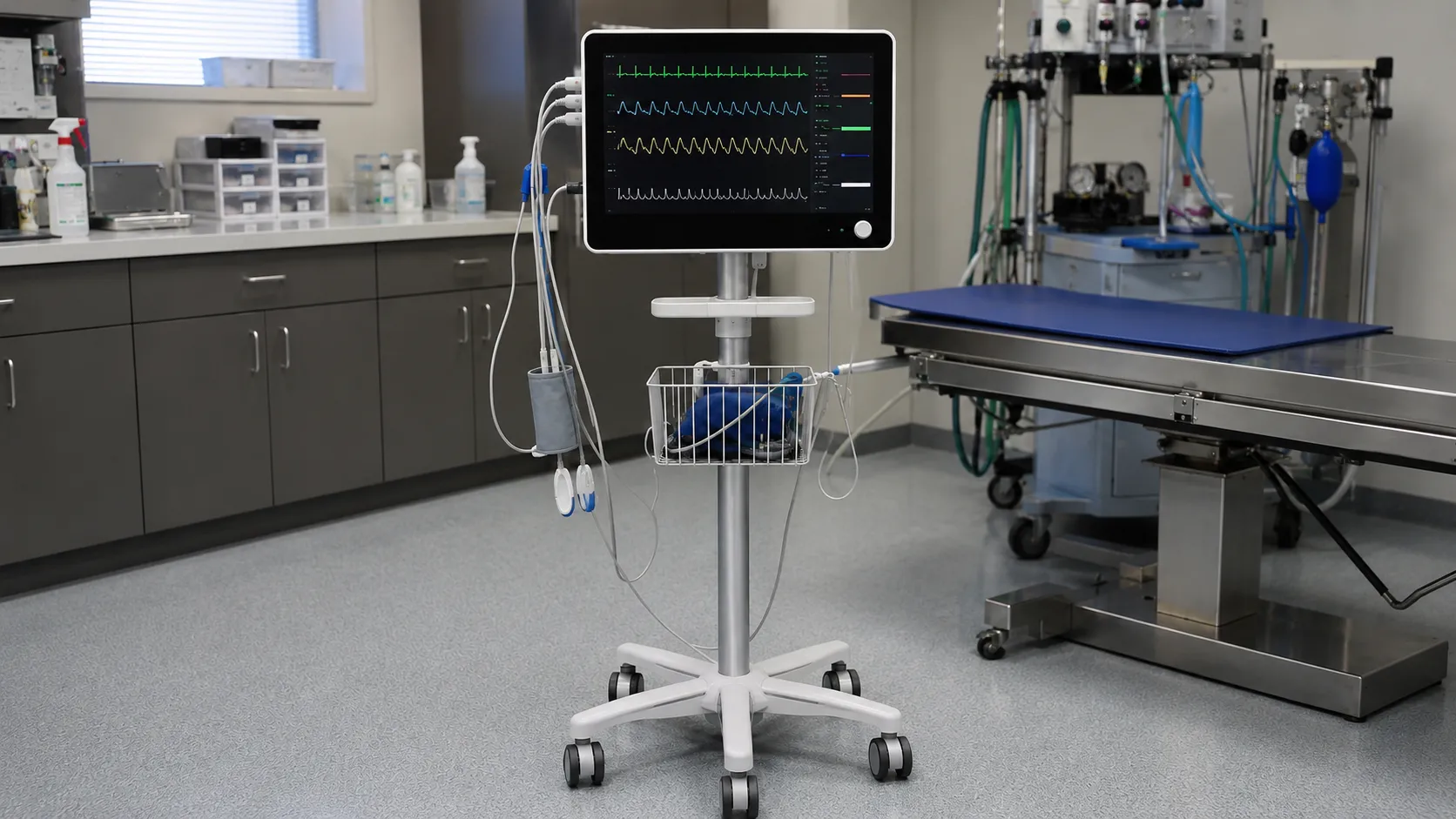
Most haemodynamic parameters converge on a multiparameter bedside monitor, often networked to a central station where staff watch several beds at once. Modern platforms store trends, generate alarms and export readings into the patient record. When comparing systems, look at how many parameters a single monitor can display, whether modules can be added as needs grow, and how cleanly the data feed into your clinical information systems rather than being trapped on the screen.
Global markers of perfusion
Some of the most valuable haemodynamic information does not come from a pressure at all. Blood lactate rises when tissues are starved of oxygen and switch to anaerobic metabolism, so a rising lactate is a warning that the circulation is failing even when pressures look acceptable, and a falling lactate suggests treatment is working. Urine output is a cheap, continuous bedside marker of kidney perfusion. Central venous oxygen saturation reflects the balance between how much oxygen the body is delivering and how much it is using. Skin temperature, mottling and capillary refill add a hands-on layer. A capable monitoring setup lets a team read these alongside the pressures rather than in isolation.
Calibration, zeroing and everyday accuracy
Accurate numbers depend on correct setup. A non-invasive blood-pressure reading is only reliable if the cuff is the right size and correctly placed, so departments must stock a full range of cuff sizes including paediatric and large-adult options. Invasive pressures require the transducer to be zeroed to atmosphere and levelled to the correct reference point, or every reading carries an error. Bedside monitors themselves need scheduled calibration and electrical-safety checks by biomedical engineering. Movement, poor probe contact and interference all introduce artefacts, so staff training in recognising a suspect reading is part of getting good data.
Standards, regulation and safety
Haemodynamic monitors are active medical devices and must carry valid UKCA or CE marking with instructions for use supplied. The MHRA regulates these devices in the UK, and electrical safety follows the IEC 60601 family, with particular standards covering non-invasive blood-pressure accuracy and invasive pressure performance. Verify that any platform meets the relevant parts of that series, and that the manufacturer can supply calibration and servicing documentation for your biomedical engineering team.
Networking and central monitoring
In busy units, monitors are rarely watched one at a time. Networking bedside monitors to a central station lets staff observe several patients from one point, review stored trends and respond to alarms without standing at each bed. Telemetry extends this to mobile patients whose electrocardiogram and other signals are transmitted wirelessly. When comparing platforms, check how many beds a central station supports, how alarms are routed and escalated, how long trend data are retained, and whether remote review fits your unit layout. Reliable networking turns a set of individual monitors into a coordinated system, which is often where the practical value lies for a department.
Procurement considerations across settings
Needs differ sharply by setting. A ward wants reliable, easy non-invasive monitoring; a high-dependency unit adds invasive pressures; intensive care and major theatres may want flow monitoring and modular expansion. Standardising on one monitor family across a department reduces training, spares-holding and setup errors. Weigh capital cost against the recurring cost of consumables such as cuffs, sensors and single-use transducer sets, and confirm warranty, servicing intervals and spares availability before committing.
-
Match the monitoring level to patient acuity, from non-invasive cuff to invasive flow.
-
Choose modular platforms so parameters can be added without replacing the monitor.
-
Check UKCA or CE marking and compliance with the relevant IEC 60601 parts.
-
Confirm how readings and trends export into your clinical information systems.
-
Standardise the monitor family across a department to cut training and spares.
-
Model consumable costs — cuffs, sensors and transducer sets — not just capital price.
-
Verify calibration, servicing intervals and spares availability with the supplier.
Conclusion
Haemodynamic monitoring is best understood as a ladder of measurements rather than a single gadget, and buying well means equipping each setting with the right rung: dependable non-invasive monitoring on the ward, invasive pressures where they earn their place, and expandable platforms in critical care. To compare compatible monitoring systems for your facility, register as a buyer or speak to the MediGear team.
Disclaimer
This article is for informational purposes only. It is published by MediGear (medigear.uk) for general information and procurement guidance, and is not clinical, diagnostic, treatment, technical, engineering, legal or regulatory advice, nor a product endorsement, guarantee or substitute for professional assessment. MediGear does not provide medical consultations. Buyers should consult their clinical, biomedical, estates and regulatory contacts, and the manufacturer's documentation, and independently verify all specifications, certifications, compatibility and suitability before purchase. Specifications, certifications and availability are correct at the time of publication and may change without notice. MediGear is a medical-equipment distributor and does not sell medicines or pharmaceutical products.