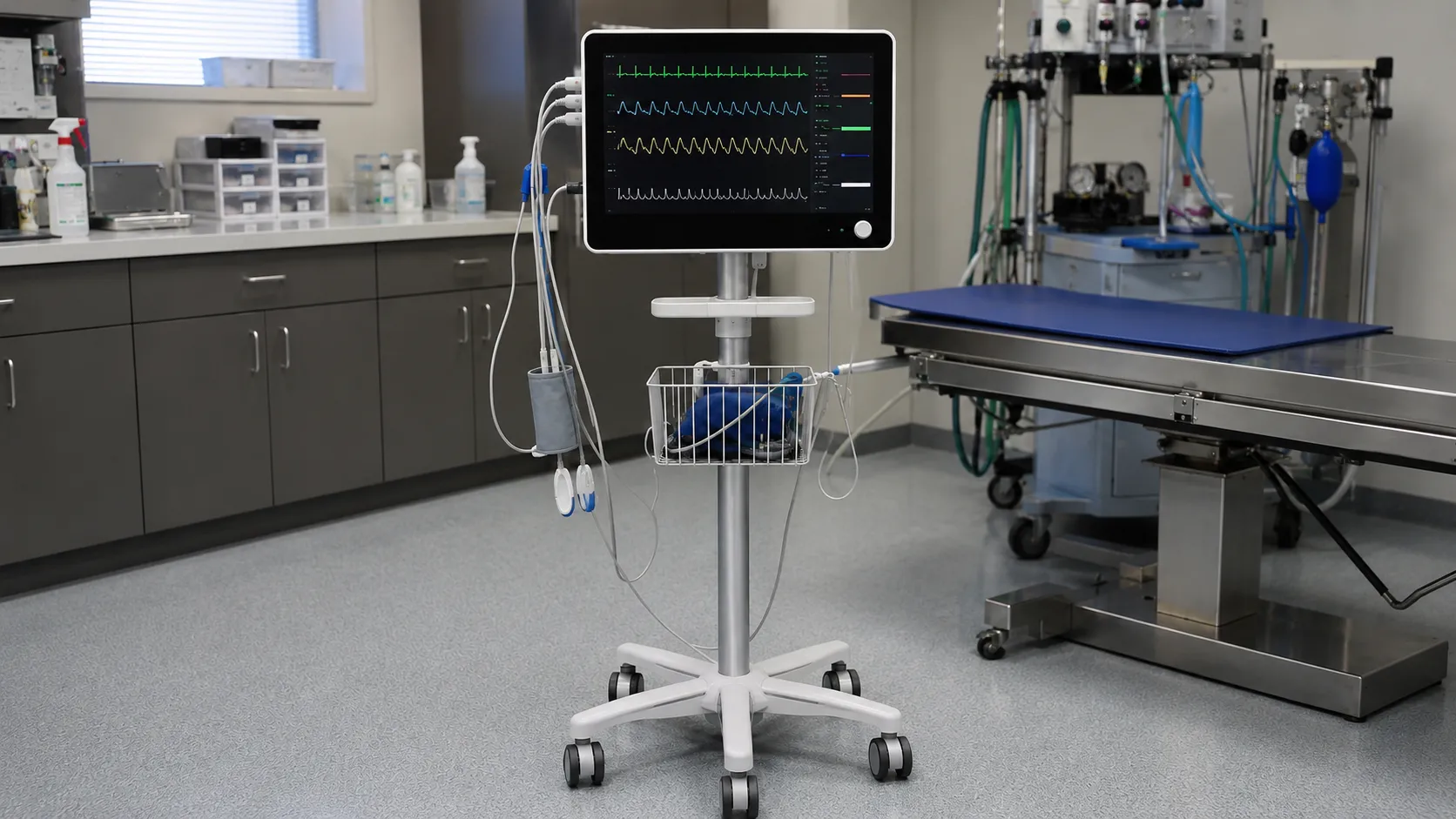
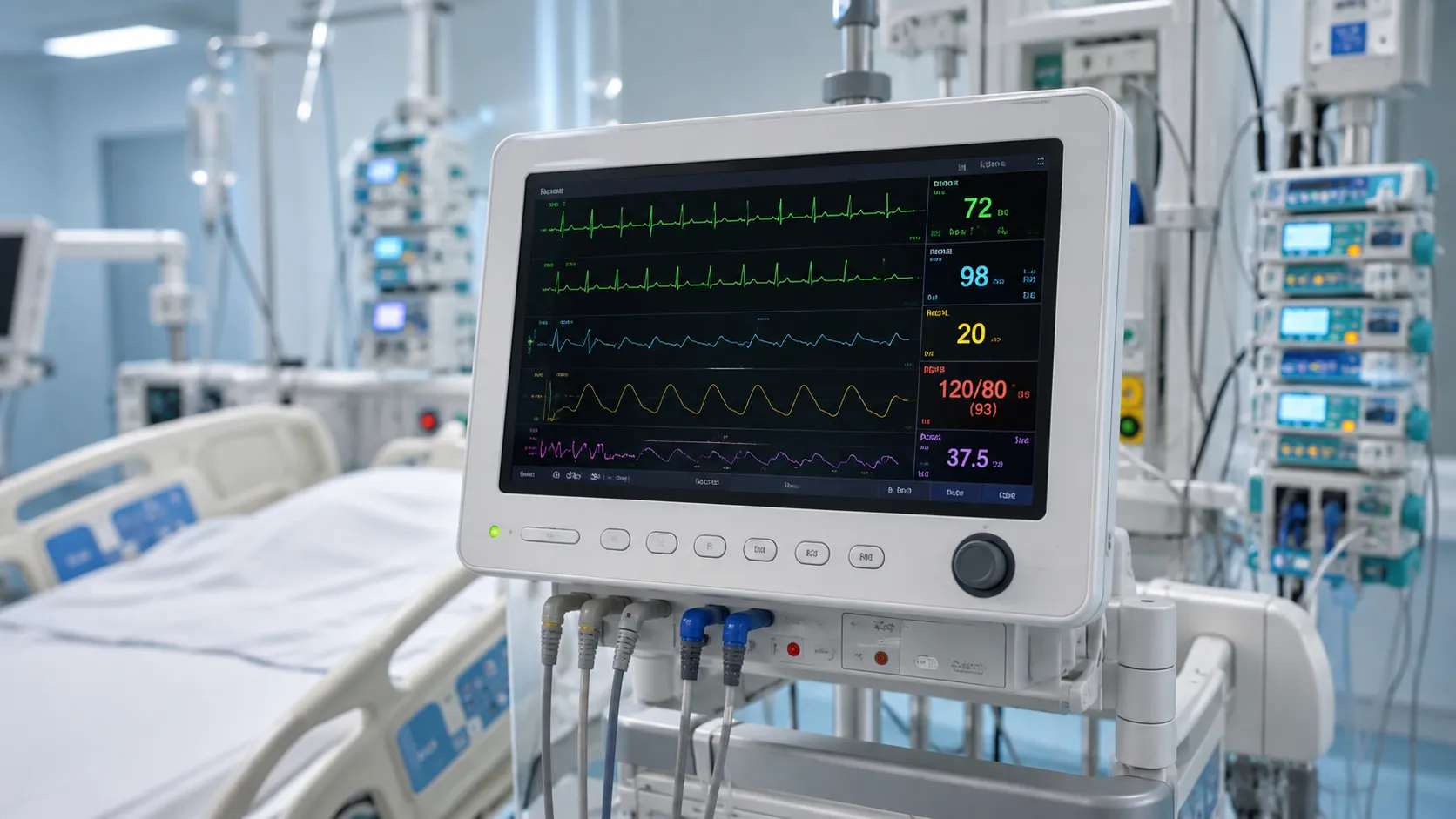
A multi-parameter monitor is a bedside device that measures and displays several vital signs at once on a single screen. In critical areas such as intensive care, theatres, recovery and high-dependency units, one monitor typically shows the electrocardiogram, heart rate, oxygen saturation, non-invasive blood pressure, temperature and often invasive pressures and exhaled carbon dioxide together. Bringing the parameters onto one calibrated display lets clinicians read a patient's whole physiological state at a glance and see how the signs move together.
Unlike a central station, which aggregates many patients, or a wireless telemetry unit, which follows a mobile patient, the multi-parameter monitor is the stationary workhorse at a single high-acuity bed. Choosing one well means understanding both the measurements it makes and how it will be configured, connected and maintained.
The Core Parameters and How They Are Measured
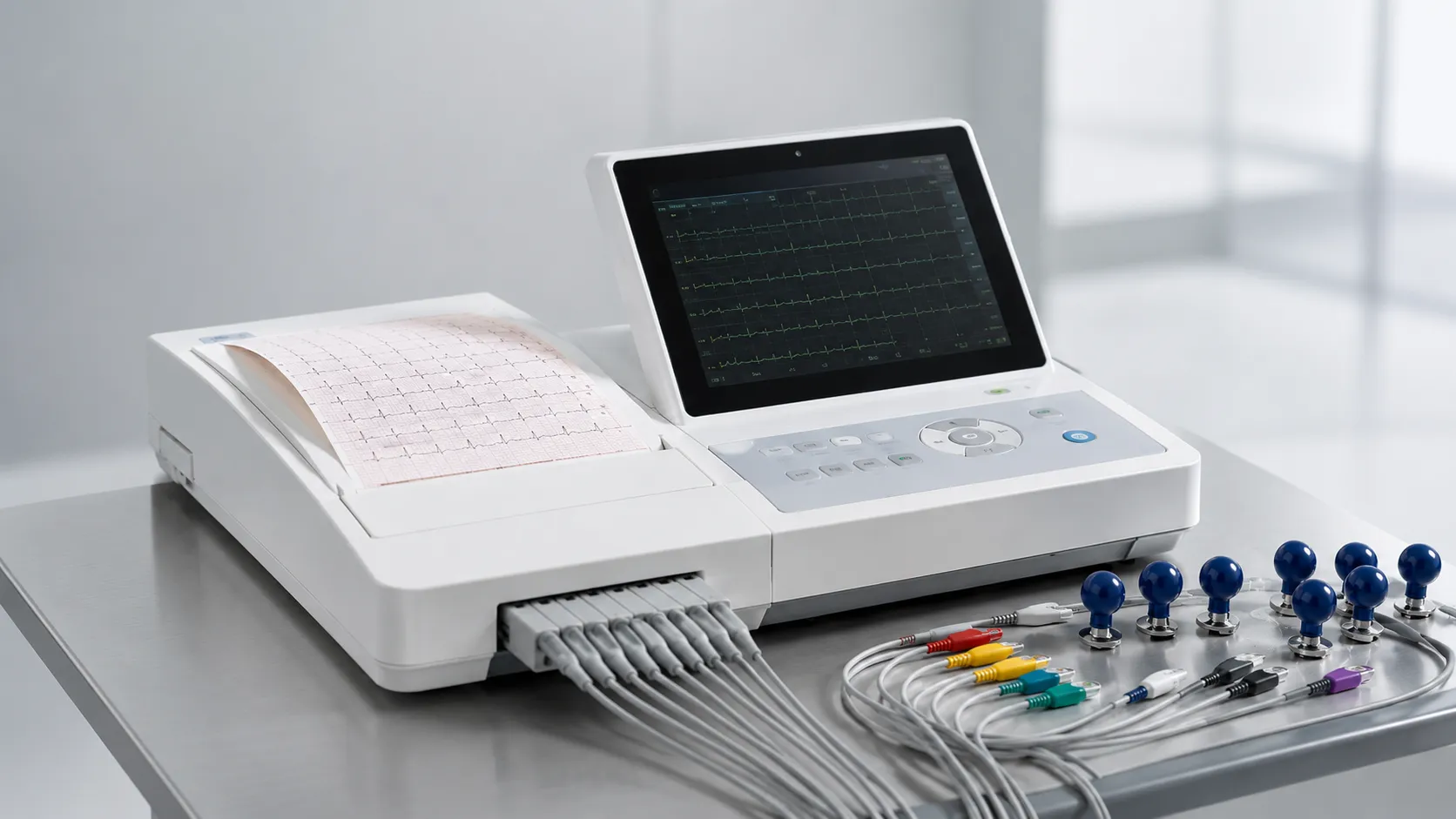
Each parameter uses a distinct principle. The ECG derives heart rate and rhythm from skin electrodes reading the heart's electrical activity. Pulse oximetry estimates oxygen saturation from how tissue absorbs red and infrared light. Non-invasive blood pressure uses an oscillometric cuff that inflates and reads pressure oscillations. Temperature comes from a skin or probe sensor. In higher-acuity configurations, invasive blood pressure reads directly from an arterial or venous line through a transducer, and capnography measures exhaled carbon dioxide to confirm ventilation. ECG inputs are commonly offered in 3-, 5- or 12-lead configurations, and higher-acuity monitors provide two or more invasive-pressure channels so an arterial and a central venous line can be traced at once. Capnography itself comes in sidestream form, which draws a gas sample through fine tubing and suits both intubated and spontaneously breathing patients, and mainstream form, which places the sensor directly in the breathing circuit for a faster response. Understanding each principle helps a buyer judge which sensors and accuracy specifications the unit actually needs.
Modular Versus Pre-Configured Designs
Monitors come in two broad architectures. A pre-configured monitor has a fixed set of parameters built in, which keeps cost and complexity down and suits areas with predictable needs. A modular monitor accepts plug-in parameter modules that can be added, swapped or moved between monitors, giving flexibility to match changing acuity and to share expensive modules across a fleet. Modular systems cost more up front but can be more economical and adaptable across a critical-care unit. The right choice depends on how varied and how high your patients' needs are.
Matching the Monitor to the Care Setting
The same broad category covers very different needs. An intensive-care bed may require invasive pressures, capnography, cardiac output and multiple invasive lines, with deep waveform review and tight central-station integration. A theatre monitor emphasises anaesthetic-relevant parameters and reliability amid electrosurgical interference. A recovery or high-dependency bed sits between the two, while a transport monitor prioritises light weight, battery life and ruggedness for moving a patient between areas. Specifying by setting, rather than buying one configuration for everywhere, avoids both paying for unused features and, worse, finding a bed under-equipped for its acuity.
Key Specifications a Buyer Must Check
Look beyond the parameter list to the details that decide clinical usefulness. Check screen size, resolution and how many waveforms display clearly at once. Confirm the measurement accuracy and range for each parameter, and which pulse-oximetry technology is fitted, since motion and low-perfusion performance vary. Assess battery endurance for intra-hospital transport, the weight if the monitor travels with the patient, and the range of compatible sensors and cuffs. Confirm how the monitor stores trends and how far back a clinician can review, and whether settings and patient data transfer cleanly when a patient moves between a transport monitor and a bedside unit. Check too how configurable the screen is, since most monitors let staff choose which waveforms and numerics appear, resize traces and save display profiles per care area or per user. Consider how data leaves the device for records and audit: live networking to the central station and electronic patient record, plus export of trends and full-disclosure captures to a USB drive or network share in a readable format. These specifications separate monitors that look similar on a brochure.
Usability and Human Factors
In a critical area, a monitor is operated under pressure, so clarity is a safety feature. Clinicians should be able to change an alarm limit, start a blood pressure cycle or silence a nuisance alert in a few unambiguous steps, and the display should make the most important numbers legible from across the bed space. Consistent behaviour across a fleet reduces errors when staff move between beds and units, which is a strong argument for standardising on one family. Consider how the monitor handles admitting a new patient and clearing the previous patient's data and settings, since a leftover alarm limit or trend can mislead. Poor usability shows up as workarounds, silenced alarms and mistrust, all of which undermine safety.
Connectivity, Alarms and Integration
In a critical area, a monitor is rarely an island. It should connect to the ward's central monitoring station and, ideally, push data to the electronic patient record through HL7 so vital signs are recorded automatically. Alarm behaviour should follow IEC 60601-1-8, with configurable patient-specific limits, sensible priorities and escalation to reduce nuisance alarms. Electromagnetic compatibility should meet the IEC 60601-1-2 family, so the monitor is reliable amid the dense equipment of an ICU or theatre. Confirm current UKCA or recognised CE status with the manufacturer and the MHRA.
Procurement checklist
-
Match the parameter set, including invasive pressures and capnography, to the area's acuity.
-
Decide between modular and pre-configured based on how variable your needs are.
-
Check screen legibility, waveform count and trend review depth.
-
Confirm sensor and cuff compatibility, including reusable versus single-use options.
-
Verify central station and HL7 record integration.
-
Confirm IEC 60601-1-8 alarms, IEC 60601-1-2 EMC and UKCA or CE status.
-
Assess battery life and weight for intra-hospital transport.
Calibration, Maintenance and Decontamination
Critical-care monitors need routine checks to stay trustworthy. Non-invasive blood pressure and invasive pressure channels require periodic verification, and biomedical engineering should schedule planned maintenance against the manufacturer's guidance. Because monitors move between patients, the housing, cables and sensors must tolerate the cleaning agents your infection-control team uses, so confirm validated decontamination procedures. Decide which sensors will be single-use and which reusable, as this affects both infection risk and running cost. A monitor that cannot be cleaned safely or calibrated easily will not serve a critical area for long.
Consumables, Servicing and Total Cost
The purchase price is only the start. Pulse-oximeter sensors, blood pressure cuffs, ECG leads, invasive-pressure transducers and capnography consumables recur for the life of the device, and licensed measurement technologies can carry ongoing costs. Model these across your expected patient throughput, and clarify warranty length, spares availability, service response times and software update policy. Ask whether the monitor accepts a choice of sensor brands or locks you into a single proprietary consumable, as this materially affects long-run cost and supply resilience. Standardising monitors across a unit simplifies training, spares and biomedical support, and can strengthen your position on both price and service terms. MediGear helps procurement teams compare compliant monitors and source them through our buyers' service and the contact desk.
Conclusion
A multi-parameter monitor brings a critical patient's key vital signs onto one reliable, calibrated display, and the right choice depends on matching its parameters, architecture and connectivity to the acuity of the area it serves. Weigh modular flexibility against fixed simplicity, scrutinise the per-parameter specifications, and cost the consumables and servicing over the device's life, not just the sticker price. Involve clinical and biomedical colleagues early and test against your own workflow. MediGear can help you compare critical-care monitors and buy them well.
Disclaimer
This article is for informational purposes only. It is published by MediGear (medigear.uk) for general information and procurement guidance, and is not clinical, diagnostic, treatment, technical, engineering, legal or regulatory advice, nor a product endorsement, guarantee or substitute for professional assessment. MediGear does not provide medical consultations. Buyers should consult their clinical, biomedical, estates and regulatory contacts, and the manufacturer's documentation, and independently verify all specifications, certifications, compatibility and suitability before purchase. Specifications, certifications and availability are correct at the time of publication and may change without notice. MediGear is a medical-equipment distributor and does not sell medicines or pharmaceutical products.