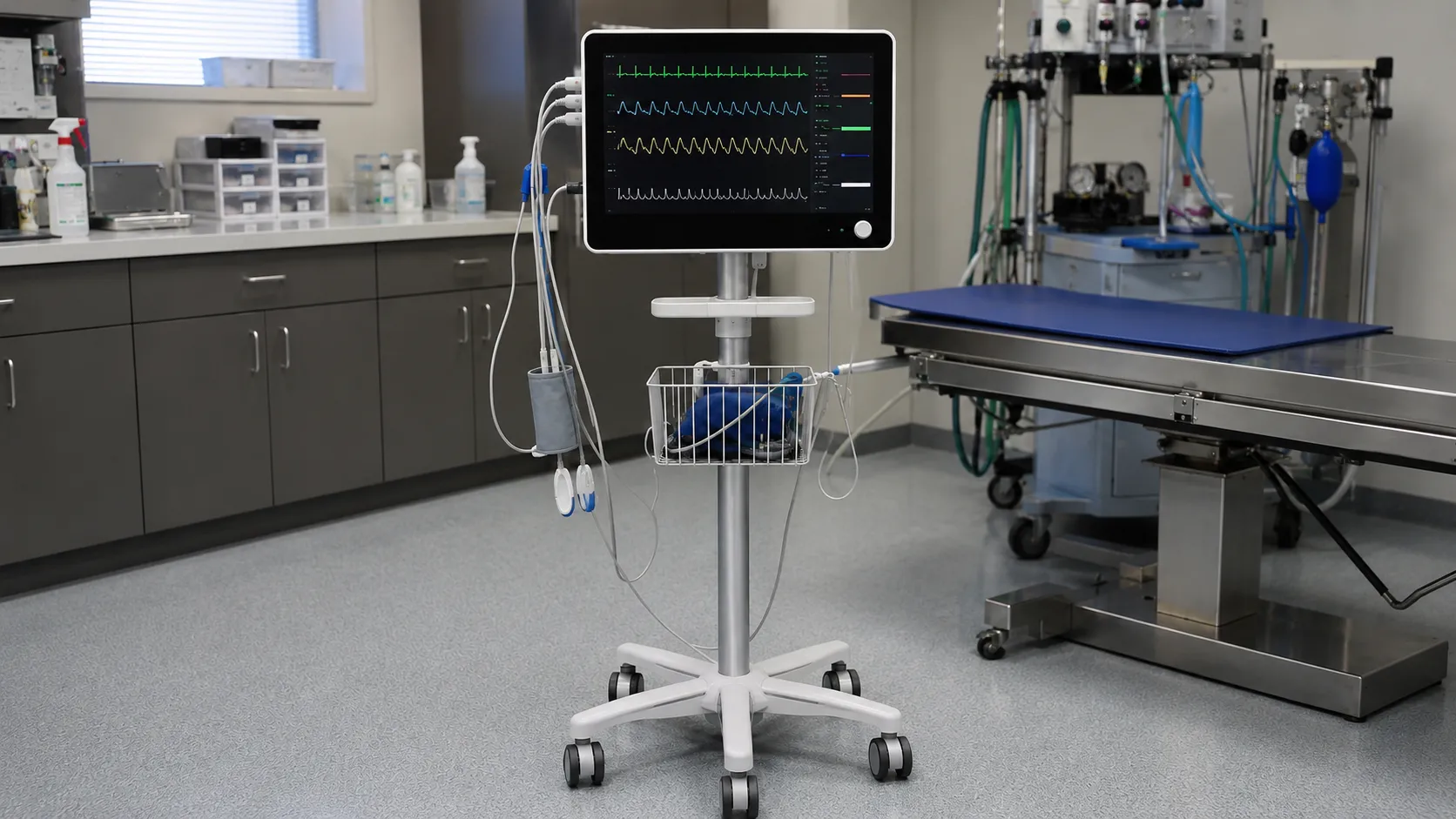
Monitoring an anaesthetised animal calls for a veterinary patient monitor that accommodates patient sizes and uses probes designed for animals rather than people. A monitor suited to veterinary surgery is one whose parameters, probes and settings work across the species a practice treats, from small companion animals to larger patients, since a monitor tuned only for one size will struggle with the rest.
The ten monitor types below cover companion-animal-specialist veterinary use. Each entry explains its role and what to confirm before purchase.
Parameters, species range and probes
The parameters a monitor measures should match what the practice needs during surgery, and the settings should accommodate the physiological ranges of different animals. A monitor whose ranges and alarms suit a wide span of patient sizes is more useful in a mixed practice than one configured narrowly.
Probes and sensors are where veterinary monitoring differs most. Probes suited to animals, including sizes and placements appropriate for different patients, and their availability and durability, shape how well monitoring works in practice, so the probe range should be confirmed for the animals seen.
The ten veterinary patient monitor types
1. Multiparameter veterinary monitors
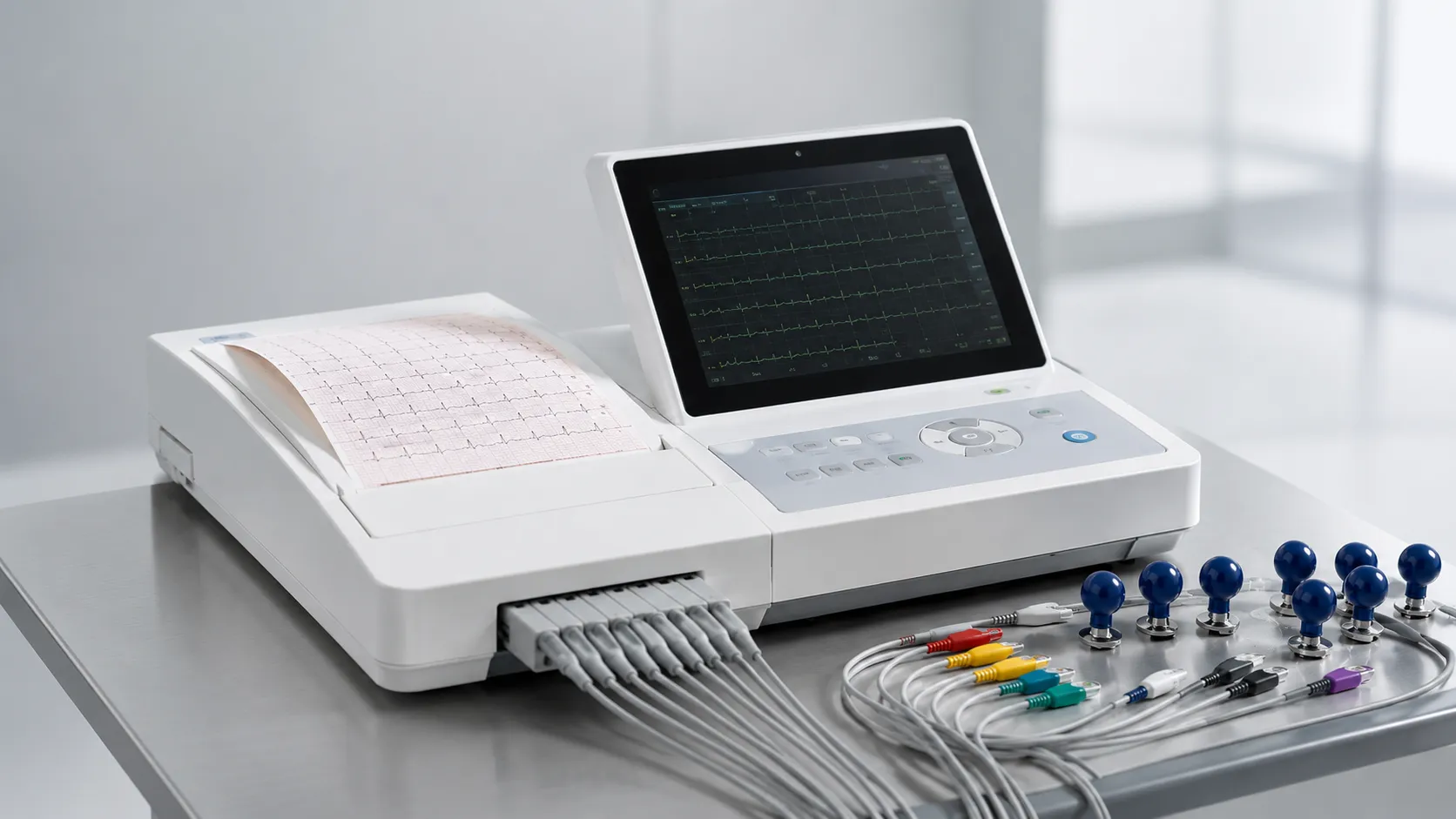
Combine several parameters in one display, a single surgical monitor, the general configuration for a veterinary theatre.
2. Monitors configured for a wide size range
Provide ranges and alarms suited to small and larger patients, useful in mixed practices.
3. Compact and portable monitors
Smaller monitors for branch practices, mobile work or space-limited theatres, retaining the required parameters while using veterinary probe sets
Supplied with probes and sensors suited to animals, with sizes and placements appropriate for different patients.
5. Monitors with capnography
Include measurement of exhaled carbon dioxide, valuable during anaesthesia. Confirm the sampling suits the patient sizes.
6. Monitors with invasive pressure capability
Support invasive measurement for procedures requiring it, used under appropriate clinical direction.
7. Monitors integrated with anaesthesia machines
Combine monitoring with the anaesthesia machine, keeping delivery and monitoring together for the team.
8. Monitors with trend recording
Record trends through a procedure for review and the record. Confirm what is recorded and retrieval.
9how . Monitor issues with configurable alarms
Allow alarm limits to be set for the patient, important given the range of animal sizes and physiology.
10. Monitors with durable, wipeable construction
Built for a veterinary environment, with surfaces that clean easily after contact with animals.
Alarms, cleaning and the veterinary theatre
Alarm settings deserve particular thought in veterinary monitoring, because a single fixed limit cannot suit a small animal and a large one. Configurable alarms that can be set for the patient in front of the team support safe monitoring across sizes, and staff should understand how to set them appropriately. Cleaning is a veterinary-specific consideration, since probes and surfaces contact animals and their coats, so wipeable construction and a clear cleaning routine keep a monitor serviceable and hygienic between patients. In the theatre,tre the monitor should be positioned where the team can see it while attending the patient, with probes and cables managed so they do not tangle during a procedure. Planning probe supply and cleaning before the monitor is in use keeps monitoring reliable across a varied caseload.
What to confirm before ordering
-
Parameters. Confirm the parameters match your surgical monitoring needs.
-
Size range. Establish ranges and alarms suitable for smaller and larger targets.
-
Probes. Confirm veterinary probe sets, sizes and availability.
-
Capnography. Where needed, confirm carbon dioxide measurement suits patient sizes.
-
Alarms. Check alarm limits are configurable for the patient.
-
Cleaning. Verify wipeable construction and probe cleaning.
Training, cleaning and servicing
Training should cover probe placement for different animals, setting alarms for the patient, interpreting the display and cleaning, so monitoring is used well across the range of patients.
Cleaning between patients follows the manufacturer's method for probes and surfaces, especially to maintain routine, consistent, agreed-upon maintenance, probe and sensor checks, and electrical safety testing, since probes are handled constantly. Ensure the practice receives published MHRA device notices so any field safety notices reach the veterinary team.
Probes and configurable alarms should suit the range of animal sizes treated. Practices can check current options with the verified supplier network.
Final thoughts
Choose a monitor with a wide range and suited to animals, with configurable alarms and easy cleaning for a mixed caseload. Most veterinary practices are best served by a monitor whose ranges and probes suit their patients, whose alarms can be set for each animal, and which cleans easily between patients.
This article provides general procurement guidance for veterinary practices. It is not clinical or veterinary advice, and it does not replace manufacturer instructions or professional judgement.