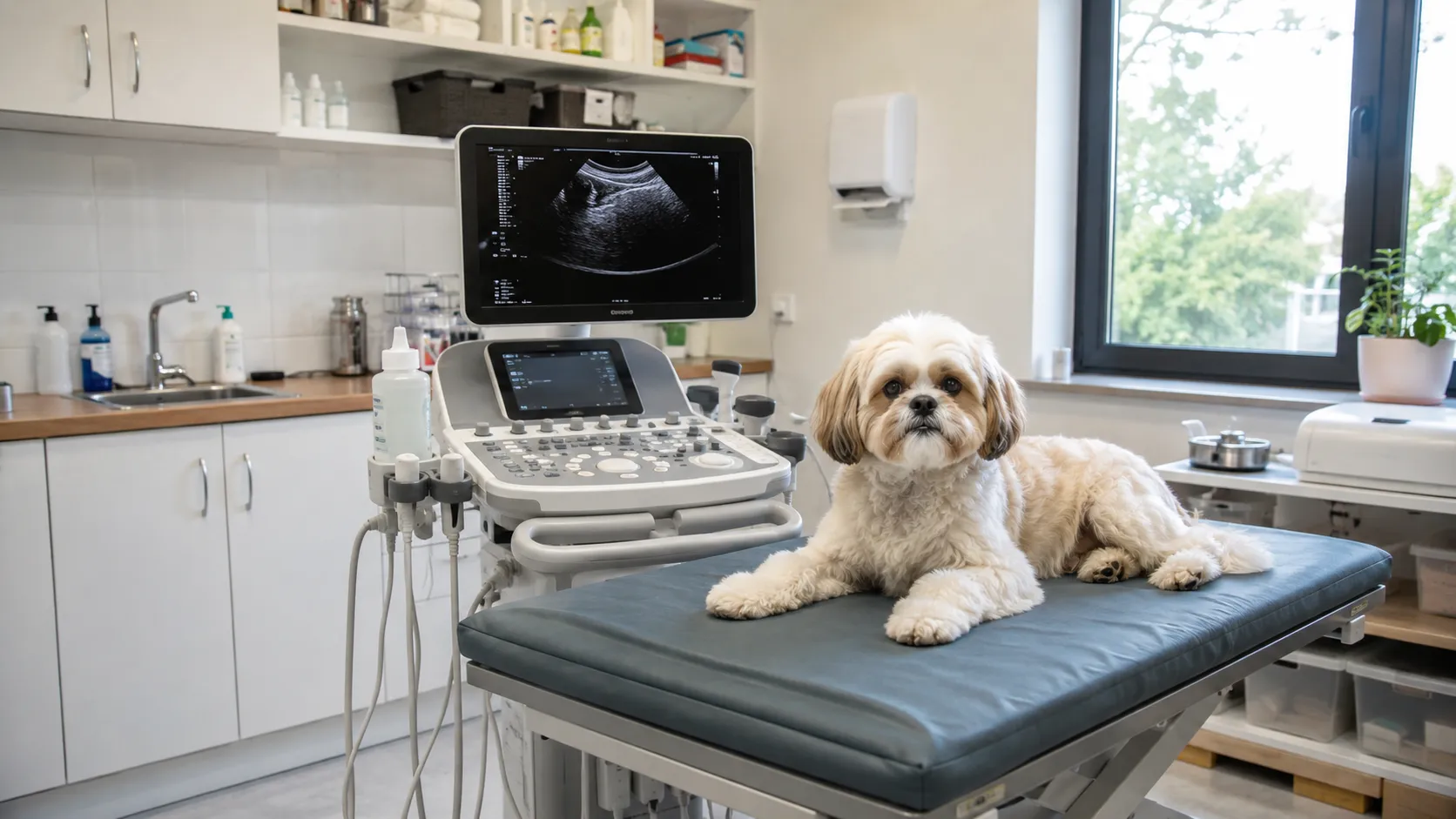
Veterinary ultrasound has its own demands, shaped by patients who cannot be asked to keep still, a wide range of body sizes, and the practicalities of scanning an animal that may be restrained. A system suited to small-animal practice is one whose probes, presets, and handling fit that reality, rather than one designed around a cooperative human patient.
The ten system types below cover general and specialist small-animal. Each entry explains its role and what to confirm before purchase.
Probes, presets and the animal patient.
Probes determine what a system images well. Small animal scanning spans different body sizes and depths, so the probe range, including options suited to small patients and to deeper structures in larger dogs, shapes what the system supports. The probe frequencies and footprints should match the animals a practice sees.
Presets and handling matter because the patient will not hold a pose. Veterinary presets are configured for animal scanning, quick image capture, and a one-handed, easy-to-operate system. In contrast, an animal is held to help obtain images before a patient moves.
The ten system types
1. Portable veterinary ultrasound units
Compact systems carried between consulting rooms or to the patient, suited to practices needing flexibility.
2. Trolley-based veterinary systems
Cart-mounted systems for a dedicated scanning area, offering more processing and a larger display.
3. Systems with a broad probe range
Support probes across all asizes nd large targets at different depths, matching the probe to the animal.
4. Systems with veterinary presets
Include presets configured for animal scanning, saving setup and supporting consistent images.
5. Handheld veterinary ultrasound devices
Very compact devices for quick assessment and field or farm work. Battery life and durability are the practical measures.
6. Systems with fast image capture
Emphasise quick capture and freeze, helping obtain an image before a restrained animal moves.
7. Systems with cardiac capability
Support cardiac scanning with appropriate probes and features, where a practice offers it.
8. Systems with measurement and reporting
Provide measurement tools and reporting suited to veterinary work. Confirm how records are handled.
9. Systems with durable, wipeable construction
Built to withstand a veterinary environment, with surfaces that clean easily after contact with animals.
10. Systems with wireless probe options
Offer wireless probes that ease handling around a moving patient. Confirm battery, charging and image quality.
Animal handling, cleaning and the practice environment
Scanning an animal is a practical, sometimes physical task, and the system should fit that. One-handed operation, quick capture and controls reachable while a patient is held all matter, since the person scanning often has only one free hand. Hair and debris from an animal's coat can accumulate on probe casings, so a system that wipes down easily and requires frequent decontamination remains usable across a full range of clients. Portability suits practices that scan in different rooms or visit patients, so weight and battery life matter for those settings. Consumables such as coupling gel are routine, and clipping or coat preparation is part of the workflow, so planning the scanning setup around the animal and the room helps ensure efficient operation.
What to confirm before ordering
-
Probe range. Confirm probes suit the body sizes and depths of your patients.
-
Presets. Establish veterinary presets for your dling. Check one-handed operation and quick capture for a moving patient.
-
Portability. Where needed, confirm weight, battery life and durability.
-
Cleaning. Verify wipeable construction and probe cleaning routine.
-
Reporting. Establish measurement and record handling.
Training, cleaning and servicing
Training should cover probe selection, preset use, image capture technique and cleaning, pitched at scanning animals that may not stay still. Familiarity with the system helps obtain images quickly.
Cleaning between patients follows the manufacturer's method for probes and surfaces, which is important where the system contacts animals and their coats, and uses an efficient, consistent approach.
For routine servicing, agree planned maintenance, probe testing, image quality checks and electrical safety testing, since probes are handled constantly. Ensure the practice receives safety alerts for medical devices so any field safety notices reach the veterinary team.
Probe range and handling should suit the animals a practice scans. Practices comparing systems can discuss requirements with the equipment team at Medigear.uk.
Final Thoughts
Choosing the right veterinary ultrasound system can significantly improve diagnostic confidence and clinical efficiency in small animal practice. The best option depends on factors such as image quality, probe compatibility, portability, workflow, service support, and budget. By carefully comparing these features, veterinary clinics can select an ultrasound system that enables reliable examinations, faster decision-making, and consistent patient care.