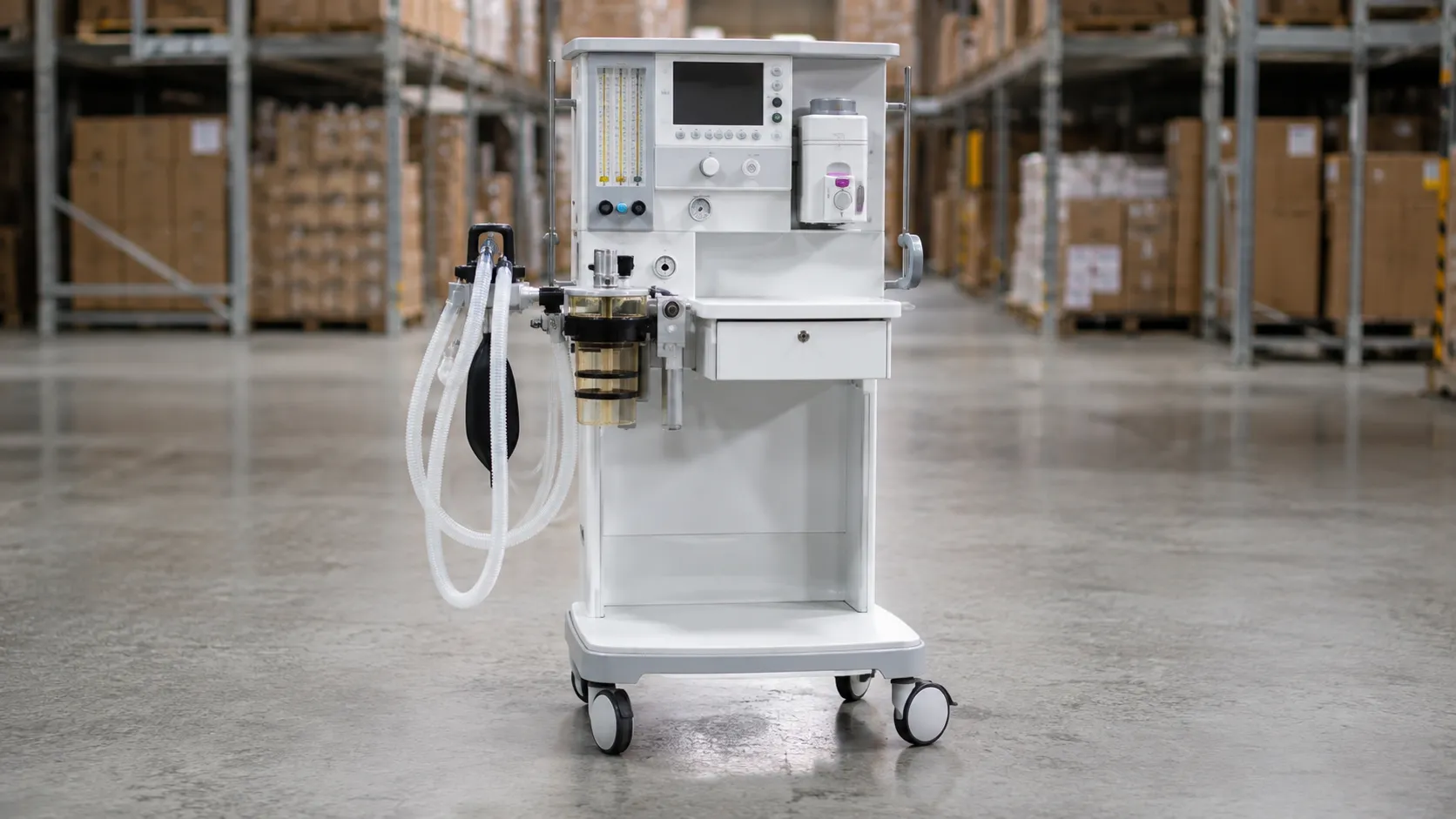
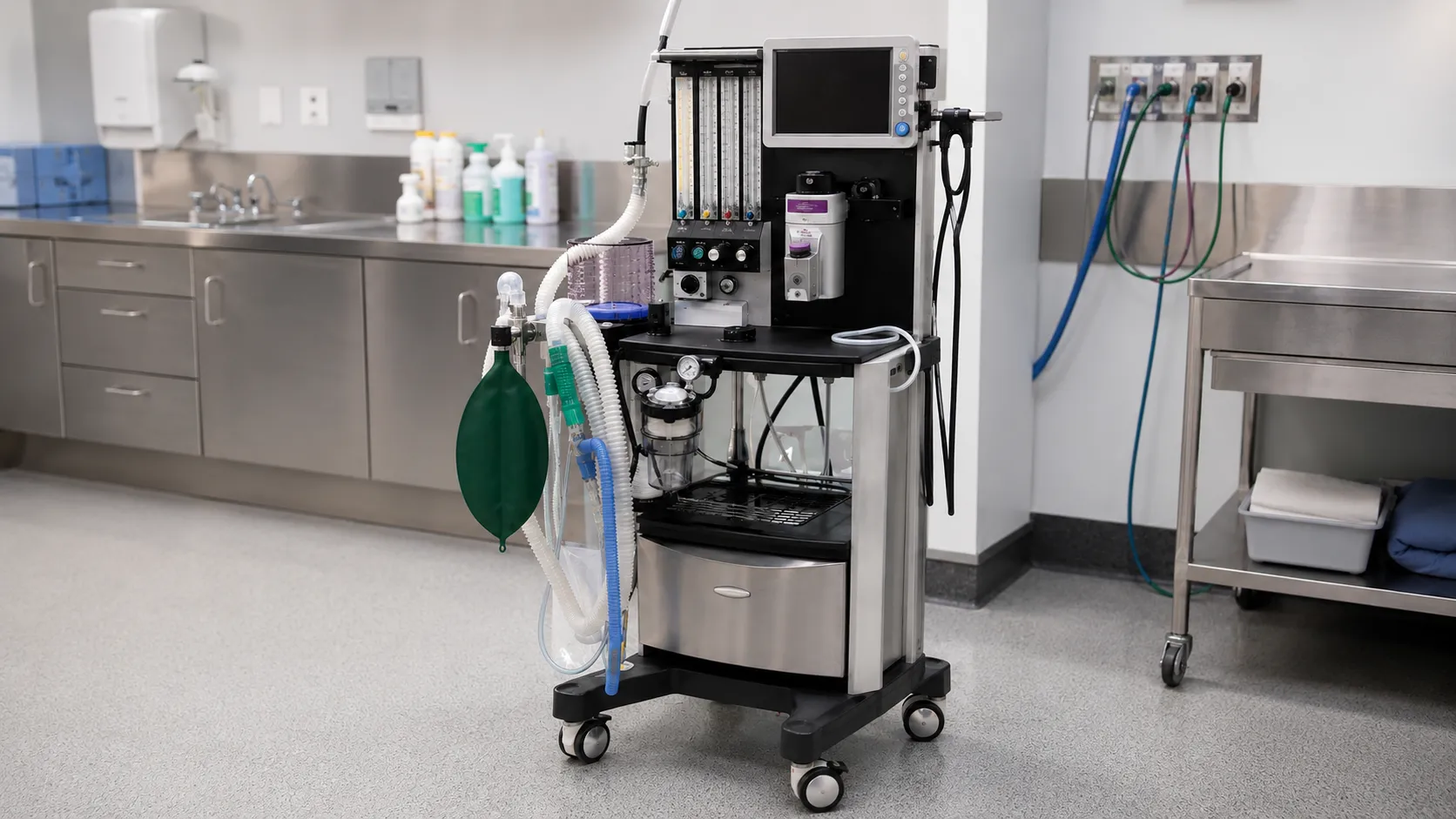
Veterinary anaesthesia covers a wide range of animal sizes, from small companion animals to larger patients, so the machine and its breathing systems must suit the species a practice treats. A machine well suited to cats and small dogs may need different breathing systems for larger patients, which is why species range shapes the decision from the outset rather than being an afterthought.
The ten machine types below cover companion-animal and specialist veterinary use. Each entry explains its role and what to confirm before purchase.
Species range, breathing systems and scavenging
The breathing system is chosen for the patient's size, and a practice treating a range of animals needs the systems to match. Confirming which breathing systems a machine supports, and that they cover the smallest and largest patients seen, is central, since the wrong system for a patient's size affects the anaesthesia.
Scavenging of waste anaesthetic gas protects the veterinary team and is a workplace requirement. The scavenging arrangement, whether active or passive, should be confirmed as part of the machine and the room, not treated as optional, so waste gas is managed properly.
The ten machine types
1. Companion animal anaesthesia machines
Configured for cats, dogs, and similar patients with appropriate breathing systems, the general small-animal machine is suitable.
2. Machines for a wide size range
Support breathing systems across small and larger patients, suited to mixed practices treating varied species.
3. Machines with integrated monitoring
Combine the anaesthesia machine with patient monitoring, keeping delivery and monitoring together for the team.
4. Machines with active scavenging
Use active scavenging to remove waste gas, requiring the appropriate extraction. Confirm the room supports it.
5. Machines with passive scavenging
Use passive scavenging when extraction is unavailable; this suits the room and workload.
6. Compact and portable machines
Smaller machines for branch practices, mobile work or space-limited theatres. Confirm that the breathing systems need support.
7. Machines with ventilator integration
Include or connect to a ventilator for supported ventilation during longer procedures. Confirm suitability for the patient sizes seen.
8. Machines with multiple vaporiser mounting
Allow more than one vaporiser to be fitted, giving flexibility. Vaporiser fitting and servicing are the points to confirm.
9. Machines for larger animal practice
Configured for larger patients with the breathing systems and capacity that implies, used in equine and farm settings.
10. Machines within complete anaesthesia workstations
Form part of a workstation that combines delivery, monitoring, and ventilation, suited to practices seeking an integrated setup.
Monitoring, cleaning and the veterinary theatre
Monitoring supports safe anaesthesia across the range of animals a practice treats. Where it is not integrated, the machine should work alongside the monitoring the practice uses, so that delivery and monitoring together suit each patient's size. Cleaning between patients matters in a veterinary setting where animals of different species and conditions are treated, so breathing systems and patient-contact components require regular cleaning and, where appropriate, single-use policies. The theatre setup should keep the machine, scavenging, monitoring, and the surgical field all workable together, with the machine positioned so the team can reach the controls and observe the patient. Planning breathing system supply, vaporiser servicing and scavenging before the machine is in use keeps a list running and the team protected.
What to confirm before ordering
-
Species range. Confirm breathing systems cover the smallest and largest patients seen.
-
Scavenging. Establish active or passive scavenging and that the room supports it.
-
Vaporiser. Confirm vaporiser mounting, fitting and servicing.
-
Monitoring. Establish integrated or compatible monitoring for the patient sizes.
-
Ventilation. Where needed, confirm ventilator suitability across sizes.
-
Cleaning. Verify breathing system cleaning and single-use policy.
Training, safety and servicing
Training should cover machine checks, breathing system selection for the patient, scavenging, vaporiser use and cleaning, so the machine is used safely across the range of animals treated.
Waste gas management protects the team, so the scavenging arrangement and any monitoring of the working environment should be understood and maintained in accordance with workplace requirements.
For servicing, agree planned maintenance, vaporiser servicing, leak and function testing, scavenging checks and electrical safety testing. Ensure the practice receives the device alerts and recalls page so any field safety notices reach the veterinary team.
Breathing systems and scavenging should suit the species range before the machine is in use. Practices can review options through the healthcare buyer network.
Finally, choose a veterinary anaesthetic machine within the species range, with breathing systems and scavenging suited to the practice's needs, and monitoring and cleaning as part of the routine. Most practices are best served by a machine supporting the breathing systems their patients require, proper scavenging, and vaporiser and function servicing built into the routine.
This article provides general procurement guidance for veterinary practices. It is not clinical or veterinary advice, and it does not replace manufacturer instructions or professional judgement.
Final Thoughts
Choosing the right veterinary anaesthesia machine is essential for safe, controlled, and efficient animal surgery. The best system should match the clinic’s patient range, surgical workload, available space, and monitoring requirements while providing reliable ventilation, precise gas delivery, and straightforward operation. By comparing features, compatibility, maintenance needs, and long-term reliability, veterinary teams can select an anaesthesia machine that supports safer procedures and consistent clinical performance.