What Is a Flow-Inflating Bag and How Neonatal Ventilation Works
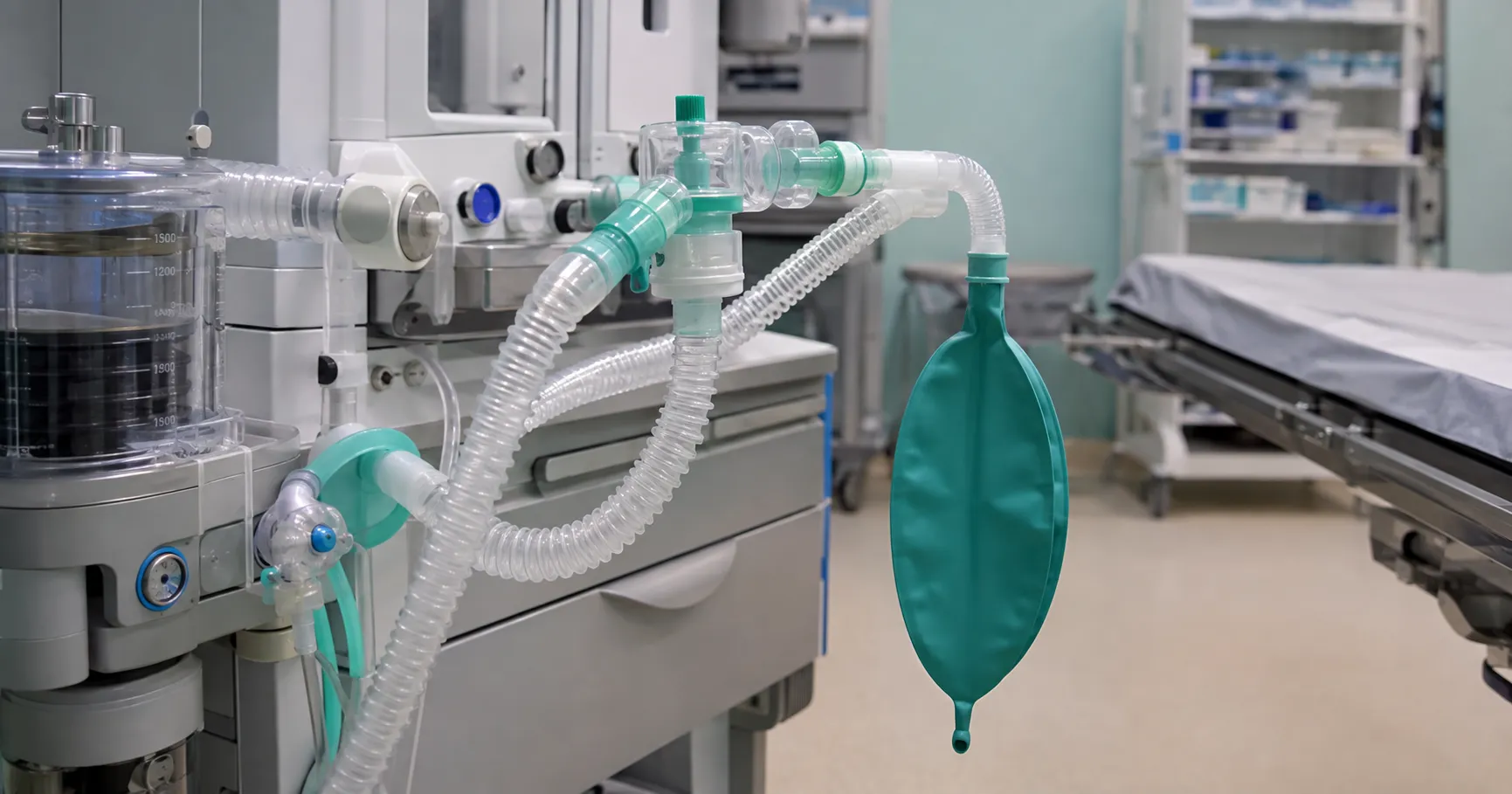
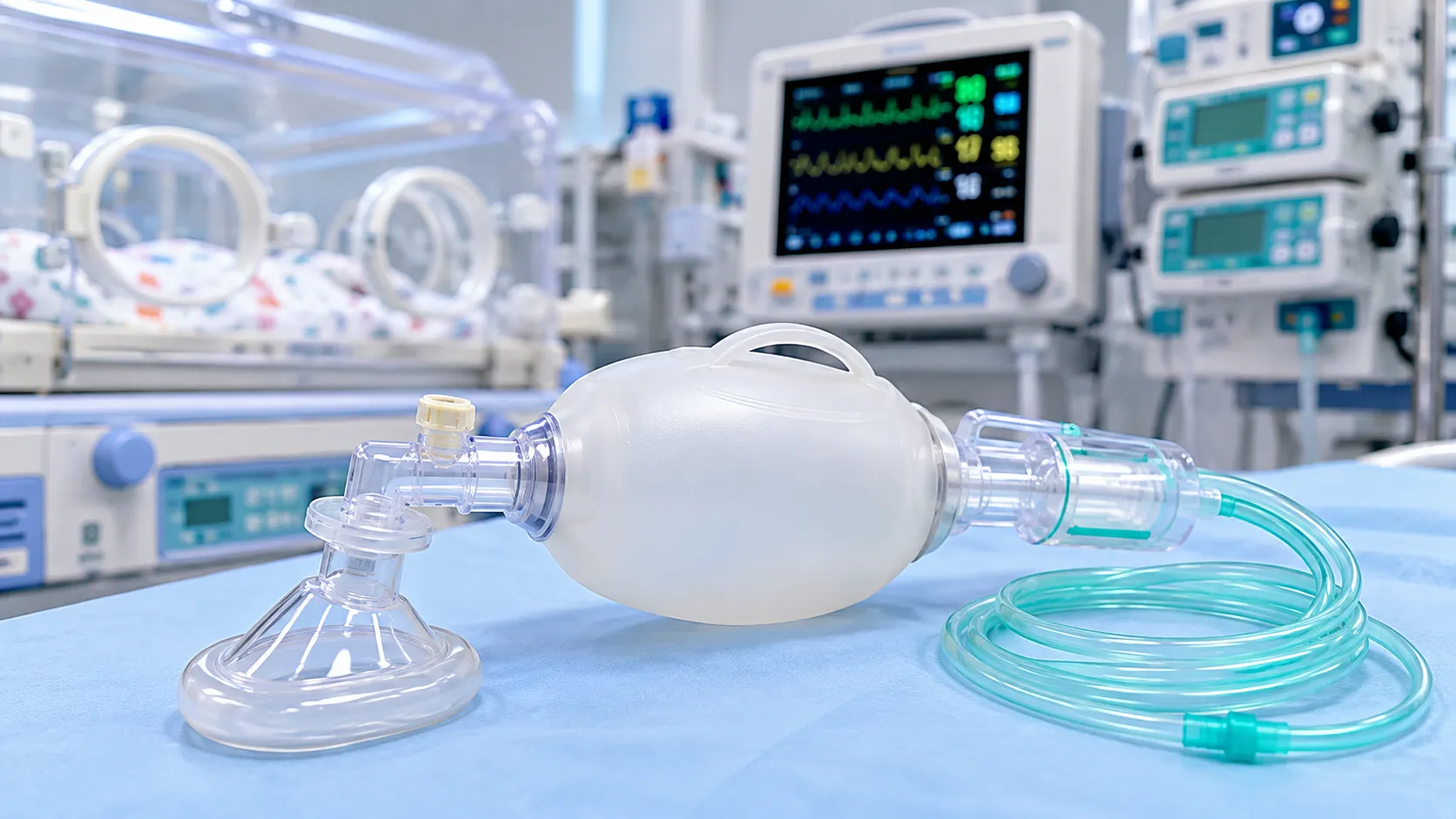
A flow-inflating bag, also called an anaesthesia bag, is a manual ventilation bag that inflates only when supplied with a continuous fresh gas supply and collapses the instant flow stops, unlike a self-inflating bag. Because the operator controls both the gas inflow and a flow-control valve that releases gas, it can deliver a precise oxygen concentration and maintain positive end-expiratory pressure, which is why it is favoured for delicate neonatal ventilation.
This guide is for procurement and neonatal service leads who are specifying resuscitation equipment. It explains why the bag needs a gas source, how it delivers controlled oxygen and PEEP, the tactile feedback it gives, how it compares with self-inflating bags and T-piece devices, and the specifications and standards to confirm before buying.
Why It Needs a Gas Source
A flow-inflating bag has no elastic recoil to refill itself. Gas enters from the fresh gas supply, and the bag remains inflated only while the flow exceeds the sum of the gas escaping through the patient and the outlet valve. The operator sets the flow at the flowmeter and adjusts a flow-control (bleed) valve on the bag to balance inflation against escape. Get that balance right, and the bag is taut and responsive; too little flow or an open valve, and it collapses; too much back pressure, and it overdistends. This dependence on a gas source is the fundamental difference from a self-inflating resuscitator, which can ventilate during a total gas-supply failure.
Controlled Oxygen and PEEP
The clinical appeal is control. Fed from a blended or piped source, the bag can deliver any set oxygen concentration from 21 per cent to 100 per cent, and by adjusting the flow-control valve, the operator can maintain a chosen positive end-expiratory pressure and provide continuous positive airway pressure to a spontaneously breathing newborn. That ability to hold PEEP and CPAP, and to titrate oxygen precisely, is exactly what fragile neonatal lungs often need and is difficult to achieve with a basic self-inflating bag. A manometer in the circuit is strongly advisable, so peak inflation pressure and PEEP can be measured rather than guessed.
Tactile Feedback and Operator Skill
Because the bag responds directly to the patient's lungs, an experienced operator can feel changes in compliance, a stiffening lung, an airway obstruction,n or a leak around the mask through the bag itself. That feedback is valuable, but it comes with a demand: the flow-inflating bag needs more skill and constant attention than a self-inflating one. Lose the mask seal or let the flow drift and the bag deflates, so it is a tool for trained hands, typically anaesthetists and neonatal teams, rather than a grab-and-squeeze device for occasional users.
How It Compares With Self-Inflating Bags and T-Piece Devices
Three devices cover manual neonatal ventilation, each with its own lane. The self-inflating bag works without gas and is the universal emergency fallback, but it delivers PEEP and precise oxygen less reliably. The flow-inflating bag provides controlled oxygen, PEEP feel, and CPAP, at the cost of requiring gas and skill. The T-piece resuscitator, increasingly used in newborn resuscitation, provides consistent, preset peak inflation pressure and PEEP with less operator variability, which is why many neonatal units have adopted it. It, too, depends on a gas supply. A department often holds more than one type, pe so it has both a supply-independent fallback and a controlled-delivery option.
Sizes and Configuration for Newborns
Neonatal flow-inflating bags are small, commonly around 500 ml, so the operator cannot easily deliver an excessive tidal volume to tiny lungs. The set typically comprises the bag, an inlet for fresh gas, a flow-control outlet valve, a manometer port and a patient connection sized for neonatal masks or tracheal tubes. Correctly sized round or anatomical newborn masks are essential, because the controlled pressures the device offers are wasted if the seal leaks. Confirm the whole assembly is specified and stocked together rather than as loose parts.
Setting Up and Troubleshooting
Getting a flow-inflating bag ready is itself a skill worth designing equipment around. The operator connects the fresh gas source, sets an adequate flow, and then closes the outlet valve enough that the bag distends but not so far that pressure builds uncontrollably; the manometer guides that balance. A bag that will not fill points to insufficient flow, a wide-open outlet valve, or a leak at the mask or a connection, and each is checked in turn. A bag that becomes tense and hard to squeeze warns of excessive pressure. Because these adjustments happen in real time on a compromised newborn, the valve should move smoothly, and the manometer should be easy to read at a glance; clumsy controls turn a controlled device into a hazard.
Key Specifications a Buyer Must Check
Confirm that the bag volume is suitable for neonatal use and that a flow-control valve and a manometer port are present. Check the fresh-gas inlet matches your blender or flowmeter output and that the patient connector is the standard 15 mm size for neonatal masks and tubes. Verify the range of PEEP the outlet valve can maintain, that the assembly is compatible with an oxygen blender for precise FiO2, and whether the product is single-use or a validated reusable set. Confirm the supporting consumables, masks, tubing and manometers are available so the device is usable on arrival.
Standards, Regulation and Verification
Flow-inflating bags are medical devices and should bear a valid UKCA or CE marking from a manufacturer registered with the MHRA, and their conical connectors should comply with ISO 5356-1. As part of neonatal resuscitation practice, device selection should align with current clinical guidance and local newborn life-support policy, which increasingly specifies consistent PEEP and pressure control. Where the bag is fed by an air-oxygen blender, the blender and flowmeter carry their own standards and should be verified against a calibrated oxygen analyser. Request the instructions for use and the declared pressure and reprocessing data.
Decontamination, Maintenance and Total Cost
Reusable silicone flow-inflating bags withstand autoclaving but must be dismantled, cleaned, reassembled and function-tested, with the flow-control valve confirmed to seat correctly. Single-use versions remove that burden where throughput or infection control favours disposables. The cost picture includes the bag, masks, manometer, blender and tubing, plus either reprocessing or disposal, and the training investment the device demands, since competence directly affects safety. Because readiness matters as much as unit price, buying complete, checked sets reduces the risk of a missing manometer or wrong-sized mask when a newborn needs support.
Use Across Care Settings
Flow-inflating bags are used in delivery suites, neonatal intensive care, paediatric theatres and retrieval services where controlled oxygen and PEEP for newborns are needed and trained staff are present. They are less appropriate as a general ward or ambulance grab-tool, where the supply independence and simplicity of a self-inflating bag win. Matching the device to the setting, and to the skill of the people who will use it, is the core procurement judgement.
Procurement Checklist
- Check the flow-inflating bag carries UKCA or CE marking from an MHRA-registered supplier.
- Check the fresh-gas inlet matches your blender or flowmeter output.
- Verify a flow-control valve, adjustable PEEP, and a manometer port are present.
- Confirm neonatal bag volume and the use of a 15 mm connector for newborn masks and tubes.
- Ensure blender compatibility so FiO2 can be set precisely and verified.
- Decide single-use versus a validated reusable set with a function-test routine.
- Cost masks, manometers, tubing, reprocessing or disposal and staff training.
Conclusion
A flow-inflating bag trades the gas independence of a self-inflating bag for something newborn lungs often need: controlled oxygen, held PEEP and CPAP, and direct feel of compliance. Specify gas-source and blender compatibility, an adjustable outlet valve and manometer, neonatal sizing, and the training required for safe use. To compare flow-inflating bags, self-inflating resuscitators, and T-piece devices, or to arrange a facility quote, contact MediGear or open a buyer account.
Disclaimer
This article is for informational purposes only. It is published by MediGear (medigear.uk) for general information and procurement guidance. It is not clinical, diagnostic, treatment, technical, engineering, legal or regulatory advice, nor a product endorsement, guarantee or substitute for professional assessment. MediGear does not provide medical consultations. Buyers should consult their clinical, biomedical, estates and regulatory contacts, and the manufacturer's documentation, and independently verify all specifications, certifications, compatibility and suitability before purchase. Specifications, certifications and availability are correct at the time of publication and may change without notice. MediGear is a medical-equipment distributor and does not sell medicines or pharmaceutical products.