Dental decontamination is a series of steps performed multiple times a day, usually by nurses working between patients. Equipment that fits the room, the workflow and the instrument set makes that chain reliable. Equipment chosen without reference to the practice's actual instruments tends to create workarounds instead.
The ten items below cover the full dental decontamination process. Each entry explains its role and what to confirm before purchase.
Start with the instruments
List what the practice actually processes. Simple solid instruments, hinged instruments, cassettes and handpieces with narrow internal channels behave very differently. Handpieces in particular require a cycle capable of removing air from internal lumens, which rules out the simplest machines.
Then decide whether instruments are pouched for storage or used immediately. That single decision determines which cycle types the practice needs and how much drying capability matters.
The ten items of dental sterilisation equipment
1. Benchtop sterilisers for solid unwrapped instruments
Simple machines for non-hollow, unwrapped items used immediately. They are not suitable for pouched instruments or handpieces.
2. Benchtop sterilisers with manufacturer-defined cycles
Support specific load types declared by the manufacturer. Suitable where the practice processes a defined instrument range that matches those declarations.
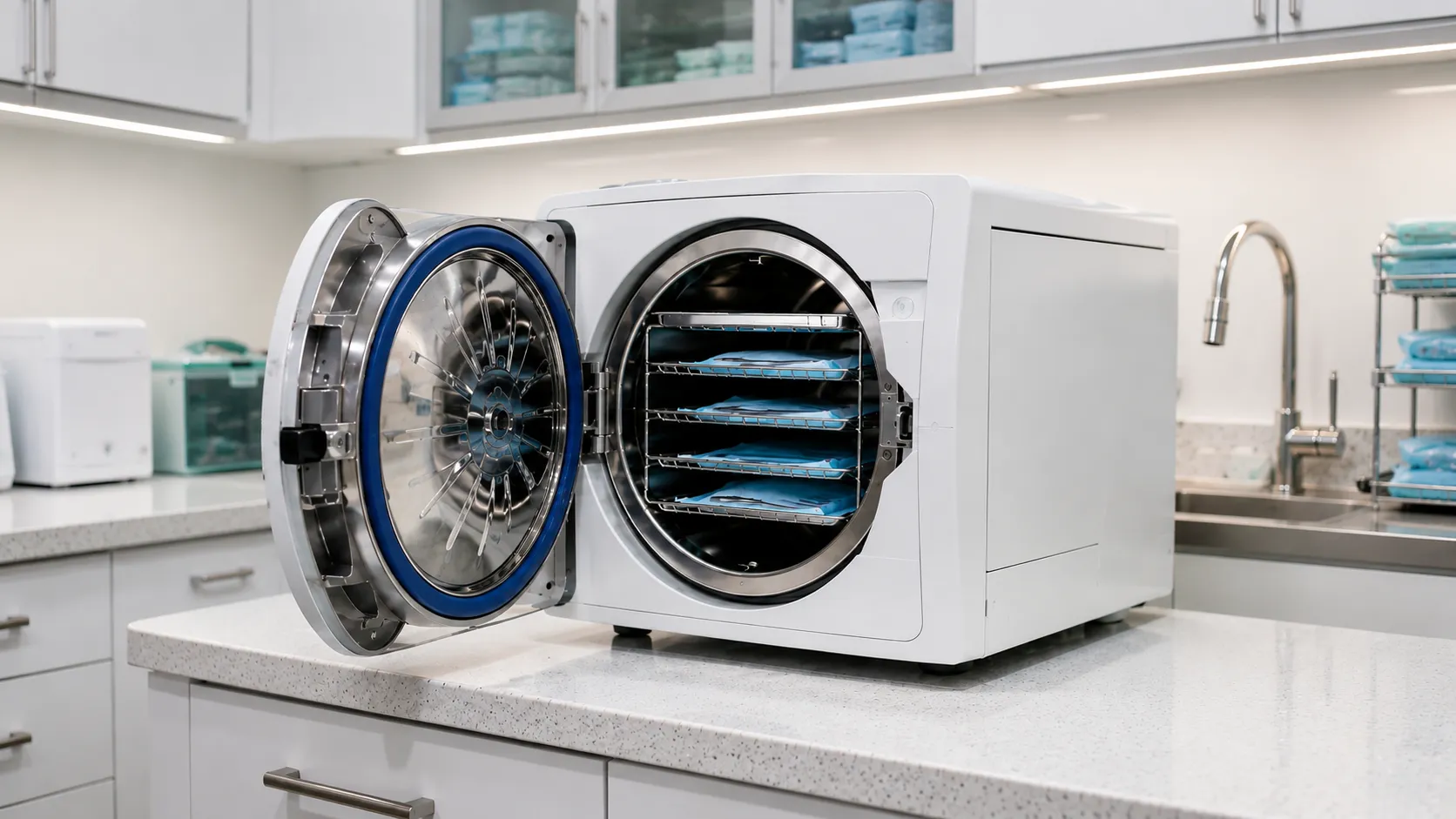
3. Vacuum benchtop sterilisers
Active air removal supports pouched, hollow and handpiece loads. For most handpiece-processing practices, this is the necessary specification.
4. Cassette sterilisers
Rapid cycles for small instrument sets, useful where turnaround between patients is tight and a full chamber load is not required.
5. Ultrasonic cleaning baths
Pre-clean instruments before sterilisation using ultrasonic agitation. Solution changes, lid use and periodic cleaning efficacy checks are part of the routine.
6. Washer-disinfectors
Automated cleaning and thermal disinfection with recorded cycles, reducing manual scrubbing and improving consistency. Confirm rack options for your instruments and handpieces.
7. Water treatment units
Distillers or reverse osmosis units producing feed water of the required quality. Poor water quality is the most common cause of premature steriliser failure.
8. Pouch sealing machines
Heat sealers producing consistent seals on sterilisation pouches. Seal integrity affects whether the pouch protects the instrument until use.
9. Drying and storage cabinets
Support drying after processing and controlled storage before use. Confirm capacity against your daily throughput.
10. Handpiece maintenance units
Automated lubrication and purging of handpieces before sterilisation, which supports both instrument life and processing consistency.
Room size and daily rhythm
Decontamination rooms are usually small, and equipment that does not fit the bench forces staff into awkward routines. Measure the available run of worktop, allow clearance for opening doors and lids, and plan where wet and dry stages sit relative to each other. Where a practice runs several surgeries from one decontamination room, chamber capacity and cycle length together decide whether instrument sets circulate quickly enough to keep every chair working.
Records, water and workflow
-
Cycle records. Confirm whether the machine prints, stores or exports cycle data, and how records are retained.
-
Traceability. Establish how instruments are linked to a cycle and, where required, to a patient.
-
Feed water. Specify the water treatment method alongside the steriliser rather than afterwards.
-
Room layout. Plan a clear flow from dirty to clean, with separate zones where space allows.
-
Chamber size. Match capacity to peak sessions so nurses are not waiting on cycles.
-
Consumables. Confirm pouch sizes, indicator supplies and test materials.
Testing, training and maintenance
Routine testing follows the manufacturer's instructions and local decontamination policy, with results recorded and retained. Agree who performs daily, weekly, and periodic tests, and ensure two people in the practice can carry them out.
Training should reach every nurse who processes instruments, covering loading, pouching, sealing, cycle selection, record keeping and what to do when a cycle fails. Written procedures displayed in the decontamination room help maintain consistency.
For servicing, agreed planned maintenance intervals, door seal replacement, safety valve testing, sensor calibration, and spare parts availability. Ensure the practice receives published device safety alerts. Hence, field safety notices are sent to the responsible person.
Chamber capacity and water treatment should be specified together rather than in sequence. Practices equipping a decontamination room can compare options through buyer support services.
Final thoughts
Specify the equipment around the instruments and the workflow. Most practices processing handpieces need a vacuum steriliser, reliable water treatment, an ultrasonic bath or washer-disinfector for cleaning, sealing, and storage, and a record that staff can follow every day without revising.
This article provides general guidance for dental practices and equipment buyers. It is not clinical or regulatory advice, and it does not replace manufacturer instructions or local decontamination policy.