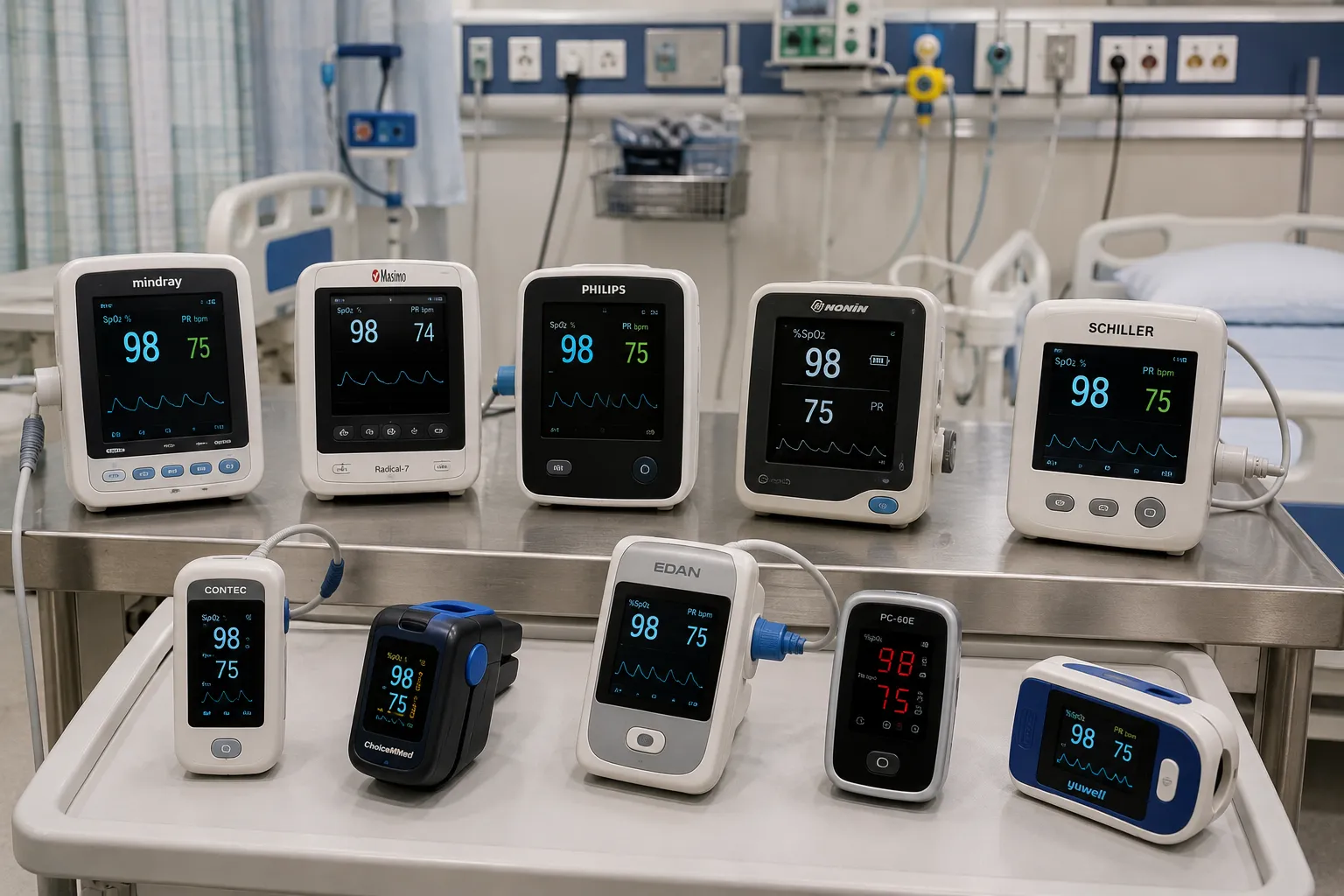
Pulse oximeters are the most widely used monitoring devices in healthcare and the most likely to be bought without much thought. Yet the differences between models are real: sensor design, tolerance of movement and low perfusion, and alarm behaviour all change how dependable a reading is at the bedside.
The ten types below cover spot checks, continuous monitoring and specialist use. Each entry explains the design and the questions worth asking to place readings correctly when things go wrong.
Understanding the limitations shapes a better purchase. Movement, poor peripheral perfusion, nail coverings, bright ambient light and incorrect sensor placement all affect readings. Skin pigmentation is also recognised as a factor that can affect accuracy in some circumstances, which is one reason readings should be interpreted alongside the wider clinical picture rather than in isolation.
None of this makes oximetry unreliable. It means the device should be matched to the setting, and staff should know what a poor signal is telling them about pulse oximeter types
1. Fingertip spot-check oximeters
Self-contained units clipped to a finger for a quick reading. Convenient and portable, best suited to intermittent observation rather than continuous monitoring.
2. Handheld oximeters
A small display unit with a separate sensor cable, allowing different sensor types. Suited to community teams, wards and rapid response use.
3. Tabletop bedside oximeters
Mains-powered units for continuous monitoring at a single bed, usually with trend display, alarm limits and a clearer screen.
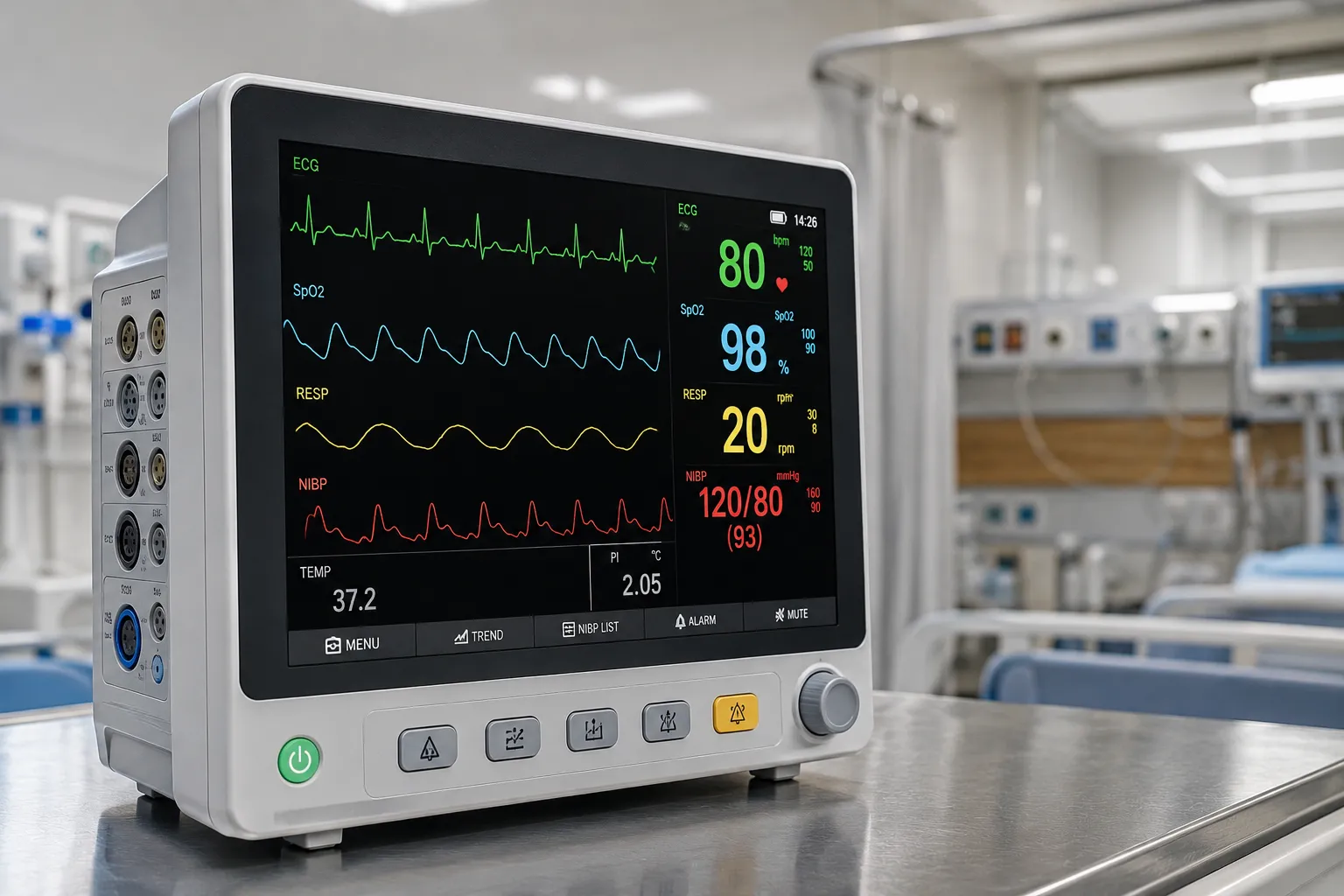
4. Oximetry modules within multiparameter monitors
Integrated measurement forming part of a wider monitoring platform, sharing alarms and data with other parameters.
5. Wrist-worn and wearable oximeters
Support extended recording during sleep or mobility, with data downloaded afterwards. Confirm the retrieval software and how records are stored.
6. Neonatal and infant oximeters
Configured with appropriate sensors and averaging settings for very small patients. Sensor fit and skin protection matter as much as the device itself.
7. Oximeters with high-motion tolerance
Use signal processing designed to maintain readings during movement, reducing false alarms in restless or transported patients.
8. Low-perfusion capable oximeters
Designed to obtain readings where peripheral circulation is poor. Useful in critical care, recovery and emergency settings.
9. Oximeters with reusable sensor systems
Support reusable clip or wrap sensors, which reduces waste but requires cleaning between patients according to manufacturer instructions.
10. Oximeters using single-patient sensors
Adhesive sensors assigned to one patient, favoured wherever secure attachment or prevention applies. Consumable supply becomes a planning point.
Placement and everyday practicalities
Sensor placement is the detail that decides whether a department gets dependable readings. A sensor that is too tight restricts circulation, one that is loose admits ambient light, and one left on the same digit for long periods risks skin damage. Rotation intervals and inspection routines should be agreed locally and taught alongside the device itself.
Sensors, alarms and other practicalities
-
Sensor range. Confirm which sensor sizes and styles the device supports, including paediatric and adhesive options.
-
Signal quality indicator. Look for a clear display of signal strength, so that you can distinguish a poor trace from a genuine reading.
-
Alarm settings. Check whether limits and delays can be set consistently across the department.
-
Battery and charging. Confirm runtime, battery type and how a large stock of handheld units will be charged.
-
Cleaning. Verify the approved cleaning agents used in our wards.
-
Data output. Establish whether readings are recorded manually or exported for observation charting.
Training, servicing and fleet control
Training is short but valuable: correct sensor placement, recognising poor signal, understanding the effect of movement and perfusion, and knowing when a reading should prompt escalation under local policy.
Because oximeters are small and portable, fleet control is a genuine issue. Asset tagging, defined storage points and a replacement plan prevent the slow disappearance of devices from wards.
For servicing, agree on functional checks, electrical safety testing where applicable, sensor replacement, supply, and expected support life. Ensure the organisation receives published device safety alerts so field safety notices reach clinical teams.
Final thoughts
Match the device to the setting rather than buying one model everywhere. Spot-check units suit clinics and community and d-p, con-monitoring, top-up, or-up, or intd dmeasurement and perfusion perform match them to patients' Firm sensorrm sensor supply, alarm gov-ernance and cleaning compatibility before ordering.
This article provides general procurement guidance for healthcare organisations. It is not clinical advice, and readings should always be interpreted in accordance with clinical judgement and local policy.